FEEL IT.STREAM
Keisuke Kinoshita

Keisuke Kinoshita

Directing

Biography

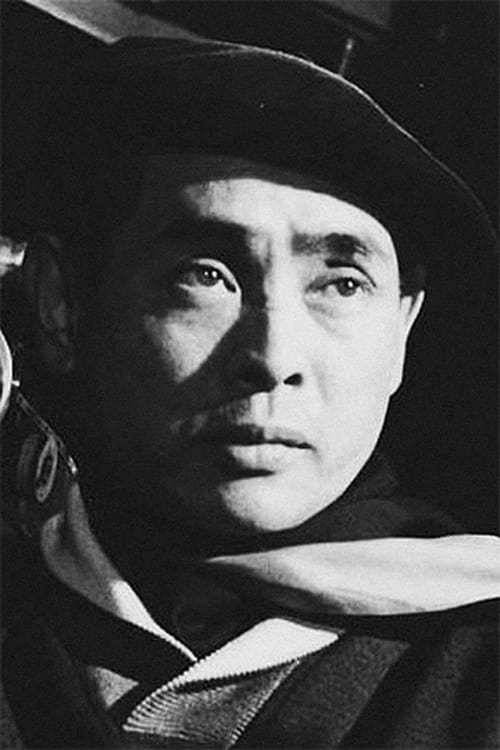
Keisuke Kinoshita (木下 惠介, Kinoshita Keisuke, December 5, 1912 – December 30, 1998) was a Japanese film director. Hugely popular in his home country of Japan, Keisuke Kinoshita worked tirelessly as a director for nearly half a century, making lyrical, sentimental films that often center on the inherent goodness of people, especially in times of distress. He began his directing career during a most challenging time for Japanese cinema: World War II, when the industry’s output was closely monitored by the state and often had to be purely propagandistic. He refused to be bound by genre, technique, or dogma. Kinoshita excelled in almost every genre: comedy, tragedy, social dramas, period films. He shot all films on location or in a one-house set. He pursued severe photographic realism with the long take, long-shot method, and went equally far toward stylization with fast cutting, intricate wipes, tilted cameras, and even classical scroll-painting and Kabuki stage technique. Kinoshita was highly prolific, turning out some 42 films in the first 23 years of his career. For this, Kinoshita explained that he "can’t help it. Ideas for films have always just popped into my head like scraps of paper into a wastebasket." While lesser-known internationally than contemporaries such as Akira Kurosawa, Kenji Mizoguchi and Yasujirō Ozu, he was a household figure in his home country, beloved by both critics and audiences from the 1940s to the 1960s. Although few concrete details have emerged about Kinoshita's personal life, his homosexuality was widely known in the film world. Screenwriter and frequent collaborator Yoshio Shirasaka recalls the "brilliant scene" Kinoshita made with the handsome, well-dressed assistant directors he surrounded himself with. His 1959 film Farewell to Spring (Sekishuncho) has been called "Japan's first gay film" for the emotional intensity depicted between its male characters. Kinoshita received the Order of the Rising Sun in 1984 and was awarded the Order of Culture in 1991 by the Japanese government. He died on December 30, 1998, of a stroke. His grave is in Engaku-ji in Kamakura, very near to that of his fellow Shochiku director, Yasujirō Ozu.
Known For

World of Two
10.0

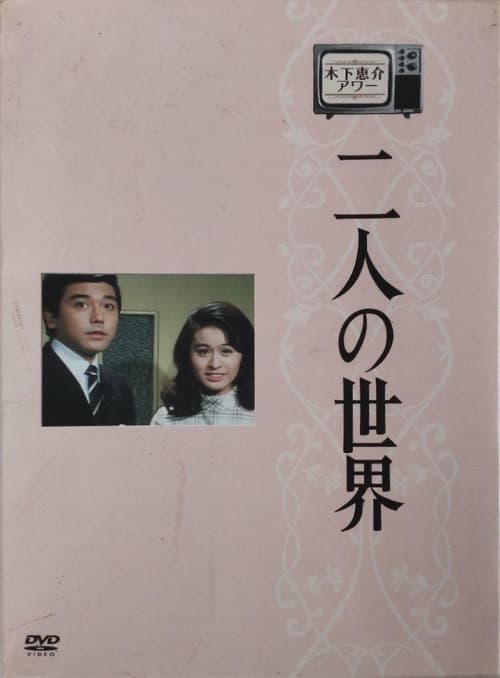
One night, Jiro and Reiko fell in love at first sight, and on the seventh day he proposed to her, and three months later they were married. However, the difference in upbringing between Jiro, who was born and raised in a farmhouse in Shinshu, and Reiko, who is a city girl by nature, sometimes causes small ripples in their sweet newlywed life.

World of Two

1970
Family of Three
N/A

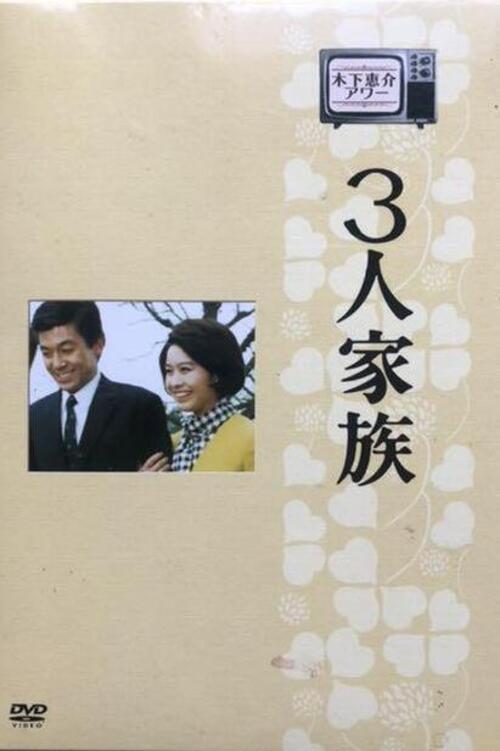
The drama features two families, the all-male Shibata family and the all-female Inaba family, and depicts the interactions between the two families with many amusing and heartwarming episodes.

Family of Three

1968
Oyaji Daiko
9.0

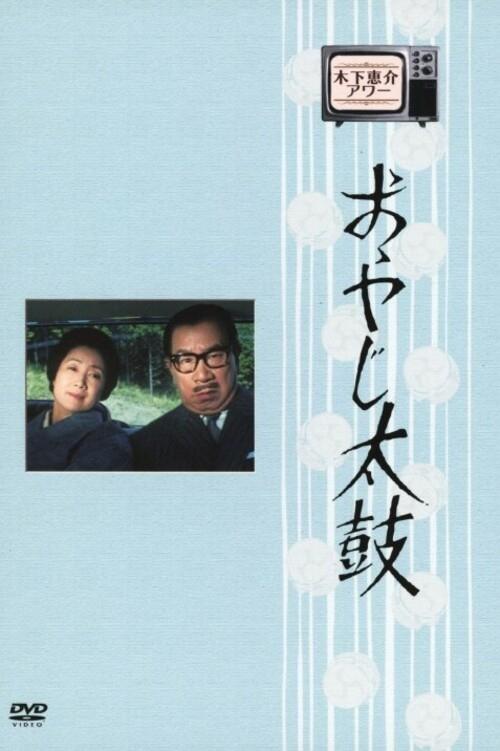
The Tsuru family is a family of nine, headed by Kamejiro. Kamejiro is the president of a construction company that has made a fortune in its first generation, but he is a one-man family. His wife, Aiko, is a typical good wife and wise mother type. Kamejiro gets angry and thunders down every week, and the children are afraid of him, calling him "Oyaji Daiko", but he also takes advantage of this.

Oyaji Daiko

1968
Mom’s Shoulders
N/A

Kenichi, the son of a master carpenter, was in his third year of high school. His mother, Motoko, was a resolute woman who took care of her husband's work. But one day...

Mom’s Shoulders

1971
Story of Yakuza in Naniwa
N/A

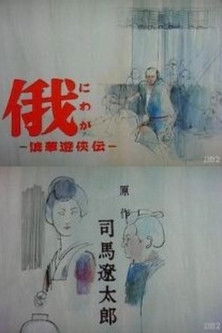
A dramatization of Ryotaro Shiba's novel of the same title about the life of Kobayashi Sahē, a chivalrous man who actually existed at the end of the Edo period.

Story of Yakuza in Naniwa

1970
Omoi Bashi
N/A

A human drama that unfolds around a Japanese restaurant-inn

Omoi Bashi

1973
Taiyō no Namida
N/A

The day before he leaves on a business trip to Europe, Shoji meets an old man named Ogawa while visiting his younger brother in the hospital. Ogawa lies to Shoji that he has a son and asks him to do something extraordinary for him...

Taiyō no Namida

1971
Spring Dreams
6.0

When a wealthy, selfish family decides to take care of an elderly hobo who collapsed near their home, they are beset by visits from his numerous friends.

Spring Dreams

1960
No image
N/A

Set in a neighborhood near a private railway station in the suburbs of Tokyo, this cheerful home drama depicts various events that occur in the homes of merchants and businessmen, as well as love affairs between men and women of all ages. It is a story of people of goodwill and kindness.

Ashita Kara no Koi

1970
The Ballad of Narayama
7.5

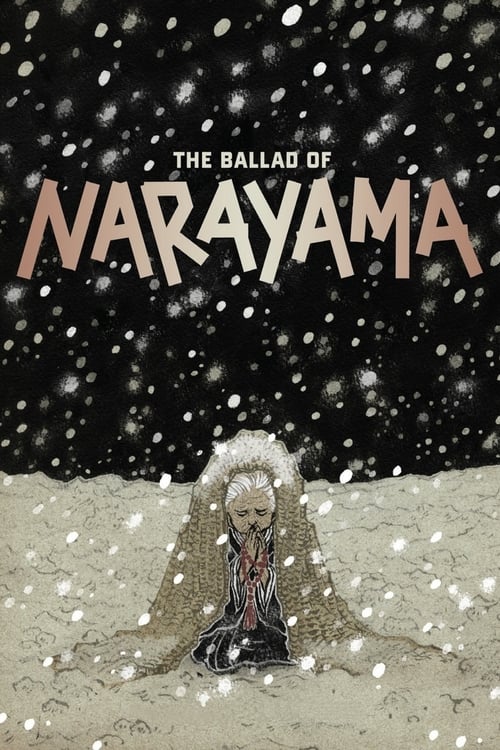
In a remote village where food is scarce, elders who reach the age of 70 are carried by their children to the top of a nearby mountain to die in solitude. Orin, a vibrant 69-year-old grandmother, has accepted her fate — but struggles to prepare the rest of her family for the ritual.

The Ballad of Narayama

1958
Brother
N/A

The drama depicts the lives and loves of people living in three different environments: a family consisting of two brothers and their parents; a family with a father and a daughter who are not well organized; and a girl who has moved from the countryside to Tokyo to live alone in the whirlwind of the big city, desperately trying to survive.

Brother

1969
Wagako wa Tanin
N/A

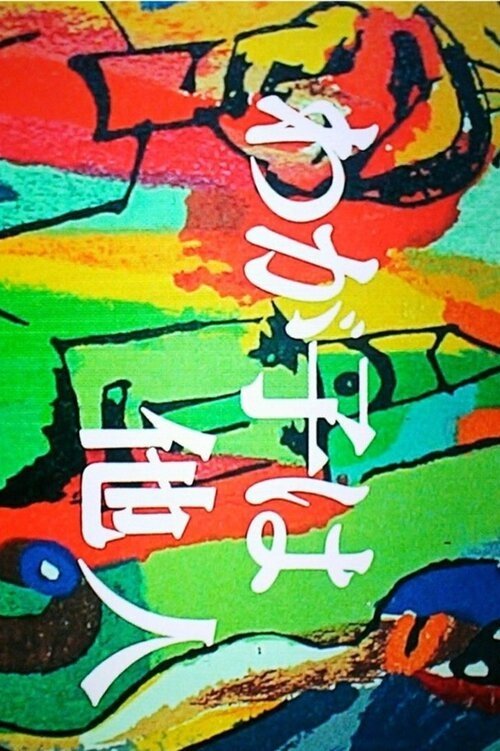
The drama is about the suffering of two families whose babies were mistaken for each other in the hospital.

Wagako wa Tanin

1974
Kōfuku Sōdan
N/A

A light-hearted comedy about love, fortune telling and songs of life that begins when a couple of sisters and brothers meet. It depicts a group of coming-of-age men and women earnestly seeking for love.

Kōfuku Sōdan

1972
Dodes'ka-den
7.1

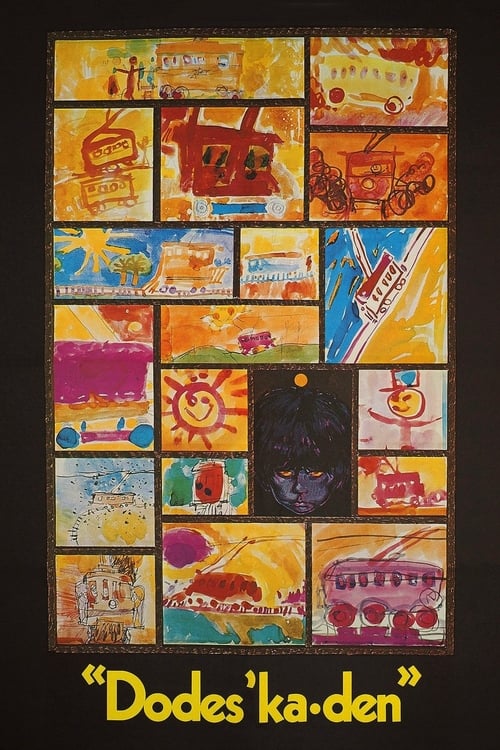
On a Tokyo dump’s shantytown edge, interwoven vignettes follow residents scraping by: a boy who “drives” an imaginary trolley, a homeless father and son designing a dream house, a young woman brutalized at home, drunks, schemers, and saints of small kindnesses. Kurosawa crafts a ragged mosaic of hardship, fantasy, and flickers of grace that keep people moving forward.

Dodes'ka-den

1970
The Living Magoroku
6.8

A wealthy family will not allow the military to grow crops on their fields due to their superstitious beliefs about their son's illness.

The Living Magoroku

1943
The Garden of Women
6.6

A student at a woman's university takes a controversial action against the school's old-fashioned doctrines.

The Garden of Women

1954
Twenty-Four Eyes
7.7

From 1928 to 1946, the lives of 12 young people and their school teacher in a poor Japanese village are profoundly affected by historical events and personal circumstances.

Twenty-Four Eyes

1954
Army
6.8

Though plagued by ill health all his life, a young Japanese man is obligated to fulfill his family's longstanding military tradition.

Army

1944
Kotoshi no Koi
N/A

This cheerful romantic comedy hints at conflicts in a changing society through the friendship between two underachieving teenage boys and the accidental bringing together of their respective siblings.

Kotoshi no Koi

1967
You Were Like a Wild Chrysanthemum
7.0

On the way back to his childhood home, a septuagenarian man recalls his childhood and adolescence, in particular his love for a young woman.

You Were Like a Wild Chrysanthemum

1955