Pierre Boulez
Acting
Biography
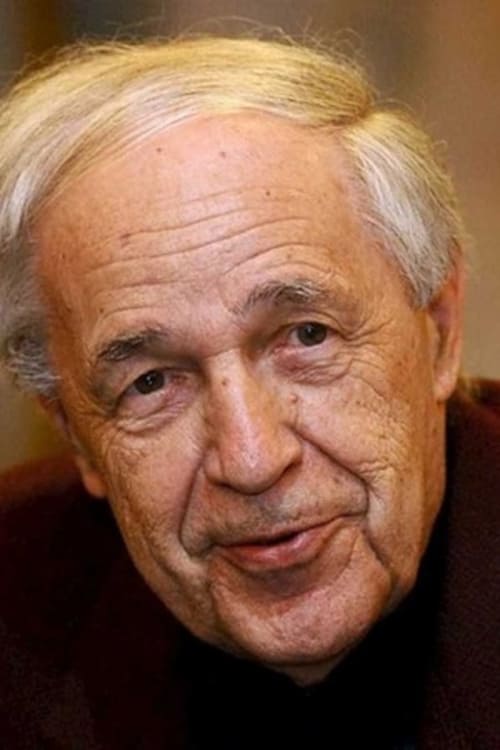
Pierre Louis Joseph Boulez (26 March 1925 – 5 January 2016) was a French composer, conductor and writer, and the founder of several musical institutions. He was one of the dominant figures of post-war contemporary classical music. Born in Montbrison, in the Loire department of France, the son of an engineer, Boulez studied at the Conservatoire de Paris with Olivier Messiaen, and privately with Andrée Vaurabourg and René Leibowitz. He began his professional career in the late 1940s as music director of the Renaud-Barrault theatre company in Paris. He was a leading figure in avant-garde music, playing an important role in the development of integral serialism in the 1950s, controlled chance music in the 1960s and the electronic transformation of instrumental music in real time from the 1970s onwards. His tendency to revise earlier compositions meant that his body of work was relatively small, but it included pieces considered landmarks of twentieth-century music, such as Le Marteau sans maître, Pli selon pli and Répons. His uncompromising commitment to modernism and the trenchant, polemical tone in which he expressed his views on music led some to criticise him as a dogmatist. Boulez was also one of the most prominent conductors of his generation. In a career lasting more than sixty years, he was music director of the New York Philharmonic, chief conductor of the BBC Symphony Orchestra and principal guest conductor of the Chicago Symphony Orchestra and the Cleveland Orchestra. He made frequent appearances with many other orchestras, including the Vienna Philharmonic and the Berlin Philharmonic. He was known for his performances of the music of the first half of the twentieth century—including Debussy and Ravel, Stravinsky and Bartók, and the Second Viennese School—as well as that of his contemporaries, such as Ligeti, Berio and Carter. His work in the opera house included the production of Wagner's Ring cycle for the centenary of the Bayreuth Festival, and the world premiere of the three-act version of Berg's opera Lulu. His recorded legacy is extensive. He also founded several musical institutions. In Paris he set up the Domaine musical in the 1950s to promote new music; in the 1970s he established the Institut de Recherche et Coordination Acoustique / Musique (IRCAM), to foster research and innovation in music, and the Ensemble intercontemporain, a chamber orchestra specialising in contemporary music. Later he co-founded the Cité de la musique, a concert hall, museum and library dedicated to music in the Parc de la Villette in Paris and, in Switzerland, the Lucerne Festival Academy, an international orchestra of young musicians, with which he gave first performances of many new works. ... Source: Article "Pierre Boulez" from Wikipedia in English, licensed under CC-BY-SA 3.0.
Known For

The Dick Cavett Show has been the title of several talk shows hosted by Dick Cavett on various television networks.
The Dick Cavett Show

No description available.
Kulturplatz

No description available.
Victoires de la musique

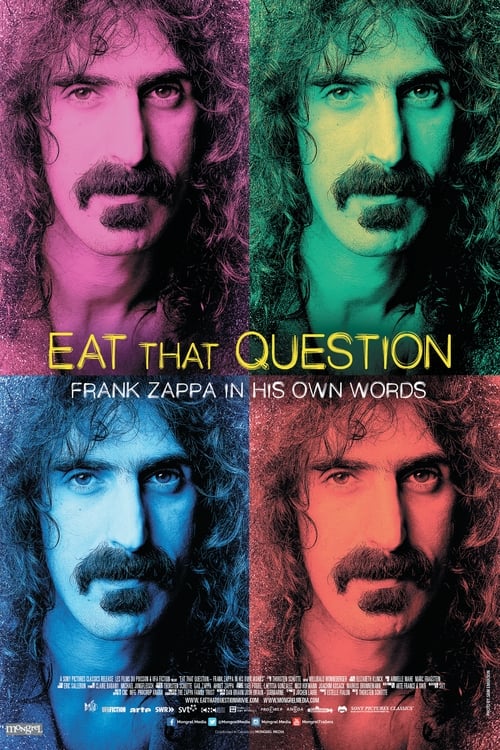
With the help of more than 10,000 dedicated Zappa fans, this is the long-awaited definitive documentary project of Alex Winter documenting the life and career of enigmatic groundbreaking rock star Frank Zappa. Alex also utilizes in this picture thousands of hours of painstakingly digitized videos, photos, audio, writing, and everything in between from Zappa's private archives. These chronicles have never been brought to a public audience before, until now.
Zappa

Utilizing potent TV interviews and many forgotten performances from his 30-year career, we are immersed into Frank Zappa’s world while experiencing two distinct facets of his complex character. At once Zappa was both a charismatic composer who reveled in the joy of performing and, in the next moment, a fiercely intelligent and brutally honest interviewee whose convictions only got stronger as his career ascended.
Eat That Question: Frank Zappa in His Own Words

No description available.
En direct de...

The third opera in Richard Wagner's epic Ring cycle, Siegfried follows the adventures of the son of demigods Siegmund and Sieglinde as he conquers his enemies and rescues the beauteous Brunnhilde with the help of his magic sword. This video preserves the controversial 1976 Bayreuth Centenary production, with Pierre Boulez leading the Bayreuth Festival Orchestra. Manfred Jung leads the cast as Siegfried, with Gwyneth Jones as Brunnhilde, Donald McIntyre as the Wanderer, and Hermann Becht as Alberich.
Wagner: Siegfried
Two partisan views of a controversial issue.
Split Screen

Set in a Siberian prison camp, Janacek's final opera centers on the experiences of recent arrival Alexandre Petrovitch Goriantchikov (Olaf Bar), a nobleman who finds relief from the harsh conditions in the friendship of the illiterate Alyeya (Eric Stoklossa). Recorded at the Grand Theatre de Provence, this stage production is directed by the well-respected Patrice Chereau and features famed conductor Pierre Boulez. Filmed at the Aix-en-Provence Festival on 20 July 2007.
From the House of the Dead

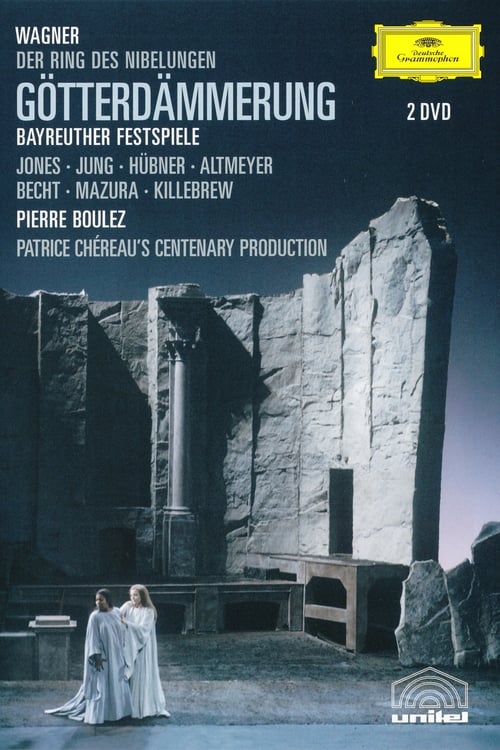
Götterdämmerung, the fourth of Richard Wagner's four Ring operas. The cast features Manfred Jung as Siegfried and Gwyneth Jones as Brünnhilde, with music provided by Bayreuther Festspiele Orchester conducted by Pierre Boulez. This title is available in a boxed set with the other Ring operas, Das Rheingold, Die Walküre, and Siegfried.
Wagner: Götterdämmerung

The second part of Patrice Chérau's epoch-making Bayreuth Ring is a radical re-imagining of Die Walküre, unprecedented in its psychological penetration. This production of " Die Walkure," staged as part of Patrice Chereau's Centenary celebration marking the 100th anniversary of the completion of the "Ring," this lavish performance features Donald McIntyre as Wotan, Peter Hofmann as Siegmund, and Gweneth Jones as Brunnhilde; Pierre Boulez conducts the Orchester Der Bayreuther Festspiel.
Wagner: Die Walküre

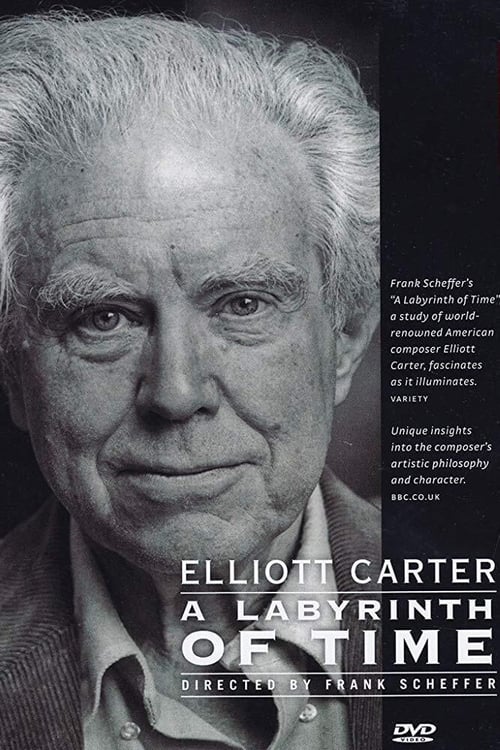
Carefully composed portrait of prominent modern composer Elliott Carter (1908-1912). Scheffer depicts both the person and the development in his music and the musical tradition it grew out of, as well as the time in which the American Carter grew up. The result: historical images of the city of New York, old film footage, cinematographic finds to illustrate the music and statements by conspicuous fellow-composers and musicians, including Pierre Boulez and Daniel Barenboim.
A Labyrinth of Time

No description available.
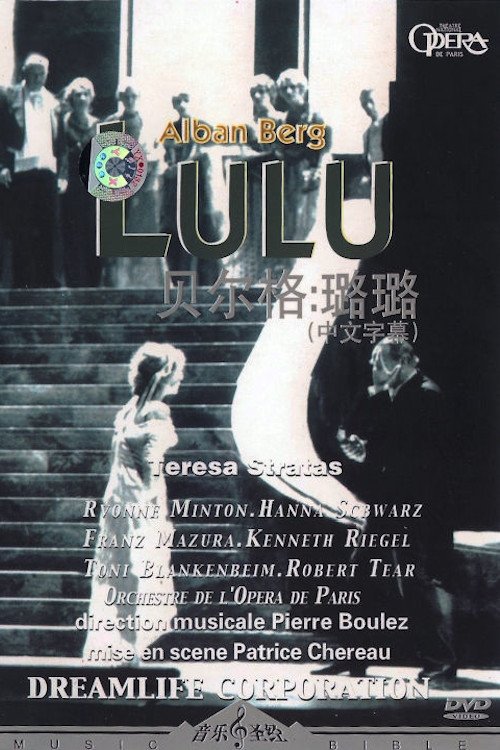
Alban Berg - Lulu
Frank Zappa: The Present-Day Composer Refuses To Die is a 2000 documentary about Frank Zappa.
Frank Zappa: The Present-Day Composer Refuses To Die
In the centenary year since the founding of the Ballets Russe, this documentary looks back at Sergei Diaghilev and the company he created, what they did and the influence they had, even a 100 years later.
For Art's Sake: The Story of Ballets Russes
Frank Zappa: Phase Two is a 2002 documentary about Frank Zappa. It features a lot of footage from Scheffer's previous film, but new material from Malcolm McNab's private achive.
Frank Zappa: Phase II - The Big Note

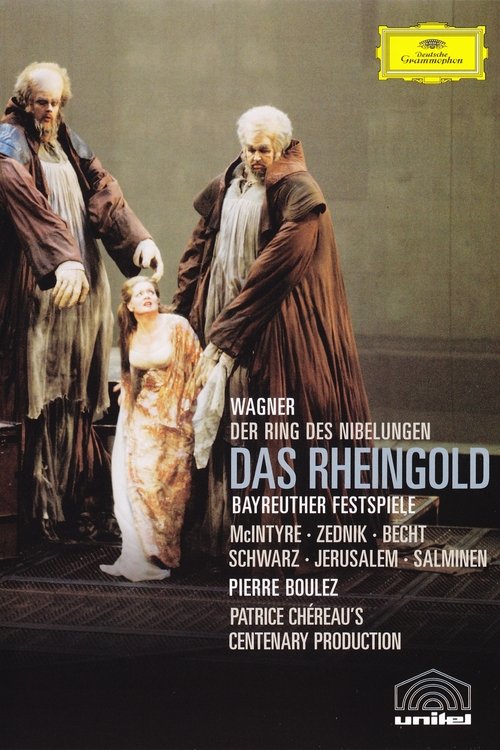
This is a beautifully conducted and thoughtfully staged performance of the first opera (the prologue) in Wagner's Ring Cycle. As soon as the clouds of mist have dissipated, while the daring, long-held opening chord is still reverberating, the screen clears to show not only the River Rhine and the three maidens (dressed like prostitutes in this production) assigned to guard the gold hidden there. It also shows an enormous dam (not mentioned in Wagner's text). This is the underwater base of a hydroelectric plant, and its presence tells us two things immediately: that this production takes the story out of the vaguely medieval fantasy world in which Wagner had placed it, and that a basic theme of the four-opera cycle would be power. Alberich, the Nibelung, is willing to renounce the love of women, after stealing the gold from the Rhine, to become the ruler of the world. Another basic theme is greed.
Wagner: Das Rheingold

Shot over a two-year period observing Abbado: a) Rossini, Overture to 'll Barbiere di Siviglia' b) Schubert, Symphony no. 2 B-Major, D. 125 c) Arnold Schonberg, Kammersinfonie no. 1 E-Major op. 9 (Filmed in Venice, Gran Teatro La Fenice, in February 1995, Chamber Orchestra of Europe). a) Richard Strauss, Elektra (Deborah Polaski, Karita Mattila, Marjana Lipovsek, Ferrucio Furlanetto) b) Beethoven, Symphony no 6 F-Major, op. 68, 'Pastorale' (Filmed in the Festspielhaus Salzburg on the occasion of the Easter Festival, April 1995, Berlin Philharmonic). a) Beethoven, Concerto for piano and orchestra no. 3 C-MINOR, OP. 37 (Maria Joao Pires) b) Bruckner, Symphony no. 9 D-Minor (Filmed in Paris, Cite de la Musique, in August 1995, Gustav Mahler Youth Orchestra).
Abbado: The Silence that Follows the Music

The Philharmonie de Paris celebrates its tenth anniversary and invites Klaus Mäkelä and Gustavo Dudamel to perform a concert of changing colours, from modernism to impressionism, with works by Boulez, Beethoven, Poulenc, Moussorgski and Ravel.
Klaus Mäkelä and Gustavo Dudamel 10 year anniversary of the Philharmonie de Paris

To celebrate the centenary of Pierre Boulez's birth, ARTE invites you to (re)watch an extract from the opening concert of the Pierre Boulez Hall in Berlin in March 2017. Daniel Barenboim conducted the Boulez Ensemble there in a dazzling performance of Sur Incises, composed by Pierre Boulez between 1996 and 1998.