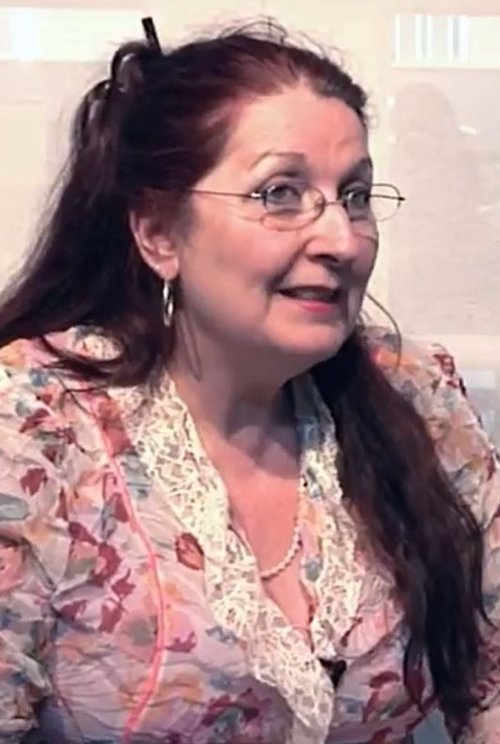
Suzan Vachon
Directing
Biography
Suzan Vachon is an artist with interdisciplinary training. She taught Activités vidéographiques and Recherches vidéographiques at the Université de Montréal’s Pavillon Mont-Royal for 12 years. She has taught at the École des arts visuels et médiatiques at UQAM since 1992. Vachon is interested in the metamorphosis of form and meaning through compositional work with still and moving images. Her research deals with the haptic dimension of image, sound and text and is part of a continuum of work centred around the archive, literature, cinema and the imaginaire of languages. Her videographic and interdisciplinary works have been shown in Canada, the United States, South America, Palestine and several European countries.
Known For

A videopoem on a text by Hélène Monette.
En prière dans le champ magnétique

Following in the footsteps of Goethe, Stendhal and numerous anonymous travellers, the author desires to recreate the famous Roman itinerary. She trades the archaic travel diary for a video camera, and uses the contemporary means that it offers to the traveller. To each his own alibi; places, dates and all details possessing touristic interest are hidden, in the quest of impressions and lasting images, which are inevitably swept away by time.
Palimpseste sentimental
![Chant [dans les muscules du chant]](https://image.tmdb.org/t/p/w500/eAaMXWVGUgFMcR4faXQszz52sfc.jpg)
Chant [dans les muscules du chant] is a video composed primarily of film archives from the first half of the twentieth century. The product of careful and selective research literally enflamed by the conceptual motor “film flame”.
Chant [dans les muscules du chant]
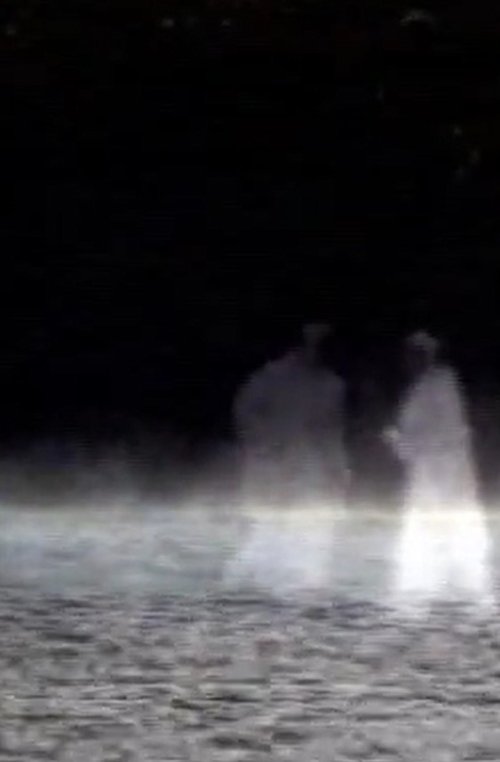
"For Les Heures d'argent, des illuminations, I have tried to make an installation of the conditions in wich sudden images appear, to interrogate oscillatory phenomena such as presence, disapearance, and to represent them in a luminous way. Thus, the research consists in revealing in each sequence incredible light situations wich, as suggested by the title, sometimes depend on atmospheric accidents. Each sequence, as if it where an Illumination will reflect light as a phenomenon. Among these, let us mention mirage, scintillation, dazzle and radiance - manifestations with a halo. Finally, the selected poetic fragments from Rimbaud's Illuminations introduce words that create acoustic sparkles within the space and tension with the image. They do not only increase the semantic potential of the image but also, and hopefully, add starlight to it." - Suzan Vachon
Les Heures d'argent, des illuminations
A question of perspective, 1958 - 1992. In an elliptical train of fragmentary and associative imagery, Discours des comètes explores the difficulty sometimes experienced in the act of distinguishing dreams from memory; this ambiguity is called troubled vision. Images pass, comets: small and luminous bodies traced onscreen; luminous, glorious, celestial orbs, firing deep impressions. Pregnant memories, boats, men, virtual drowning, anguished dreams. Now, as then, dream and memory give their accounts.
Discours des comètes
A feminine character stages fragments of paintings through dance. The metaphoric body constitutes the essence of this artwork. Two narrations are conjugated in the present and in the past : one speaks of the human quest for survival and the threat of man's intervention in nature, while the other evokes a wild nature where characters and animals are emerging. Paintings of Caravagio, Della Francesca, and Douanier Rousseau overlap the two accounts.