Directing
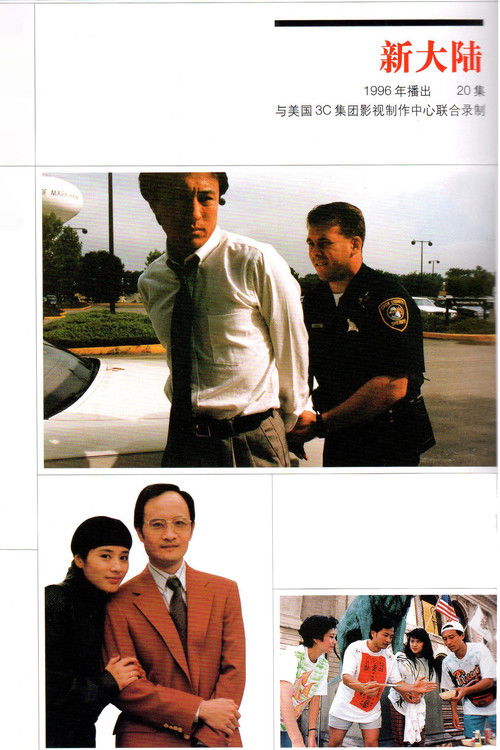
Overseas Chinese making a life for themselves in Chicago. A Chinese-U.S. joint production, shot in 1993 and released in 1996.
No description available.
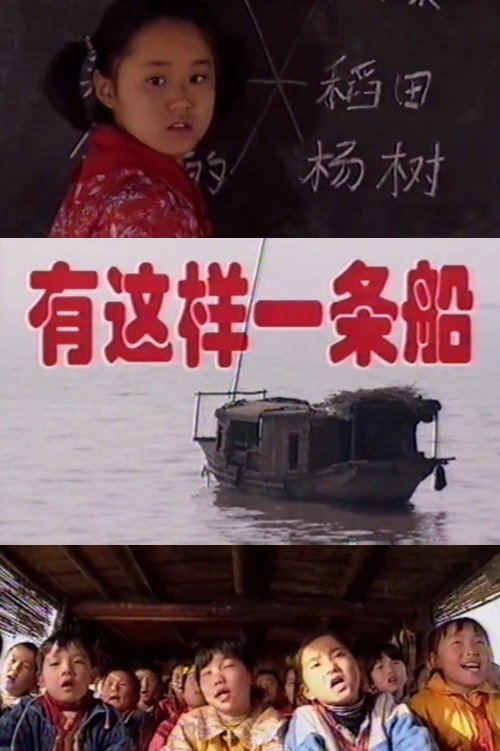
Teacher An has spent nearly thirty years teaching the children of fishing families on Hongze Lake, carrying education from boat to boat while sacrificing his own life ashore. After a professional evaluation shakes his faith in the value of his work, he is forced to confront the cost of his devotion: his late wife, his children, and the possibility of a new family with Yueying, a woman who seems willing to share his hardships. As local officials and former students try to arrange a successor and a better school boat, An struggles between personal happiness and the weight of responsibility to his students.
Chen Jue's student graduation film for the Beijing Broadcasting Academy.
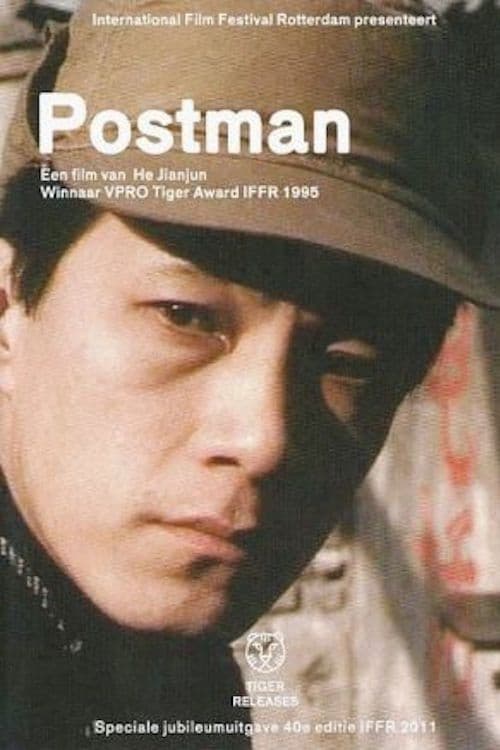
Xiao Dou is a shy and naive mailworker living in Beijing with his sister. When a coworker is fired for reading people's correspondences Xiao Dou takes over the same mail route. He soon finds himself indulging in the same curiosity, eventually developing an obsession. Xiao Dou chooses to spend time reading letters instead of socializing with friends or coworkers. As he becomes increasingly tied to the letters, he begins to intervene in the lives of those who write and receive the letters.
“Only One Earth” (只有一个地球) is a pioneering Chinese environmental documentary series presented in four parts. The project was produced by CCTV with support from state environmental authorities (then the National Environmental Protection Agency, now the Ministry of Ecology and Environment), but it did not pass censorship and was not permitted to air. (It was originally planned to premiere on the first celebrated Earth Day in China in 1990.) It approaches ecological crisis through an experimental, essayistic lens shaped by the concerns of reform-era Chinese intellectuals, confronting the toll of global industrialization. Directed by Chen Jue (a member of SWYC, the same collective behind the following year's banned Tiananmen series), Only One Earth uses literary, academic, and archival materials alongside a visual style influenced by experimental cinema.
A CCTV-commissioned, 8-part series shot between 1988 and 1990, but barred from being released after the events of June 4th. A production of the Structure, Wave, Youth, Cinema (SWYC) Experimental Group, an informal collective of young filmmakers founded in the summer of 1989 and devoted to the production of documentaries, that includes: this series' two directors, Shi Jian and Chen Jue, as well as Beijing TV's Wang Zijun, and this series' screenwriter, Kuang Yang (under the name Guang Yi). Tiananmen documents various aspects of life surrounding the Square: survivors of the imperial era, street performers, fledgling entrepreneurs, fashion school students, foreigners marrying Chinese nationals, and so forth. Each episode starts with a close-up of a giant portrait of Mao hung over the Square, and proceeds as a hybrid of archival footage, direct cinema, and cinema verité, weaving a permanent dialectic between the present and the past, daily life and history.
Experimental short on various objects, made in 1994.
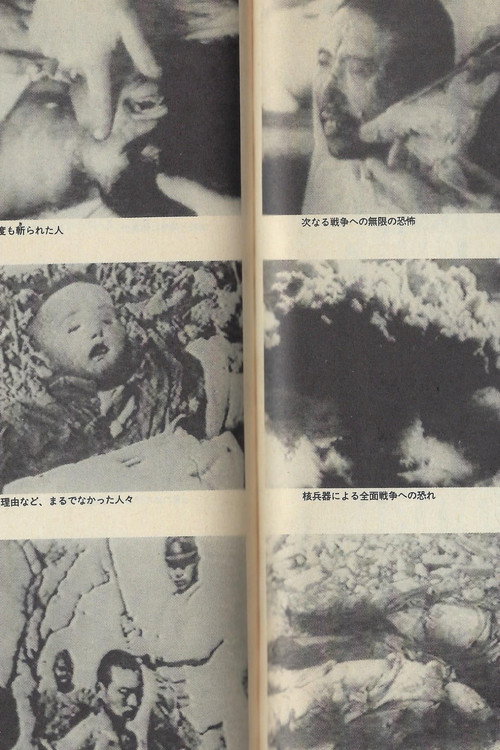
A documentary produced to disseminate historical truth about the 1937 Nanjing Massacre to international audiences. It records the Shorinji Kempo Organization of Japan’s 40th-anniversary visit to China, but rather than serving as a simple travelogue, it uses the 299 participants’ journey—beginning in Nanjing—as a confrontation with the facts of Japan’s wartime aggression and the choices demanded in the present. Through Chinese filmmakers’ perspectives, testimony, archival images, and narration addressing the Nanjing Massacre, nuclear war, militarization, and historical responsibility, the film asks viewers to reject indifference, self-justification, and the concealment of inconvenient history. It argues that peace cannot remain an abstract ideal or be left to governments and power-seekers; each person must begin from the shared human right to survival, face history honestly, and choose concrete action toward mutual understanding and peace.