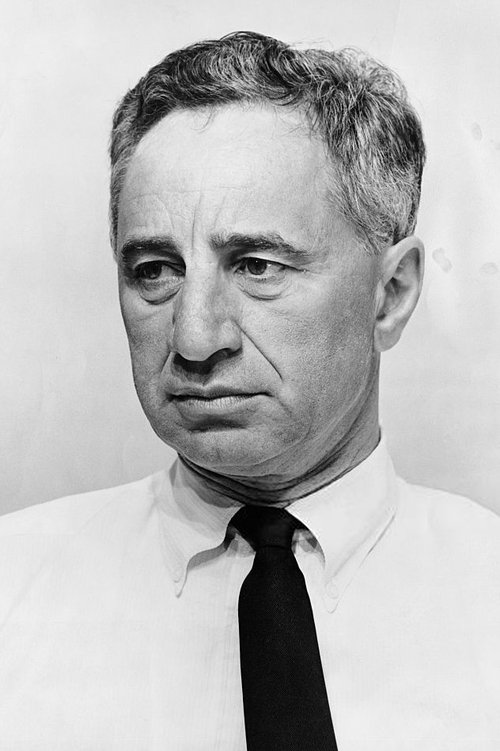
Elia Kazan
Directing
Biography
Elia Kazan ( September 7 , 1909, Kayseri – September 28, 2003) was a Greek-American director and actor, described as "one of the most honored and influential directors in Broadway and Hollywood history". He also produced, and wrote screenplays and novels. Born in the Kayseri, Ottoman Empire to Greek parents, they emigrated to New York when he was four. After two years studying acting at Yale, he acted professionally for eight years before becoming a stage and film director. Kazan co-founded the influential Group Theater in 1932 and Actors Studio in 1947, and together with Lee Strasberg, introduced Method acting to the American stage and cinema as a new form of self-expression and psychological "realism". Having been an actor himself for eight years, he brought sensitivity and understanding of the acting process, and was later considered the ideal "actor's director". He himself acted in only a few films, including City for Conquest (1940), alongside James Cagney. Overall, Kazan influenced the films of the 1950s and 1960s by his run of provocative, issues-driven subjects, and acting. Moreover, his personal brand of cinema, employing real locations over sets, unknowns over stars, and realism over convenient genres, proved influential to a whole generation of independent filmmakers in the 1960s. Film author Ian Freer concludes that "If his achievements are tainted by political controversy, the debt Hollywood — and actors everywhere — owes him, is enormous." In 2010, Martin Scorsese co-directed the documentary film, A Letter to Elia, as a personal tribute to Kazan, who he credits as the inspiration for his becoming a filmmaker.

Known For

The Mike Douglas Show is an American daytime television talk show hosted by Mike Douglas that originally aired only in the Cleveland area during much of its first two years on the air. It then went into syndication in 1963 and remained on television until 1982. It was distributed by Westinghouse Broadcasting and for much of its run, originated from studios of two of the company's TV stations in Cleveland and Philadelphia.
The Mike Douglas Show

No description available.
The Merv Griffin Show

An annual American awards ceremony honoring cinematic achievements in the film industry. The various category winners are awarded a copy of a statuette, officially the Academy Award of Merit, that is better known by its nickname Oscar.
The Oscars

Apostrophes was a live, weekly, literary, prime-time, talk show on French television created and hosted by Bernard Pivot. It ran for fifteen years (724 episodes) from January 10, 1975, to June 22, 1990, and was one of the most watched shows on French television (around 6 million regular viewers). It was broadcast on Friday nights on the channel France 2 (which was called "Antenne 2" from 1975 to 1992). The hourlong show was devoted to books, authors and literature. The format varied between one-on-one interviews with a single author and open discussions between four or five authors.
Apostrophes

The Dick Cavett Show has been the title of several talk shows hosted by Dick Cavett on various television networks.
The Dick Cavett Show

Marcello Mastroianni, Isabelle Adjani, Alain Delon, Martin Scorsese, Woody Allen... the biggest stars in cinema were welcomed by Christian Defaye on his show Spécial cinéma. Between intimate confessions from actors and immersion in the world of the greatest filmmakers, Christian Defaye took viewers on a journey into the fascinating world of cinema for nearly thirty years.
Spécial cinéma

No description available.
Cinépanorama

The Kennedy Center Honors is an annual honor given to those in the performing arts for their lifetime of contributions to American culture.
The Kennedy Center Honors
No description available.
Die Drehscheibe

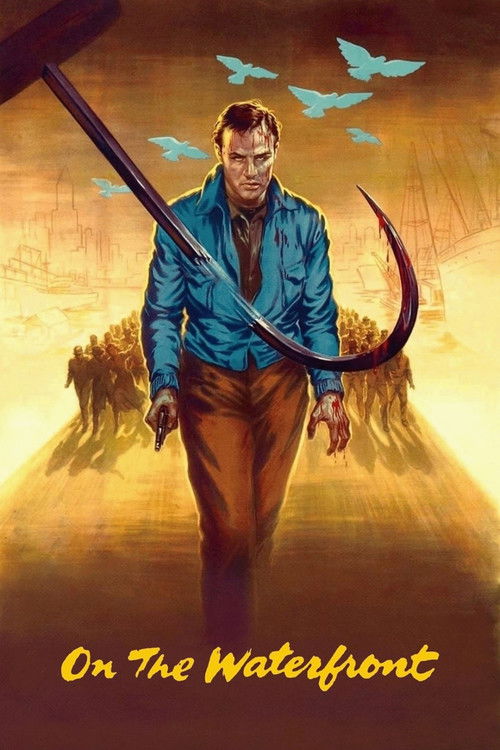
A prizefighter-turned-longshoreman with a conscience goes up against labor leaders to expose corruption, extortion, and murder among the union ranks.
On the Waterfront

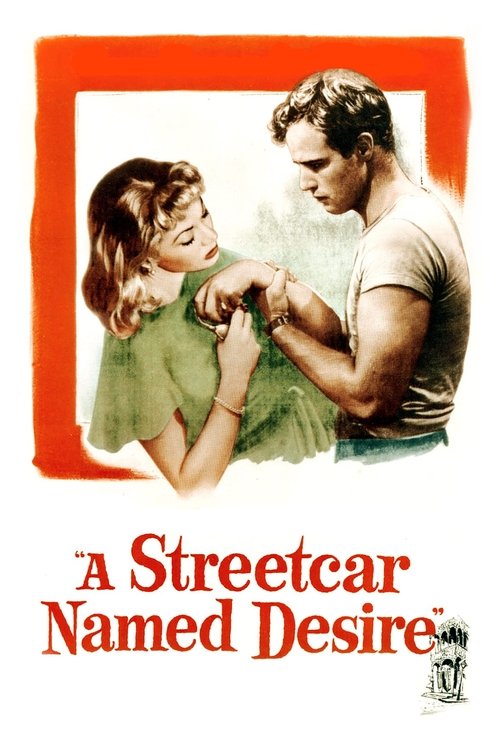
A disturbed, aging Southern belle moves in with her sister for solace — but being face-to-face with her brutish brother-in-law accelerates her downward spiral.
A Streetcar Named Desire

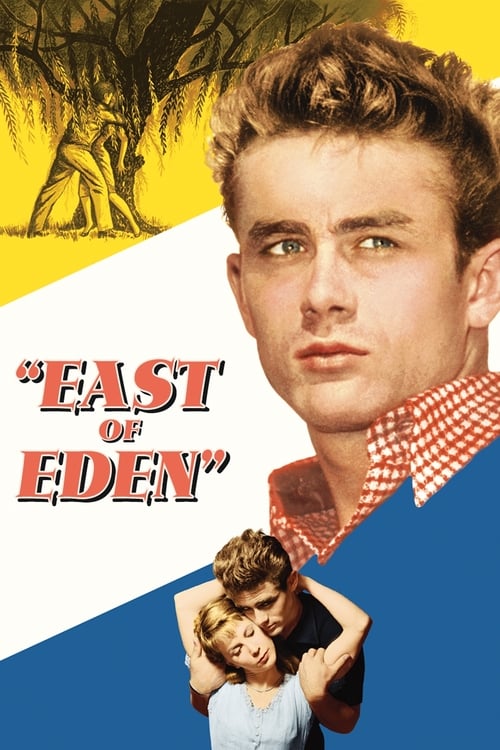
In the Salinas Valley in and around World War I, Cal Trask feels he must compete against overwhelming odds with his brother for the love of their father. Cal is frustrated at every turn, from his reaction to the war, how to get ahead in business and in life, and how to relate to his estranged mother.
East of Eden

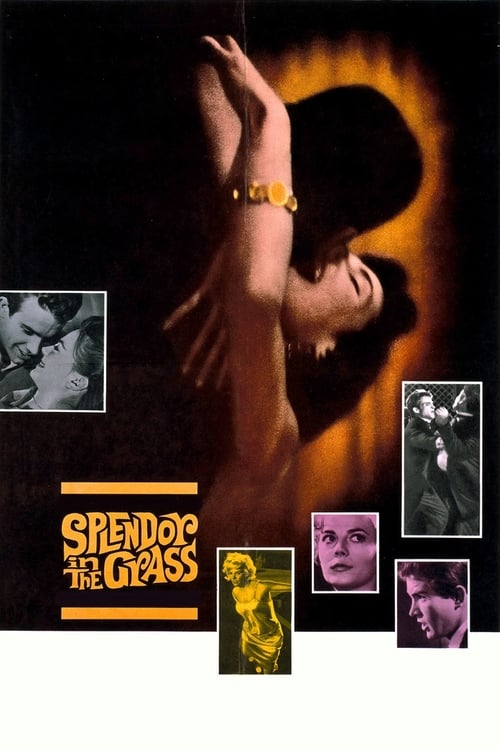
A fragile Kansas girl's unrequited and forbidden love for a handsome young man from the town's most powerful family drives her to heartbreak and madness.
Splendor in the Grass

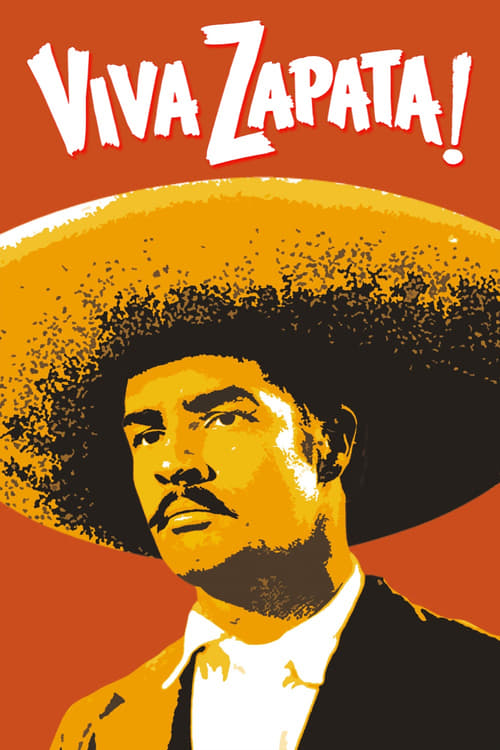
The story of Mexican revolutionary Emiliano Zapata, who led a rebellion against the corrupt, oppressive dictatorship of president Porfirio Díaz in the early 20th century.
Viva Zapata!

Archie Lee Meighan is a failing cotton gin owner who is married to Baby Doll, a 19-year old childlike beauty whose father arranged the marriage for financial reasons. As Archie awaits the arrival of Baby Doll's 20th birthday, the day that they are supposed to consummate their marriage, he faces interference from business rival Silva Vacarro, who plots to seduce Baby Doll away from Meighan.
Baby Doll

A young Anatolian Greek, entrusted with his family's fortune, loses it en route to Istanbul and dreams of going to America.
America America

Pinky, a light skinned black woman, returns to her grandmother's house in the South after graduating from a Northern nursing school. Pinky tells her grandmother that she has been "passing" for white while at school in the North. In addition, she has fallen in love with a young white doctor, who knows nothing about her black heritage.
Pinky

The rise of a raucous hayseed named Lonesome Rhodes from itinerant Ozark guitar picker to local media rabble-rouser to TV superstar and political king-maker. Marcia Jeffries is the innocent Sarah Lawrence girl who discovers the great man in a back-country jail and is the first to fall under his spell.
A Face in the Crowd

In Brooklyn circa 1900, the Nolans manage to enjoy life on pennies despite great poverty and Papa's alcoholism. We come to know these people well through big and little troubles: Aunt Sissy's scandalous succession of "husbands"; the removal of the one tree visible from their tenement; and young Francie's desire to transfer to a better school...if irresponsible Papa can get his act together.
A Tree Grows in Brooklyn

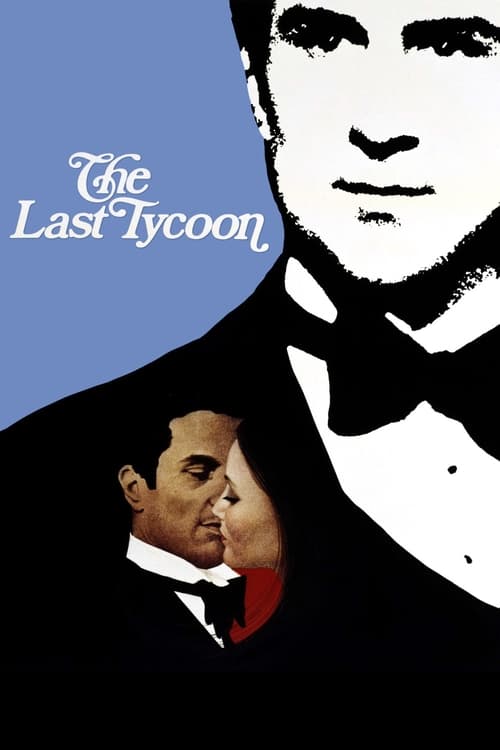
Monroe Stahr, a successful movie producer, pursues a beautiful and elusive young woman — all the while working himself to death.