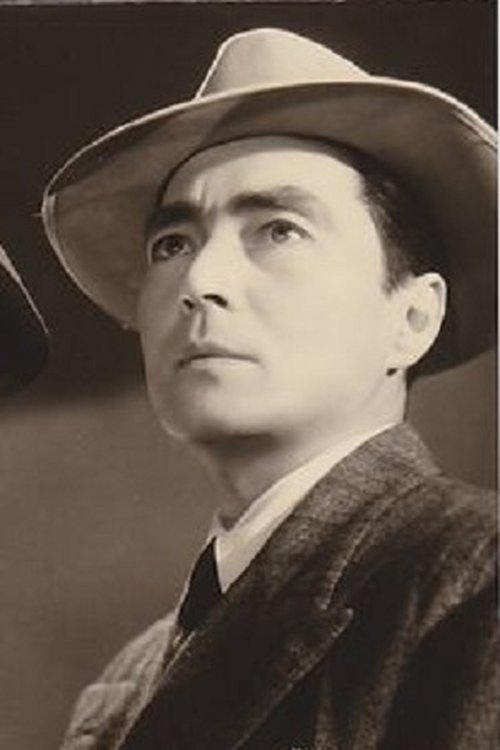
Joji Oka
Acting
Biography
Joji Oka, born in Tokyo, Japan, on May 25, 1902, was a renowned Japanese actor celebrated for his versatile roles in the film industry. His given name was Katsuzo Nakamizo, and he also used alternate names, including Susumu Minobe. Oka embarked on his cinematic journey in the late 1920s, making his debut with the film "Ryuko no Maki Tora no Maki" in 1928. He rose to prominence as a leading actor in movies like "Akai Hi Aoi Hi" (Red Lights, Blue Lights) in 1929. His influence extended across silent and sound films, where he showcased his remarkable voice and talent. In the early 1930s, Oka encountered personal and professional challenges, including a romantic involvement with actress Ran Koizumi and a subsequent disappearance incident. Later, he joined Toho Studios, further solidifying his position as a leading actor. Notable works, such as "Shiroi Kinjo" (White Robes) in 1936, featured his exceptional talents. During World War II, Oka served in the Imperial Japanese Army while simultaneously pursuing his acting career. Following the war, he resumed his involvement in filmmaking and garnered recognition for his roles in movies like "Kanchi eizu Seiretsu" (The Ambitious Gang) in 1954. Oka's career spanned from the late 1920s to the late 1960s, showcasing his versatility and skill in various genres, encompassing modern drama, period pieces, and action films. He passed away on December 17, 1970, at the age of 68, leaving behind a legacy of memorable performances within the realm of Japanese cinema.
Known For
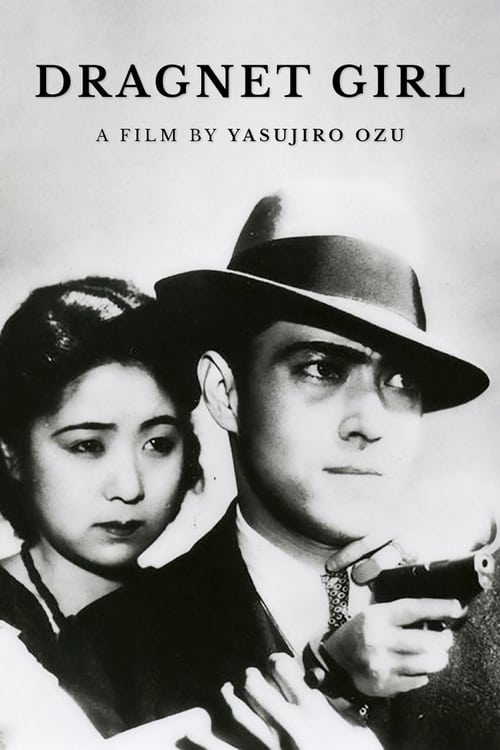
A gangster tries to find redemption with the inadvertent help of an innocent shop girl and his jealous girlfriend will do anything to keep him.
Dragnet Girl
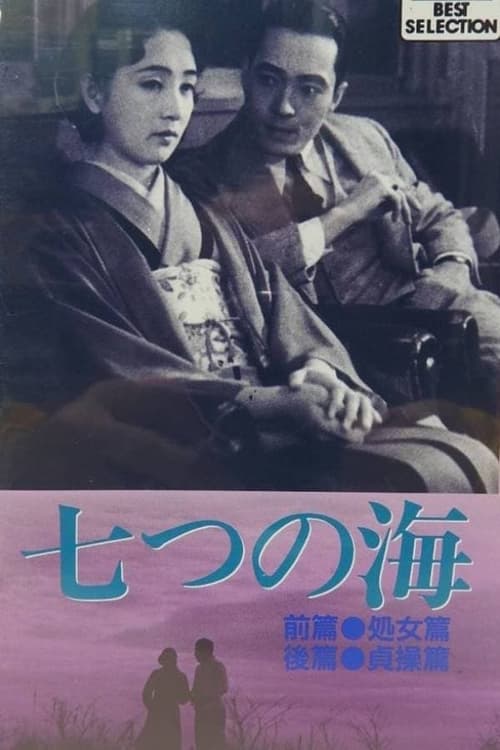
Part two of Shimizu's major silent Seven Seas, a family drama of the intertwining fates of the rich, decadent Yagibashis and the far less prosperous Sone family.
Seven Seas: Chastity Chapter
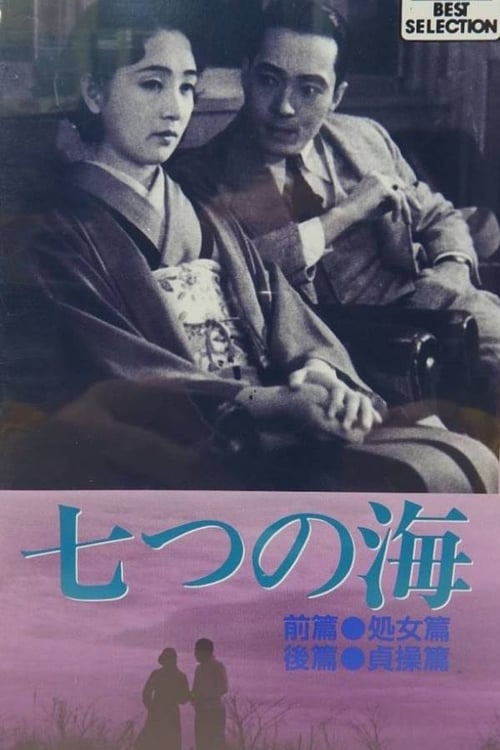
The film is a lengthy work interweaving characters from different backgrounds and social strata in a narrative centered around the experiences of its heroine, Yumie Sone. Over two hours long, Seven Seas was released theatrically in two parts, with the first part entitled "Virginity Chapter" coming out in December 1931, while the second part, "Chastity Chapter," followed in March 1932. Near the beginning of the narrative, at a garden party given by the wealthy Yagibashi family in Tokyo, Yumie meets Takehiko, the Yagibashis' playboy son and the brother of Yumie's fiancé, Yuzuru. Yumie, a young middle-class woman, lives with her ailing father, a retired ministry official, an older sister, and a younger sister still a child (played by a very young Hideko Takamine). Takehiko, who has just returned from a trip to Europe, is attracted to Yumie and contrives to have her stay overnight at his family's mansion where he takes advantage of her.
Seven Seas: Virginity Chapter
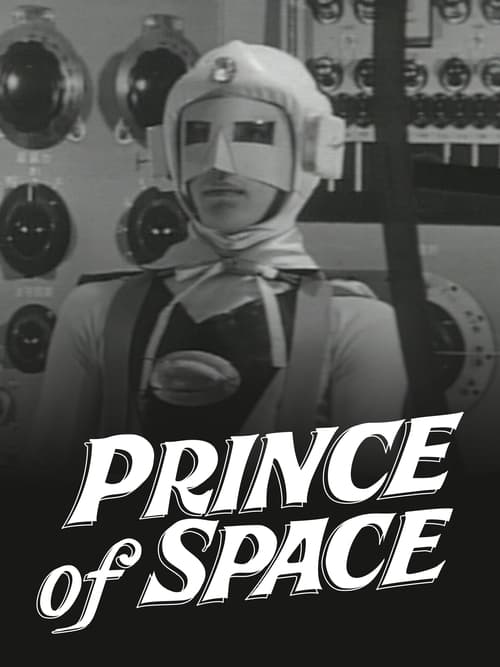
Attracted by the report of the development of a new type of rocket fuel, the vicious dictator of Krangkor, the dark planet, descends on Earth to steal the formula from its creator, the benevolent Dr. Makin.
Prince of Space
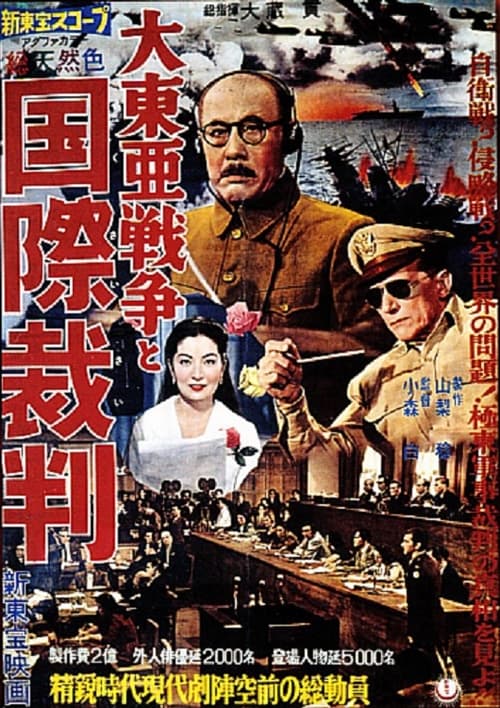
In 1941, overpopulated Japan faces an economic boycott and its armed forces push further to the south. And despite negotiations between Japan and the U. S. A. war is declared with the attack on Pearl Harbour. Victories follow for Japan on land and sea and her forces push forward to the borders of India. But gradually the tide turns in favour of the Allies and after the atom bombings of Hiroshima and Nagasaki, Japan is compelled to accept the Potsdam Declaration and by the order of the Emperor agrees to unconditional surrender. Under the supervision of the occupation forces the International Military Tribunal opens in Tokyo to try the Japanese war leaders. Established in the cause of justice, and to prevent future aggressive wars the trials drag on for two and a half years. And on December 23, 1948, General Tojo and six other war leaders mount the thirteen steps to the gallows at Tokyo's Sugamo prison.
The Pacific War and the International Military Tribunal
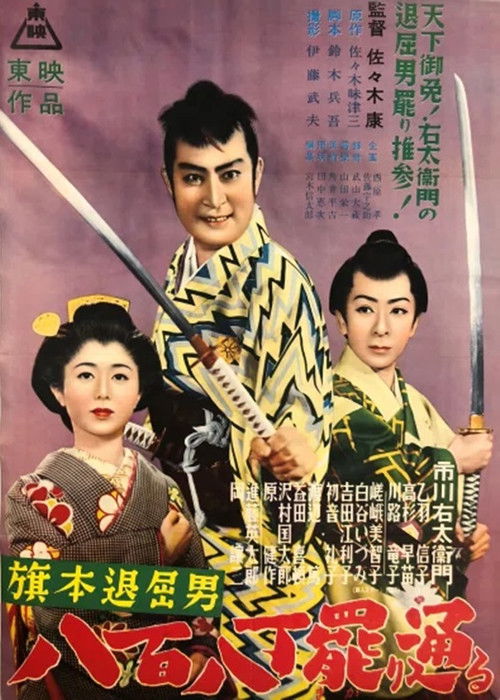
Bored Hatamoto movie #14
Bored Hatamoto Passes By
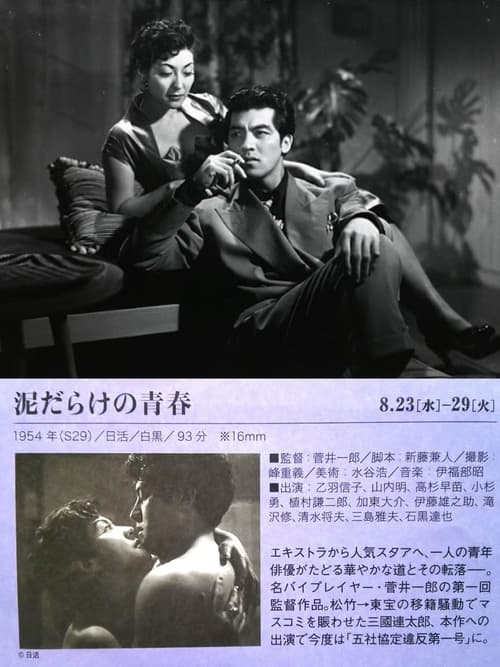
Shigeki Kachi, Tosuke Satomura, and Nanako, who belong to the theater company Vuanbert around Dosa, withdrew at the indignation of the chairman Hayashi and seeked their own careers in the film industry.
Turbid Youth

A swordsman must foil a minister's sinister plan to assassinate the shogun.
The Mansion of Intrigue
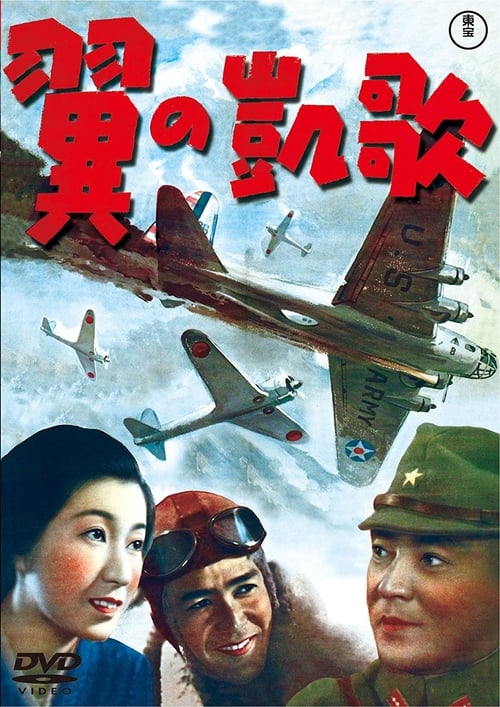
No description available.
Wings of Victory
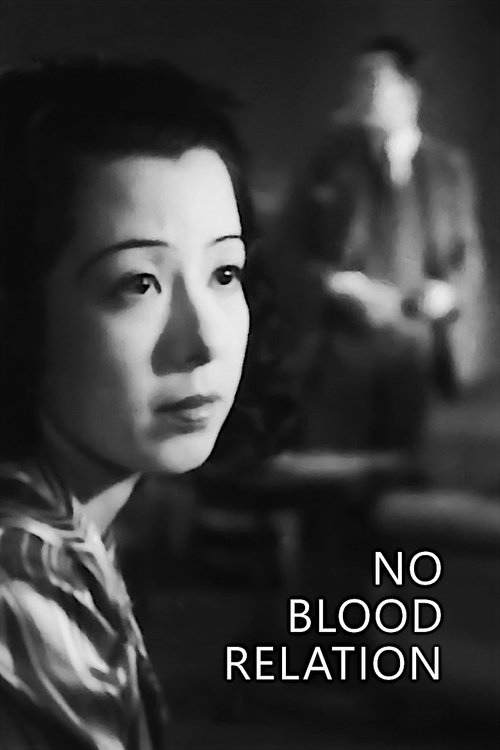
An actress returns to Tokyo after a successful stint in Hollywood to reclaim—with the help of her gangster brother—the daughter she abandoned years before.
No Blood Relation
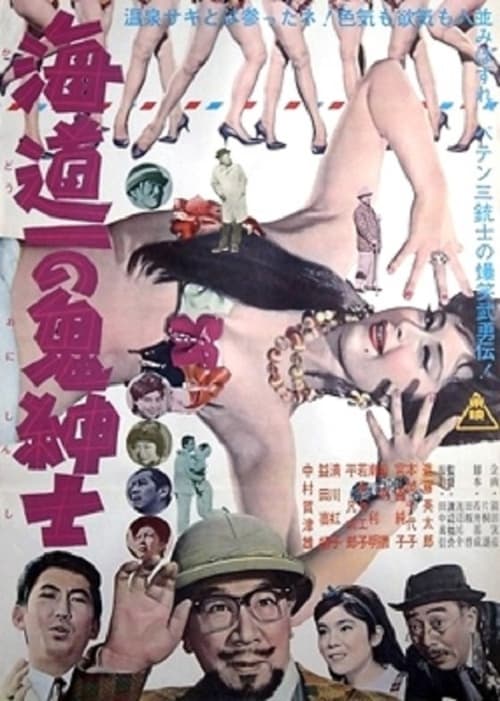
No description available.
A Devil of a Gentleman
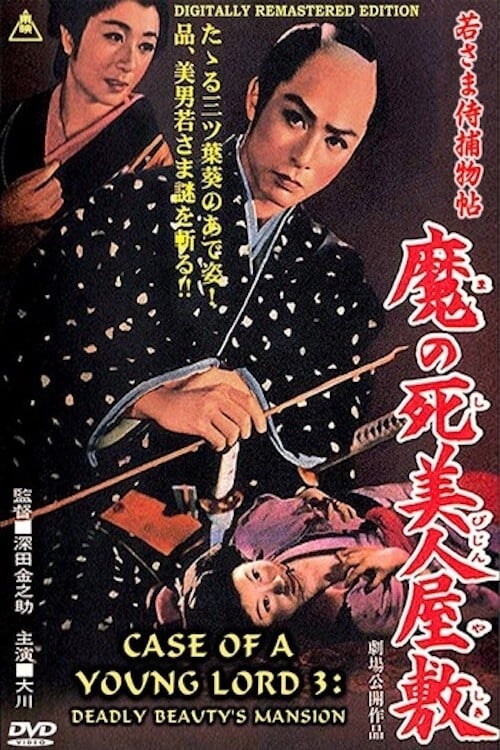
Okawa Hashizo as 'Young Lord', the unlikely sleuth sets out to untangle the riddle of what went on at the Inner Palace, where a young woman who had served the Shogun came home in fear for her life. Will the Young Lord uncover the truth of what went on at the Palace, and does it relate to a series of murders that have been occurring just before the festival?
Case of a Young Lord 3
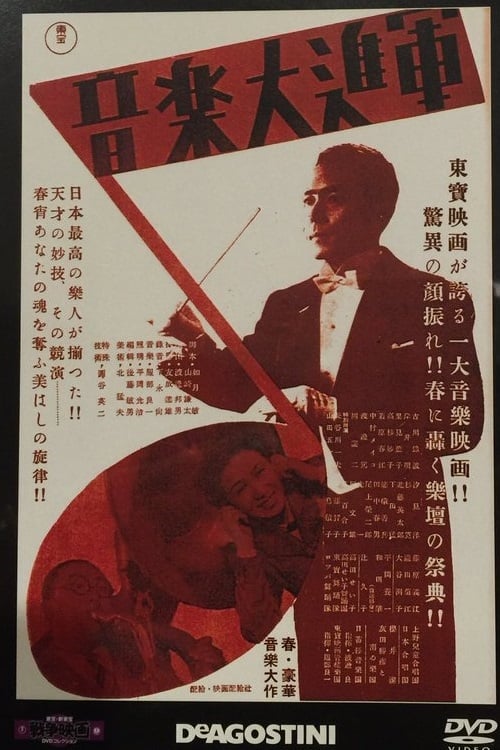
A 1943 film.
音楽大進軍
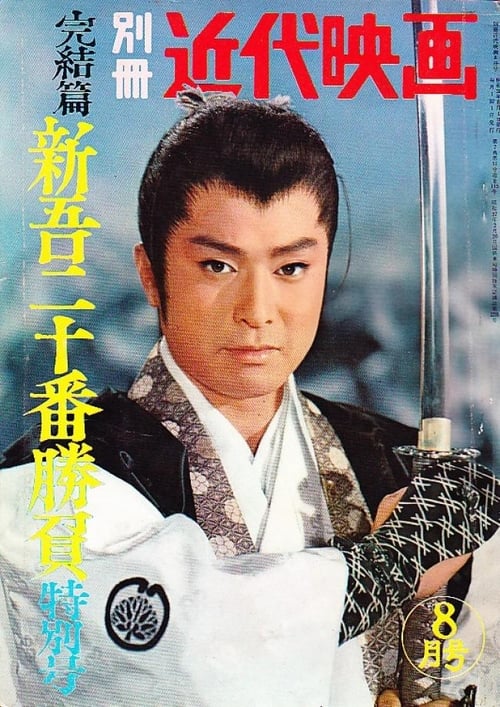
The adventures of Aoi Shingo continue. Shingo is finally given permission to officially meet his father, the Shogun. However, his journey is disturbed by those who wish to claim his life. This is the third part of "THE 10 DUELS OF YOUNG SHINGO", following the first 2 parts (which were actually done as one movie). The tension mounts as young Shingo must face obstacles the like of which he had never before seen. And, can he avenge the death of his master? The man to whom he owes everything.
Shingo's Original Challenge, Part 3
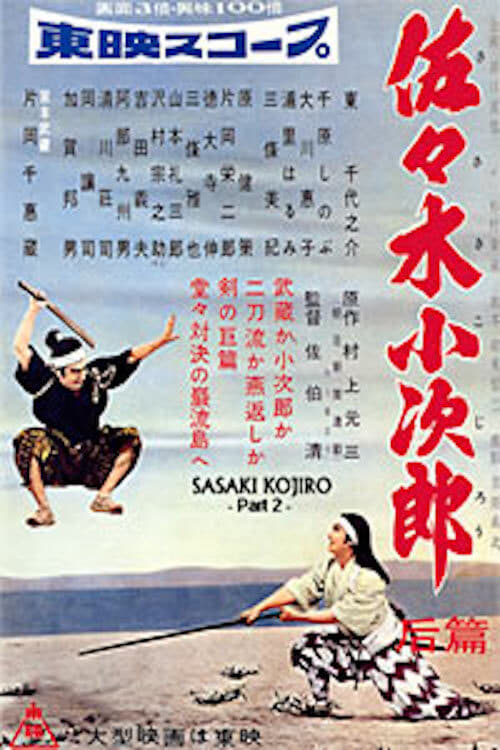
The conclusion of the story of famed swordsman, Sasaki Kojiro. After surviving a series of daring adventures, Kojiro seems to have finally discovered the ultimate happiness in life when he is reunited with Tone, the love of his life. However, his days of happiness are overshadowed by an upcoming duel with his fateful enemy Miyamoto Musashi.
Sasaki Kojiro, Part 2
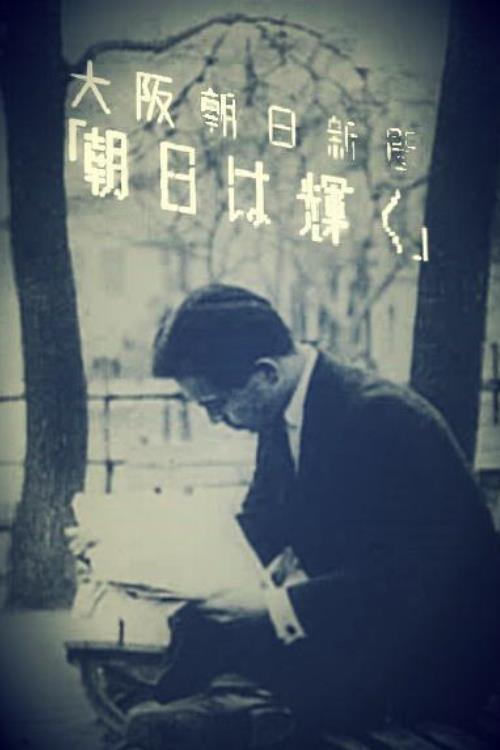
The Morning Sun Shines is a fiction-documentary film by Kenji Mizoguchi and Seiichi Ina. The film is a combination of a drama about a reporter, and documentary footage about newspaper production. Only 25 minutes of footage has survived.
The Morning Sun Shines
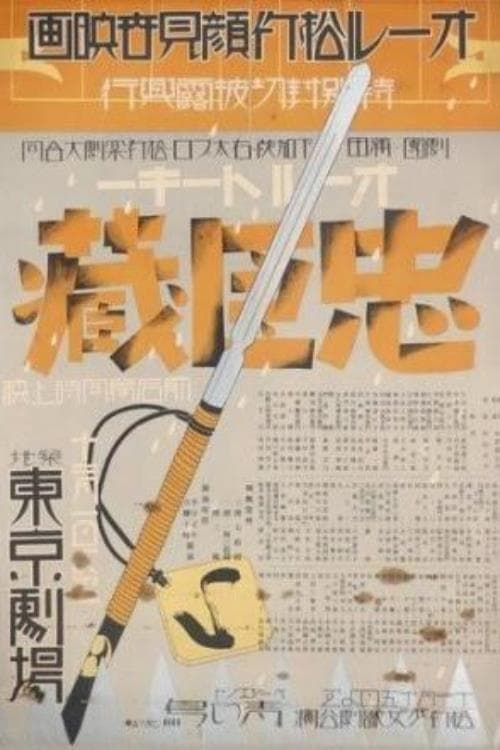
This 1932 adaptation is the earliest sound version of the ever-popular and much-filmed Chushingura story of the loyal 47 retainers who avenged their feudal lord after he was obliged to commit hara-kiri due to the machinations of a villainous courtier. As the first sound version of the classic narrative, the film was something of an event, and employed a stellar cast, who give a roster of memorable performances. Director Teinosuke Kinugasa was primarily a specialist in jidai-geki (period films), such as the internationally celebrated Gate of Hell (Jigokumon, 1953), and although he is now most famous as the maker of the avant-garde silent films A Page of Madness (Kurutta ichipeji, 1926) and Crossroads (Jujiro, 1928), Chushingura is in fact more typical of his output than those experimental works. The film ranked third in that year’s Kinema Junpo critics’ poll, and Joseph Anderson and Donald Richie noted that 'not only the sound but the quick cutting was admired by many critics.
The Loyal 47 Ronin
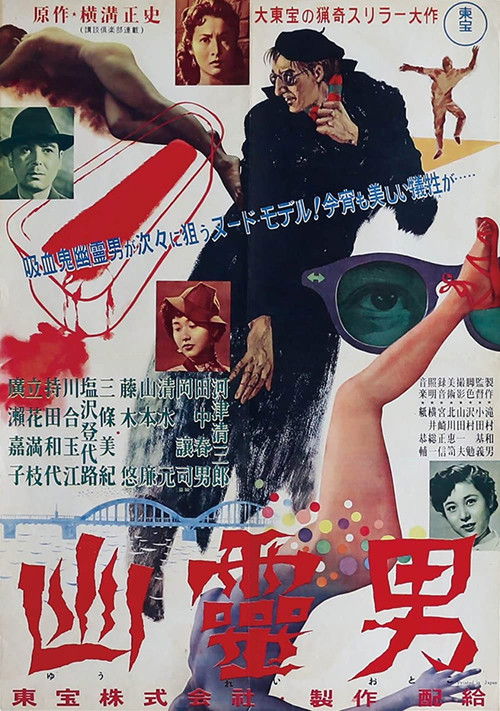
A ghost man with his face hidden entirely by bandages is killing beautiful nude models. Detective Kindaichi investigates.
Ghost Man
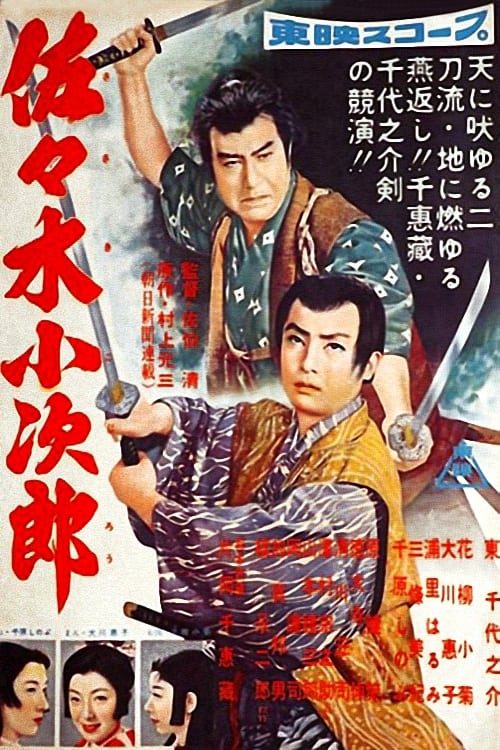
Ronin Sasaki Kojiro pursues his ultimate goal of becoming a master swordsman. Along the way he encounters another great swordsman, Miyamoto Musashi.
Sasaki Kojiro
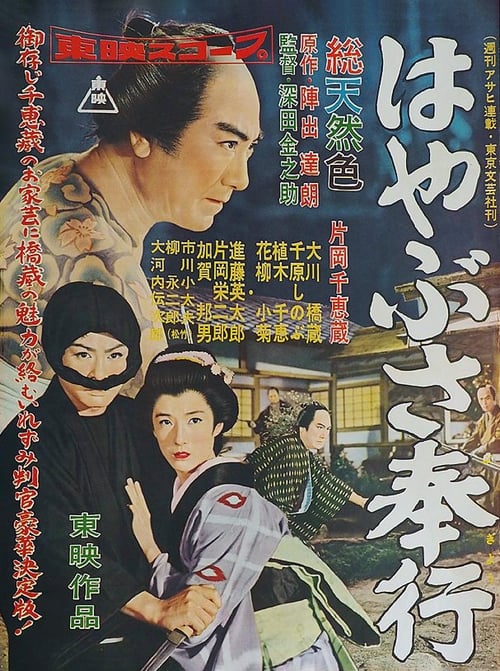
Toyama Kinshiro, a commissioner from northern Edo, goes undercover to unravel the mystery behind a series of murders. Kinshiro, played by Kataoka Chiezo, is most famous for the cherry blossom tattoos on his shoulder which he reveals at the moment of judgement.