Directing
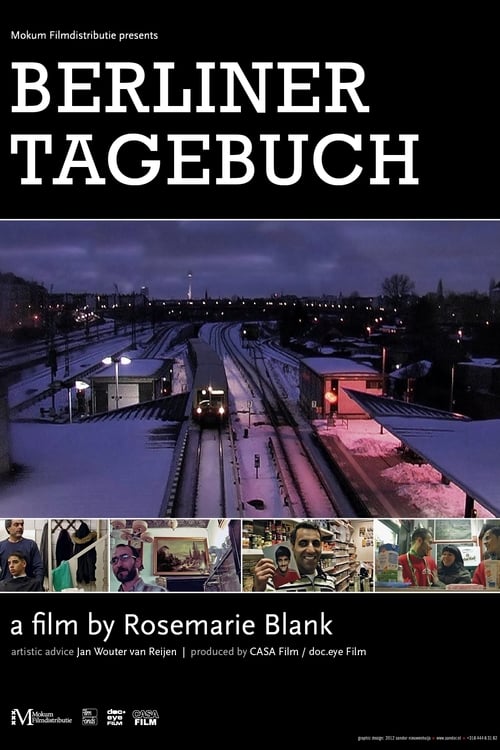
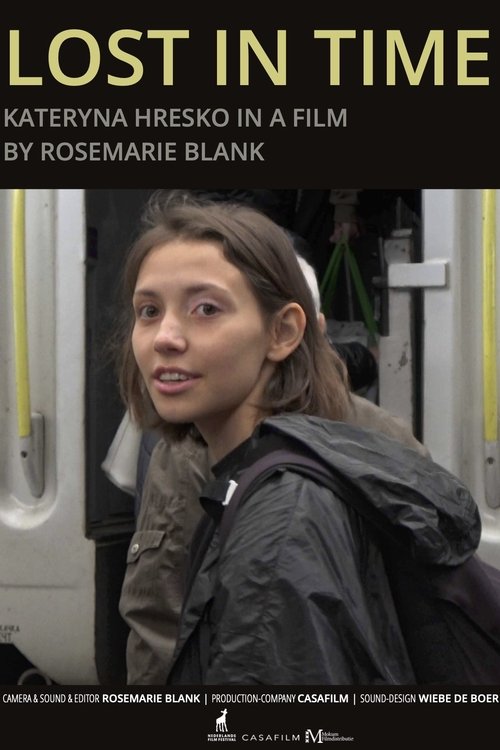
‘Where I am, I don’t want to stay. I want to stay where I’ve never been.’ Filmmaker Rosemarie Blank was born in Berlin, but has lived in various other places in the world. After returning to her native city, she wondered what it’s like for other people to live outside their motherland. In this diary, she interviews people whom she literally met in the street: her Kurdish newsvendor, who apart from his busy trade has a second job with the German railways, a Lebanese hairdresser, a Turkish furniture seller. They talk about melancholy, longing, the struggle for existence and against discrimination and they show how they lead their daily life. The encounters are larded with observing shots of multicultural Berlin, particularly where diversity is most visible: the subway.
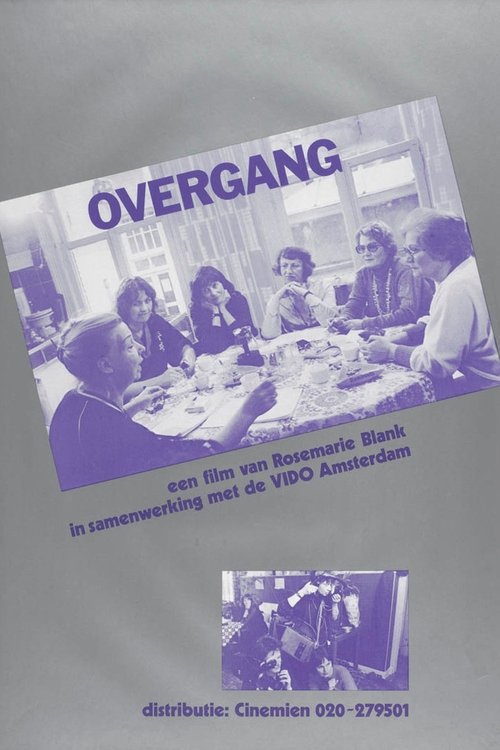
Rosemarie Blank made this film, which focuses on women aged around fifty, in collaboration with the organisation VIDO (Dutch: Vrouwen in de Overgang/Women in the Menopause). An all but invisible group of housewives who have spent their lives putting themselves last to ensure that their husbands and children can reach their full potential.
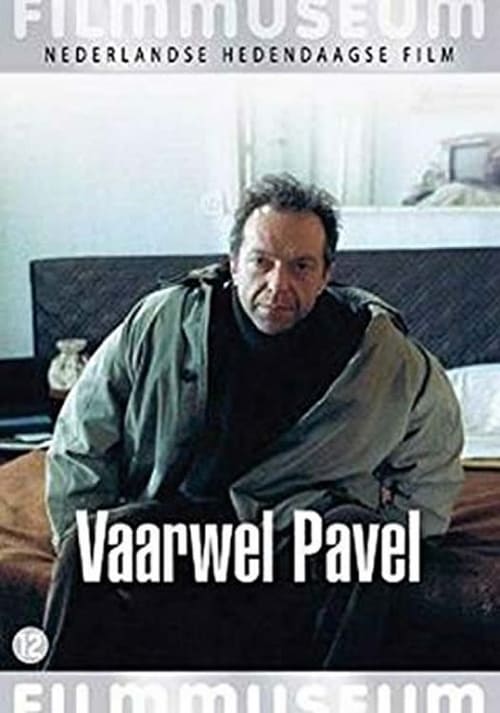
Farewell Pavel takes place in two cities. In Rotterdam, we follow Russian reporter Alexei Petrov. He stays in a shabby hotel while investigating Russian ships that have been chained up and writes an article about trafficking in women. His contact with a Russian prostitute gets him into trouble when he tries to arrange a fake passport for her. While Alexei becomes entangled in a criminal web in the West, Alexei's 14-year-old son Pavel longs for his father in St. Petersburg and takes his first steps on the path of love. The events in both cities run almost parallel, but are told from different time perspectives. Over time, a shift occurs. For Pavel, who is on his way to adulthood, time passes more and more quickly, while for Alexei, who feels increasingly threatened, time seems to stand still.
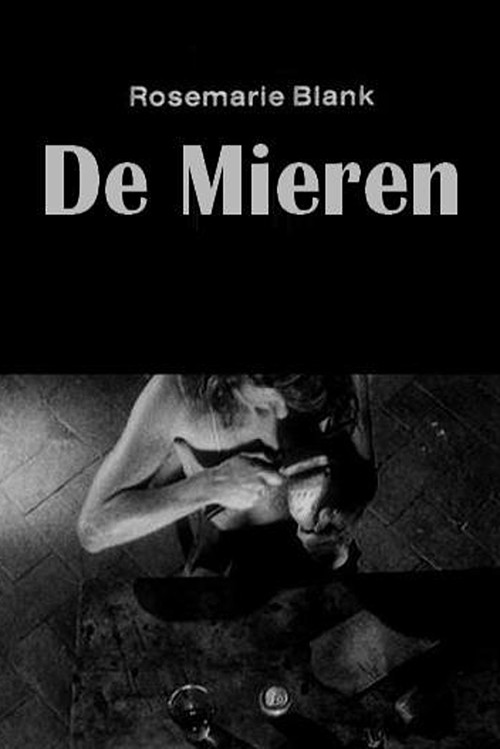
A young woman seeks solitude and peace by retreating to an old, isolated peasant house in Italy. Instead of finding tranquility, she becomes increasingly overwhelmed by her strange surroundings, the silence of inanimate objects, and the constant presence of insects.
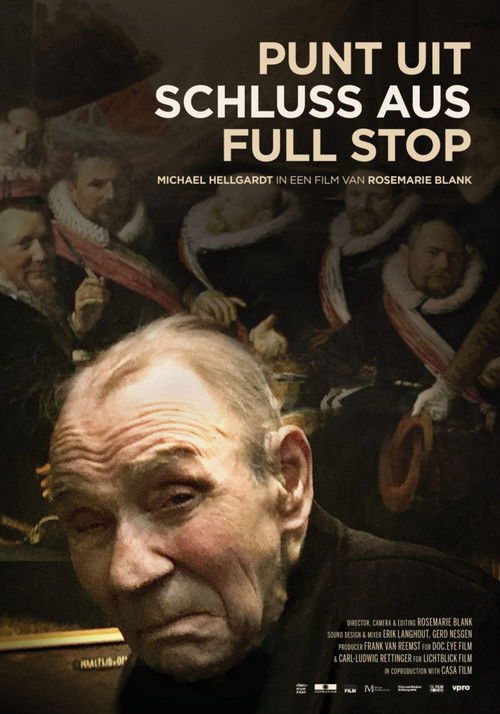
A sensitive, intimate and intriguing glimpse into the final days of the director's life companion. Rosemarie Blank follows her life companion very closely as, together, they make a film of his last days. In cinematographically fascinating scenes she manages to touch life in its most naked and pure form and delivers a tribute to a man who continued to fight for his life until the end, until his final decision to die of his own will.
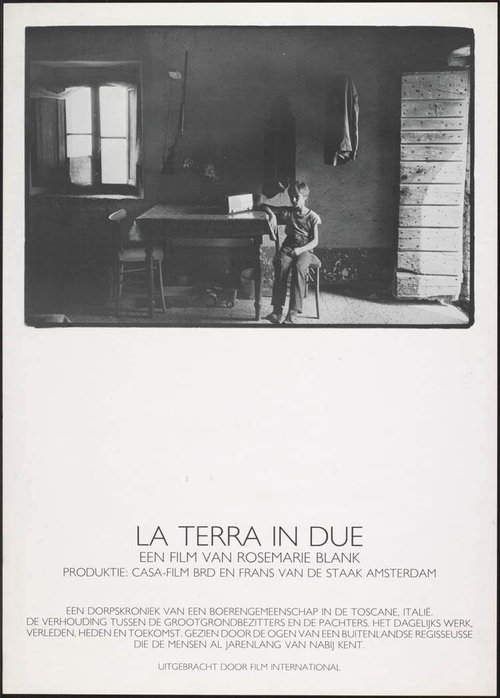
La terra in due means the earth of the landlords versus that of the peasants who actually cultivate it. This film uses evocative photogrphy and a dignified rhythm to depict the death of peasant culture. This fact is brought home by the super 8 footage shot ten years earlier. Blank's familiarity with the villagers and their unsselfconsciousness in front of the camera produce a high degree of authenticity in this account of culture of the 'mezzadria'.
The importance of the Atelier as a meeting and working-place for independent or beginning filmmakers is highlighted in Last days of Studio Frans van de Staak a necrology of his films by Kees Hin (2002), which focuses mainly on Van de Staak's non-naturalistic style of directing actors.
No description available.
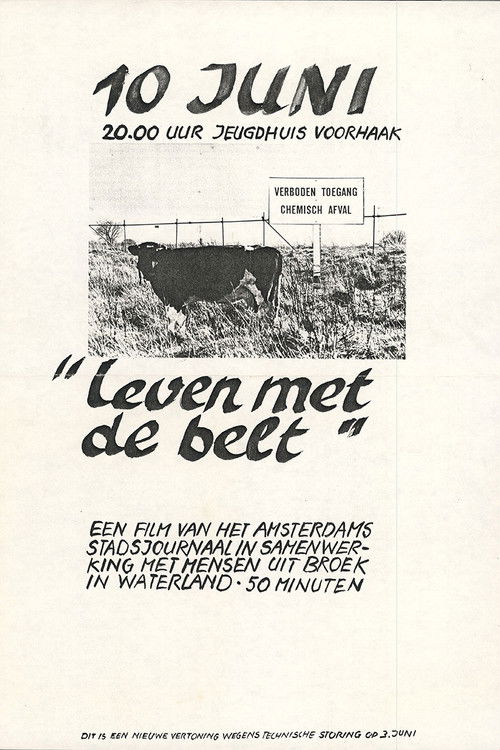
In Leven met de belt (Life With A Rubbish Heap), filmmaker Rosemarie Blank portrays with great empathy the residents of the Volgermeerpolder near Broek in Waterland in The Netherlands. They live with the physical and psychological consequences of a toxic waste dump on their doorstep.
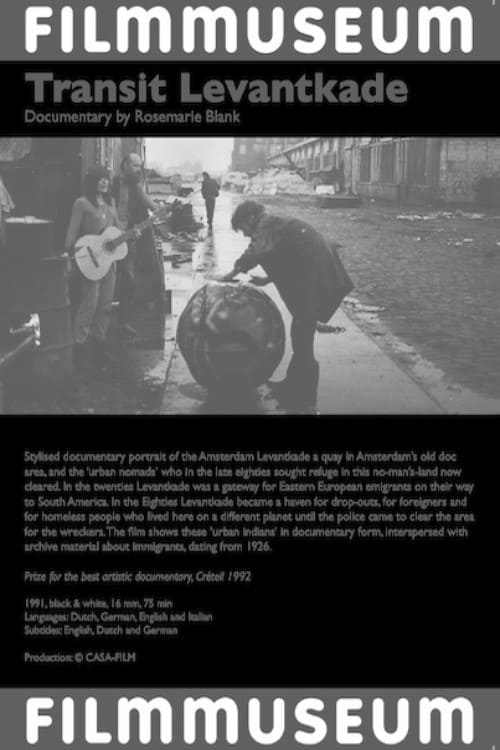
Stylised documentary portrait of the Amsterdam Levantkade area and the 'urban nomads' who in the late eighties sought refuge in this no-man's-land now cleared. The film tells the story of the Levantkade, a quay in Amsterdam's old doc area. In the twenties Levantkade was a gateway for Eastern European emigrants on their way to South America. In the eighties Levantkade became a haven for drop-outs, for foreigners and for homeless people who lived here on a different planet until the police came to clear the area for the wreckers. The film shows these 'urban indians' in documentary form, interspersed with archive material about immigrants, dating from 1926.
The film documents a personal memory. In 1988 I met a quietly eccentric man, who lived in the occupied Conradstreet in Amsterdam. More than 100 squatters lived there, mostly artists. Job was in my eyes the most authentic of them all. After the Conradstreet was dramatically cleared by the police the squatters left. Only Job stayed behind as if nothing had happened. After the buildings were pulled down he survived under the most bizarre conditions, apparently oblivious to time and space, but Job seemed to see something in stones and wood splinters that no-one else could see. One day he left and was never seen again.
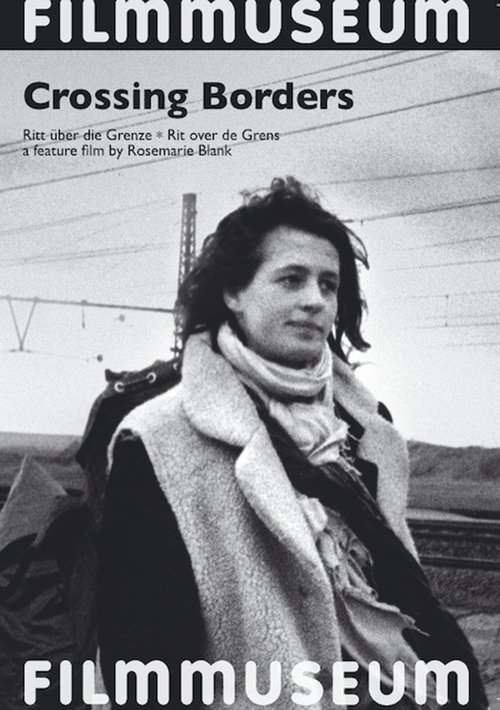
A young woman is searching for a place to call her own. Wherever Nele ends up, she feels that something is missing, something she believes can only be found elsewhere. No sooner has she settled down with her dog in Amsterdam and furnished her caravan than she no longer knows why she is there. So she sets off again: to Berlin to visit a friend she can't find, to Dresden, which was once her home and is now unbearable to her, to Hamburg, where she gets into trouble with the police and the money from social services fails to materialize. Resigned and completely exhausted, Nele finally hears about a way out, a way of life she can imagine without having to stay in one place.
A restless German woman lives with her dog in an old trailer close to the city of Amsterdam. Her life is an unstructured, nomadic existence. Wherever she is, there is always something missing and she always thinks that she could find it somewhere else.