Acting
Hasegawa is a chief police of big heart who leads a band of samurai police and cultivates reformed criminals as informants to solve difficult crimes.
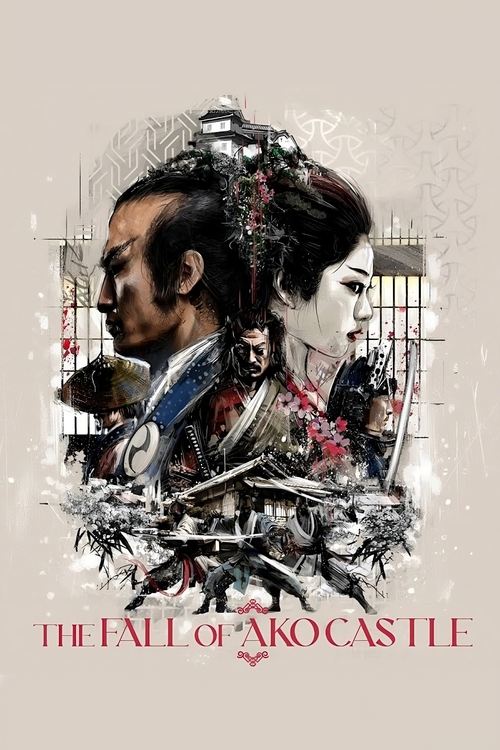
This is the story of "The Forty-Seven Ronin." Based on historical events in 1701-2, the movie tells the tale of the Asano clan's downfall and the revenge of its former samurai on the perpetrator of the catastrophe. Lord Asano was goaded, or tricked, into drawing his sword inside the Shogun's palace -- a crime which carried the death penalty. The newly installed Shogun was furious at Asano and ordered all his clan's assets seized, meaning some 20,000 samurai and commoners were unemployed and landless at a stroke. Forty-seven of these ronin (masterless samurai) banded together to take attempt revenge on Lord Kira, who had goaded Asano into drawing his sword.
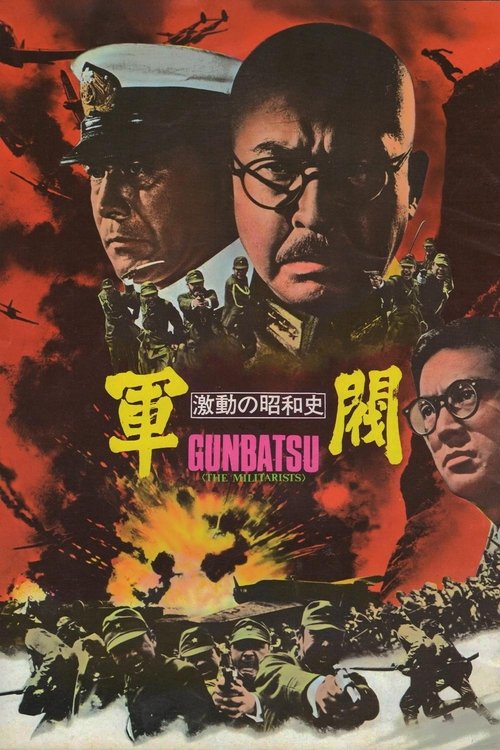
The second film in Toho's series on the military history of the Showa era, Hiromichi Horikawa's war drama offers a look at the career of controversial politician Hideki Tojo and the strained relationships between Japan's government, military, and the media.
A criminal syndicate wants detective Onihei dead, but the resolute hero proves to be hard to kill.
At school, Fumio is good in everything. His cheerful, out-going personality makes him a great favorite with teachers and classmates alike. He is in perfect health and there does not seem to be a single shadow to cloud his life. Then, one day, he feels a sudden pain in his shoulder. His parents take him to a doctor who tells them that their son has bone cancer and must be hospitalized. The parents cannot believe their ears, for Fumio had always been the picture of abounding health. The whole family with the exception of Fumio is cast into the depths of despair. They wonder why it had to happen to their Fumio and their happy family. The father who recovers first and decides to fight cancer to save his son's life.
An epic drama about Nichiren's life. Nichiren was a Buddhist monk who lived for 60 years during the Kamakura period (1185-1333) in Japan. Nichiren taught devotion to the Lotus Sutra as the exclusive means to attain enlightenment. Because of his devout belief, Nichiren is met with opposition throught his travels, with life on the line, can Nichiren accomplish his goal?
Nobuo Nakagawa's Shintoho period drama adapted by Kikuo Kitagawa from the original story by Kazutora Fujishima, which borrowed the structure of Dumas's "The Three Musketeers".
A performance of the new kabuki play, written by Mayama Seika, premiered in April 1932 at the Kabukiza. The play comprises of one act divided into 2 scenes: "Before the gate of Hokkedô Temple" and "In the Shôgun household mansion."