Directing
Stories about people who get into problems who use the help of Virgin Mary and where a rose appears and their problems are solved.
Agujetas de color de rosa is a Mexican youth telenovela produced by Luis de Llano Macedo for Televisa and originally broadcast on Canal de las Estrellas from April 4, 1994, to May 26, 1995. Created by Susan Crowley, adapted by Sergio Schmucler, and with literary supervision by Gabriela Ortigoza, the telenovela stars Angélica María, Alberto Vázquez, Carlos Bracho, Natalia Esperón, Flavio César, and Alexis Ayala. The story follows Elisa Morán, a widow who is left in financial ruin after the death of her wealthy husband. As she struggles to rebuild her life and raise her three children, her daughter Paola falls in love with Martín, a talented young singer. Together, they face family conflicts, jealousy, betrayal, and the challenges of pursuing their dreams while discovering the true meaning of love, friendship, and perseverance.
Sueños y Caramelos is a 2005 Mexican telenovela that starred Nashla Aguilar as a little girl who lives in an almacen where she assembles a Maniqui or Mannequin, which comes to life and becomes like a mother to her. Remake of La Pícara Soñadora
No description available.
Having to serve a sentence for a murder she did not commit but took the blame for, a woman gives her baby to her sister to be raised without knowing the truth. 20 years later she is freed and try to be once again part of her life. But things get complicated when the daugther, Rosalinda, and Fernando, the son of the man that was killed, become close.
Esmeralda is a telenovela that was released by Televisa in 1997. It is a remake of a 1970 Venezuelan telenovela of that same name, and was itself remade in Brazil in 2004. Another version is Topacio from Venezuela in 1984. One of the most famous telenovela all the time.
Pasión is the telenovela that began transmissions on September 17, 2007, in Mexico; Canal de las Estrellas. The novela is a production of Carla Estrada and the stars are Susana González, Fernando Colunga, Sebastián Rulli, and Daniela Castro.
María José is a simple small-town woman eagerly awaiting her wedding day to Alejandro Lombardo, unaware that her “Alejandro” is actually Bruno—the half-brother of the real Alejandro—who has inherited a vast fortune.
Mónica, a career-minded woman, falls in love with Camilo, her married boss. Meanwhile, his secretly terminally ill wife plans to set up Mónica and her own husband to ensure her children have a family after her death.
En Nombre Del Amor is a Mexican telenovela produced by Televisa. It is a remake of Cadenas de Amargura. En Nombre Del Amor was produced by Carlos Moreno, and filming began on August 4, 2008. It premiered in the United States July 7, 2009 on Univision and ended its run on March 7, 2010 in a two-hour grand finale on a Sunday. Starring for Allison Lozz and Sebastián Zurita, as adult stars Victoria Ruffo, Arturo Peniche with Leticia Calderón as the villain protagonist and main villain, co-starring for Laura Flores, Alfredo Adame, Víctor Cámara, and the participation of Altair Jarabo as youth antagonist.
Isabel is abandoned at the door of an orphanage a few days after birth. There she grows between the jokes of the other girls and the mistreatment of the harsh director called "Justa." One day her classmates show her a false birth certificate where it says that her father's name is Jesús García, that he is alive and resides in Mexico City, so she, with the hope of having a family, escapes from the orphanage towards Mexico City to look for her supposed father.
Alma Rebelde is a 1999 Mexican telenovela, starring Lisette Morelos, Eduardo Verástegui and the late Edgar Ponce. It was produced by Televisa. This telenovela contained 90 episodes.
Tenías que ser tú is a Mexican telenovela produced by Carlos Téllez for Televisa and originally broadcast on Canal de las Estrellas from November 23, 1992, to March 12, 1993. Created by Jorge Patiño and Gerardo Sánchez Luna, it was the last telenovela produced by Carlos Téllez. The story follows Gabriela Beltrán, whose life changes dramatically after the tragic death of her father leaves her family in poverty. As she and her family struggle to rebuild their lives, Gabriela falls in love with her childhood friend, Gorka Charachaga. Their romance is threatened by Santa, an ambitious young woman determined to separate them, leading to a story of love, sacrifice, and perseverance in the face of adversity.
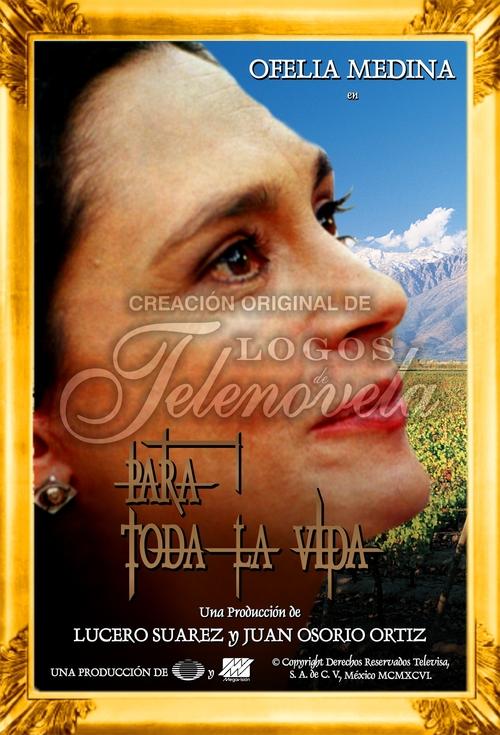
Para toda la vida is a Mexican telenovela produced by Lucero Suárez and Juan Osorio for Televisa, in co-production with Megavisión, and originally broadcast on Canal de las Estrellas from April 15 to August 2, 1996. It is a remake of the 1985 telenovela Vivir un poco, which was itself based on the Chilean telenovela La madrastra by Arturo Moya Grau. The story follows Elena, a woman who is wrongfully convicted of murder during a trip to Chile. After spending fifteen years in prison, she returns to Mexico under a new identity to uncover who framed her, expose the truth behind the conspiracy that destroyed her life, and reunite with the family that believes she died years earlier.
Bendita Mentira is a Mexican telenovela produced by Jorge Lozano Soriano for Televisa and originally broadcast on Canal de las Estrellas from August 5 to December 6, 1996. It is based on the radio serial La madrastra, created by Inés Rodena, and was adapted for television by Celia Alonso and Andrea Ordóñez. The story follows Esperanza, a humble housekeeper who works for the wealthy de la Mora family. Unknown to everyone, Diego—the young man who despises her—is actually her biological son, having been raised to believe the de la Mora family are his true parents. As long-hidden secrets begin to surface, Esperanza must confront prejudice, betrayal, and painful truths while fighting to reunite her family and find happiness.
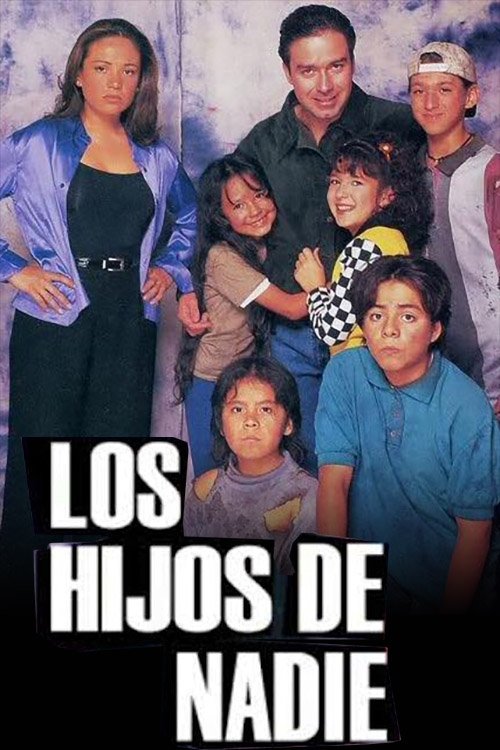
Los hijos de nadie is a Mexican social drama telenovela produced by Miguel Sabido and Irene Sabido for Televisa and originally broadcast on Canal de las Estrellas from February 24 to June 20, 1997. Created by Miguel Sabido, with adaptation by Miguel Sabido, Verónica Suárez, Andrea Ordóñez, Rosa Ana Curiel, and Kary Fajer, the telenovela was supported by UNICEF to raise awareness about the situation of homeless children in Mexico. The story follows Doña Leonor, an elderly woman who loses her daughter and granddaughter in a tragic accident. Seeking to overcome her loneliness, she dedicates herself to helping a group of children living on the streets of Mexico City. Alongside Verónica, a young woman who brings hope to the children through her puppet shows, Leonor faces the challenges of poverty, abandonment, and the people who seek to exploit those most vulnerable.
A man named Tony is captured riding the horse of Lee Corey, a missing delivery man for a local mining company. Tony claims to have bought the horse from two men, but the sheriff believes he has murdered Corey and stolen the horse. Tony is sent to the gallows, but escapes hanging with the help of Corey's mistress and sets out to find the real killer.
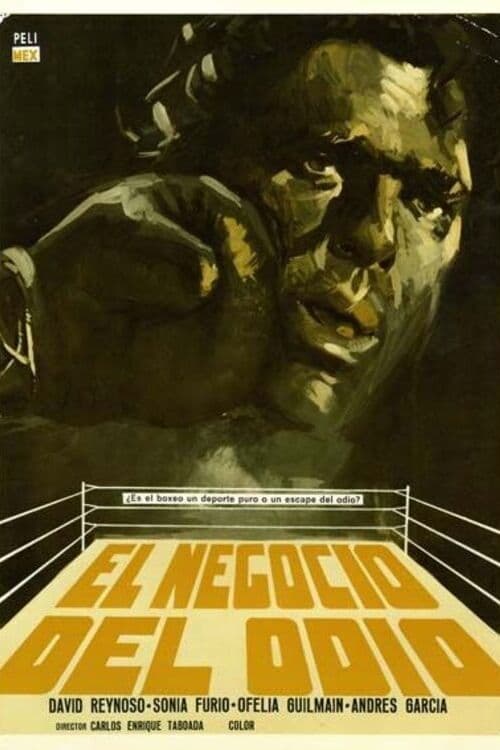
An ambitious businessman searches for the perfect candidate to train and turn into a great boxing champion.