FEEL IT.STREAM
Shūji Terayama

Shūji Terayama

Directing

Biography

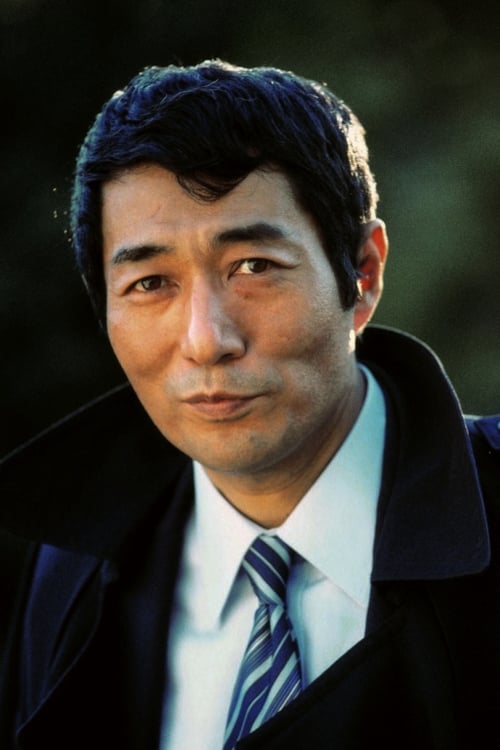
From Wikipedia, the free encyclopedia. Shūji Terayama (December 10, 1935 – May 4, 1983) was an avant-garde Japanese poet, dramatist, writer, film director, and photographer. According to many critics and supporters, he was one of the most productive and provocative creative artists to come out of Japan. He was born December 10, 1935, the only son of Hachiro and Hatsu Terayama in Hirosaki city in the northern Japanese prefecture of Aomori. His father died at the end of Pacific War in Indonesia in September 1945. At the age of nine, his mother moved to Kyūshū to work at an American military base while he himself went to live with relatives in the city of Misawa, also in Aomori. At this same time, Terayama lived through the Aomori air raids that killed more than 30,000 people. Terayama entered Aomori Prefectural Aomori High School in 1951, and in 1954 went to prestigious Waseda University's Faculty of Education to study Japanese language and literature. However, he soon dropped out because he fell ill with nephrotic syndrome. He received his education through working in bars in Shinjuku. His oeuvre includes a number of essays claiming that more can be learned about life through boxing and horse racing than by attending school and studying hard. Accordingly, he was one of the central figures of the "runaway" movement in Japan in the late 1960s, as depicted in his book, play, and film "Throw Away Your Books, Run into the Streets! In 1967, Terayama formed the Tenjō Sajiki theater troupe, whose name comes from the Japanese translation of the 1945 Marcel Carné film "Les Enfants du Paradis", so can be translated as "children of heaven", however its correct translation is "Ceiling Gallery" and has a meaning similar to the English expression "Peanut Gallery". The troupe was dedicated to the avant-garde and staged a number of controversial plays tackling social issues from an iconoclastic perspective. Some major plays include "Bluebeard", "Yes", and "The Crime of Fatso Oyama", among others. Also involved with the theater were artists Aquirax Uno and Tadanori Yokoo, who designed many of the advertisement posters for the group. Musically, he worked closely with experimental composer J.A. Seazer and folk musician Kan Mikami. He was also involved in poetry and at 18 was the second winner of the Tanka Studies Award. Terayama experimented with ‘city plays’, a fantastical satire of civic life. Also in 1967, Terayama started an experimental cinema and gallery called 'Universal Gravitation,' which is in fact still in existence at Misawa as a resource center. The Terayama Shūji Memorial Hall, which has a large collection of his plays, novels, poetry, photography and a great number of his personal effects and relics from his theatre productions, can also be found in Misawa. In 1976, he was a member of the jury at the 26th Berlin International Film Festival. Terayama published almost 200 literary works, and over 20 short and full-length films. He was married to Tenjō Sajiki co-founder Kyōko Kujō, but they later divorced, although they continued to work together until Terayama's death on May 4, 1983 from cirrhosis of the liver. Description above from the Wikipedia article Shūji Terayama, licensed under CC-BY-SA, full list of contributors on Wikipedia
Known For

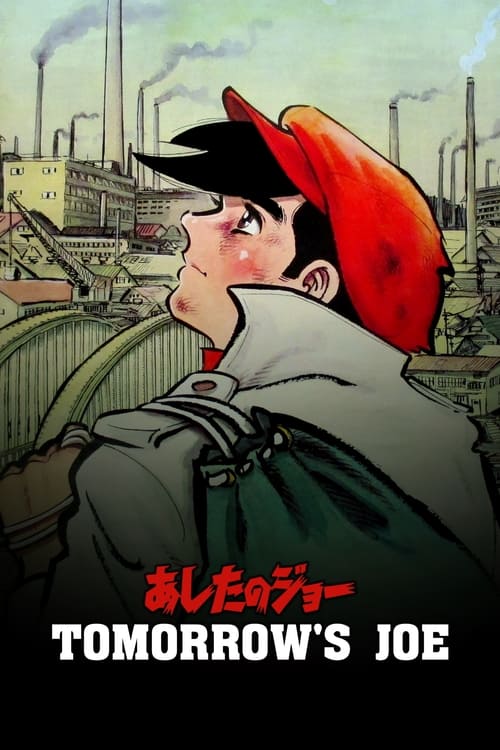
Tomorrow's Joe
7.7

A young drifter named Joe Yabuki wanders through the slums of Tokyo, but when the local ruffians try to give him a hard time he teaches them a rough lesson with his fists. The spectacle sparks a gleam in the eye of an old drunk who happens to be watching—Danpei Tange, a failed boxer and former coach who sees something special in the boy. He pleads with Joe to train with him off, but the cocky young fighter brushes him. Later, though, when Joe is arrested and put in a juvenile detention facility, he realizes that he’s going to need to hone his raw fighting skills if he wants to survive. Thus is born a partnership that might just take Joe all the way to the top…

Tomorrow's Joe

1970
Fruits of Passion
5.3

A girl named O loves a rich, and much older man. She is subjected to a variety of humiliating experiences to prove her unconditional obedience to him in a Chinese brothel. A poor boy sees her and falls in love with her. To get the money needed to sleep with her, he takes part in rebellious acts.

Fruits of Passion

1981
Wilderness: Part 1
6.3

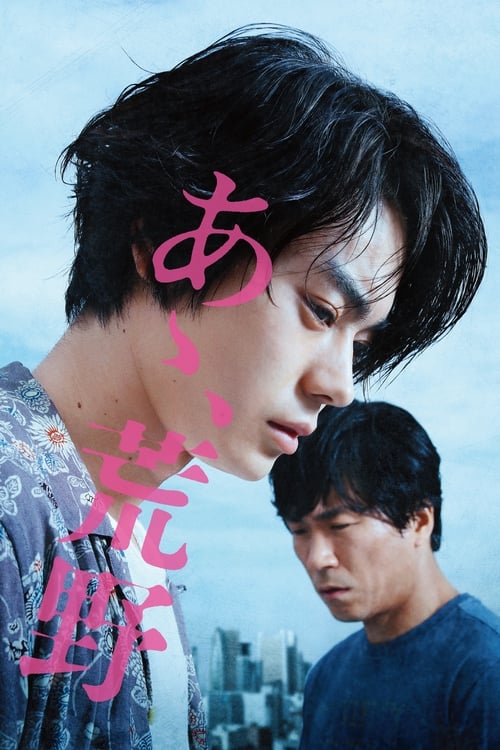
Set in the near future around Shinjuku, Tokyo. Shinji got out from a youth detention center. Barikan suffers from stuttering and extreme shyness. These two men meet in a boxing gym. Shinji and Barikan become friends and pursue boxing under a hopeless situation.

Wilderness: Part 1

2017
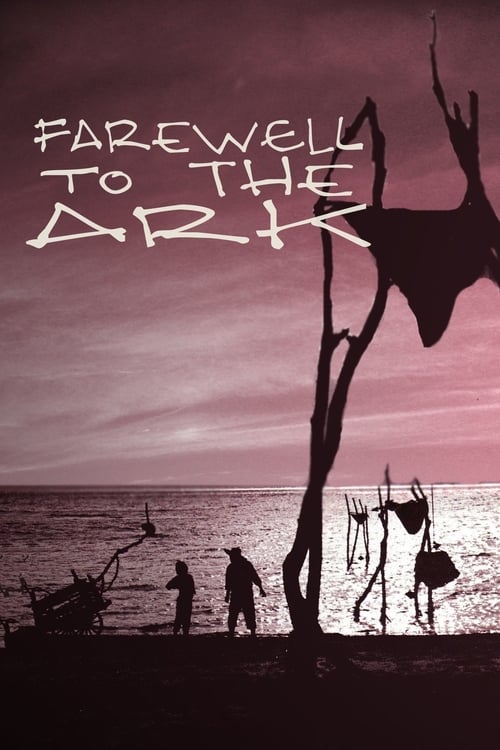
Farewell to the Ark
6.9

A surreal, isolated village sees its inhabitants gradually leave behind their mutual traditions and superstitions as they leave for the city. Among them are two cousins who love each other and who get into a quarrel with other villagers.

Farewell to the Ark

1984
The Scandalous Adventures of Buraikan
7.1

An outlaw pushes the residents of Edo's red light district to rebel against a growing number of stifling, moralistic laws.

The Scandalous Adventures of Buraikan

1970
Get 'em All
7.0

Gang of robbers quarrel about the loot, but when one of them gets killed, his younger brother seeks them out to ice them one by one.

Get 'em All

1960
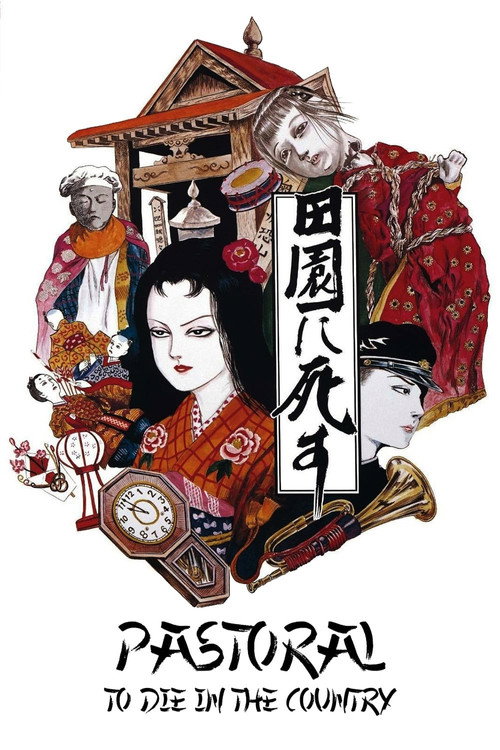
Pastoral: To Die in the Country
7.5

A director faces creative block while working on his latest film – a reimagination of his adolescence growing up in a mountain village in rural Japan.

Pastoral: To Die in the Country

1974
Wilderness: Part 2
6.4

Set in the near future around Shinjuku, Tokyo. Shinji got out from a youth detention center. Barikan suffers from stuttering and extreme shyness. These two men meet in a boxing gym. Shinji and Barikan become friends and pursue boxing under a hopeless situation.

Wilderness: Part 2

2017
Throw Away Your Books, Rally in the Streets
7.3

An experimental, psychedelic odyssey through Japanese subculture experienced via the eyes of a disillusioned young man, who must contend with intense familial dysfunction, psychosexual alienation, and existentialist malaise.

Throw Away Your Books, Rally in the Streets

1971
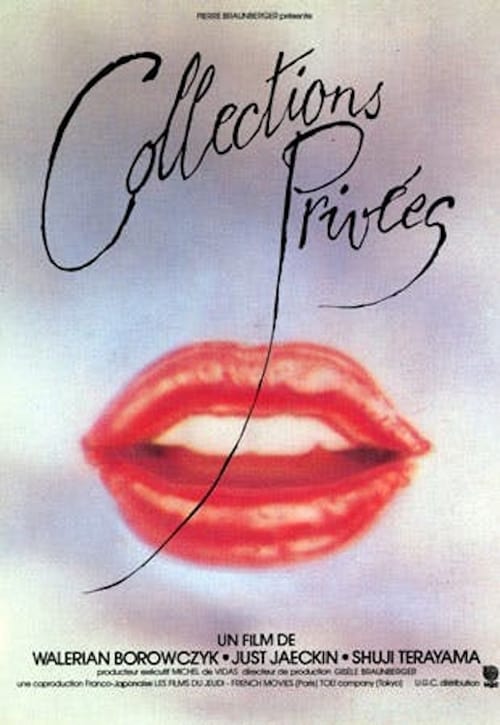
Private Collections
6.0

Three stories. A solitary sailor falls from his boat and washes ashore on a tropical island. While seeking rescue, he's found by a nearly naked woman who is playful and compliant. He decides to erase his signs of distress and remain on the island. What awaits? In the second, an adolescent searches for the words of a nursery rime he remembers bits of. His journey takes him into dreams, sexual awakening, and Oedipal fantasy. Third, a man of wealth in late-nineteenth century Paris hires a prostitute for the night. She's also cabaret performer and takes him to her room. He fears he's about to be robbed. What's her secret?

Private Collections

1979
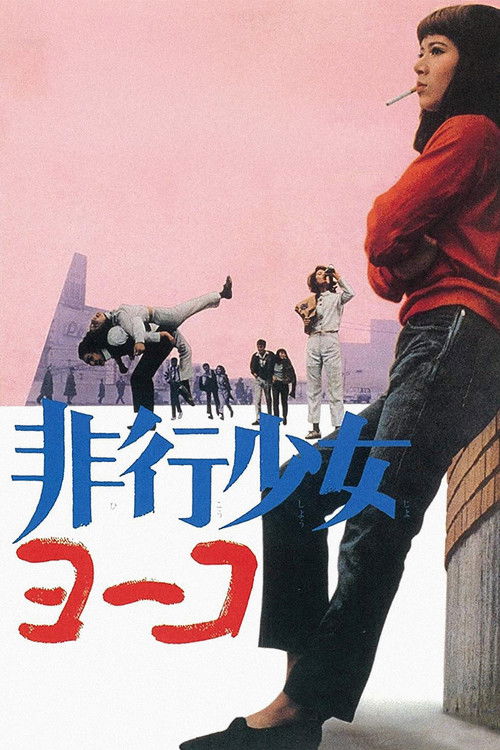
Pretty Devil Yoko
3.3

Easily bored, but still innocent and naive countryside girl discovers partying in Tokyo is a ton of fun. Yakuza-to-be is an acquaintance who tries to rape her, and the typically bland but very-good-here the first boyfriend.

Pretty Devil Yoko

1966
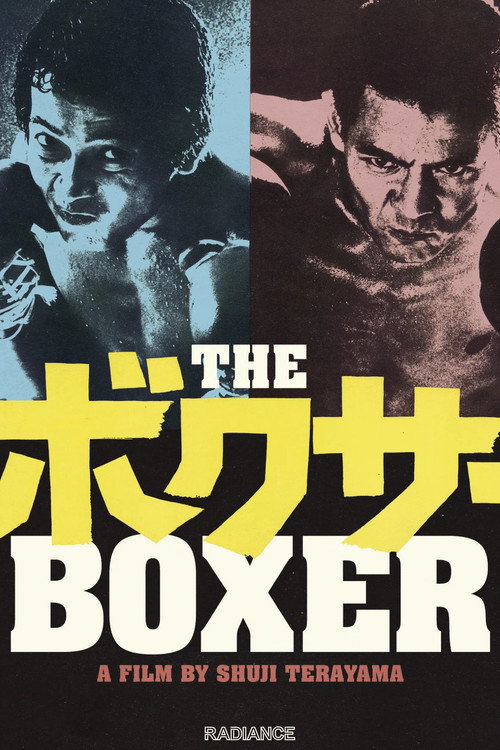
Boxer
6.8

In the midst of a match, a successful boxer - Hayato, has had enough of the sport. He lets himself get knocked, quits boxing, leaving his wife and start living alone with his mangy dog. One day a young mediocre boxer knocks at the door and wants to be Hayato's apprentice.

Boxer

1977
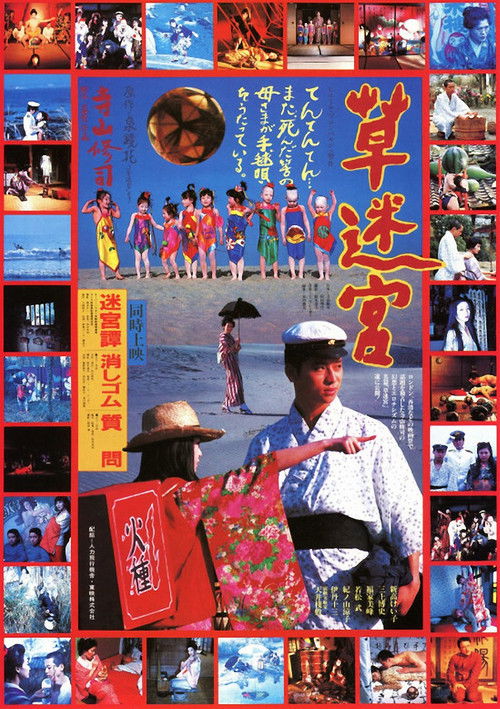
Grass Labyrinth
7.2

Akira is haunted by a "bouncing ball" song that he remembers his mother singing when he was a small child, and now on the verge of a sexually active adulthood, he wants to find the origins of the song. The young man ostensibly wanders into a time-warp in which aspects from his childhood and adulthood mix together. In this never-never land he comes across a beautiful woman/witch who is lost inside the labyrinth of her mansion, just as the young man is lost in the labyrinth of time — and on some levels, perhaps the labyrinth of his subconscious.

Grass Labyrinth

1979
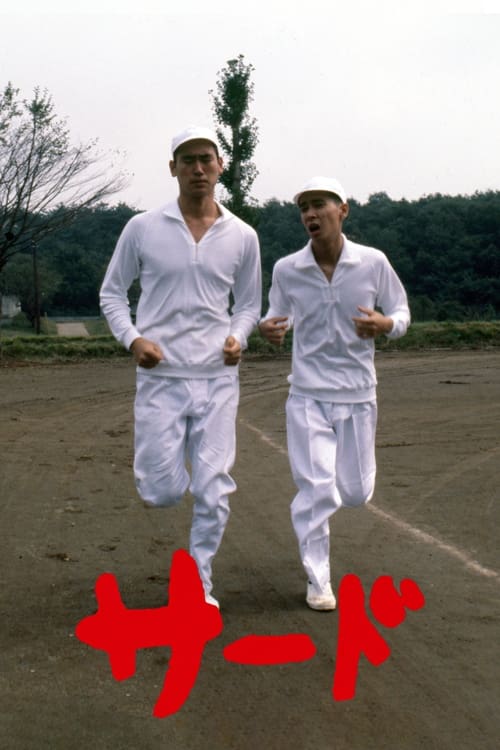
Third Base
6.4

Third is an aimless young man who hangs around with a couple of girls who are amateur hookers. One day, while acting as their pimp, he gets into a conflict with a young gangster and winds up killing him.

Third Base

1978
A Flame at the Pier
6.1

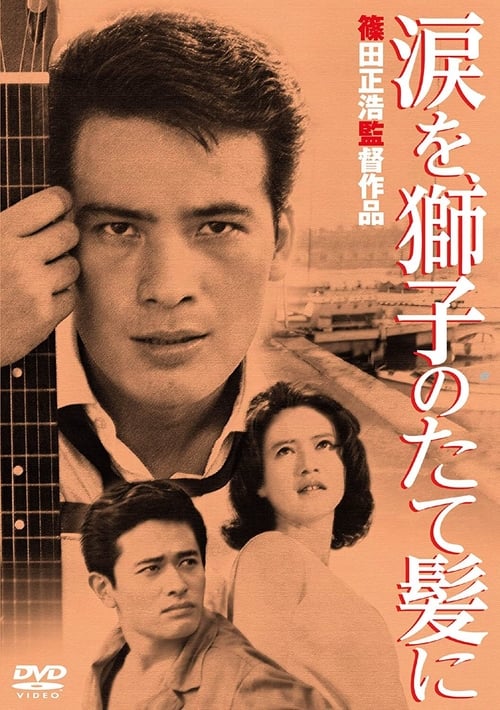
A young dockworker who owes his life to his boss becomes embroiled in union activity on the Yokohama waterfront. The rebel Saburo works as an errand boy for a shipping company and vents his frustrations by plucking on the guitar.

A Flame at the Pier

1962
Lemming
N/A

Yukichi Matsumoto's 2013 stage adaptation of Shuji Terayama's "Lemmings". Two cooks share a room, one of which talks with his mother's head: it lives beneath their tatami mats. On the other side of their room's wall, lives a wife who desperately cares for her feverish husband. As more and more walls are tore down movie studios, hospitals and prisons are revealed, destroying the physical boundaries between their boarding house and the city.

Lemming

2013
Emperor Tomato Ketchup
5.5

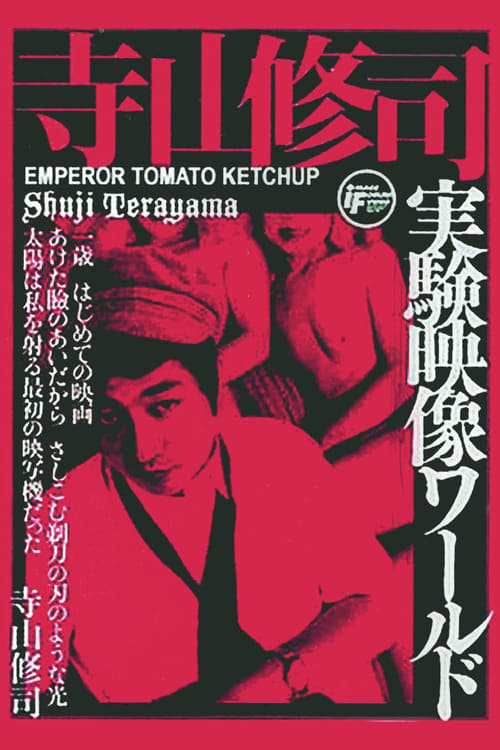
In a Japanese colony, children overthrow their parental guardians and attempt to form a new society. Their plan spirals out of control and they are soon lost in a web of sexual deviation and violence.

Emperor Tomato Ketchup

1971
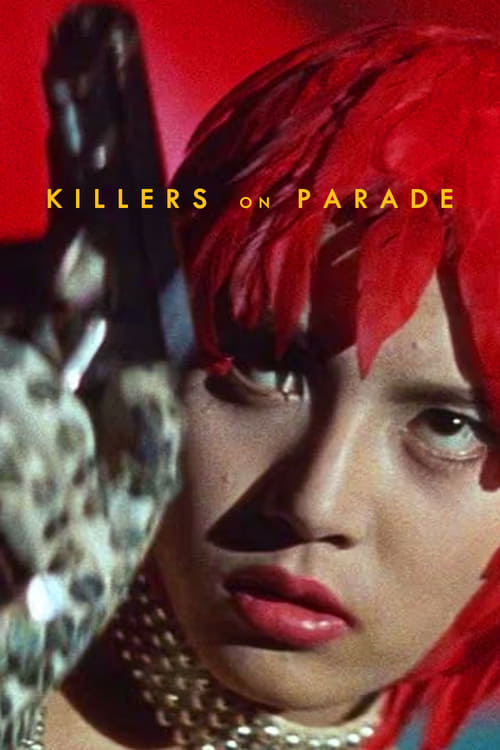
Killers on Parade
6.5

A vengeful contractor hires a series of young killers to target a woman muckraker. Trouble brews when an amateur marksman shows up his eclectic competition.

Killers on Parade

1961
Nanami: The Inferno of First Love
7.0

A teenage goldsmith with a dark past tragically falls in love with a young nude model.

Nanami: The Inferno of First Love

1968
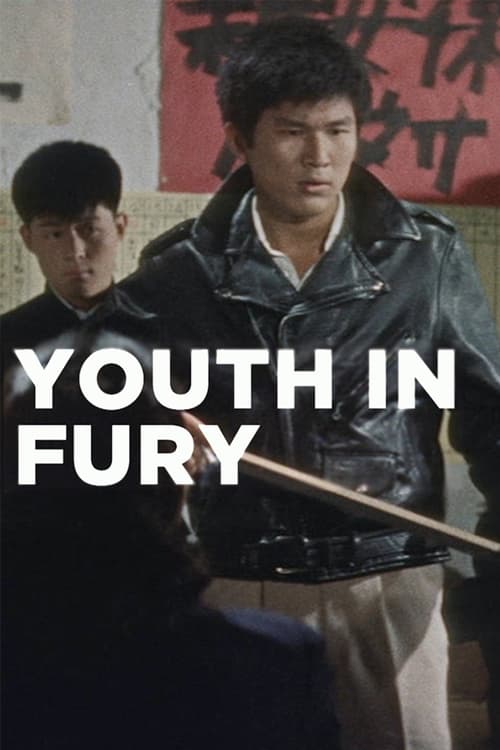
Youth in Fury
7.0

A reckless student contemplates terrorism in a prescient film that confirmed Shinoda as a fearless member of Shochiku's iconoclastic New Wave. At the height of student protests, Shimojo takes his aggressions to another level, beset by seemingly insoluble feelings of alienation.

Youth in Fury

1960