Directing
Hello Again is a colorful road movie, a "classic" music video, both in terms of its production (pictures set to an existing music track) and the intention behind it.
"Lost Destinations" is the name of a Web site dedicated to obscure locations in the USA. "Abandoned, unusual, wild and weird road trip photography and beyond" is presented for the viewer´s pleasure, including illustrations of an abandoned concrete and building-material factory in Idaho Falls (the "Monroc Facility"), which is the starting point for Michaela Grill´s video of the same name. A still image of the picturesque industrial ruin appears repeatedly throughout the half-hour work like a refrain, its stanzas comprising three independent abstract studies. The soundtrack by Martin Siewert underlines the suite´s synesthetic character, such as by casting acoustic shadows in places where the video image builds on musical parameters such as rhythm, timbre and tonality. When the color and brightness of individual images are modulated in the reprise, the three episodes independently sample a range of more abstract visual characteristics.
With trans, Martin Siewert and I used the 5 act structure of classical drama to create an atmosphere of in-between-ness and levitation. I found these old photographs of a harbor that totally embodied this emotion (also the sadness and melancholy of parting and saying goodbye). So I used them as my starting images and worked through the layers of the images, scratched away the unnecessary until I reached the essence.
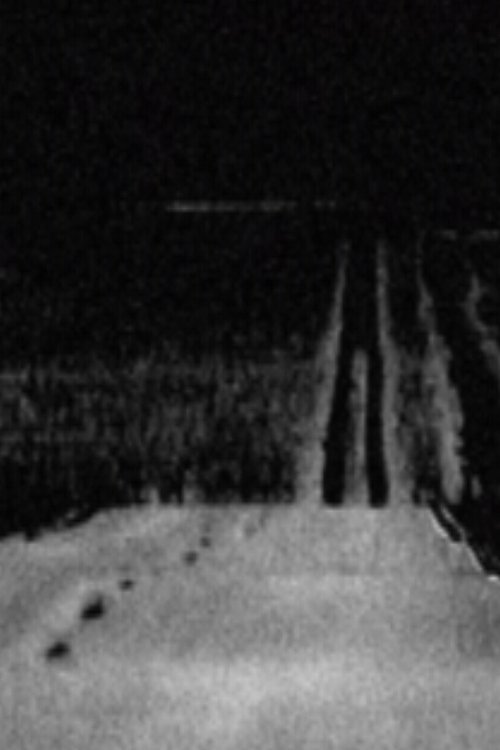
Experimental short based on a car ride.
In Michaela Grill´s work, the opulence of these images is diametrically opposed to a minimalistic reduction to an element of urban architecture. The disintegration of the initial material (the windowed façade of a building), which resembles a chemical process, produces the colors violet, light blue and white and dissects the urban vocabulary of forms. The dispersion of the big city´s lights carries over to the structure of time and space and ceases to conjure up an external danger. Instead, the viewer is confronted with sound and images which decompose the personal criteria employed in sensory perception.
KILVO is a classical music video in the sense that the music already existed, a track by Radian called Kilvo like the town in Lapland. I wanted to know what the place looked like that inspired the music, so I went online and found all these old postcards and I started collecting them. I reduced the postcards to lines to emphasize the two-dimensionality of the represented landscape. I wanted the final videoimage to look like a postcard, so I divided it in 4 parts and generated every image on a black, a gray and a white background. Each beat of the bassdrum moved the images to the next quarter and I made an arrangement so that each quarter had to move in every three colors and in every possible direction. So in the end it became this very dynamic, animated postcard.
The perception of the city in the modern era is characterized by its fleeting and momentary nature. Social and architectural constructions are fragmented and dashing past. Cityscapes attempts to make archived recordings from the Austrian Film Museum legible along these lines. Single images are isolated from the cinematographic flow in order to scrutinize their inscribed cognitive potential. For Walter Benjamin, history disintegrates into images and not stories. Cityscapes is a search along the tracks of these images.
A subtle-spherical text-image composition about South Georgia, an island group of the Antarctic—a stretch of coast into which humanity’s devastating overexploitation has been inscribed.
Michaela Grill's visual work makes use of a concrete wall as the smallest identifiable element of urban music culture which forms a space. The visual organization of this barely recognizable representational surface is resolved through Takeshi Fumimoto's musical structure. The images illustrate neither the tone nor the rhythm; they follow the logic of the acoustic blueprint to create new forms of hearing through the processing of the found sounds. The camera makes a parallel searching movement along the rough surface. The images, which cannot be isolated, resist a representational aesthetic, and fleeting spatial landscapes and forms which illustrate non-repeatability and improvisation appear in the tension between concentration on the cracks and fractures and the camera's movement across them. Reduction to the plastic and sensorial basis sensitizes the viewer's gaze by making the structure comprehensible.
A short succession of splits-screens gathers women in the throes of extreme states, screaming, with eyes wide, arms thrown up in dismay, angular eyebrows, stunned mouths – laying, running, standing, leaping to their feet: instants of extreme emotions sought and found in silent films of the 1920s.
MY KINGDOM FOR A LULLABY # 4 Basic musical material such as feedback, various sound spectrums, etc. and a live performance of »visual music,» translated into digital images.
The story of Tierra del Feugo’s vanished indigenous population. With the help of nature footage, historical photos, texts, and drawings, a dialogue emerges between past and present. In interview sequences, descendants of indigenous people speak, while research reports recount the brutal missionary campaigns.
Sound/intoxication (Rauschen) is what the music video is about, say the artists, and the ecstatic (Rauschhaft). The German play on words actually makes sense in MY KINGDOM FOR A LULLABY #2; it suits a piece, in which electronically generated sounds and images are modulated and combined in a thoroughly sensorial or even ecstatic manner. The term «white noise» refers to both visual and acoustic elements. It is a prevailing theme in this video, an abstract piece, which requires that the viewer look and listen with utmost attention. On a white screen appear horizontal and vertical lines in delicate gray. First they alternate, then overlap, fade, then become more intense. The soundtrack plays a primary role, is equally as powerful (and elusive) as the images: a composition of crackling, noises (Rauschen), and whirring begins to emerge; music comprised of subtle electronic tones and high frequency distortion.
Experimental filmmakers from Jean Painlevé onwards have long explored the wonders inherent in scientific and medical footage, particularly when trained on microscopic phenomena. There are multiple universes of unfolding and exploding forms revealed in UNDER THE MICROSCOPE, but Michaela Grill is not content to leave these amazing images unadorned. Using the cinematic resources of colour treatment, flashing and strobing, looping and repetition, plus a rich counterpoint soundtrack by Sophie Trudeau, she fashions a symphony of mysterious, mutating movements.
Shifting and gliding views of the Arctic Ocean oscillate between abstraction and figuration. Snow, ice, clouds, and pixels melt and collide, confusing our sense of spatial orientation.
The experimental forest, the name of a place, a title, and a statement of intent. The first step into this forest is represented as a black-and-white silhouette, branches against a background of clouds moving rapidly across the sky, with a modulating soundtrack that records and further develops nature’s sounds. A picture, whose aesthetic excess takes up well-known references to landscape paintings and photography, as well as genre cinema. But as soon as one penetrates deeper into the forest, the visual and tonal register changes, the view moves ever closer to the landscape’s pre-civilizational elements; vegetation, water, and wildlife. Attention urns to details, rhythm; to subtle and also surprising changes and movements. Nature’s enigmatic aspect moves to the forefront and the viewer is captivated by formal beauty, by pictures, which must first be decoded in their visual alienation and play of various size relations.