Hans Schweikart
Directing
Known For

Der Kommissar is a German television series about a group of detectives of the Munich homicide squad. All 97 episodes, which were shot in black-and-white and first broadcast between 1969 and 1976, were written by Herbert Reinecker and starred Erik Ode as Kommissar Herbert Keller. Keller's assistants were Walter Grabert, Robert Heines, and Harry Klein who, in 1974, was replaced by his younger brother Erwin Klein.
The Commissioner
No description available.
Blick zurück im Film
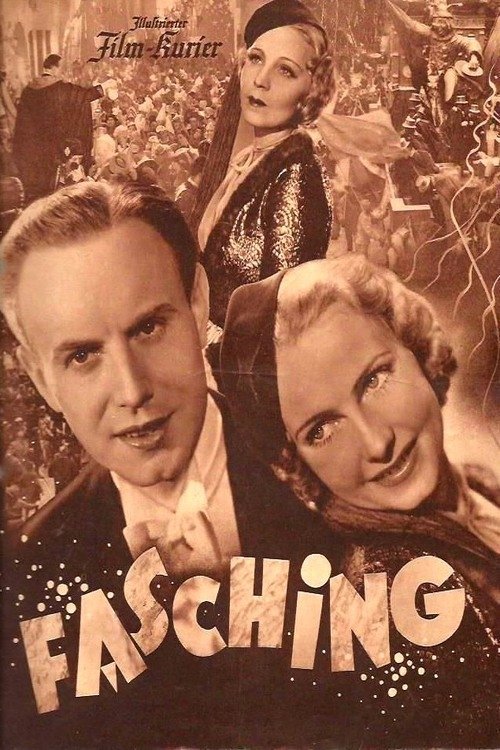
Lisa is taking a night train to Munich to start fashion training, while Martin is a young artist. They meet and romance blossoms. Upon arrival, they plan to meet later at Marienplatz. However, they didn’t know it’s Fasching, the Bavarian carnival, and the square is packed. They miss each other in the crowd and struggle to find one another with limited information, leading to a series of near misses.
Fasching
Everything seems perfect in the lives of Andreas and Garda. They have a happy marriage and up-and-coming talent Andreas is constantly striving to reach the top of his sport. But their happiness is suddenly clouded when the racing driver suffers a serious accident at the Nürburgring. He is sent to Switzerland to recover. There, however, a second shadow looms over the couple's idyll, this time in the form of the beautiful, rich Argentinian widow Joan de Portago. When Garda finds out about her husband's flirtations, she becomes jealous and begins to fake an affair of her own in return. When Joan's old admirer Dr. Albys joins the triangle, the web of love becomes increasingly tangled.
Muss man sich gleich scheiden lassen?
No description available.
Der Monddiamant
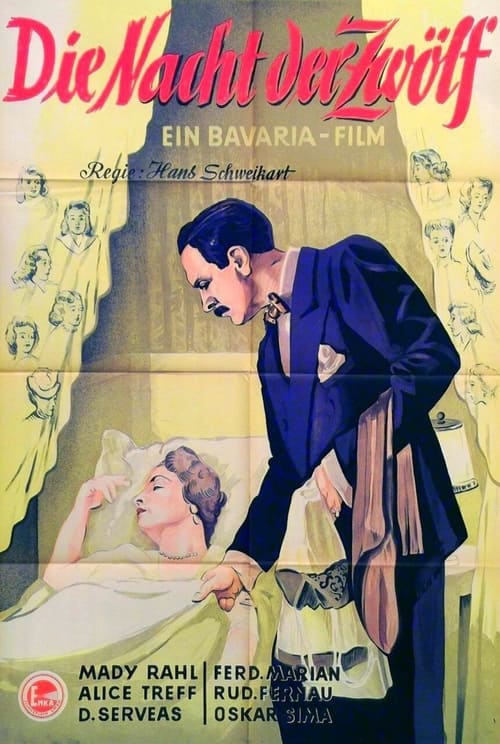
A dozen ladies expect marriage impostor Lanski to keep his promises. But he needs more money and decides to kill Mrs. von Droste who has changed her will in his favor. He covers his tracks but is seen by a neighbor who soon blackmails him.
The Night of the Twelfth

The House on the Moon
The House on the Moon
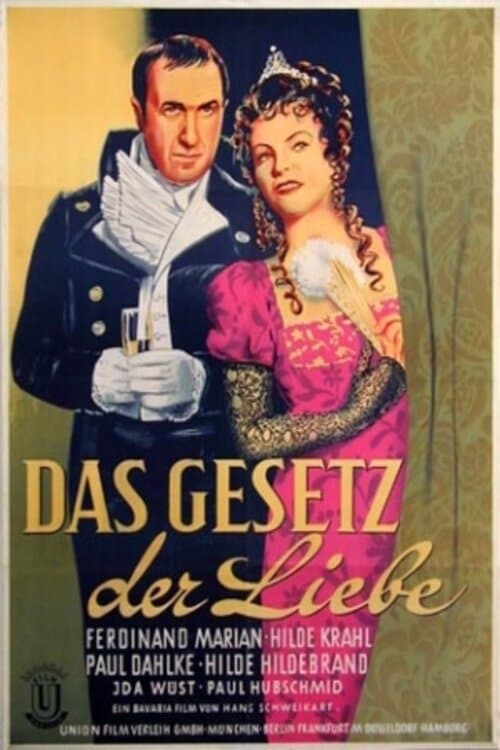
Berlin, 1805: The brave Lieutenant Hofstede fell stormily in love with the charming singer Madeleine. Although Madeleine works in a very dubious establishment and thereby embroiled her lover in a scandal.
The Law of Love
No description available.
Magdalena
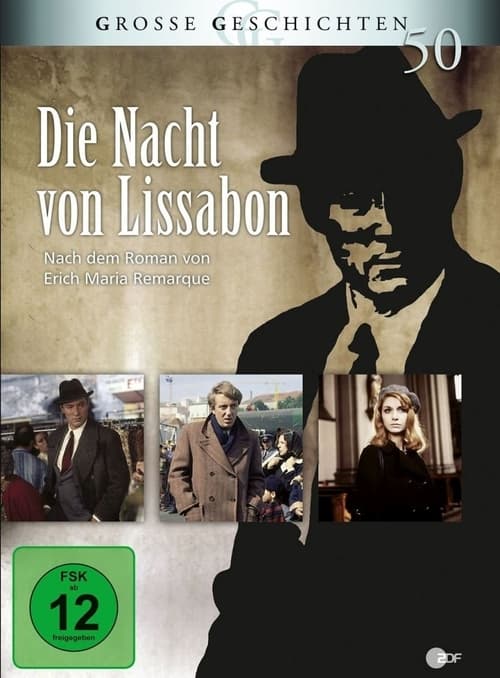
After fleeing from Nazi Germany, Josef and Helen Schwarz arrive in Portugal's capital in 1942, where a ship to America awaits them. But on the evening before the ship departs, Helen dies in the hotel. She had concealed the cancer from her husband so as not to burden their last days together. Deeply affected and disillusioned, Josef is drawn to the port of Lisbon. There he meets a penniless exile to whom he is willing to give the ship's tickets and visas, which have now become worthless to him, if he accompanies him that night and listens to his story.
Die Nacht von Lissabon
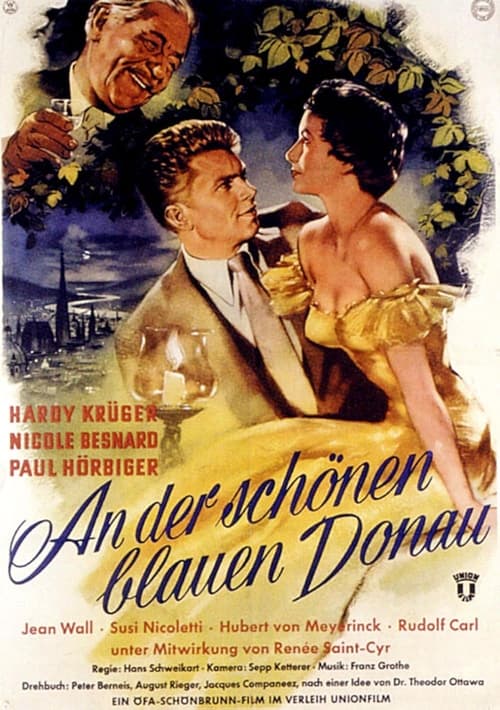
A young king and a princess are engaged to be married but have never met. Both are reluctant to take part in an arranged marriage but they meet in Vienna and fall in love.
An der schönen blauen Donau
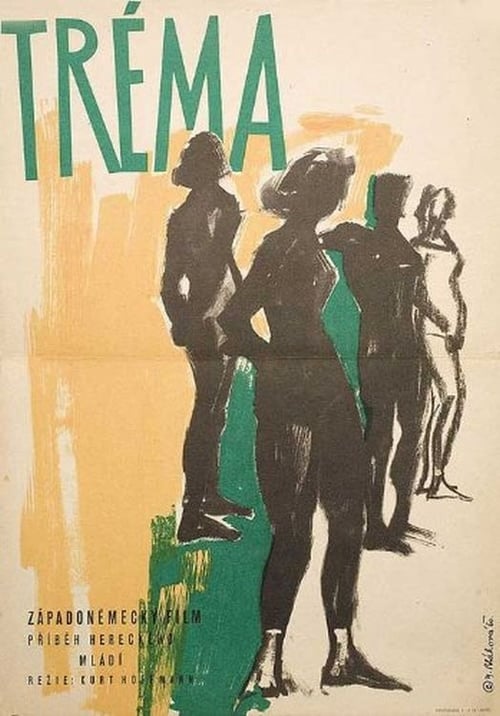
The early stage experiences of a group of young, more or less talented aspiring actors, whose first steps on the stage are described. Among them are schoolgirls such as the coquettish Evelyne, who believes she can do anything, and the modest Gitta, who demonstrates greater willingness and skill.
Lampenfieber
No description available.
Einfach sterben
The life story of Friedrich List, an influential 19th century German political economist who developed the liberal nationalist theory of political economy in both Europe and the United States.
The Endless Road
During the Seven Years' War, Prussian Major von Tellheim sacrifices his own fortune to save a Saxon estate from being plundered. After the war ends he is discharged and left penniless when the government suspects his noble deed was actually due to a bribe. Believing his lost honour makes him unworthy Tellheim breaks his engagement to Minna von Barnhelm, but she tracks him down to a Berlin tavern to win him back. To test his love Minna pretends she has also lost her wealth, prompting Tellheim’s protective instincts to finally override his stubborn pride. The film concludes with a royal decree from Frederick the Great, restoring Tellheim's rank and fortune and allowing the couple to marry.
The Young Lady of Barnhelm
The young fashion illustrator Jeanette meets the chief engineer Rudolf Siebert at an artists' festival in Schwabing, but thinks he is the talented but poor painter Braubach, whom she admires and would like to support. The spoiled Siebert is happy to put up with this. This is a completely new life for him. He wants to continue playing this role, and so Braubach has to play the chief engineer in his place. But then the unsuspecting Jeanette learns the truth. She feels betrayed and is deeply hurt. Now Rudolf Siebert has to convince them that he started the game with the best of intentions and that he wants to bring it to a happy end with their help. Will she believe him?
Geliebter Lügner
Penniless Peter Schild looks for work when arrived in Germany. Working as a private eye he has to observe a young lady who is willing to marry an unemployed actor against the will of her parents.
Insolent and in Love

Set during the rise of the Nazi regime, Elisabeth Maurer and Hans Wieland enjoy successful careers as actors in Berlin. Confident in her career, Elisabeth, who is Jewish, ignores the advice of a colleague to leave Germany in the face of increasing anti-Semitism. Believing that he can protect her if she becomes his wife, Hans convinces Elisabeth to marry him. In the following years, as Hans's career thrives, Elisabeth awaits the end of the Nazi terror which bars her from public life. When the situation worsens in 1938 with the Kristallnacht pogrom, Elisabeth decides to leave the country, but Hans, who still believes he can protect her, convinces her to stay with him.
Marriage in the Shadows
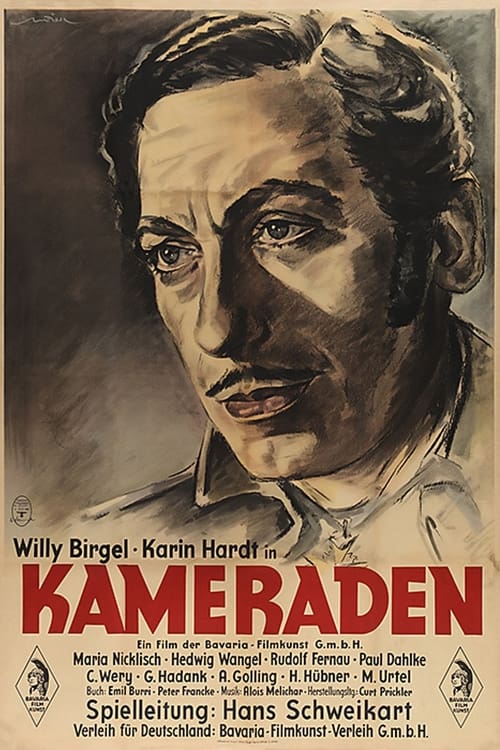
King Frederick II and his leading advisors hesitate too long in the eyes of some officers, so Major von Schill decides to strike out on his own. He hoped that his brave move would be the catalyst for the great war of liberation. But von Schill's troops were soon defeated by a superior force of Dutch-Danish troops. The king takes a public stand against von Schill's actions and eleven of his officers are shot by summary execution on Napoleon's orders. However, one of them, Lieutenant Heinrich von Wedell, escapes death and is sentenced to forced labor for life. When Wedell's brother Karl, who opposed von Schill's unauthorized actions, learns of Heinrich's fate, he decides to help him in a risky way...
Comrades
a silent movie by Robert Wiene