J.A. Seazer
Sound
Biography
Takaaki Terahara (寺原 孝明 Terahara Takaaki), known professionally as Julius Arnest "J.A." Caesar (born 6 October 1948), is a Japanese film and theater music composer. Seazer enjoyed popularity among students in Japan during the 1960s, and worked closely with director Shuji Terayama and his theater Tenjo Sajiki until Terayama's death (besides incidental music, he wrote a few full-fledged rock operas for Tenjo Sajiki, including Shintokumaru). He is a member of the theatrical company Experimental Laboratory of Theatre ◎ Universal Gravitation (演劇実験室◎万有引力 Engeki-Jikkenshitsu Ban'yū Inryoku), better known as just Ban'yū Inryoku. He gained more mainstream attention for his songs composed for the anime Revolutionary Girl Utena, and has also composed the score to the animated film adaptation of Suehiro Maruo's manga Mr. Arashi's Amazing Freak Show (also known as Midori or Shojo-tsubaki). -- Wikipedia

Known For

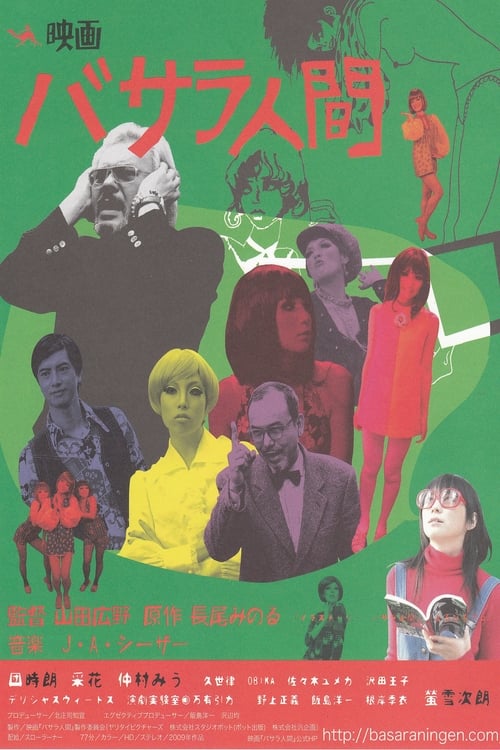
After losing her parents, young flower selling Midori is put up by a fairground group. She is abused and forced to slavery, until the arrival of an enigmatic magician of short stature, who gives her hope for a better future.
Midori

In a loose retelling of the Revolutionary Girl Utena TV series, Utena Tenjou arrives at Ohtori Academy, only to be immediately swept up in a series of duels for the hand of her classmate Anthy Himemiya and the power she supposedly holds. At the same time, Utena reunites with Touga Kiryuu, a friend from her childhood who seems to know the secrets behind the duels. Utena must discover those secrets for herself, before the power that rules Ohtori claims her and her friends, new and old.
Revolutionary Girl Utena: The Movie

A girl named O loves a rich, and much older man. She is subjected to a variety of humiliating experiences to prove her unconditional obedience to him in a Chinese brothel. A poor boy sees her and falls in love with her. To get the money needed to sleep with her, he takes part in rebellious acts.
Fruits of Passion

A surreal, isolated village sees its inhabitants gradually leave behind their mutual traditions and superstitions as they leave for the city. Among them are two cousins who love each other and who get into a quarrel with other villagers.
Farewell to the Ark

A director faces creative block while working on his latest film – a reimagination of his adolescence growing up in a mountain village in rural Japan.
Pastoral: To Die in the Country

An experimental, psychedelic odyssey through Japanese subculture experienced via the eyes of a disillusioned young man, who must contend with intense familial dysfunction, psychosexual alienation, and existentialist malaise.
Throw Away Your Books, Rally in the Streets

In the midst of a match, a successful boxer - Hayato, has had enough of the sport. He lets himself get knocked, quits boxing, leaving his wife and start living alone with his mangy dog. One day a young mediocre boxer knocks at the door and wants to be Hayato's apprentice.
Boxer

Akira is haunted by a "bouncing ball" song that he remembers his mother singing when he was a small child, and now on the verge of a sexually active adulthood, he wants to find the origins of the song. The young man ostensibly wanders into a time-warp in which aspects from his childhood and adulthood mix together. In this never-never land he comes across a beautiful woman/witch who is lost inside the labyrinth of her mansion, just as the young man is lost in the labyrinth of time — and on some levels, perhaps the labyrinth of his subconscious.
Grass Labyrinth

In a Japanese colony, children overthrow their parental guardians and attempt to form a new society. Their plan spirals out of control and they are soon lost in a web of sexual deviation and violence.
Emperor Tomato Ketchup

A group of young men go treasure hunting in the sea.
Bôkenshatachi

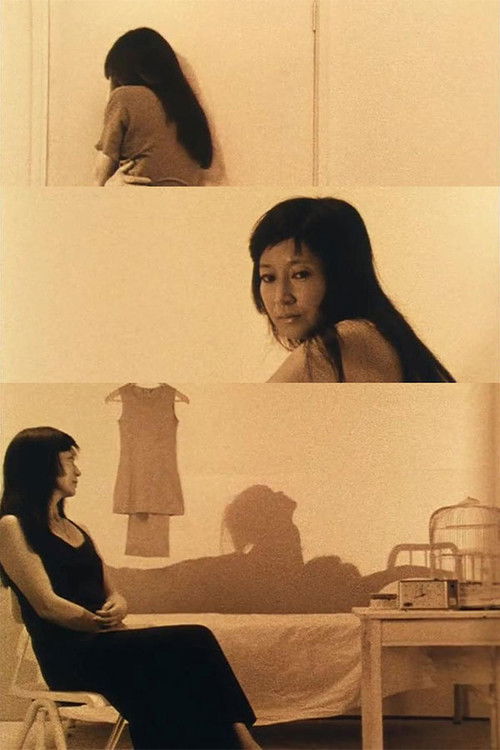
As a family goes on with their day, the shadows on their walls lead a completely different life.
The Woman with Two Heads

This second version of the play follows Wan and Tsu, two apprentice cooks who, as they eavesdrop on their neighbors one day, are shocked by the sudden disappearance of a wall separating them from the next flat. As they try to understand what happened and how to fix their wall, the line between reality and fiction begins to crumble, their endeavors continuously halted by weird and disrupting characters.
The Lemmings
In this Borgesian satire on knowledge and technology, bibliophilic desire leads to the construction of a pedal-powered reading machine. Resembling a combination of gymnastic contraption, printing press and early cinematic apparatus, the machine’s purpose remains ambiguous. And like this machine, Terayama’s film connects his work in poetry, motion picture and graphic design by weaving together printed and projected, still and moving images.
The Reading Machine

An experimental short featuring people and nails.
The Trial

Shuji Terayama and J.A.Seazer's phantasmagoric folk-psych-symph-prog-rock opera. Historical Tenjo Sajiki performance from 1978.
Shintokumaru

A bus full of cult members gets stuck in snow. The cult has to stay in a mountain hotel. Strange things start to happen...
Heaven and Hell

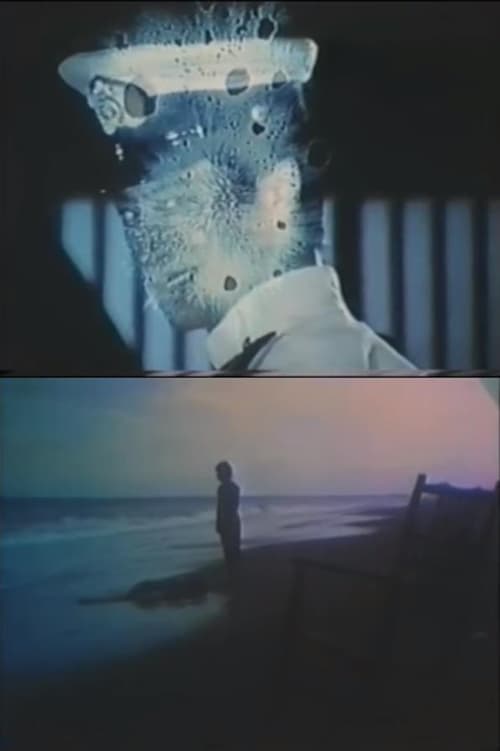
Visions of characters by the seaside from one's memory are erased by the filmmaker's hand.
The Eraser

A man claiming to be the heir of an estate in northern japan finds himself at the doors of his mansion, only to find it overrun by servants and maids playing pretend as master or mistress, while the real master is nowhere to be found. As he makes his way down the many rooms of the mansion and witnesses the staff's strange antics, he gradually loses his own role and sense of identity. In this subversive play performed by Tenjo Sajiki, the spectator is asked to question their own role as hierarchical structures are reversed and walls between character and actor, actor and audience gradually break down.
Directions to Servants
Using bluescreen video techniques, Terayama playfully—and with a silent film theatricality—posits a series of postmodern vignettes featuring realities-within-realities as his protagonist attempts some kind of relationship with a nude woman on the screen-within-the-screen. In his struggles to “free” her, he exposes the absurd flimsiness, deceptiveness and mutability of both the cinema experience and our human dimension.
An Attempt to Describe the Measure of a Man

No description available.