Ernst Wild
Camera
Known For
No description available.
German Film Award

A German submarine hunts allied ships during the Second World War, but it soon becomes the hunted. The crew tries to survive below the surface, while stretching both the boat and themselves to their limits.
Das Boot

Eight acclaimed filmmakers bring their unique and differing perspectives to the 1972 Summer Olympic Games held in Munich. The segments include Lelouch's take on Olympic losers and their struggle to remain dignified even in the face of bitter disappointment and defeat; Zetterling's dramatic exploration of the world of weightlifting; and Pfleghar's piece on young Russian gymnast Ludmilla Tourischev's majestic performance on the uneven bars.
Visions of Eight
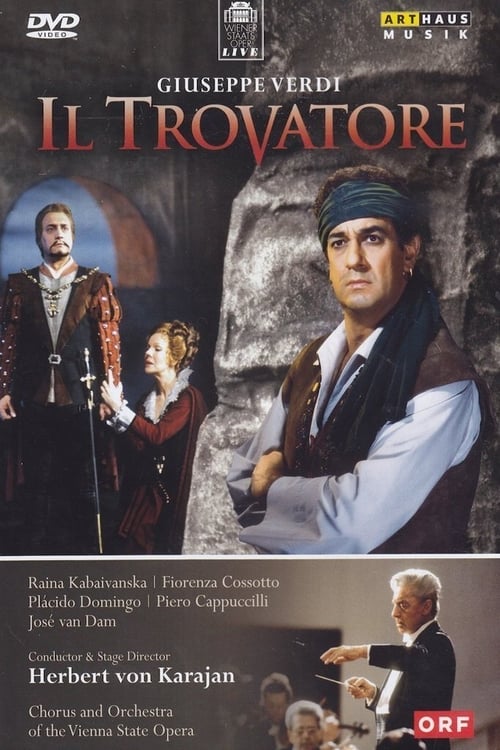
The gypsy Azucena (Fiorenza Cossotto) takes revenge for her mother who was accused of putting a curse on one of the old Count di Luna's two sons: she decides to abduct the younger child and throw it in the flames. But when she is about to carry out this fatal act, the gypsy sacrifices her own child and keeps the old Count’s son, whom she names Manrico (IL TROVATORE, Plácido Domingo). Later, as adults, the troubadour Manrico and the Count di Luna’s elder son (Piero Cappucilli) do not know each other, but become rivals for the beautiful Leonora (Raina Kabaivanska). Manrico succeeds in winning the young woman’s heart, and she sacrifices herself for him, deceiving the Count’s son. Mad with jealousy, the latter orders the execution of the troubadour in front of his mother. Azucena reveals to him that Manrico was his brother. This legendary performance of Giuseppe Verdi's most successful opera was recorded at the Vienna State Opera under the baton of Herbert von Karajan.
Il Trovatore - Verdi
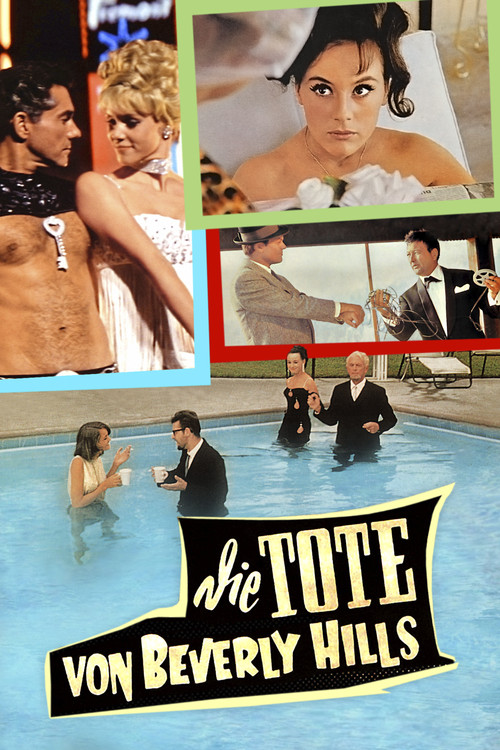
Detective C.G. begins to investigate the death of an attractive woman whose naked body was found in Beverly Hills. When he recovers her journal, he is taken into her past where he finds that she lead a sexually promiscuous life. Perhaps in the pages of the diary will be a clue to her killer's identity.
Dead Woman from Beverly Hills

After completing his voyages Sindbad the Sailor and his hearty crew have come home to find a palace coup d'etat has occurred and his home city is being run by a brutal dictator played by Pedro Armendariz. He's got designs on the beautiful young princess, Heidi Bruhl both lustful and political.
Captain Sindbad

A young man is chosen by a magazine company to be a modeled into a public heart-throb while being dogged by a persistant reporter out to expose the fraud the company is putting out.
How to Seduce a Playboy?

Pitt and Felix, two friends from school, meet again by chance in hospital years later. Both are looking forward to fatherhood. In order to shorten the grueling wait until the baby is born, they exchange lively memories of their school days. Some embarrassments are also brought up.
Auch ich war nur ein mittelmäßiger Schüler
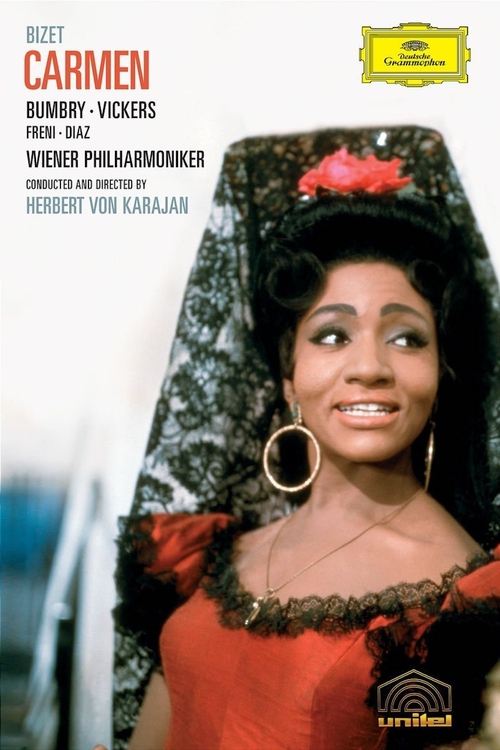
This spectacular opera film was taped in 1967 and is based on the 1966 Salzburg Festival production directed by Herbert von Karajan himself, who also conducts the fabulous Vienna Philharmonic Orchestra. The production features the three greatest exponents of their respective roles at the time: Grace Bumbry’s magnificently seductive-toned Carmen, Mirella Freni’s ineffably lovely, touching Micaëla and Jon Vickers’s thrillingly manic-depressive Don José. On its release the film was hailed by Die Presse, (Vienna) as a “unique artistic event”, while Le Monde felt that Karajan’s production brought “a whole new dimension” to the opera, “combined with a magisterial interpretation”. A classical and utterly dramatic approach to probably the world's most beloved opera – Karajan’s Carmen is as much a delicacy for opera fans as it is a perfect starter for newcomers.
Bizet Carmen

Documentary based on the book by Erich von Däniken concerning the ancient mysteries of the world, such as the pyramids of Egypt and Mexico, ancient cave drawings, the monuments of Easter Island, etc., and the fact that these things and modern civilisation could have been influenced by extraterrestrial visitations hundreds (or perhaps thousands) of years ago.
Chariots of the Gods
No description available.
Zwanzig Mädchen und die Pauker: Heute steht die Penne kopf
Over twenty-five years after his death in July 1989, the controversial Austrian conductor Herbert von Karajan remains an enigma. He was the most successful conductor in the history of classical music. Many of his recordings - of Italian opera, of Wagner and Richard Strauss, of Sibelius, Beethoven and Brahms - are treasured by music lovers around the world. Yet, even at the peak of his fame, his performances were variously criticised for being too opulent, too manicured, lacking warmth or spiritual depth. This musical profile explores the many paradoxes in the life and music of this controversial figure, who forged his international reputation in London with the Philharmonia Orchestra shortly after the end of the Second World War and went on to reign supreme in the classical music world during his three decades with the Berlin Philharmonic. The film also examines Karajan's belief in the visual power of music, and his determination to leave behind a substantial legacy of music on film.
Karajan's Magic and Myth
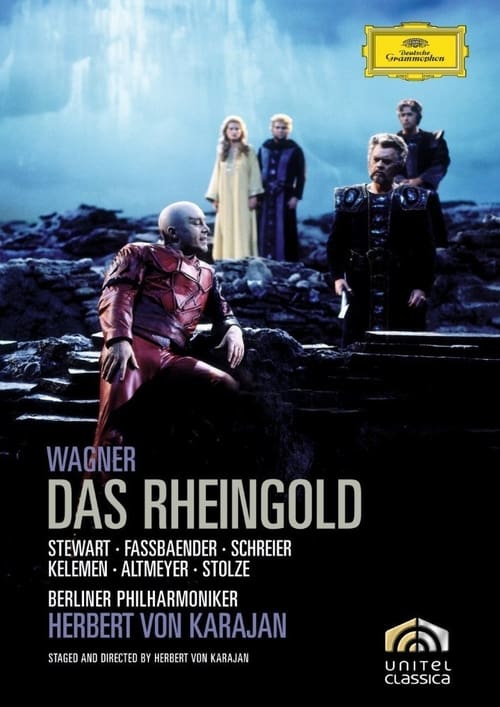
This 1978 studio production of the prologue to Wagner's masterpiece is the only segment of the famous Salzburg Festival/Metropolitan Opera productions, first seen in the 1960s, that made it to film. Based on one of those original productions, Georges Wakhevitch produced stage settings and transformations that supported Karajan's concept with every possible means. Herbert Von Karajan's staging is in the epic style of another age, emphasizing the dignity of the gods rather than their all too human failings. With the singers - foremost among them Peter Schreier - Karajan had an ensemble that fully conformed to his intentions.
Wagner: Das Rheingold
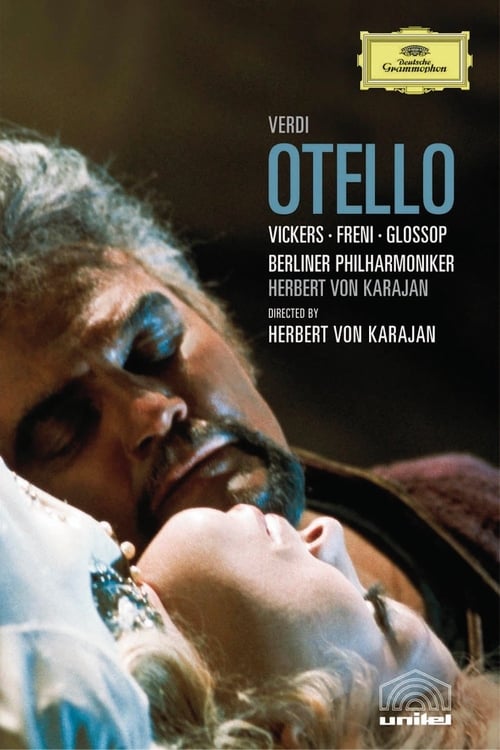
Herbert von Karajan directed this film of Verdi’s Shakespearan masterpiece as well as conducting the Berlin Philharmonic. As the tragic Moor of Venice, arguably his greatest role, John Vickers (in the words of critic David Cairns) "commands both the notes and the moral grandeur of the part. … And he has the aura of greatness – greatness of heart, of bearing, of musical and dramatic conception". Mirella Freni is a heartbreakingly lovely and fragile Desdemona, while the fine English baritone Peter Glossop plays the villainous Jago.
Otello
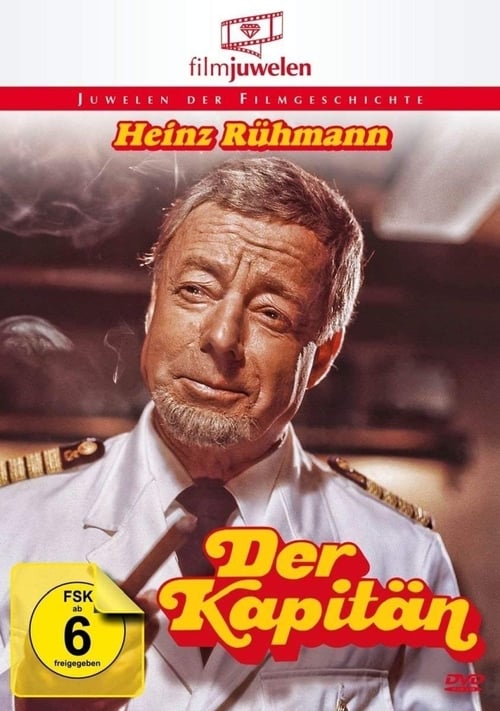
Captain Ebbs is an older, experienced seaman who has, however, only sailed on freighters. While his current old barge, the Martin Luther, has to go into the shipyard for an overhaul, the shipping company gives him command of the elegant cruise ship Julia to temporarily replace a colleague who has fallen ill. The rough Ebbs finds his way into his new job only with difficulty and initially puts his foot in his social mouth.
Der Kapitän
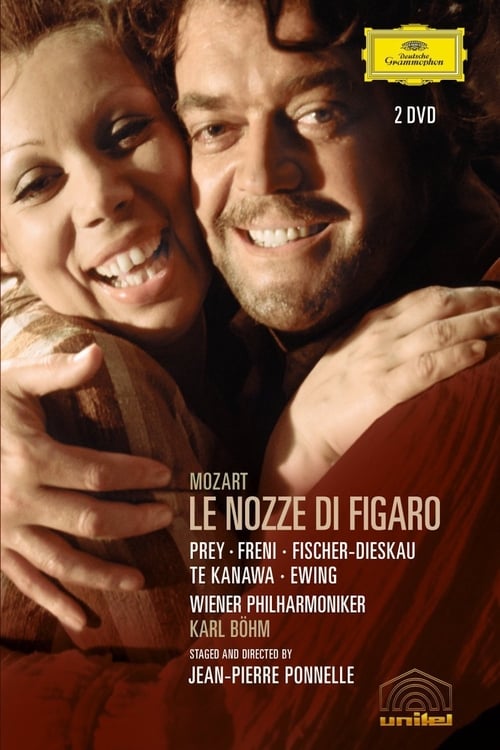
Mozart's Marriage of Figaro is a comedy whose dark undertones explore the blurred boundaries between dying feudalism and emerging Enlightenment. Herman Prey's Figaro is admirably sung in a firm baritone and aptly characterized. So too, is his antagonist, Dietrich Fischer-Dieskau as the Count perpetually frustrated by the scheming wiles of Figaro and Susanna, here the perky Mirella Freni, who sings and acts like a dream. The Countess is creamy-voiced Kiri Te Kanawa, and the Cherubino, Maria Ewing, looks just like the horny, teenaged page she's supposed to be. The all-star leads are complemented by worthy supporting singers, the Vienna Philharmonic at the top of its form, and the experienced Mozartian, Karl Böhm conducting a stylishly fleet performance.
The Marriage of Figaro
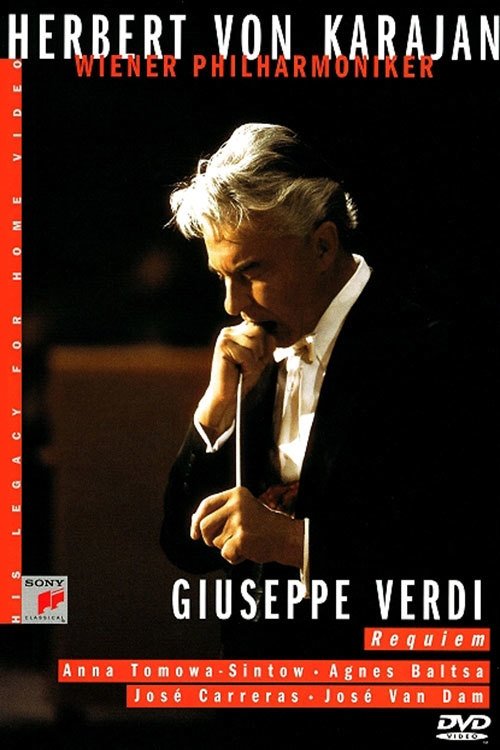
This installment in the "Karajan Legacy" series captures the acclaimed conductor leading the Vienna Philharmonic Orchestra with the Vienna State Opera Chorus and the Sofia National Opera in a masterful performance of Verdi's "Requiem." Filmed in 1984, the concert features an array of renowned soloists, including tenor José Carreras, soprano Anna Tomowa-Sintow, bass-baritone José van Dam, bass Kurt Moll and mezzo-soprano Agnes Baltsa.
Herbert von Karajan: Verdi: Requiem
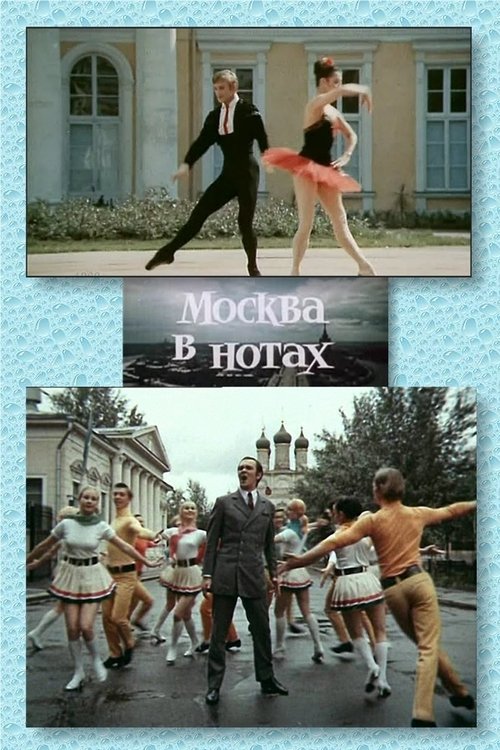
A promotional concert film made for promoting and introducing Moscow to foreigners.
Moscow in Notes
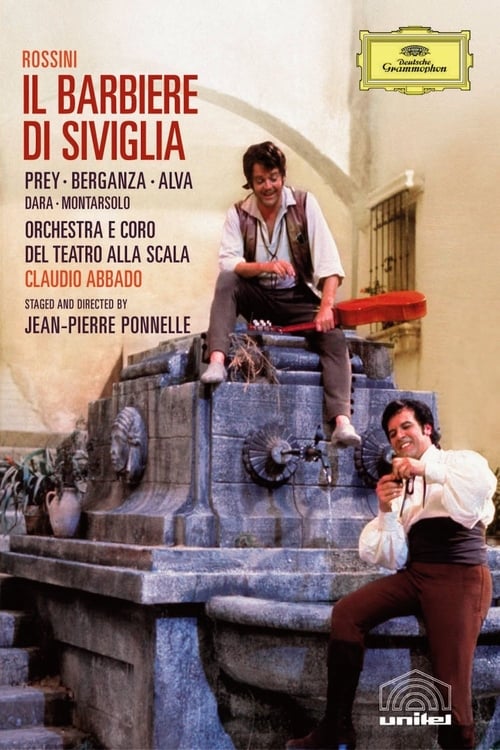
Count Almaviva is in love with Rosina. However, she is currently staying with Dr. Bartolo – who desires to marry her. By using a series of disguises, Almaviva manages to pass letters to Rosina and serenade her with his beautiful voice. Dr. Bartolo does his best to stop Almaviva but is constantly thwarted. In the end, Count Almaviva marries Rosina and Dr. Bartolo comes to terms with his defeat.
Il Barbiere di Siviglia
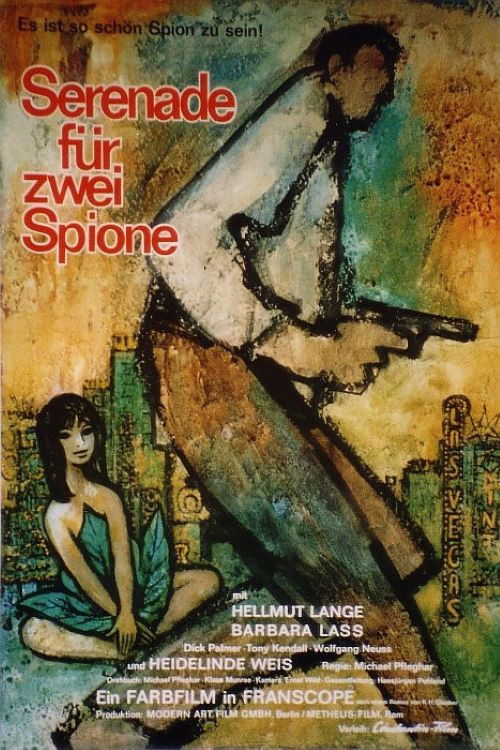
An international gang of gun dealers in the USA has stolen the prototype of a laser rifle from a German laboratory. The FBI agent Cormoran is being sent to recover the state-of-the-art and highly effective weapon. But there are some indications that he has defected to the enemy. Since agent 007 is currently on another mission, the chief of intelligence has to fall back on his second best man, the previous number 006. And so the German secret agent John Krim is given the assignment to get the rifle back, find evidence of Cormoran’s treachery and finally eliminate the colleague. Krim’s journey takes him across the ocean, and there he experiences incredible adventures in San Francisco, Los Angeles and Las Vegas. Two women get in his way, and Krim can’t be sure whether he can trust them or whether they too are working for the other side.