Eiji Yoshikawa
Writing
Known For

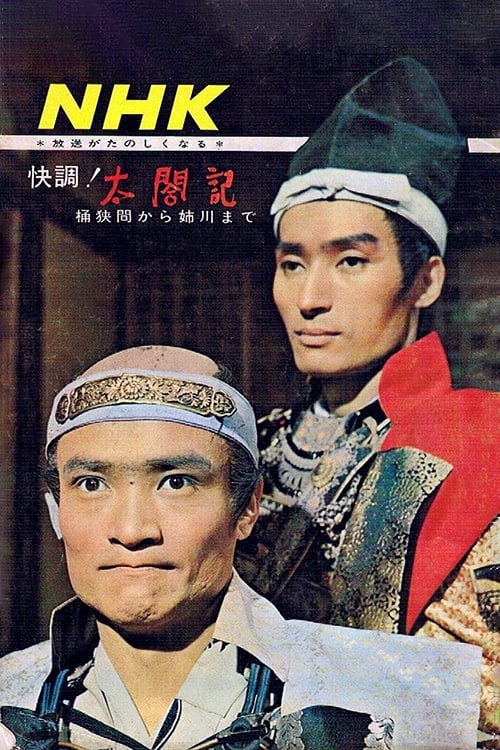
Based on the life of Hideyoshi Toyotomi (February 2, 1537 – September 18, 1598) a Sengoku period daimyo who unified Japan.
Taikouki

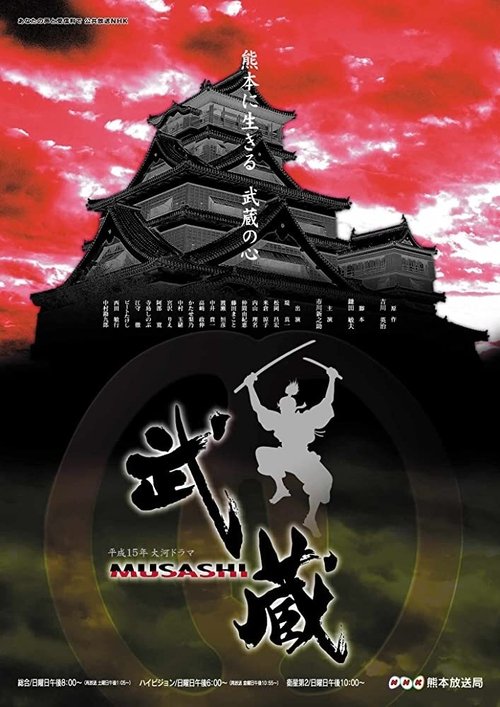
Orphaned when he was not yet ten, Musashi grows up skilled in the martial arts. During the Battle of Sekigahara, he fights on the side of the losing Toyotomi forces, but eludes the enemy as they hunt down the vanquished soldiers. He then spends years wandering the countryside mastering the sword. As his fame spreads throughout the nation, men seek him out to test their skills against him--most notably Sasaki Kojiro who faces Musashi in the ultimate duel at Ganryujima.
Musashi

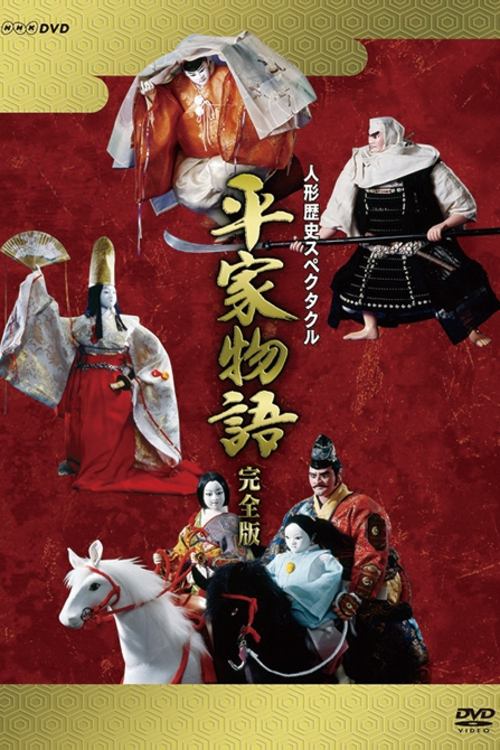
A stop-motion animated TV series based on the novel by Eiji Yoshikawa, featuring puppet art by Kihachirō Kawamoto. This is a historical picture scroll depicting various human characters, breathtaking battles and political struggles from the rise to fall of the Heike clan.
Historical Puppet Spectacle: The Tale of the Heike

On September 15, Keicho, a young man, Takezo, whose life was ruined by the war in Sekigahara wandered around like a wild beast. Only his lover Otsu and the pacifist monk Takuan understood Musashi, who escaped from the hands of the Ochimusha hunters and turned against everyone. Then, a crisis loomed over Takezo as he fled into the mountains. At the same time in the village of Jokyoji in Echizen, the sword prodigy Sasaki Kojiro, in his quest for strength had defeated his own master, Tomita Seigen and got out of the village.
Miyamoto Musashi

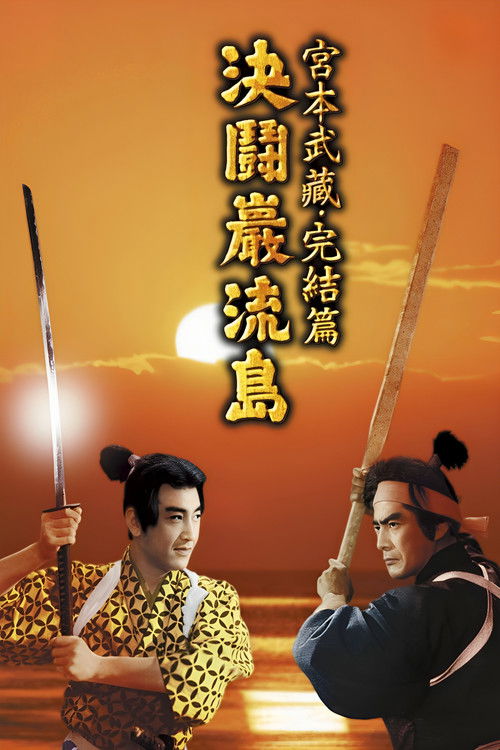
A humble and simple Takezo abandons his life as a knight errant. He's sought as a teacher and vassal by Shogun, Japan's most powerful clan leader. He's also challenged to fight by the supremely confident and skillful Sasaki Kojiro. Takezo agrees to fight Kojiro in a year's time but rejects Shogun's patronage, choosing instead to live on the edge of a village, raising vegetables. He's followed there by Otsu and later by Akemi, both in love with him. The year ends as Takezo assists the villagers against a band of brigands. He seeks Otsu's forgiveness and accepts her love, then sets off across the water to Ganryu Island for his final contest.
Samurai III: Duel at Ganryu Island

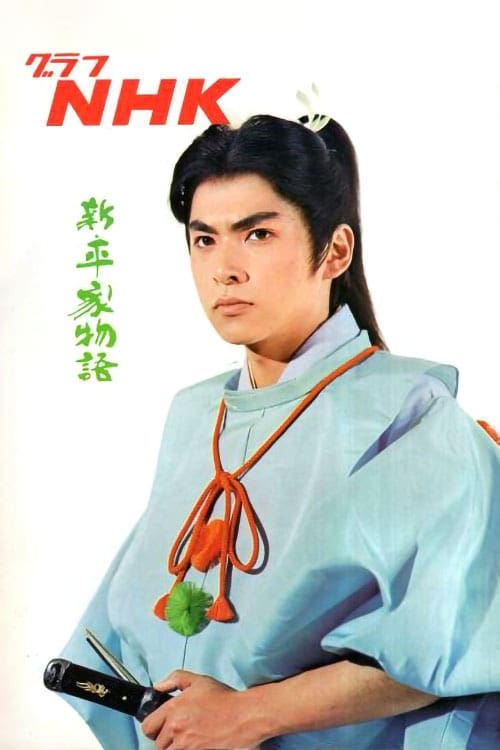
Set at the end of the 12th century when several wars for control of Japan disrupted a long era of peace, this tale of "Heike" (another name for the Taira clan) focuses on Taira Kiyomori who fights alongside other members of his clan to at first successfully overcome the Minamoto clan and their bid for power. Battles and intrigue abound, as the puppet Emperor and Buddhist monks take sides in the power struggle. At issue is Kiyomori's parentage, not an unusual problem for the nobility in that era where clandestine liaisons among courtiers and the upper classes were common.
Shin Heike Monogatari

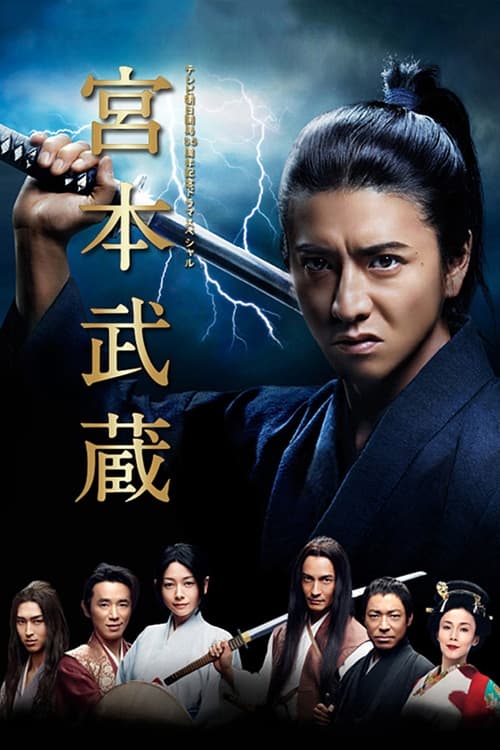
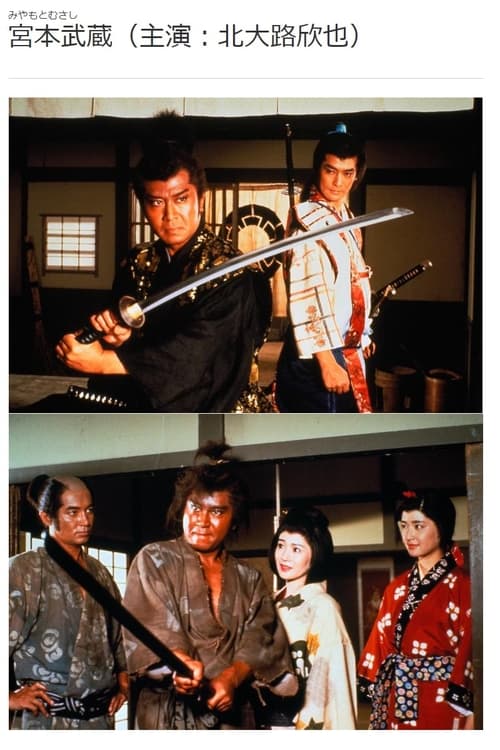
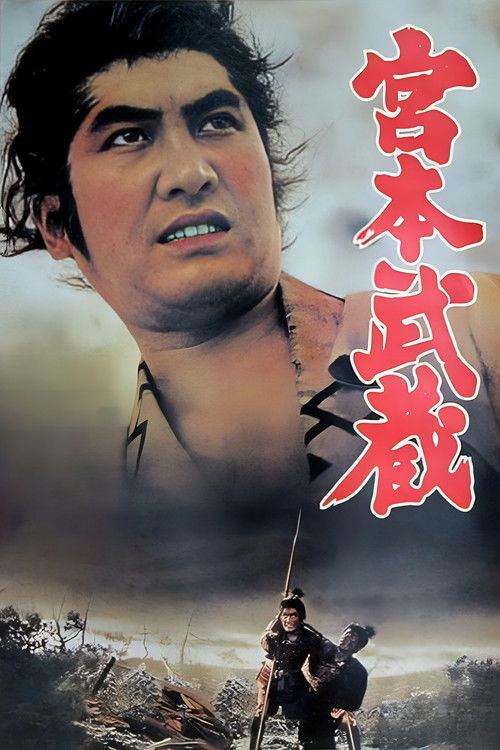
Musashi Miyamoto left his village and ended up fighting in the battle of Sekigahara with his friend Matahachi, but Musashi Miyamoto lost Matahachi. He goes back to the village to inform Matahachi's family about what happened. At the village, he is persecuted by people there. Musashi Miyamoto becomes worn down physically and mentally. At this time, Soho Takuan appears in front of Musashi Miyamoto. He then rebuilds his life with his sword. Musashi begins to travel for warrior training. He meets many masters of the sword and grows as a person.
Miyamoto Musashi

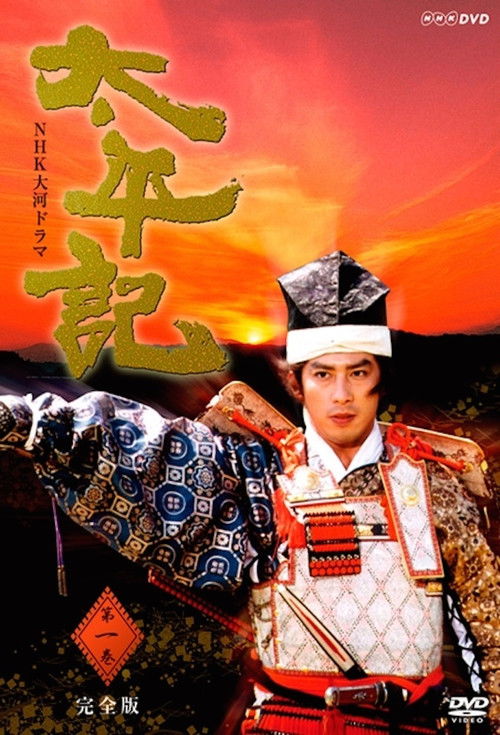
The drama centers on Ashikaga Takauji's rise to power, overthrowing the Kamakura shogunate and eventually establishing the Ashikaga shogunate.
Taiheiki

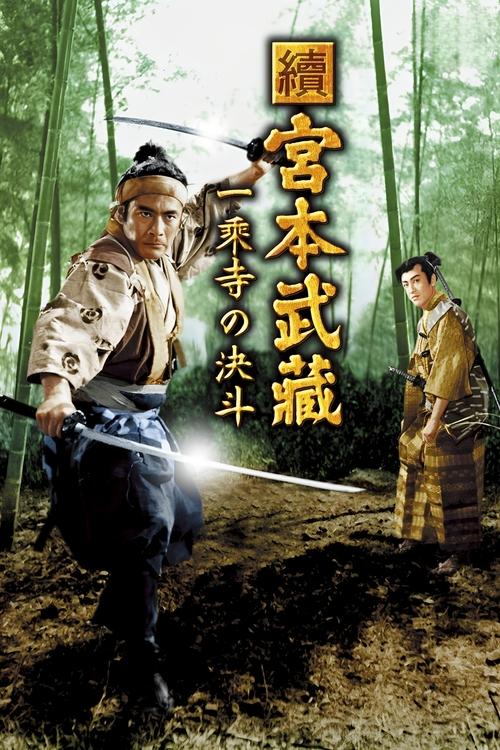
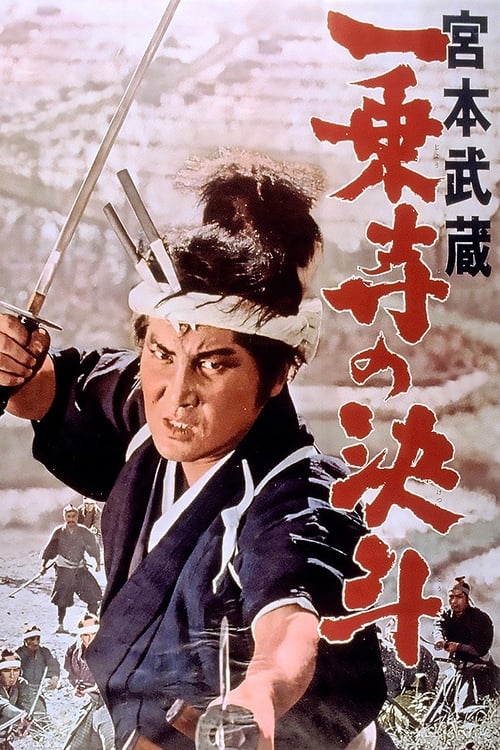
After years on the road establishing his reputation as Japan's greatest fencer, Takezo returns to Kyoto. Otsu waits for him, yet he has come not for her but to challenge the leader of the region's finest school of fencing. To prove his valor and skill, he walks deliberately into ambushes set up by the school's followers.
Samurai II: Duel at Ichijoji Temple

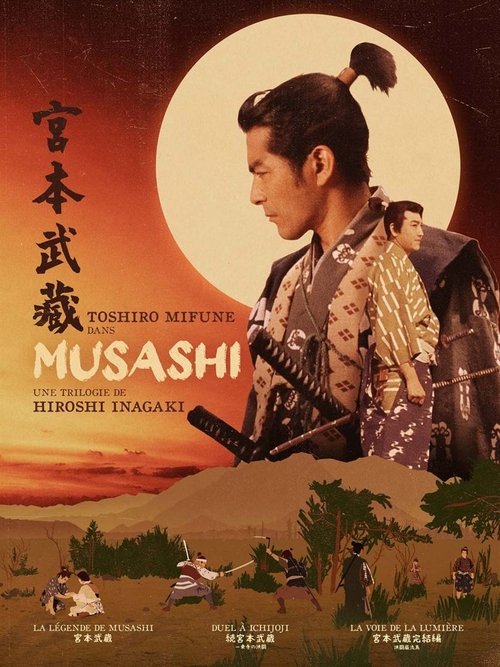
Struggling to elevate himself from his low caste in 17th century Japan, Miyamoto trains to become a mighty samurai warrior.
Samurai I: Musashi Miyamoto

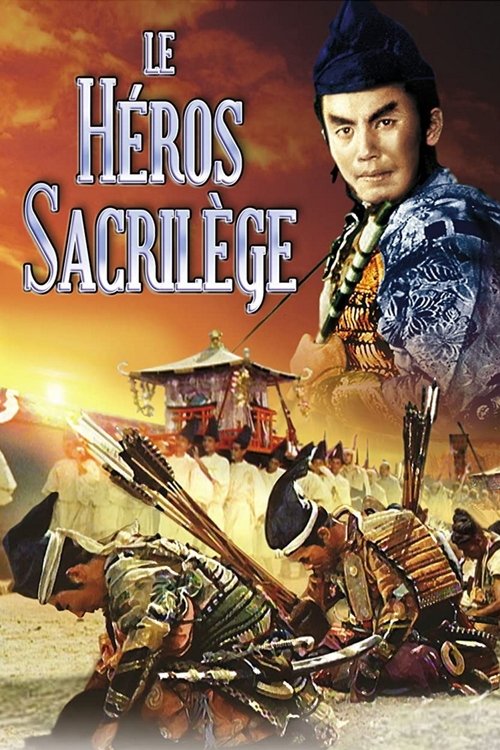
Japan, 1137. The Taira family, a samurai clan, becomes involved in the disputes between Emperor Toba and the monks of Mount Hiei.
Taira Clan Saga

The remake of Yoshikawa's novel continues with the second installment in which Takezo, soon to be Miyamoto Musashi, emerges from the Himeji Castle after three years of intense contemplation and philosophical study and starting on his epic quest to complete his skill in the Way.
Miyamoto Musashi: Showdown at Hannyazaka Heights

In the fourth installment, Musashi's potentially greatest opponent Kojiro jumps in and out of the story at the oddest and most coincidental moments. As his great love Otsu has succumbed to madness. Musashi then sets off to beat the functionaries of a treacherous clan in an arranged duel. 73 against one. Boastful Kojiro watches, secure in the knowledge that only he is a worthy opponent.
Miyamoto Musashi IV: The Duel at Ichijo-ji Temple

In the third installment of Yoshikawa's novel Musashi, things continue from the 2nd film at the end of battle, where Miyamoto continues on a mission of learning; with the introduction of his arch-rival Sasaki Kojiro; and lastly the large cast of characters rendezvouses for a fateful finale.
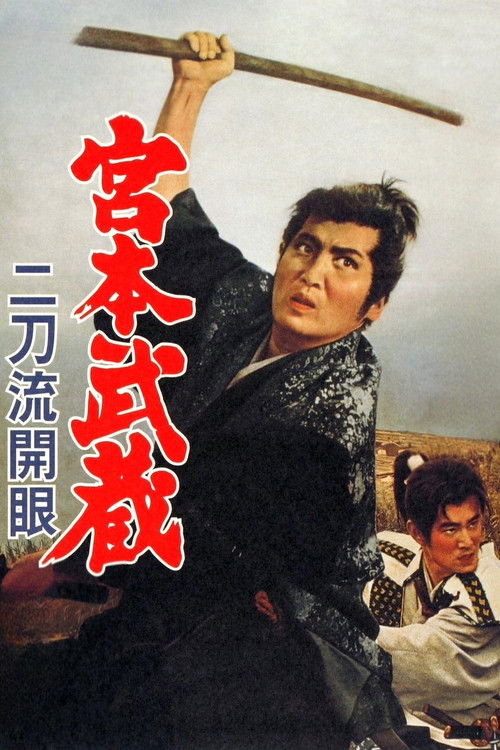
Miyamoto Musashi III: Birth of Two Sword Style

The fifth and final installment with the build up of the epic battle between Sasaki Kojiro and Miyamoto Musashi. With all the familiar characters making appearances: Otsu (Musashi's great love), Akemi, Matahachi (his former fellow soldier), old lady Osugi (still doggedly trying to defeat Musashi), and even the return of Priest Takuan (the man responsible for his journey towards enlightenment). But most of all, the boastful, long-haired and long-sworded Sasaki Kojiro.
Miyamoto Musashi V: Musashi vs Kojiro

In Part I we see the young would-be swordsman setting out to achieve greatness in war, achieving nothing because fighting on the losing side, & then beginning his long period of wandering & training, with the goal always in mind of his duel with Kojiro. Part II builds toward that great duel on Ganryu Island, with considerable focus on Musashi's planning & forethought as to how to gain an advantage.
Miyamoto Musashi

In this first episode, we are introduced to Takezo, what Musashi used to be before he became the man of legend. His beginning are not exactly auspicious. He sides with the Toyotomi at Sekigahara, and as a result finds himself on the losing side of the historic battle. He and his friend Matahachi manage to escape the slaughter although the latter is wounded in his leg. They stumble across the young Akemi who makes her living with her mother Oko by robbing corpses of their armor and anything else they can sell. Oko takes it into her head to seduce Matahachi, which she does first by skillfully sucking the gangrene from his blood, and then just by sucking.
Miyamoto Musashi

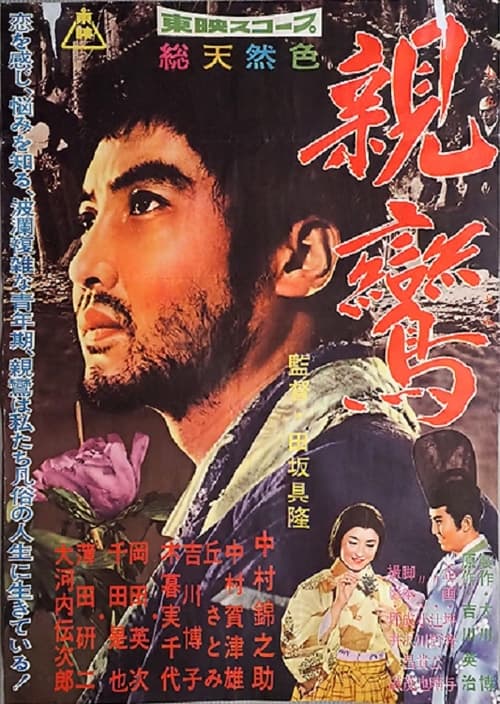
Continuation of the biographical film about the monk Shinran, based on the novel by Eiji Yoshikawa. Shinran, born of the fading aristocratic class, was placed in a monastary on Mount Hiei when still a child. He did not come down for twenty years, when his wanderings begin as he spreads his ideas for achieving enlightenment through the Pure Land sutra. Because his teachings contradict the powerful Tendai sect, he comes to grief with the government, his followers persecuted, himself exiled to far coastal Echigo where he married & began raising a family but soonafter was wandering & teaching again. He lived to be ninety.
Shinran, Part II

1942 Japanese movie
Miyamoto musashi Ichijōji kettō

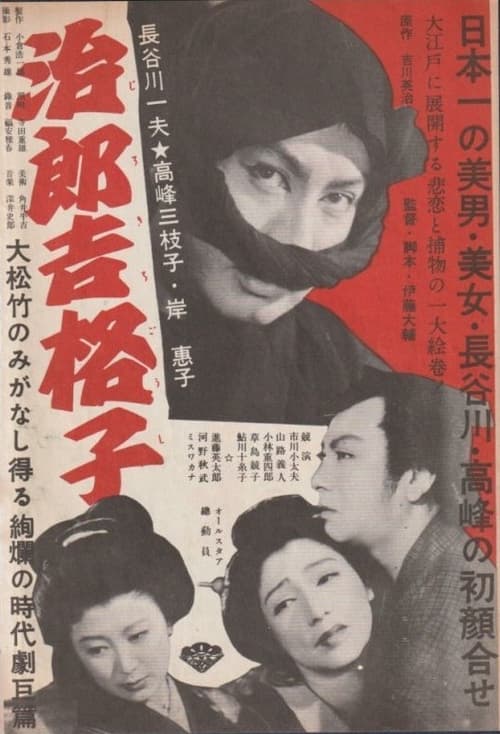
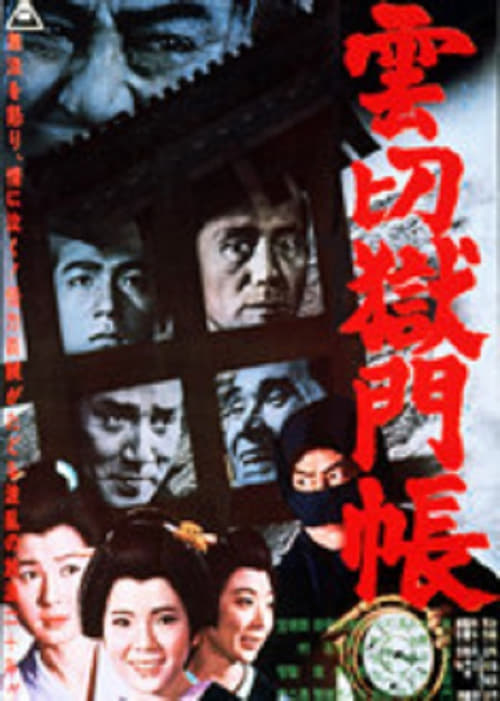
From the pen of Yoshikawa Eiji comes this exciting story. The Naruto Strait separates Tokushima from the islands of Awaji and Honshu. On Tokushima the mad lord dreams of conquest and forges a bloody revolt against the Tokugawa shogunate. A mysterious swordsman named Noriyuki Gennojo has crossed Naruto’s waters to uncover the Awa clan’s secrets. He puts his life on the line after finding a testament of Awa’s secrets, written in blood by a dying man. Joining Noriyuki are a female ninja who loves him, and the beautiful daughter of an enemy who’s sworn to kill him. Awa’s defenders willl stop at nothing to prevent the blood-soaked letter from reaching the shogun.