Acting
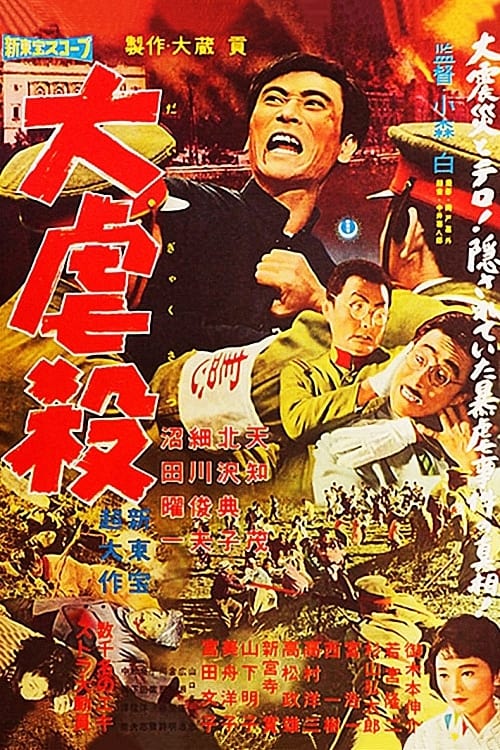
On September 1, 1923, an unprecedented earthquake hit the Kanto region. The streets are filled with victims, and rumors are circulating around. The military seized the opportunity to round up and kill many socialists, anarchists, and Koreans, culminating in the arrest and murder of Sakae Osugi. His comrades and students are outraged by this atrocity. The young man Furukawa also becomes stronger in his determination to overthrow the military...
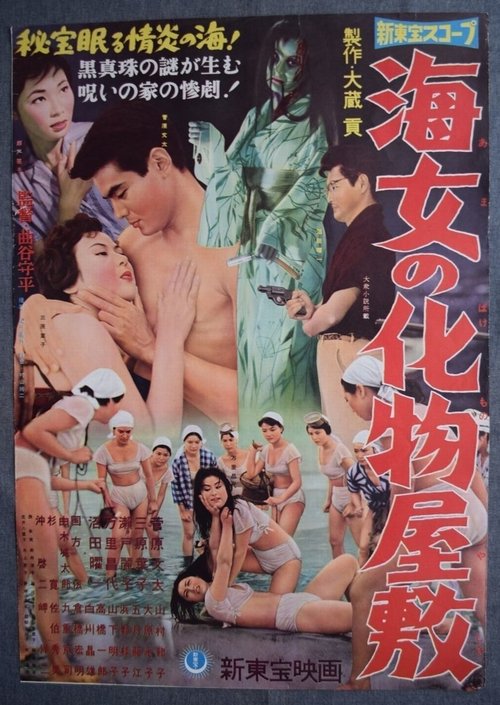
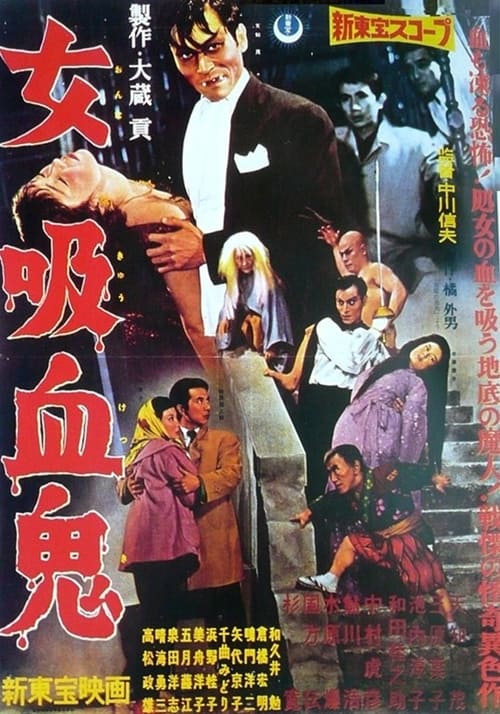
The treasures of the Aoyamas were buried at the bottom of the sea when a large earthquake occurred years before. Yumi Aoyama is the only person who knows the location, but her family dies one after another through curious incidents, as if the family were under a curse. Yumi is surprised by the ghost of a dead sister who looks the same as the grim figure who jumped into the old well alter stabbing herself with a sword. Fearful that a similar fate awaits her, Yumi seeks the help of her friend Kyoko. Later the ghost appears before Kyoko and her fiancé, Detective Nonomiya. In a haunted cave, Kyoko and Yumi are in deadly peril from those who seek treasures of the Aoyamas.
A love triangle among a girl, her poor boyfriend, and a rich company president.
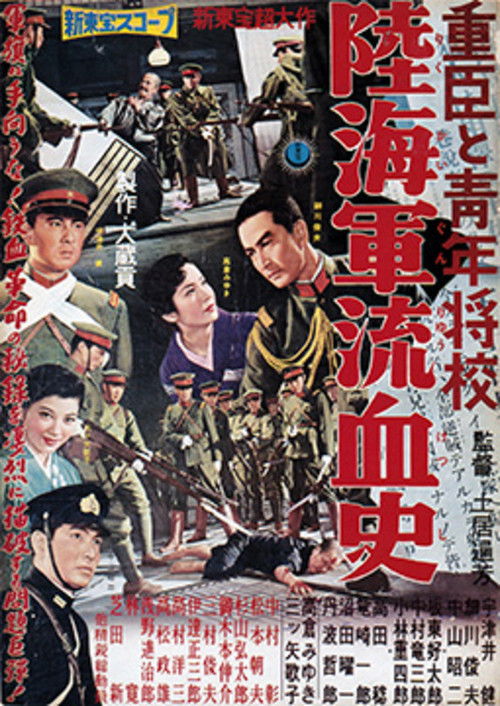
A historical film that portrays the fervent and violent actions of young Army and Navy officers, such as the February 26 and May 15 incidents, in a semi-documentary style.
A spectacular comedy with a star-studded cast that depicts unusual trials and unexpected verdicts regarding the five deadly sins: the crime of beauty, the crime of a terrifying wife, the crime of taking the wrong course, the crime of seducing, and the crime of killing with laughter.
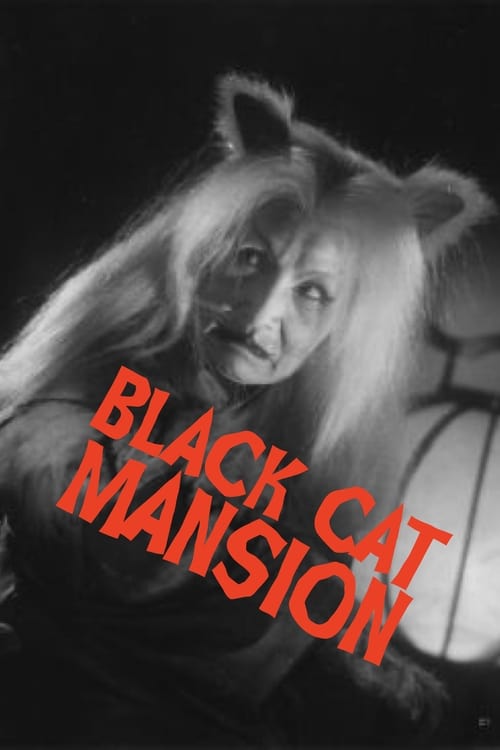
The descendant of the servant of a cruel and vicious samurai returns to the town where she was born, only to find that a cat who is possessed by the spirits of those murdered by the samurai is trying to kill her.
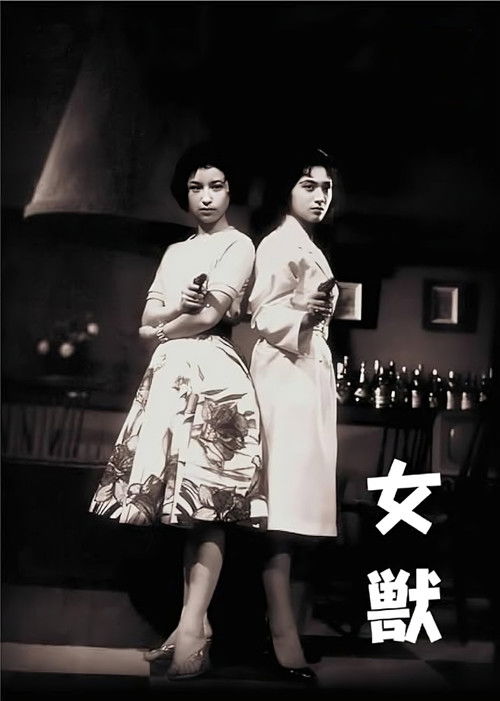
With the object of discovering the male accomplice of Hideko, a bad girl, Michiko, a police-woman, disguises herself and infiltrates a gang. Then in a reformatory, under the name of Suzuko, she finds a certain girl who is familiar with Hideko and from her she approaches a woman, named Keiko. One day, at a beer-hall, the police-woman meets Keiko who just finished a secret narcotics transaction and asks her about Hideko. However, with the sudden appearance of Saburo, one of the gang, her search fails, and an exciting pursuit begins. Later Keiko is found dead.
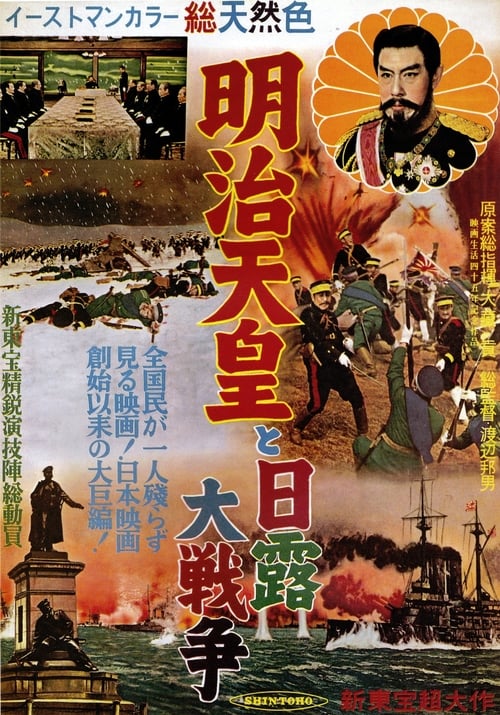
Meiji Tenno portrays the buildup to the Russo-Japan War. In addition to showing the political events that led to war, it also shows the era from the story of a farm family in rural Japan that sends their son off to war. As such, it could be considered an anti-war movie, showing how, while war is devised by governments, the people do not really understand what war is, and its combatants often do not know what they are fighting for.
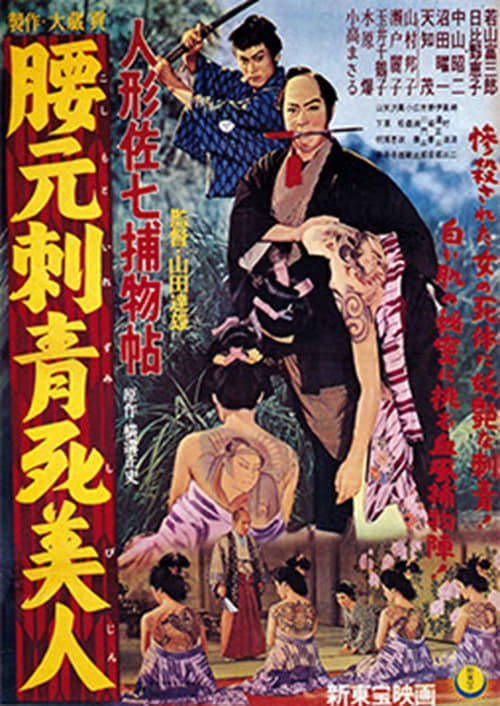
The fifth volume of the Ningyo Sana Torimonocho series. Based on the original work by Seishi Yokomizo, the film was adapted by Mitsuo Kaneda (The Nude Model Murder Case), directed by Tatsuo Yamada, who worked on The Golden Bugyo, and shot by Kikuzo Kawasaki. Keiko Hibino, Shigeru Amachi, Tomisaburo Wakayama
Japanese film.
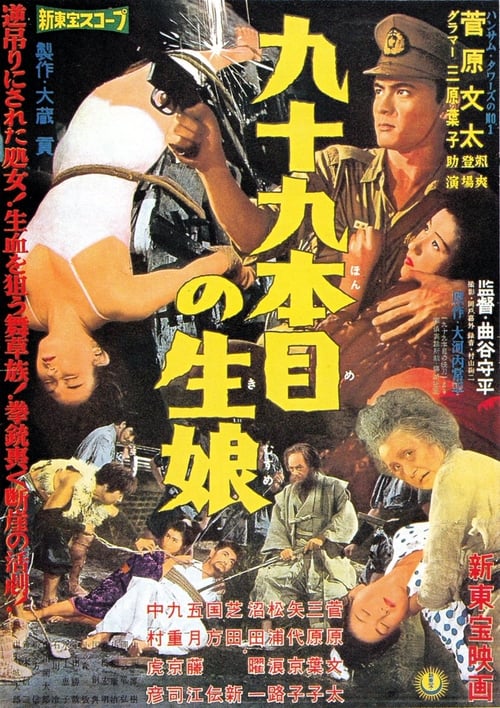
In the northern province, two waitresses Mieko and Hanako from Tokyo, are missing somewhere near the River Kitakami. At night, the villagers of Shirayama gather round a blazing fire, and utter incantations while an old headman tempers a sword...
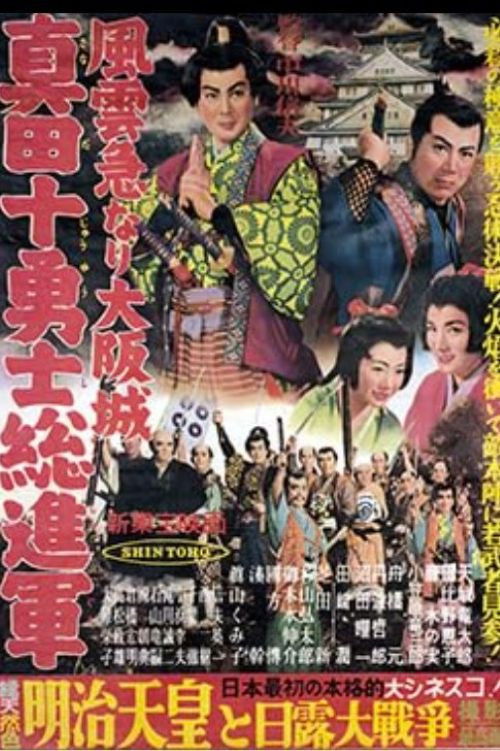
After defeat in the Battle of Skigahara, Yukimura Sanada and his Ten Braves scatter across the country to spy in order to be prepared for the final battle at Osaka Castle, trying to bring an end to the fighting by revealing the secret will of Toyotomi Hideyoshi, if they can get their hands on it!
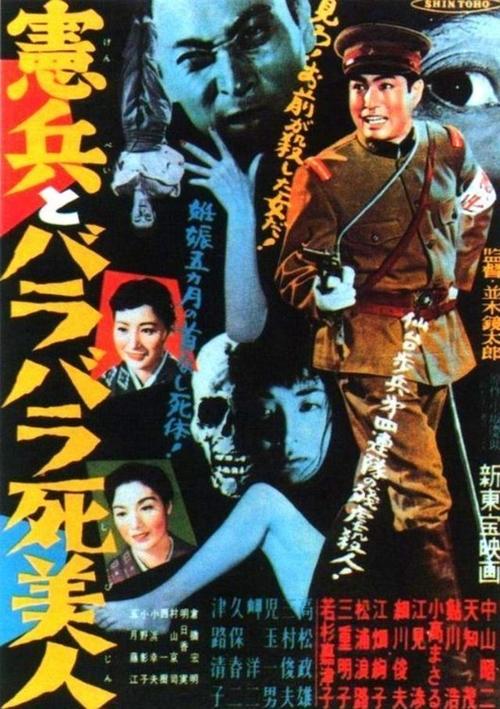
The year is 1937, and it has been six months since the Sendai Infantry left for Manchuria. The rotted corpse of a young woman is found at the bottom of a well, but her face and limbs are gone. The military police begin an investigation and search fervently for the person responsible, but they can't even determine the victim's identity, much less find any clues. However, the incident is made public when newspapers give wide coverage to the story, so Staff Sergeant Kosaka is dispatched from Tokyo to solve the case. Eventually, General Tsunekichi is taken into custody by local infantrymen because of the testimony of another unit, but the spirit of the dead woman appears before Staff Sergeant Kosaka, who continues to investigate on his own...
Japanese sports comedy film about kendo.
Song of the White Orchid was a co-production of Toho and Mantetsu, the railway that served the colonial region of Manchuria, and the first film in the Kazuo Hasegawa/Shirley Yamaguchi (Ri Koran) “Continental Trilogy.” Handsome Hasegawa (representing Japan) runs up against an impertinent Yamaguchi (representing the continent); not surprisingly, in the course of the film the woman comes around and realizes the benevolent intentions of the Japanese. In Song of the White Orchid Yamaguchi leaves Hasegawa, who plays an expatriate working for the railway, because of a misunderstanding. She joins a communist guerilla group plotting to blow up the Manchurian railway. Learning of the subterfuge that led to the misunderstanding, she renews her faith in Hasegawa—and by extension Japan—and tries to undermine the plot.
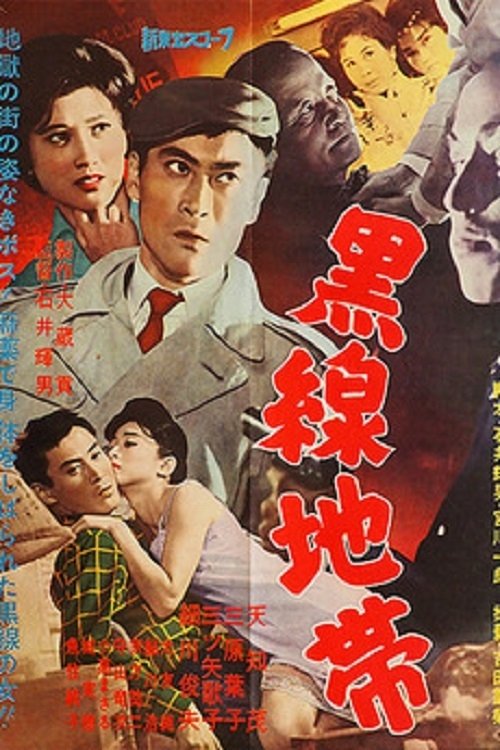
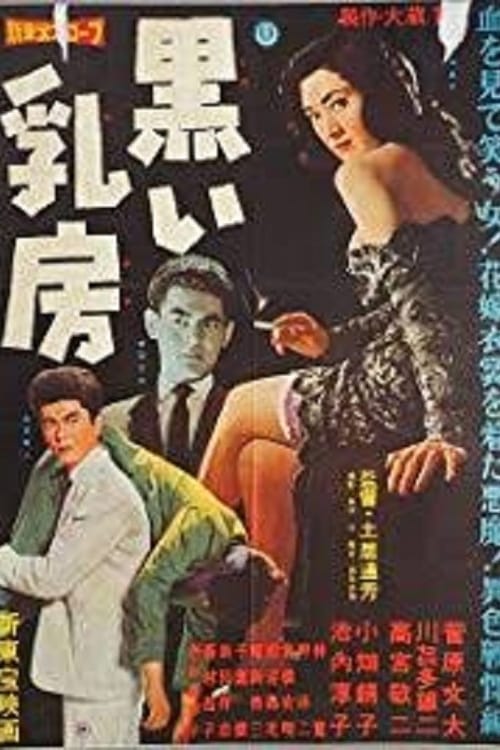
Freelance reporter “Scoop” Machida is hot on the trail of a prostitution ring called the Black Line, when he is framed for the murder of a young woman. Forced to clear his own name, the handsome journalist sinks deeper into the Black Line’s rotten swamp of drugs, prostitution, and murder and finds unexpected help in Maya, a steamy female gambler familiar with the neon-lit streets, shadowy alleyways, and seedy nightclubs he must navigate. The closest film in the Line series to classic American film noir, Ishii’s Black Line is a pulpy assortment of crime film conventions including the starkly expressionistic black and white cinematography by Jûgyô Yoshida, a jazzy music score by Michiaki Watanabe, and a sleazy screenplay by Ishii and Ichirô Miyagawa.
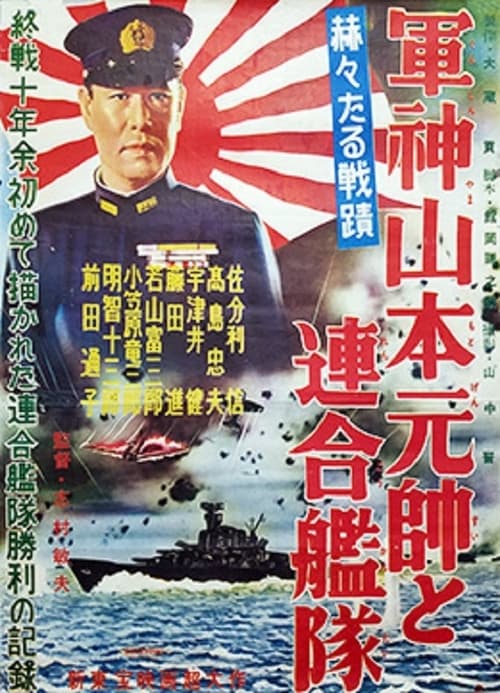
Admiral Isoroku Yamamoto leads the Combined Fleet of the Imperial Japanese Navy to defeat the American Fleet.
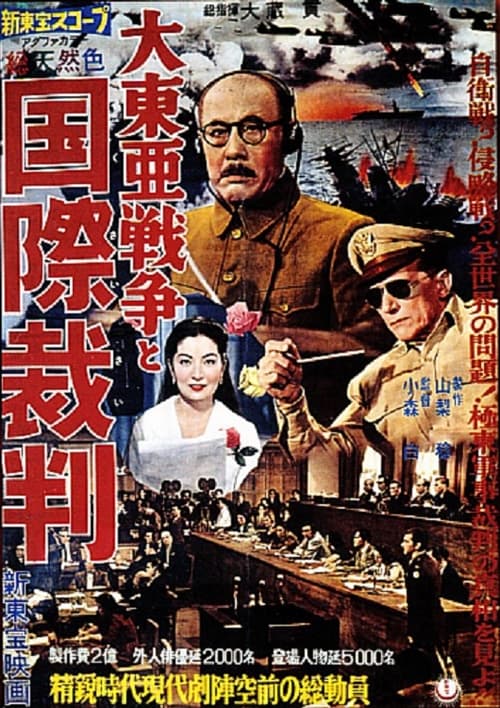
In 1941, overpopulated Japan faces an economic boycott and its armed forces push further to the south. And despite negotiations between Japan and the U. S. A. war is declared with the attack on Pearl Harbour. Victories follow for Japan on land and sea and her forces push forward to the borders of India. But gradually the tide turns in favour of the Allies and after the atom bombings of Hiroshima and Nagasaki, Japan is compelled to accept the Potsdam Declaration and by the order of the Emperor agrees to unconditional surrender. Under the supervision of the occupation forces the International Military Tribunal opens in Tokyo to try the Japanese war leaders. Established in the cause of justice, and to prevent future aggressive wars the trials drag on for two and a half years. And on December 23, 1948, General Tojo and six other war leaders mount the thirteen steps to the gallows at Tokyo's Sugamo prison.
Tired of poverty, Keiko leaves home and soon takes a lover, but leads a wanton life without paying heed to his advice. However, the younger sister Yoshiko, is an innocent and kind girl. One day, with the sudden death of their mother in a car accident, Keiko learns that she and Yoshiko are actually stepsisters, and that she is the daughter of a murderer. She now plans extortion from Yoshiko's true father who is the president of a well-known trading company.
Tamio takes Itsuko to an art gallery and the two find one painting is a nude portrait of Itsuko's mother, who disappeared twenty years ago when she was just a baby. No one knows the first thing about the artist who painted it, but he goes by the name Shiro Sofue, and he's always wearing shades in the daytime...