Chris Marker
Directing
Biography
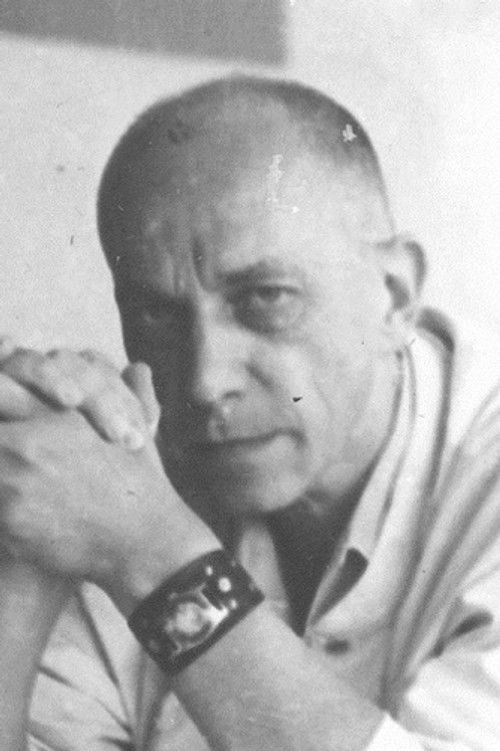
Christian François Bouche-Villeneuve, better known as Chris Marker (France, 29 July 1921 – 29 July 2012), was a French writer, poet, activist, critic, photographer, traveler, journalist, film essayist, multimedia artist, and documentary filmmaker. He began his career as part of the French Rive Gauche group—parallel to but distinct from the Nouvelle Vague—with which he would later share certain themes and collaborators. Marker is credited with developing the subjective documentary and is considered a pioneer of collective cinema in France. His films are known for their poetic, essayistic, and often experimental qualities, blending a reflective voice with a fascination for memory, art, war, politics, culture, and nature. Over six decades of work, he observed the world with meticulous curiosity, irony, and compassion, continually experimenting with new forms of image manipulation and montage. He was also famously elusive. For many years, few people knew what Chris Marker looked like—he disliked being photographed, and no confirmed portraits were publicly available. He often amused himself by giving contradictory accounts of his life in the rare interviews he granted. As Philippe Dubois observed, “Chris Marker is, in a way, the most celebrated of the unknown filmmakers.” His official website adds: “Rather than a man without qualities, he is a man without biography.” Marker also worked under numerous pseudonyms, including Hayao Yamaneko, Jacopo Berenzini, Kosinki, Michel Krasna, Sandor Krasna, and Guillaume-en-Égypte (his feline avatar), though his best-known identity remains Chris Marker. Among his most significant works are La Jetée (1962), Sans Soleil (1983), Far from Vietnam (1967), A Grin Without a Cat (1977), A.K. (1985), Level Five (1997), and One Day in the Life of Andrei Arsenevich (1999). He also explored interactive and digital media with the CD-ROM Immemory (1997), maintained a website titled Gorgomancy, a YouTube channel called Kosinki, and created a virtual gallery, Ouvroir, within the online world Second Life.
Known For

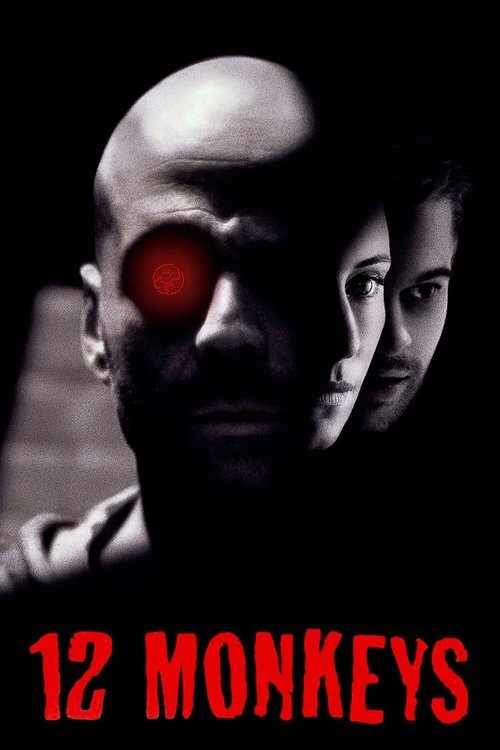
In the year 2035, convict James Cole reluctantly volunteers to be sent back in time to discover the origin of a deadly virus that wiped out nearly all of the earth's population and forced the survivors into underground communities. But when Cole is mistakenly sent to 1990 instead of 1996, he's arrested and locked up in a mental hospital. There he meets psychiatrist Dr. Kathryn Railly and the son of a famous virus expert who may hold the key to the Army of the 12 Monkeys; thought to be responsible for unleashing the killer disease.
Twelve Monkeys

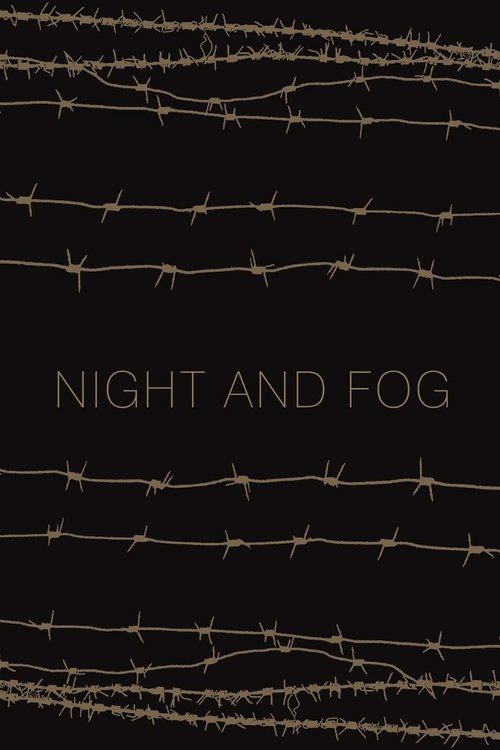
Filmmaker Alain Resnais documents the atrocities behind the walls of Hitler's concentration camps.
Night and Fog

A man confronts his past during an experiment that attempts to find a solution to the problems of a post-apocalyptic world caused by a world war.
La Jetée

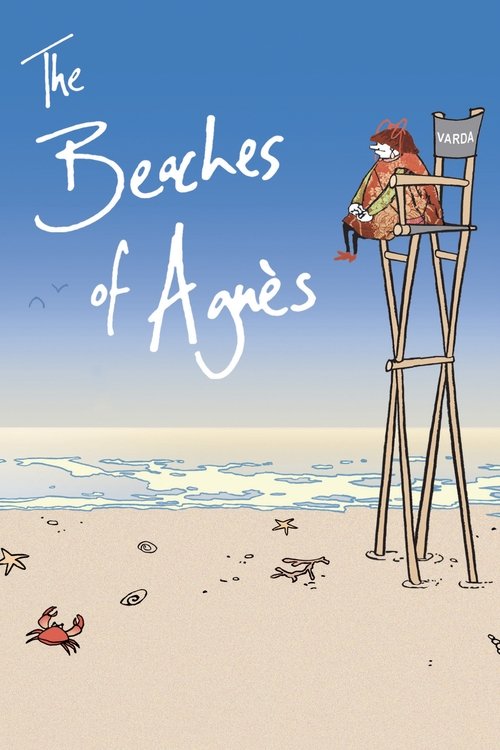
Filmmaking icon Agnès Varda, the award-winning director regarded by many as the grandmother of the French new wave, turns the camera on herself with this unique autobiographical documentary. Composed of film excerpts and elaborate dramatic re-creations, Varda's self-portrait recounts the highs and lows of her professional career, the many friendships that affected her life and her longtime marriage to cinematic giant Jacques Demy.
The Beaches of Agnès

An intimate chronicle of the shooting of Ran (1985), a film directed by the legendary Japanese filmmaker Akira Kurosawa.
A. K.

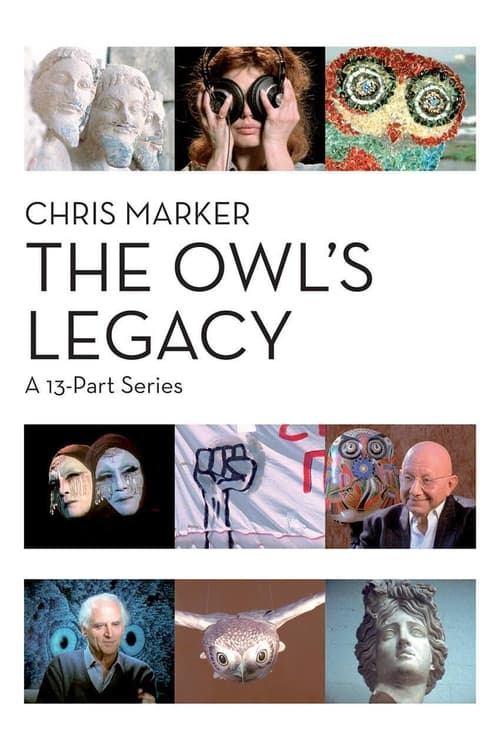
A 13-part documentary series by Chris Marker examining how ancient Greek ideas continue to shape modern Western thought. Each episode centers on a single Greek word—such as “democracy,” “philosophy,” or “mythology”—through conversations filmed in cities around the world. Combining symposium-style discussions with archival footage and visual motifs of the owl, Marker creates an expansive reflection on the enduring legacy of Greece.
The Owl's Legacy

In 1950s communist Czechoslovakia, a government minister, a war veteran long a loyal party man, leads a relatively comfortable life with his wife. However, he soon finds himself under surveillance, then under arrest. Unclear what his offense is, agents for the totalitarian regime interrogate and torture him, aiming to use their unending power to gain a false confession for these supposed crimes against the state.
The Confession

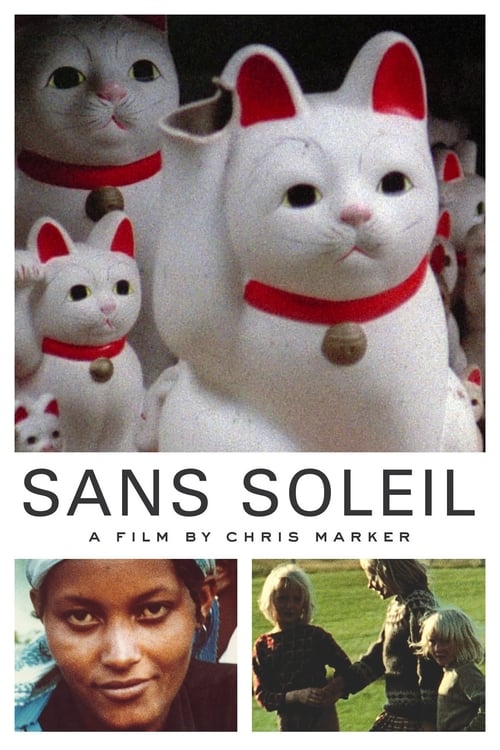
A woman narrates the thoughts of a world traveler, meditations on time and memory expressed in words and images from places as far-flung as Japan, Guinea-Bissau, Iceland, and San Francisco.
Sans Soleil

What was your first desire? What did you long for most? Arielle Dombasle put these questions to a wide circle of famous people.
La Traversée du désir

German director Wim Wenders tries to explore the Tokyo that was depicted in the films of Yasujiro Ozu and finds a very different city.
Tokyo-Ga

Candid interviews of ordinary people on the meaning of happiness, an often amorphous and inarticulable notion that evokes more basic and fundamentally egalitarian ideals of self-betterment, prosperity, tolerance, economic opportunity, and freedom.
The Lovely Month of May

A documentary on Soviet filmmaker Aleksandr Medvedkin, examining his tumultuous career, the rediscovery of his masterpiece Happiness, and Russia's struggles over the course of the 20th Century.
The Last Bolshevik

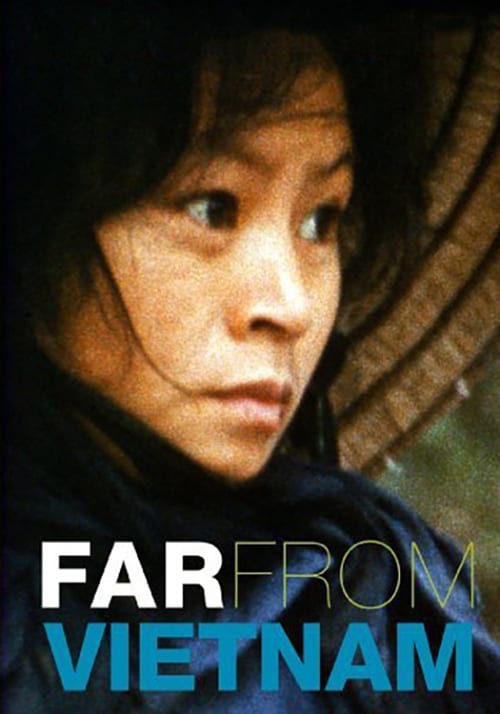
In seven different parts, Godard, Ivens, Klein, Lelouch, Marker, Resnais, and Varda show their sympathy for the North-Vietnamese army during the Vietnam War.
Far from Vietnam

Ten years after the death of iconic French filmmaker, Chris Marker. A filmmaker, hoping to rediscover that unique sensibility against the uncertainty of the new century, returns to the places synonymous with those incomparable and unforgettable films-- From the cat cemetery of Sans Soleil, to the mausoleum of The Last Bolshevik; The caves of Level Five to the rooftops of The Case of the Grinning Cat. A biographical portrait of one of the 20th century's greatest and most misunderstood filmmakers.
Ten Lives of a Cat: A Film about Chris Marker

Chris Marker’s A Grin Without a Cat is an epic political essay tracing the rise and decline of the global left from the 1960s to the 1970s. Through archival footage and commentary, the film examines revolutionary movements in France, Latin America, and beyond, reflecting on the ideals, failures, and fading hopes of a generation.
A Grin Without a Cat

Chris Marker’s portrait of Russian filmmaker Andrei Tarkovsky documents the director at work on his final film, The Sacrifice, during the last year of his life. Interweaving behind-the-scenes footage with excerpts from Tarkovsky’s earlier works, Marker crafts a moving reflection on the artist’s vision, methods, and enduring legacy.
One Day in the Life of Andrei Arsenevich

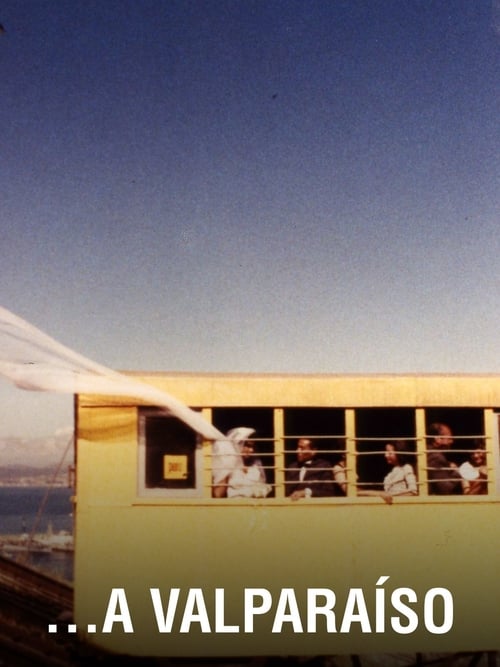
In 1962 Joris Ivens was invited to Chile for teaching and filmmaking. Together with students he made …A Valparaíso, one of his most poetic films. Contrasting the prestigious history of the seaport with the present the film sketches a portrait of the city, built on 42 hills, with its wealth and poverty, its daily life on the streets, the stairs, the rack railways and in the bars. Although the port has lost its importance, the rich past is still present in the impoverished city. The film echoes this ambiguous situation in its dialectical poetic style, interweaving the daily life reality (of 1963) with the history of the city and changing from black and white to colour, finally leaving us with hopeful perspective for the children who are playing on the stairs and hills of this beautiful town.
Valparaiso

A young man from the far future, bored by his surroundings, blasts off into space with only his cat and some robots for company. On a distant planet he discovers a serene, tranquil culture and falls in love with a girl.
The Heat of a Thousand Suns

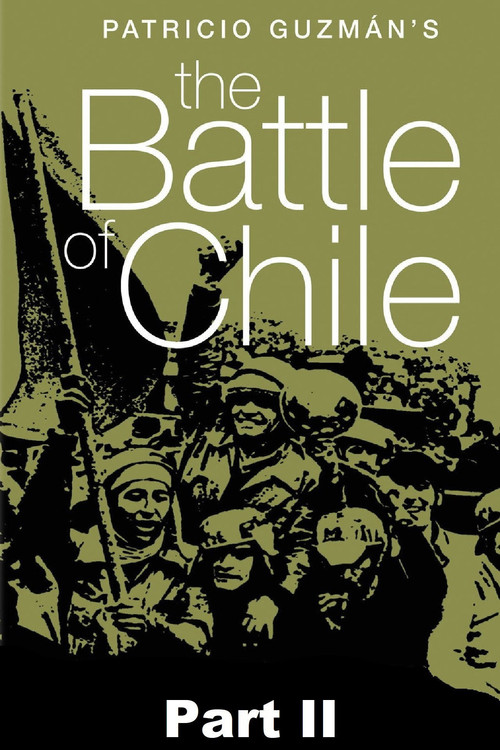
Chronicles the events immediately surrounding the CIA- supported coup itself.
The Battle of Chile: Part II

Agnès Varda travels around the world to meet friends, artists and filmmakers for an expansive view of the global contemporary art scene.