FEEL IT.STREAM
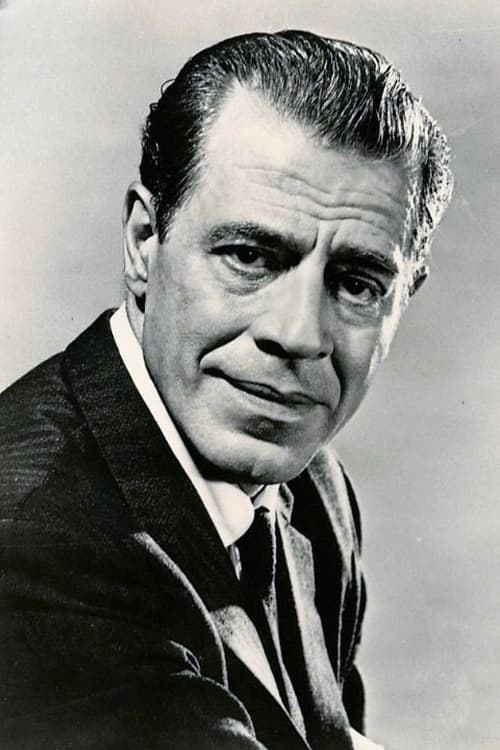
Jack La Rue

Jack La Rue

Acting

Biography

Jack La Rue (born Gaspere Biondolillo) was an American stage, screen, and television actor. La Rue went from high school to his first acting job, in Otis Skinner's road company production of Blood and Sand. He performed in Broadway plays from around 1923 to 1931. According to La Rue, while appearing in Mae West's play Diamond Lil, he was spotted by Howard Hawks, who offered him a part in the film Scarface, starring Paul Muni. He moved to Hollywood, where he appeared in numerous films. However, Scarface was not one of them. La Rue stated in a newspaper article that, after four days, Hawks had to replace him with George Raft because La Rue was taller than Muni and had a more powerful voice. Later, however, Raft turned down the role of the despicable villain in The Story of Temple Drake, fearing it would damage his screen image, so the part went to La Rue. Sometimes mistaken for Humphrey Bogart, he played thugs and gangsters for the most part. However, director Frank Borzage atypically cast him as a priest in the 1932 version of A Farewell to Arms simply because, according to newspaper columnist Hubbard Keavy, he was "tired of seeing conventional characters". La Rue stated he turned down a role in The Godfather and many parts in the television series The Untouchables because of the way they portrayed Italian-Americans. La Rue died of a heart attack at Saint John's Health Center in Santa Monica, California, at the age of 81. He was buried in Holy Cross Cemetery, Culver City, California.

Known For

Lights Out
6.0

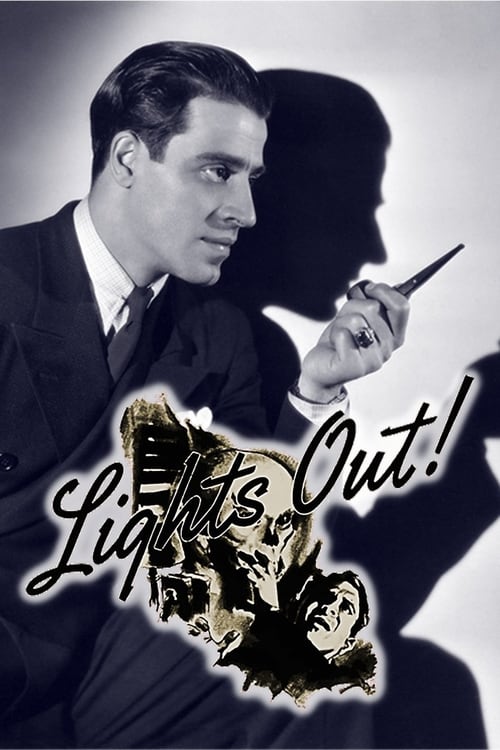
Lights Out was an extremely popular American old-time radio program, an early example of a network series devoted mostly to horror and the supernatural, predating Suspense and Inner Sanctum. Versions of Lights Out aired on different networks, at various times, from January 1934 to the summer of 1947 and the series eventually made the transition to television. In 1946, NBC Television brought Lights Out to TV in a series of four specials, broadcast live and produced by Fred Coe, who also contributed three of the scripts. NBC asked Cooper to write the script for the premiere, "First Person Singular", which is told entirely from the point of view of an unseen murderer who kills his obnoxious wife and winds up being executed. Variety gave this first episode a rave review ("undoubtedly one of the best dramatic shows yet seen on a television screen"), but Lights Out did not become a regular NBC-TV series until 1949.

Lights Out

1949Series
No image
6.3

It opens in 1926 when three bank robbers, Theodore Kedrich, Jan Imarski, and Petra Lonelli, stage a daring daylight bank robbery and get away with a million dollars in cash. They are soon apprehended and sent to prison for ten years but the money is not recovered. Flash forward to 1936 when all three men have been released from prison and are about to be deported back to where they came from via the Deportation department at Ellis Island. They arrive by the ferry boat and already on hand to bid them adieu, and possibly learn where they stashed the missing money, is gang leader Dude and his three henchmen, Nails, Moxie and Bugs, and also Kendrich's niece Betty Parker there to bid old Uncle Ted a fond goodbye. Also on Ellis Island is a crook called Solo, who has an upper hand as he has stolen the credentials of a Treasury Agent named Peter James and has access to the prisoners, and has cut a deal with Kendrichs to get him off of Ellis Island.

Ellis Island

1936Movie