Gert Fröbe
Acting
Biography
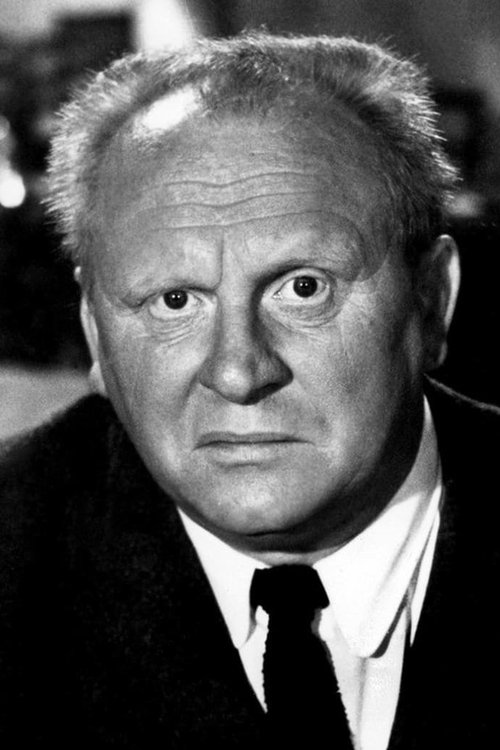
Karl Gerhart Fröbe, better known as Gert Fröbe (25 February 1913 – 5 September 1988) was a German actor who starred in many films, including the James Bond film Goldfinger as Auric Goldfinger, The Threepenny Opera as Peachum, Chitty Chitty Bang Bang as Baron Bomburst, and in Der Räuber Hotzenplotz as Hotzenplotz. Description above from the Wikipedia article Gert Fröbe, licensed under CC-BY-SA, full list of contributors on Wikipedia.

Known For

The Bambi, often called the Bambi Award and stylised as BAMBI, is a German award presented annually by Hubert Burda Media to recognize excellence in international media and television to personalities in the media, arts, culture, sports, and other fields "with vision and creativity who affected and inspired the German public that year", both domestic and foreign. First held in 1948, it is the oldest media award in Germany. The trophy is named after Felix Salten's book Bambi, A Life in the Woods and its statuettes are in the shape of the novel's titular fawn character. They were originally made of porcelain until 1958, when the organizers switched to using gold, with the casting done by the art casting workshop of Ernst Strassacker in Süßen.
Bambi
No description available.
German Film Award
No description available.
Was bin ich?

Every year there was a Gala of the Stars at the Zirkus Krone in Munich.
Stars in the Ring

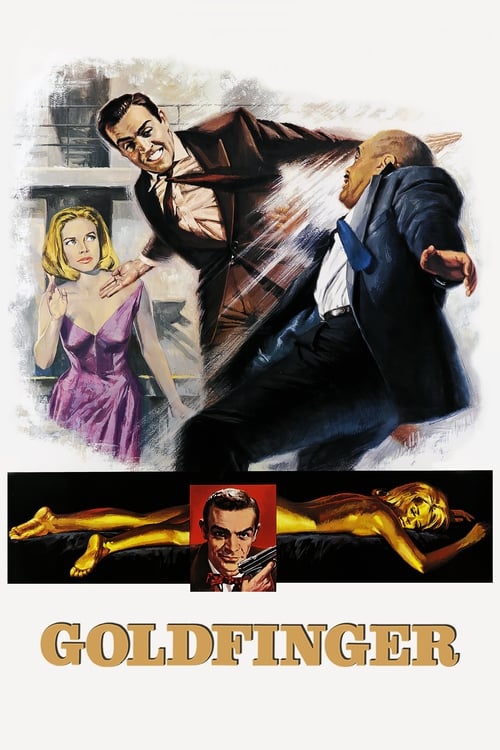
Special agent 007 comes face to face with one of the most notorious villains of all time, and now he must outwit and outgun the powerful tycoon to prevent him from cashing in on a devious scheme to raid Fort Knox -- and obliterate the world's economy.
Goldfinger

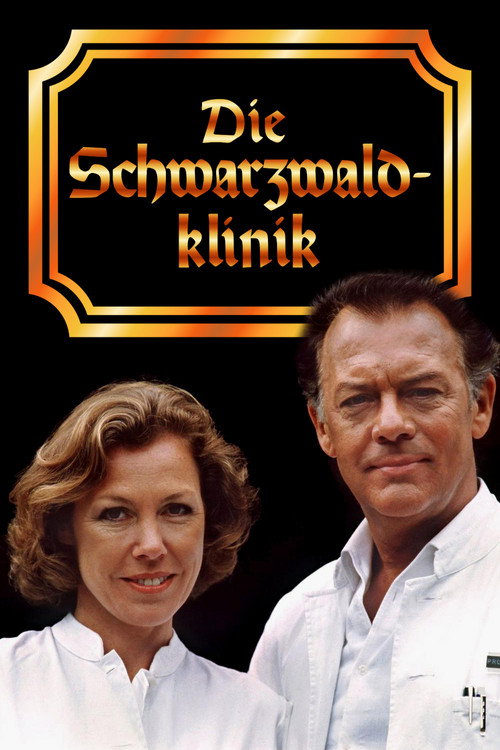
The Black Forest Clinic is a German language medical drama television series that was produced by and filmed in West Germany. The series was produced between 1984 and 1988 with the original airing being from October 2, 1985 to March 25, 1989 on West Germany's ZDF television channel. The series' storyline follows the inner workings of a small fictional hospital in the Black Forest region of Germany as well as the lives of the Brinkmann family of doctors who work at the hospital. Shortly after broadcasting had begun in 1985, The Black Forest Clinic became a highly popular television event, reaching audiences of over 20 million viewers. 25 years since its debut, it is still highly regarded in Germany. The series had been re-broadcast several times since 1985 and has spawned two television films released 20 years after its initial airing.
Die Schwarzwaldklinik

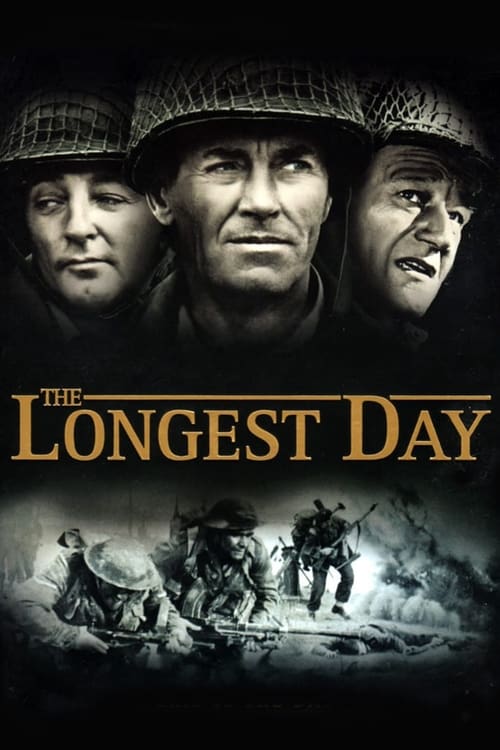
The retelling of June 6, 1944, from the perspectives of the Germans, US, British, Canadians, and the Free French. Marshall Erwin Rommel, touring the defenses being established as part of the Reich's Atlantic Wall, notes to his officers that when the Allied invasion comes they must be stopped on the beach. "For the Allies as well as the Germans, it will be the longest day"
The Longest Day
No description available.
Der große Preis
No description available.
Showgeschichten

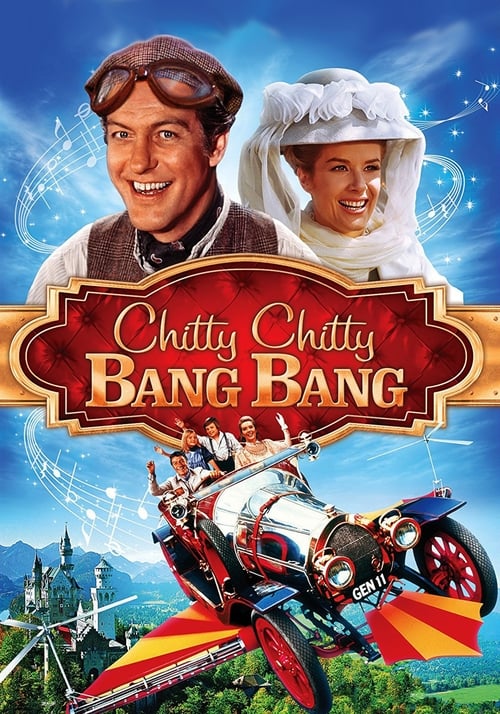
A hapless inventor finally finds success with a flying car, which a dictator from a foreign government sets out to take for himself.
Chitty Chitty Bang Bang

Ten people are invited to a hotel in the Iranian desert, only to find that an unseen person is killing them one by one. Could one of them be the killer?
And Then There Were None

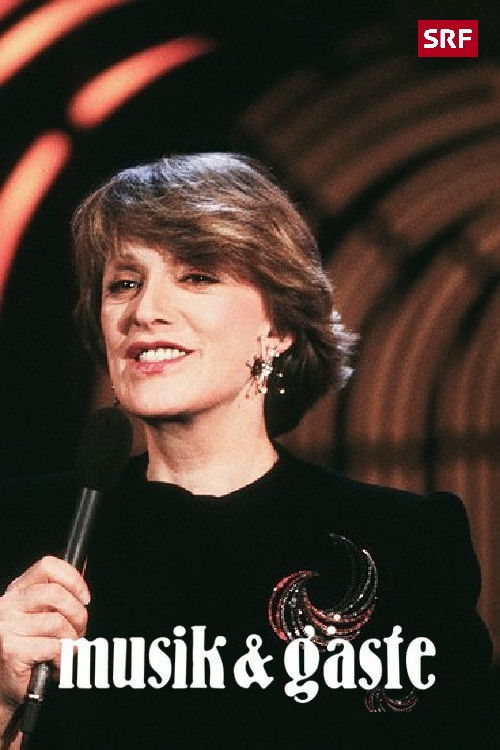
No description available.
Music & Guests

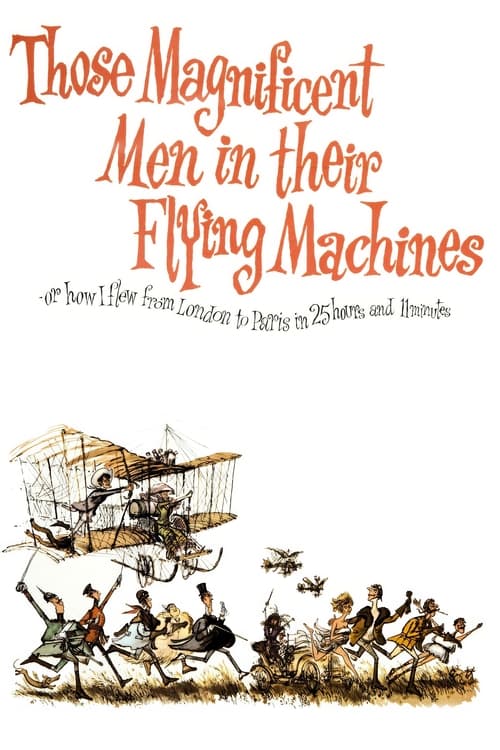
In order to boost circulation of his newspaper, Lord Rawnsley announces an air race and offers £10,000 to the first person who can fly across the English Channel. But one of the participants, Percy, plots to sabotage his competitor's planes. Will Percy triumph?
Those Magnificent Men in Their Flying Machines or How I Flew from London to Paris in 25 Hours 11 Minutes
No description available.
Deutscher Kleinkunstpreis
No description available.
Vergißmeinnicht

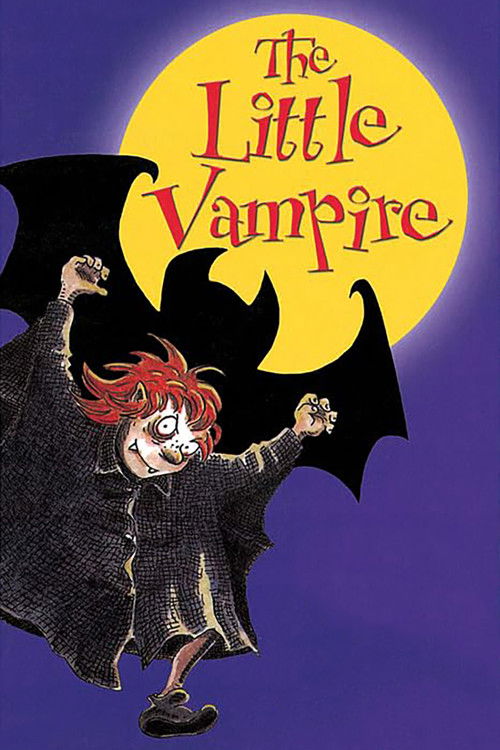
The Little Vampire is a 13-episode children’s television series based on Angela Sommer-Bodenburg’s books The Little Vampire and The Little Vampire Moves In. The series was produced in 1985 as a Canadian-German-British co-production by Norflicks Productions Ltd. (Canada), Polyphon Film- und Fernsehgesellschaft (Germany), and TVS (United Kingdom), and first aired in 1986. It follows a young boy whose ordinary life changes after befriending a young vampire and becoming involved in a secret nocturnal world of adventure, friendship, and light-hearted supernatural escapades.
The Little Vampire

“Otto – The Series” is an unusual comedy format from the early 1990s centred on Otto Waalkes, blending classic crime entertainment with Otto’s distinctive brand of humour. Rather than telling a continuous story, the series combines newly shot sketches featuring Otto with scenes from old Edgar Wallace films. These original sequences were re-dubbed, completely transforming their content. Dialogue that was once serious turns into absurd wordplay, and the originally suspenseful plots are deliberately played for laughs. In this way, Otto effectively “smuggles” himself into the dark world of the Wallace films, turning it into a parody driven by nonsense, running gags, and his characteristic humour. The result is an idiosyncratic mix of crime and comedy, whose particular charm lies above all in its playful use of the original material.
Otto – The Series

Grégoire Lecomte, the unlucky actor anxious to find a "real job", goes to take a screen test for a role of a killer, but gets to mafiosi by mistake. He takes their don for a producer, and they mistake him for a hitman with whom they had an appointment. Deluded Lecomte signs contract with them. He is supposed to kill gun dealer Otto Krampe at his birthday party in Saint-Tropez by piercing him with a cap of the umbrella with a built-in syringe with potassium cyanide. Lecomte is not aware that it has to be a real murder.
Umbrella Coup

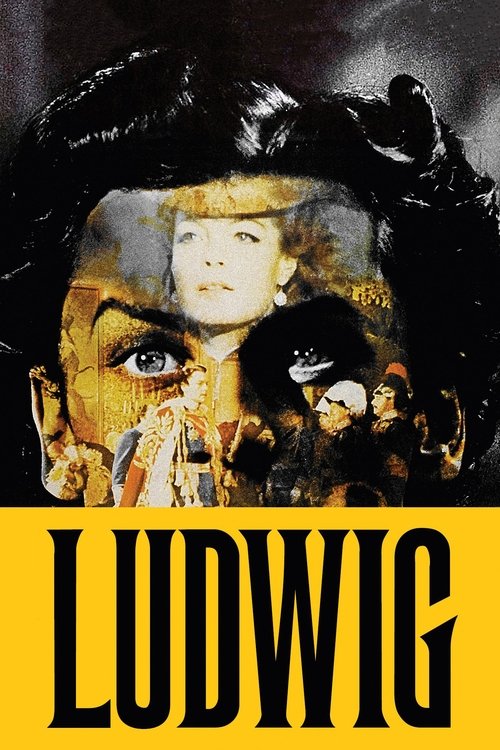
Historical evocation of Ludwig, king of Bavaria, from his crowning in 1864 until his death in 1886, as a romantic hero. Fan of Richard Wagner, betrayed by him, in love with his cousin Elisabeth of Austria, abandoned by her, tormented by his homosexuality, he will little by little slip towards madness.
Ludwig

Historical evocation of Ludwig, king of Bavaria, from his crowning in 1864 until his death in 1886, as a romantic hero. Fan of Richard Wagner, betrayed by him, in love with his cousin Elisabeth of Austria, abandoned by her, tormented by his homosexuality, he will little by little slip towards madness.