Writing
No description available.
A stage performance of the tragicomedy broadcasted live in theaters.
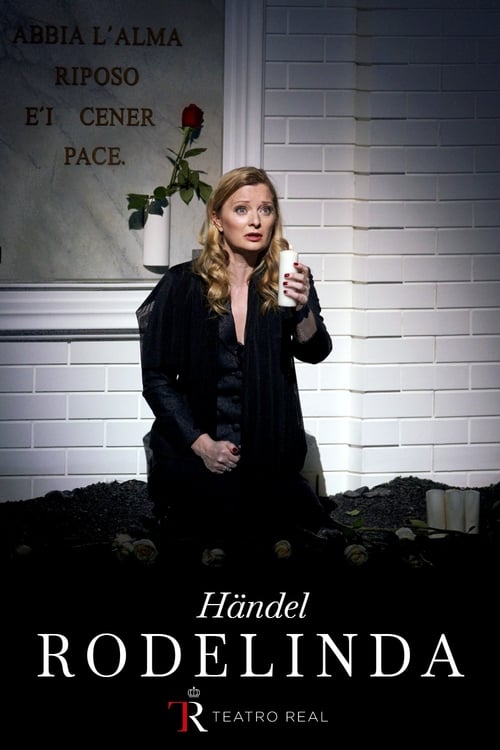
Claus Guth's exciting 2017 staging of Handel’s "Rodelinda" at Madrid’s Teatro Real, featuring Lucy Crowe and Bejun Mehta as Rodelinda and Bertarido, with conductor Ivor Bolton. After the successes of "Giulio Cesare" in 1723 and "Tamerlano" in 1724, Rodelinda completes the trilogy of Handel’s great opera seria masterpieces. The work was composed in 1725 using Nicola Francesco Haym’s libretto, a work inspired by Antonio Salvi’s earlier libretto which had been itself adapted from Pierre Corneille’s tragedy "Pertharite, roi des Lombards". Rodelinda thus brought one of the most glorious compositional periods in the Handel’s career to a close, about a decade after his arrival in the British capital. Mixing romantic storytelling and political intrigue, Handel produced one of his most beautiful scores, a true operatic tour de force.
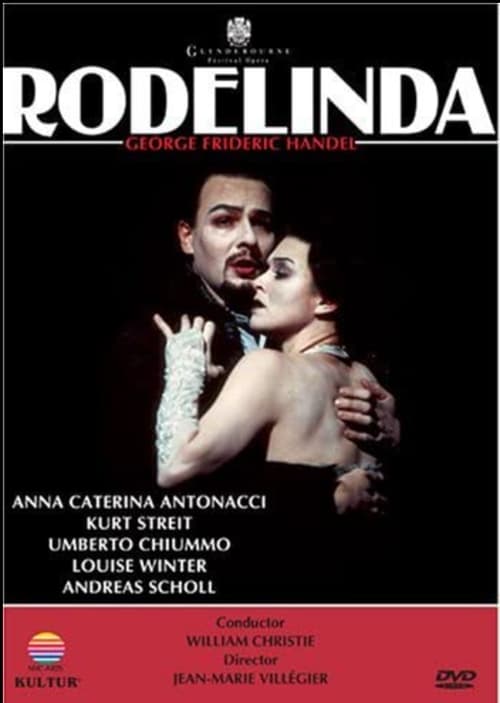
Jean-Marie Villegier's modern interpretation of Handel's "Rodelinda" – filmed live at the world-renowned Glyndebourne Opera House in the United Kingdom, sets the timeless tale of jealousy and treachery in the black-and-white world of the silent-movie era. Soprano Anna Caterina Antonacci sings the title role of Rodelinda, with tenor Kurt Streit and bass Umberto Chiummo performing the parts of Grimoaldo and Garibaldo, respectively.
The Saracens invade Spain again, but they seem content to compose music and watch the dancers.
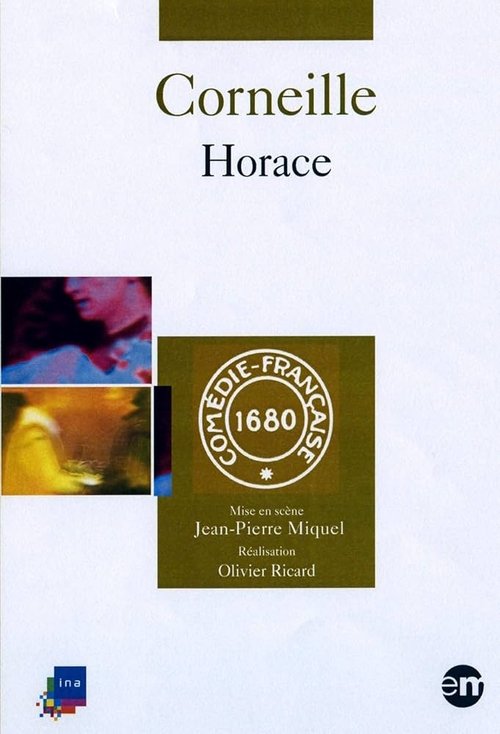
A staging of Pierre Corneille's play "Horace" by Jean-Pierre Miquel.
The last days of Sertório, the famous leader of Lusitania during the Roman Empire.
In this contemporary adaptation of Pierre Corneille’s brilliant, eponymous 17th century play, the enigmatic Alcandre is now a hotel concierge who uses the myriad in-house high-tech security cameras to show worried father Pridamant the whereabouts and travails of his son, Clindor. As Pridamant witnesses the conflicting romances involving his estranged son, Corneille’s modernist meta-narrative is transposed to contemporary Paris, underscoring the ambiguous nature of love, wealth and desire in an age of consumerism. (Chicago International Film Festival)
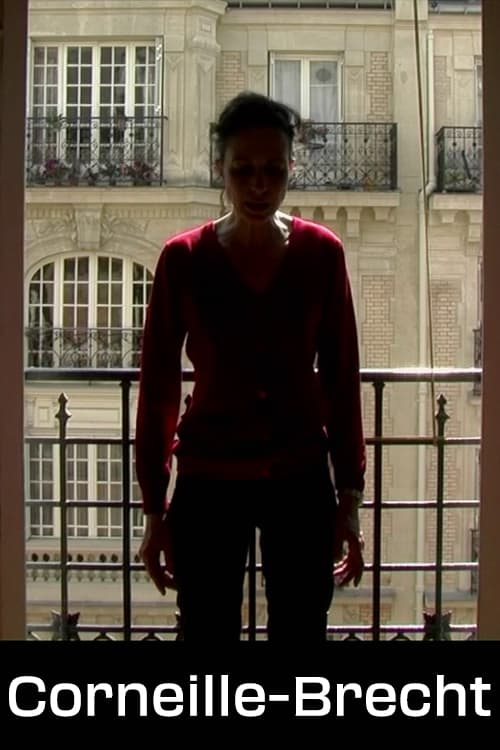
Co-director Cornelia Geiser sits by a window on an easy chair reading aloud a few verses by Corneille, then a somewhat longer excerpt from Brecht - each writer referencing Rome but really condemning injustice in his own era.
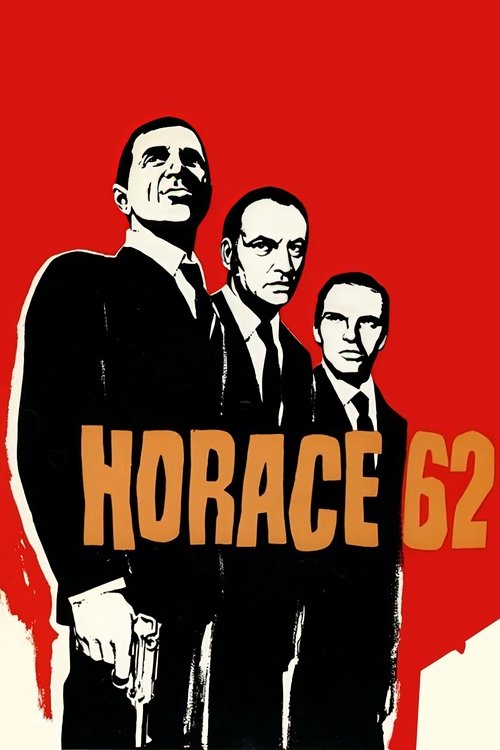
Two families fight to stay in power. On one side, the Horatii, who rule Rome; on the other, the Curiatii, who rule Albe-la-longue. To escape the war, three brothers are chosen from each camp and face off in a fight to the death. A tragic confrontation with unexpected repercussions.
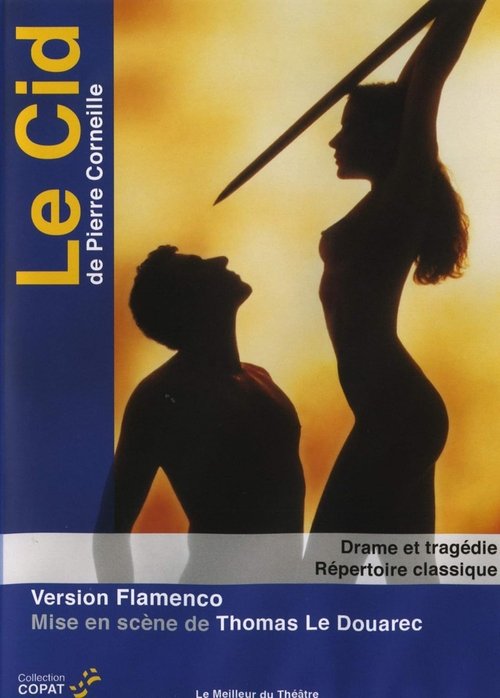
Ximéná and Rodrigo love each other, but in order to remain worthy of each other, they decide to fulfill the command of honor. Don Rodrigo avenges the insult that Ximéná's father caused his father, and Ximéná asks the king to punish Rodrigo. The king forgives Rodrigo-Cid for killing Ximéná's father, Don Gómez, in the name of the honor of his family, because Rodrigo will save the land from the Moorish invasion.
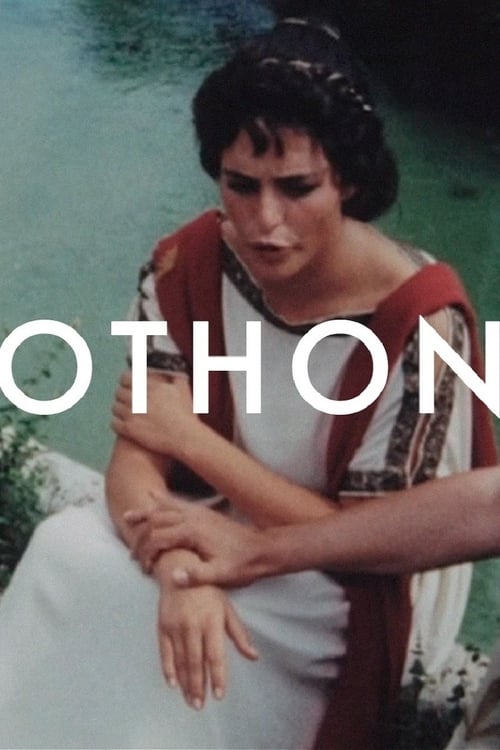
Straub-Huillet’s first color film, adapts a lesser-known Corneille tragedy from 1664, which in turn was based on an episode of imperial court intrigue chronicled in Tacitus’s Histories. The costuming is classical, and the toga-clad, nonprofessional cast performs the drama’s original French text amid the ruins of Rome’s Palatine Hill while the noise of contemporary urban life hums in the background. Their lines are executed with a terrific flatness and frequently through heavy accents; the language in Othon becomes not merely an expression but a thing itself, an element whose plainness here alerts us to qualities of the work that might otherwise be subordinated.
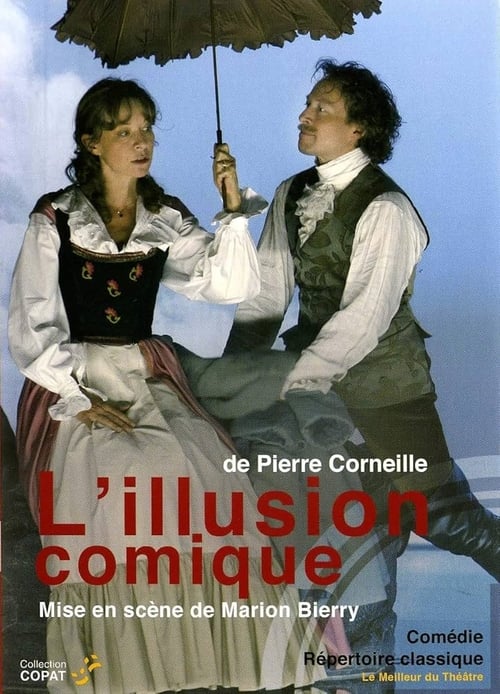
A staging of Pierre Corneille's play "L'Illusion comique" by Marion Bierry.
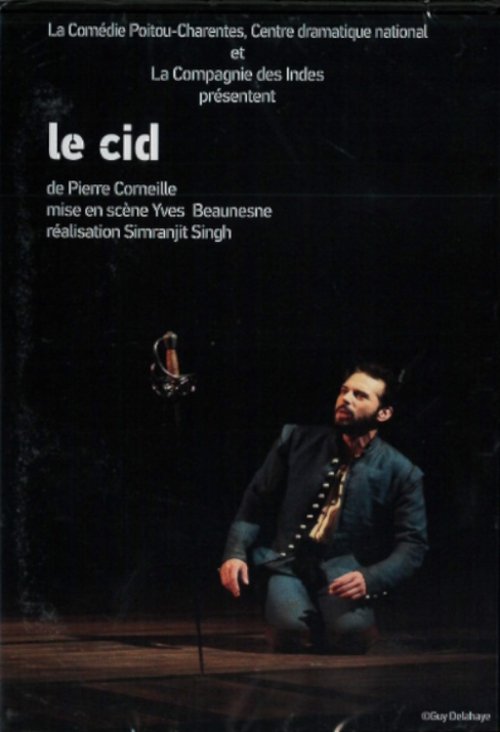
An adaptation of Pierre Corneille's play "Le Cid", staged by Yves Beaunesne.
New production. UK professional premiere May 21, 2015. Live from Glyndebourne.