Acting
An American doctor and his wife, a former singing star, witness a murder while vacationing in Morocco, and are drawn into a twisting plot of international intrigue when their young son is kidnapped.
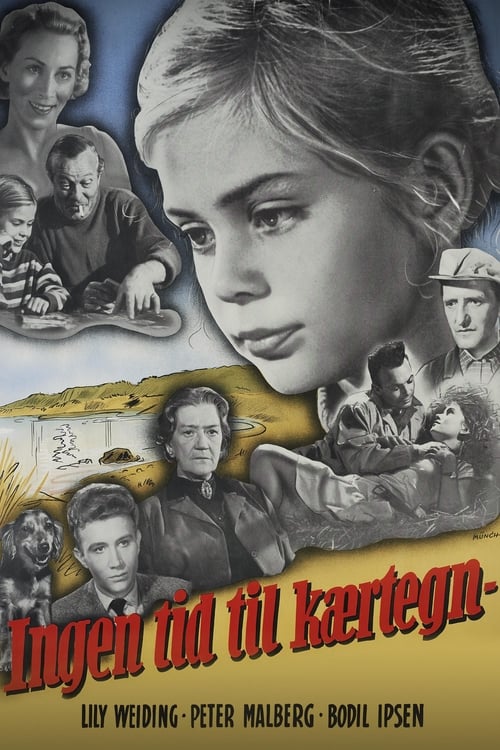
The Danish Ingen tid til Kaertegn (Be Dear to Me) is heavily reliant on the appeal of its star, 8-year-old Eva Cohn. Our heroine is the neglected child of a businessman father and actress mother. Feeling that happiness lies well outside her own backyard, Eva goes on a search for that happiness. The longer she stays away, the more her parents realize that they've unfairly ignored her. The plot is nothing new: it's what is done with it that pleases the eye and ear. Ingen tid til Kaertegn was one of the more popular entries in the 1957 Berlin Film Festival.
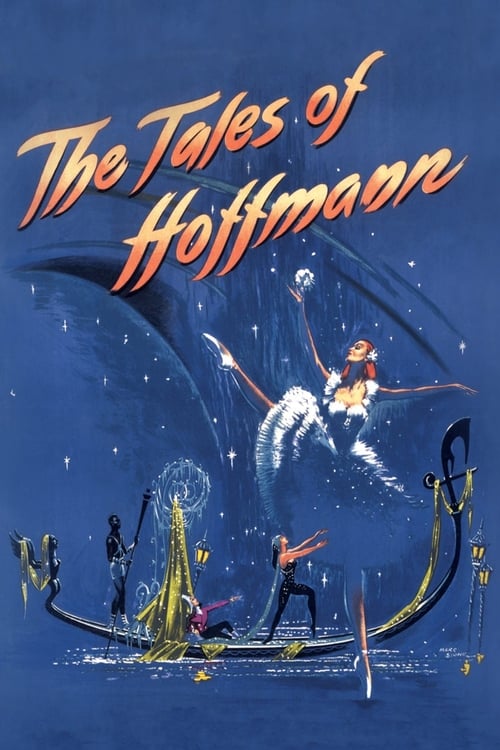
A melancholy poet reflects on three women he loved and lost in the past: a mechanical performing doll, a Venetian courtesan, and the consumptive daughter of a celebrated composer.
Sabotage of a Nazi factory is carried out by the husband of the lover of a resistance leader.
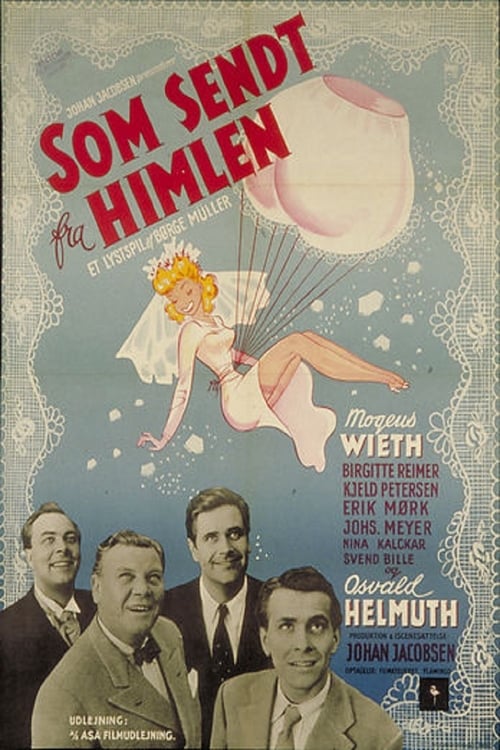
Mogens Wieth is a songwriter who lives beyond his means. He is expecting to inherit a fortune from his Aunt Tut in Paris, who is old and filthy rich. He has been corresponding with her for many years. In reality, Aunt Tut is dead, and it is her daughter who writes the letters. A young singer who wants to ingratiate himself with the songwriter claims that he knows the aunt and that she is coming to Copenhagen. He has persuaded an older actress to play the role of Aunt Tut. Unfortunately, the aunt's charming daughter also arrives in Copenhagen at the same time, setting the stage for costly episodes and amusing complications...
It's a warm summer evening in North Zealand. Black clouds are rising over the horizon and threatening thunder. Margit is cycling from the small guesthouse where she has settled down for her summer vacation to a party at a friend's house, which lives a few kilometers away. Margit is wearing a black dress and looks quite stunning, coming there on a bicycle - but it's necessary, because the landlady has decreed that all her guests must wear black - "it looks so good on her white terrace".
The young and beautiful Laura Heiberg is to marry Torsten Vinge. When the priest asks if she will marry him, she says no. She flees from the church and gets a lift from Jonas Møller. He is heading north along the coast. At the 42 km marker in the forest, she asks to be dropped off. She follows a telephone wire to see where it ends. She finds a beautiful house in the forest. It looks uninhabited, but the door is open, so she goes inside. No one responds to her calls. She sends a telegram to an old flame, Herbert Thorsen, asking him to fetch some clothes from home and bring them to her. At the same time, she tells him that she did not get married after all. She finds a book called "What Do You Know About Yourself" written by Allan Krogh. She takes it out onto the terrace to read.
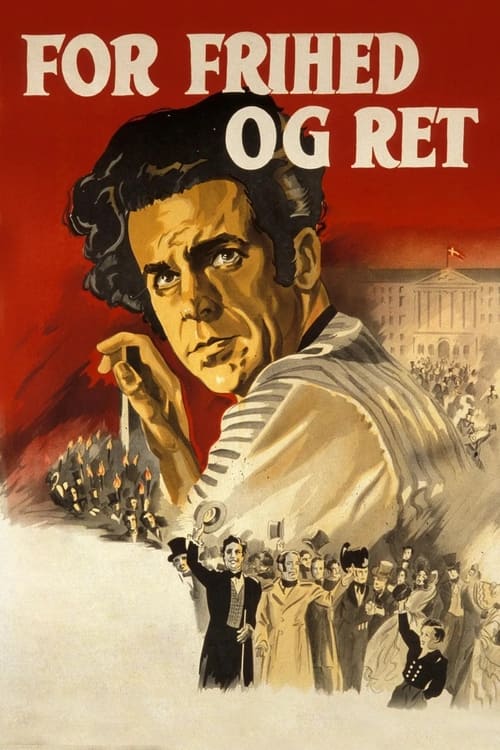
A picture of the life of the Danish people from the late 1820s to the introduction of the free constitution in 1849. A fictional character, Rasmus Nielsen, travels around the country, first as a traveling teacher, later in other positions, and through his experiences we are introduced to the conditions of various population groups. The central figure in the portrayal of historical figures is the politician Orla Lehmann.
A military mission is interrupted when a British soldier claims that God had appeared to him in a transcendental vision.
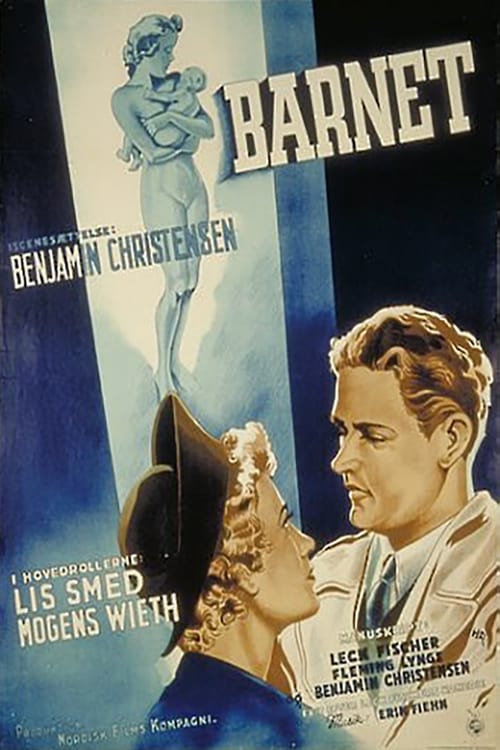
Many people are preparing their lives for a lifetime, to make it safe and secure. And then the fate's game of 24 hours can overturn everything.
The young successful author Eva Saabye surprises both her publisher William Nerup and the literary critic Dr. Hennings, who is a good friend of hers, by not wanting to publish the last book she has written. One day Eva takes the manuscript for her novel out of the drawer, and as she starts leafing through it, we are drawn into its plot. The book, titled "I Met a Murderer", has Eva Saabye as one of the main characters.
The action begins one early summer morning in a hostel, where we see, among others, two young girls, a law student, Ruth, and a small office lady, Ilse. From their conversation, we understand that Ilse has a very bourgeois outlook on life. By chance, these two girls come across one of Ruth's fellow students, Pontus Berthelsen, who is spending the summer holidays in a fisherman's cabin. Ilse, who has little world experience, quickly takes an interest in Pontus, who possesses a lot of innate charm. Pontus does his best to conquer Ilse, but her bourgeois attitude means - at first - that she does not fall for his rather deft approaches.
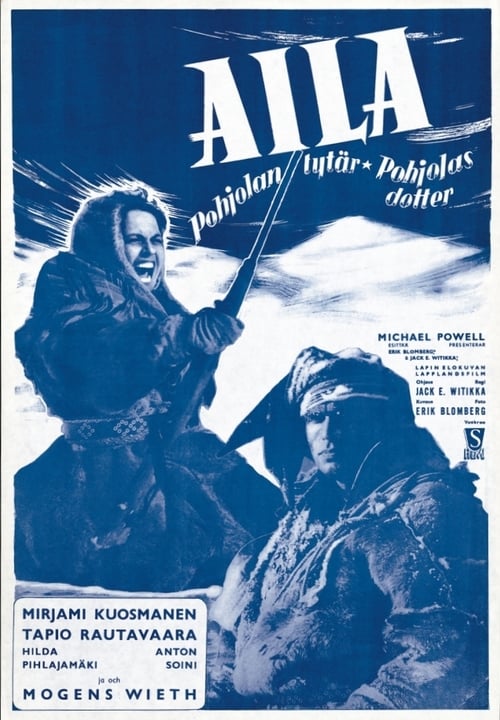
A tragedy told by an American visiting Lapland about Aila, daughter of a reindeer herder, who falls in love with Reino, a reindeer thief.
Engineer Rolf Swedenhielm is one of Sweden's most distinguished scientists, a festive and original person, and at the same time a man with an unwavering sense of honor. His home is managed by his sister-in-law Boman, who runs the household for him and his three children. After a lifetime of dedication to science, Swedenhielm is finally about to reap the rewards of his triumph: he is nominated for the Nobel Prize. Confusion arises about the nomination—is it a case of fraud?
Alan Kennebeck is unable to accept a brief, realistic romance for what it is. Eventually it leads to his complete moral downfall. Triggered by the factory official Eric Walderman, being a sadistically suave conniver and villain, who babbles a Nietzschean creed of ruthlessness and brings the picture to its grim, melodramatic conclusion.
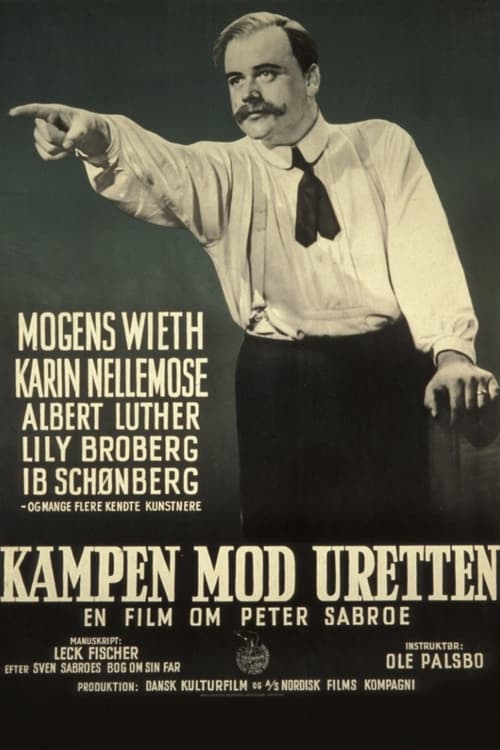
Depiction of the social democratic activist and politician Peter Sabroe, who in the time around the turn of the century went to fight for the oppressed, oppressed and abused existences.
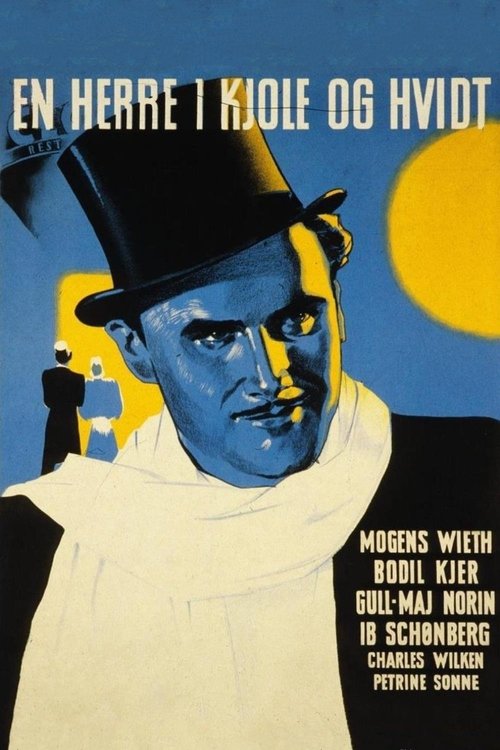
In broad daylight, a man runs at full speed across the Town Hall Square wearing a dress and white. People stare in amazement as he tries to grab a seat in a phone box to make a call. However, his story is even more incredible than they can imagine.
We meet the young violinist Erik Smith in the lap of his family with his wife Lise and his little daughter Lone. Erik is a young, aspiring musician who dreams of one day making a career as an interpreter of the great masters of music. At a concert where a well-known solo violinist has to interrupt, Erik Smith suddenly jumps in and gets his big breakthrough.
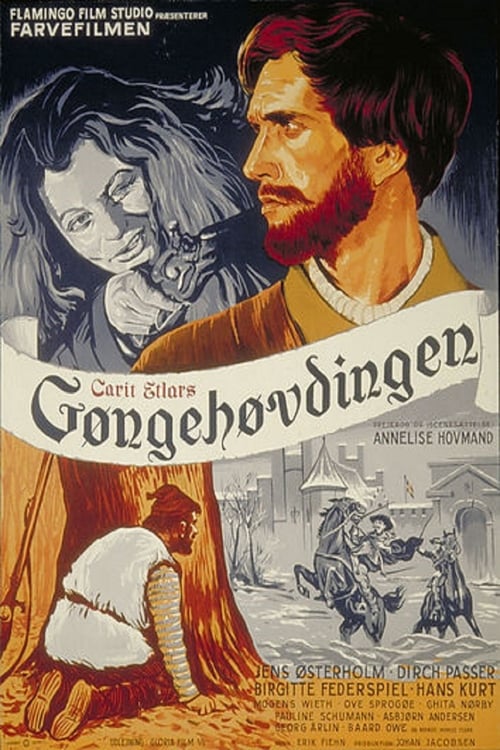
It is the war year of 1658, and the winter in February is so harsh that the belts are frozen. The Swedish King Charles X Gustav, who has arrived in Germany, is now staying in Jutland. He and his army can cross the straits and continue on toward Copenhagen. Svend Gønge is given a particularly difficult task by Frederick III: 50,000 rigsdaler belonging to the king must be brought from Vordingborg Church to Copenhagen.
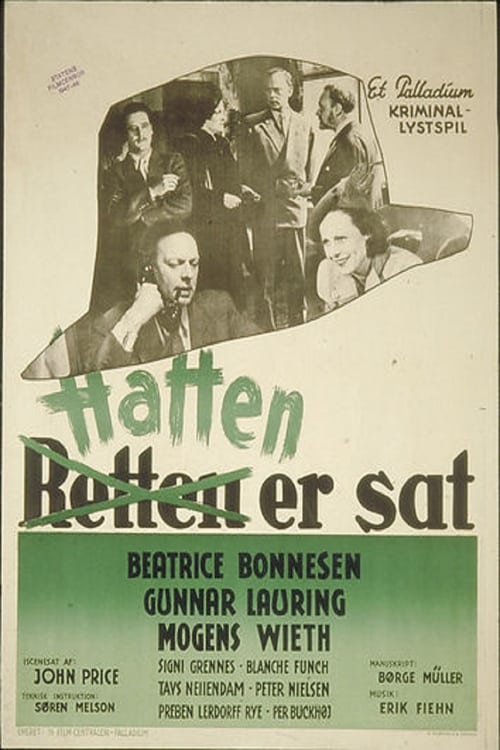
Detective Peter Smeth and his young and charming wife, Louise, visit Magasin Heiberg, where, at his wife's express request, he is to buy himself a new hat. He is not amused by the idea, but there is no getting out of it. Suddenly, however, an event occurs that causes the couple to change their minds. The daughter of the store's owner, Inge Heiberg, is found unconscious in the store's courtyard, and Peter and Louise rush to her aid. The fainting spell turns out to be shrouded in mystery.