Acting
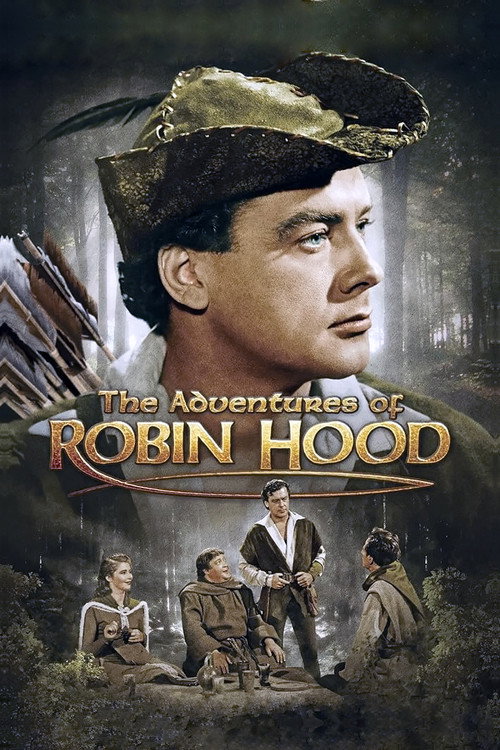
The legendary character Robin Hood and his band of merry men in Sherwood Forest and the surrounding vicinity. While some episodes dramatised the traditional Robin Hood tales, most episodes were original dramas created by the show's writers and producers.
A one-hour anthology television series of one-off contemporary and classic dramas produced by the BBC.
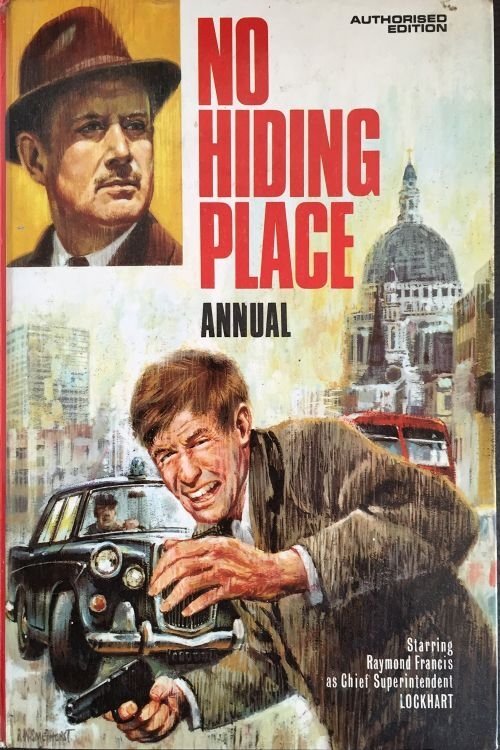
No Hiding Place is a British television series that was produced at Wembley Studios by Associated-Rediffusion for the ITV network between 16 September 1959 and 22 June 1967. It was the sequel to the series Murder Bag and Crime Sheet, all starring Raymond Francis as Detective Superintendent, later Detective Chief Superintendent Tom Lockhart.
A half-hour 1950s detective television series that took different forms and titles during its run. From October 1951 to June 1954, ABC Mystery Theater stars Tom Conway as the titular character, a plainclothes English detective working with the NYPD Homicide Division. The Vise (seasons 1–4): Donald Gray portrays Saber as a one-armed private detective based in London. Broadcast on ABC from October 1954 to June 1957. Saber of London (seasons 5–7): Gray reprises his role in this final iteration, broadcast on NBC from September 1957 to May 1960.
An anthology of plays and novels adapted into feature length TV movies, broadcast on BBC2 from September 1977 to April 1979.
New Scotland Yard is a police drama series produced by London Weekend Television for ITV from 1972 and 1974. It features the activities of two officers from the Criminal Investigations Department in the Metropolitan Police force headquarters at New Scotland Yard, as they dealt with the assorted villains of the day.
Sergeant Cork is a British detective television series which first aired between 1963 and 1968 on ITV. It was a police procedural show that followed the efforts of two police officers and their battle against crime in Victorian London. In all 66 hour-long episodes were aired during the five-year run, although the last episode was not broadcast until January 1968, 16 months after the others. Journalist Tom Sutcliffe has credited it as a first example of the use of the Victorian-era policeman in a television crime series. A 1969 review in The Age opined that rather than suspense, the strengths of the series were its "excellent period settings and wonderfully thick pea-soupers" which "add up to splendid evocative stuff", as well as the performance of star John Barrie. At no time during the whole series is Sergeant Cork's first name given.
A weekly TV comedy series of a British household with Dickie Henderson as the head of the family. Every week would feature a guest star. Most episodes of this series are believed to be lost.
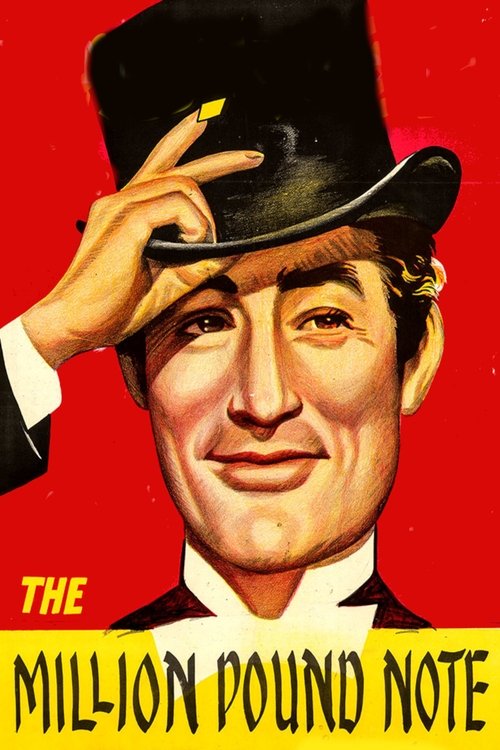
An impoverished American sailor is fortunate enough to be passing the house of two rich gentlemen who have conceived the crazy idea of distributing a note worth one million pounds. The sailor finds that whenever he tries to use the note to buy something, people treat him like a king and let him have whatever he likes for free. Ultimately, the money proves to be more troublesome than it is worth when it almost costs him his dignity and the woman he loves.
Written and filmed to reflect the reality of life in the Royal Navy and the Royal Marines in the 1970s, most stories focus on the Captain and his fellow officers, with subplots dealing with life on the lower decks. Episodes typically featured a variety of events at sea (the Cold War, smuggling, the evacuation of civilians from crisis-hit places, etc.), as well as the personal lives of officers and ratings and the impact their personal lives had on their professional lives and duties.
Blackmail, in all its meanings and forms, was the central theme of the episodes comprising this series.
A series of three minute strange tales narrated by Peter Williams.
No description available.
A completely lost early ITV sitcom with strong similarities to the popular radio series The Navy Lark. HMS Paradise is set at a Royal Navy station on an island off the Dorset coast where very little actual work takes place.
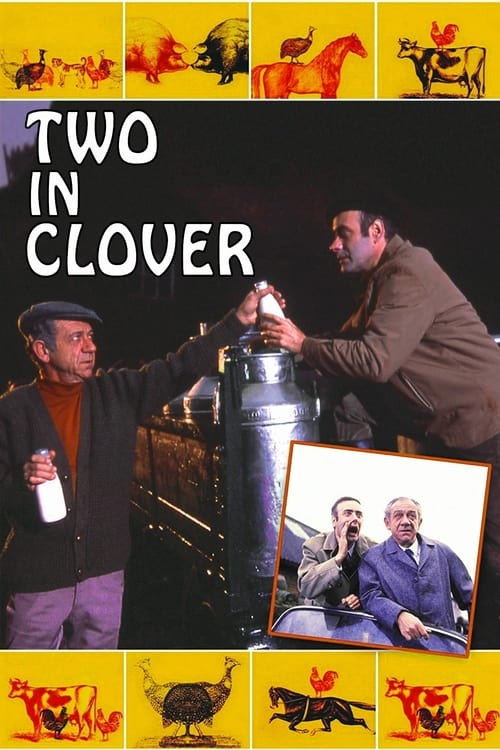
Two in Clover is a British sitcom produced by Thames Television for two series from 1969 to 1970 on ITV. It starred Sid James and Victor Spinetti and was written by Vince Powell and Harry Driver, and produced and directed by Alan Tarrant. The first series was made in black and white and the second series was made in colour. Frustrated office workers Sid Turner and Vic Evans decide to leave behind their nine-to-five lifestyle for the simpler life of living in the countryside and running a farm.
The World of Wodehouse was a comedy television series, based on the Blandings Castle and Ukridge comedy stories by P. G. Wodehouse. The series, which followed The World of Wooster, was shown on BBC Television during 1967 and 1968. Apart from one or more extracts from a solitary episode of Blandings Castle broadcast in February 1967, all episodes of both series are lost.
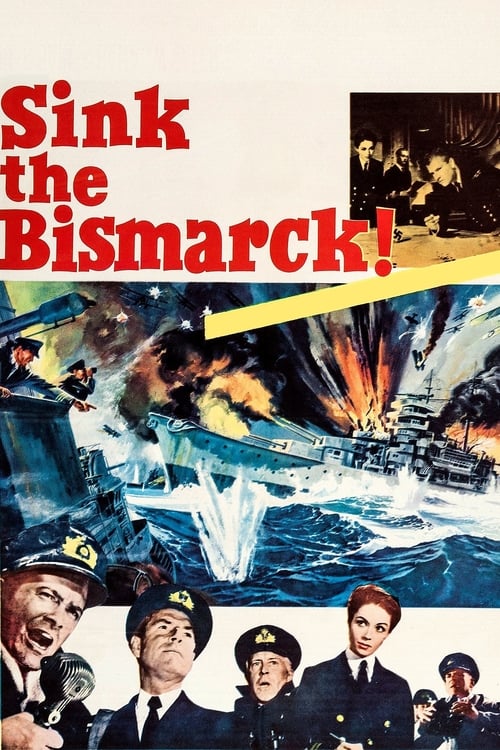
The story of the breakout of the German battleship Bismarck—accompanied by the heavy cruiser Prinz Eugen—during the early days of World War II. The Bismarck and her sister ship, Tirpitz, were the most powerful battleships in the European theater of World War II. The British Navy must find and destroy Bismarck before it can escape into the convoy lanes to inflict severe damage on the cargo shipping which was the lifeblood of the British Isles. With eight 15 inch guns, it was capable of destroying every ship in a convoy while remaining beyond the range of all Royal Navy warships.
Lord Wingate, aquitted after appearing in court for fraud, starts up a 'finishing school' to teach girls how to extract money from rich men, in return for a percentage of their gains. He enlists the help of the Duchess of Burwood as a teacher and Hector as fitness instructor. A probation officer friend supplies the first batch of pupils fresh from Holloway prison via a clapped out old mini bus. Suspicious neighbours and police together with newspaper reports naming the prison girls now hobnobbing in high society results in a raid and new court appearance for Lord Wingate. The Judge sentences him but plots to start up his own 'school for sex'.
199 Park Lane is a British television soap opera based around the residents of an exclusive block of apartments in London, and dealt with the intrigues of the Chelsea/Kensington set.
William Boot, a mild-mannered contributor of "Nature Notes" to a national newspaper, is mistaken for a famous foreign correspondent and dispatched to Ishmaelia to cover a war. This series is believed to be lost.