Acting
Susanne Sachße is a German producer, director, screenwriter and actress.
No description available.
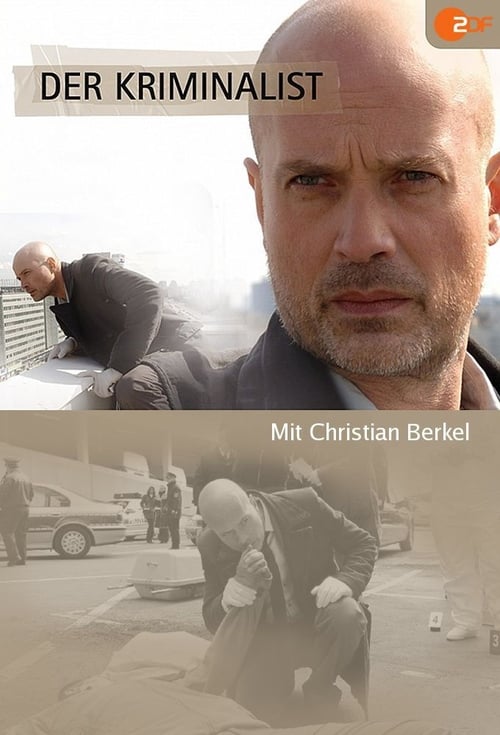
Der Kriminalist is a German television series produced by Monaco Film Hamburg, subsidiary of Odeon Film. Directors during the first season were Sherry Hormann and Torsten C. Fischer, during the second: Thomas Jahn, Jobst Oetzmann and Torsten C. Fischer.
Stubbe – Von Fall zu Fall is a German crime detective television series starring Wolfgang Stumph as detective Stubbe. It is being broadcast on ZDF, the second German public television channel since 1995.
A modern story of an actress that is in a theatre. In a place designed for representation, for daily reenactments of human passions, the film is focusing on the cruel awakening of the actress to her true self. More precisely to an “ancient self”. The one most people edit out of their lives: the garbage self.
Gudrun has modeled her amateur German terrorist group after the 1970s Red Army Faction (Baader-Meinhof Gang). She attempts to imitate her heroes by kidnapping the son of a wealthy industrialist and hopes to negotiate leftist demands from the father. When Gudrun’s not spouting leftist verses (including during a hilariously brilliant fuck session), she’s trying to convince her all-male gang to abandon their heterosexuality, which she believes is the result of mass delusion.
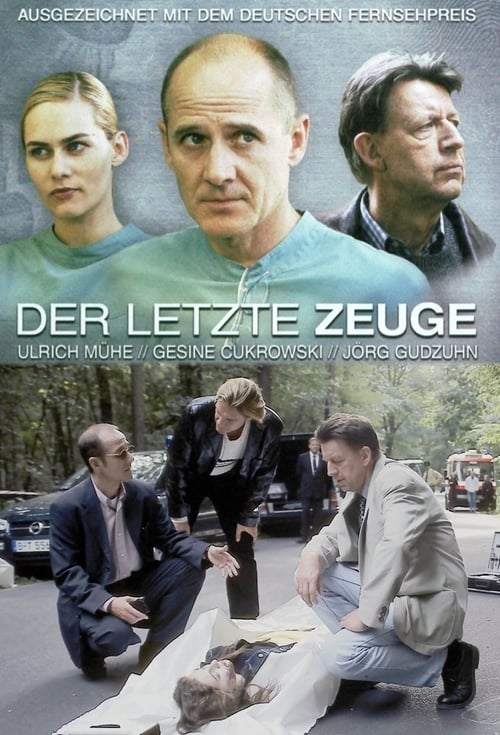
A female teenager witnesses a murder in a desolate high density housing area on the outskirts of Berlin and is henceforth in danger.
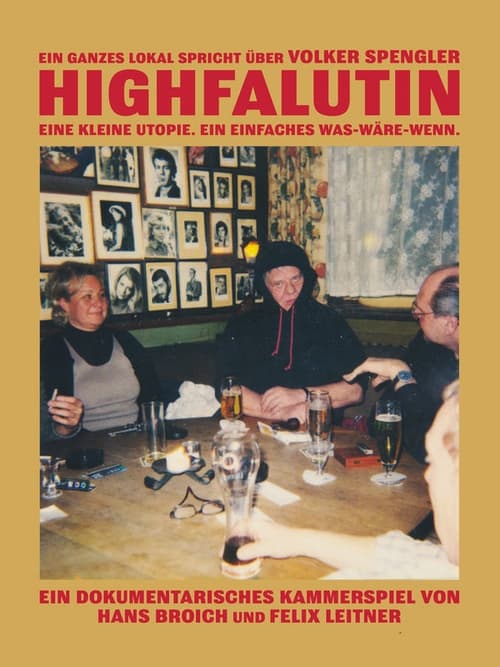
A bar full of people talking about Volker Spengler. HIGHFALUTIN is an attempt to create such a utopia, a simple "what if."
An archaeologist and a weapons designer, who knew each other in a previous life as a filmmaker and a psychoanalyst, meet at an excavation site in the Negev desert and begin a conversation about love and war, which they continue in the Israeli city of Be’er Sheva. A series of encounters with alternating actors in different roles ensues, which leads the viewer through the cities of Athens, Berlin, Hong Kong and São Paulo. Among those appearing are: an old artist who meets his younger self; a mother who lives with her two grown-up sons, a priest and a policeman; a Chinese and a Japanese woman; a curator and a cosmologist.
A woman who orgasms every time she plays tennis invites her neighbor over for a match.
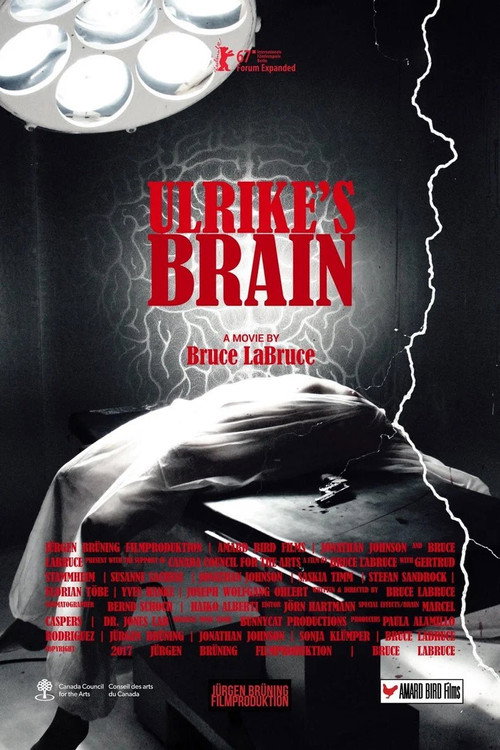
Referencing sixties B-movies like THEY SAVED HITLER’S BRAIN and THE BRAIN THAT WOULD NOT DIE, ULRIKE’S BRAIN finds Doctor Julia Feifer (Susanne Sachsse) arriving at an academic conference with an organ box. Inside the box: the brain of Ulrike Meinhof, which was saved by the authorities along with the brains of the three other leaders of the RAF after their deaths in Stammheim prison. Doctor Feifer can communicate telepathically with Ulrike’s brain, which is directing her to lead a new feminist revolution. To that end, she is searching for the ideal female body to transplant Ulrike’s brain into. At the same time, her arch-rival, Detlev Schlesinger, an extreme right-wing ideologue, arrives at the conference with the ashes of Michael Kühnen, the former German neo-Nazi leader and infamous homosexual who died of AIDS in 1989. When the two Frankenstein’s monsters of the extreme left and the extreme right meet, chaos ensues.
A young zombie named Otto appears on a remote highway. He has no idea where he came from or where he is going. After hitching a ride to Berlin and nesting in an abandoned amusement park, he begins to explore the city. Soon he is discovered by underground filmmaker Medea Yarn, who begins to make a documentary about him with the support of her girlfriend, Hella Bent, and her brother Adolf, who operates the camera. Meanwhile, Medea is still trying to finish Up with Dead People, the epic political-porno-zombie movie that she has been working on for years. She convinces its star, Fritz Fritze, to allow the vulnerable Otto to stay in his guest bedroom. When Otto discovers that he has a wallet that contains information about his past, before he was dead, he begins to remember details about his ex-boyfriend, Rudolf. He arranges to meet him at the schoolyard where they met, with devastating results.
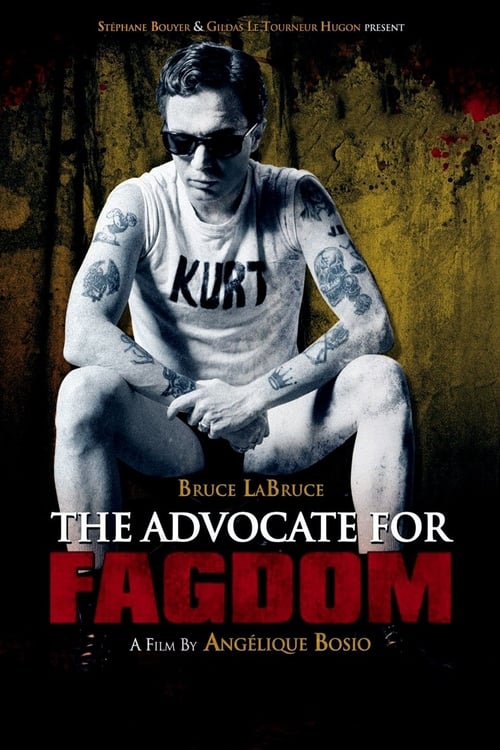
The Advocate for Fagdom unites the puzzle pieces one by one. Testimonies are combined with rare archive images. Art galeries present movie extracts that are succeeded by images shot on location. And the other way round. Writers, film makers, art galeries owners, actors and actresses, photographers, producers, friends and loved ones all join in a game of interpretation, analysis or simple anecdotes. John Waters, Bruce Benderson, Harmony Korine, Gus Van Sant, Richard Kern, Rick Castro and others deliver their impressions, theories and confessions. Everything blends into the fascinating portrait of a singular person blessed with singular talents. A complex personality at war not with a system but all systems. The portrait of a man constantly moving between his punk attitude and extreme sensibility.
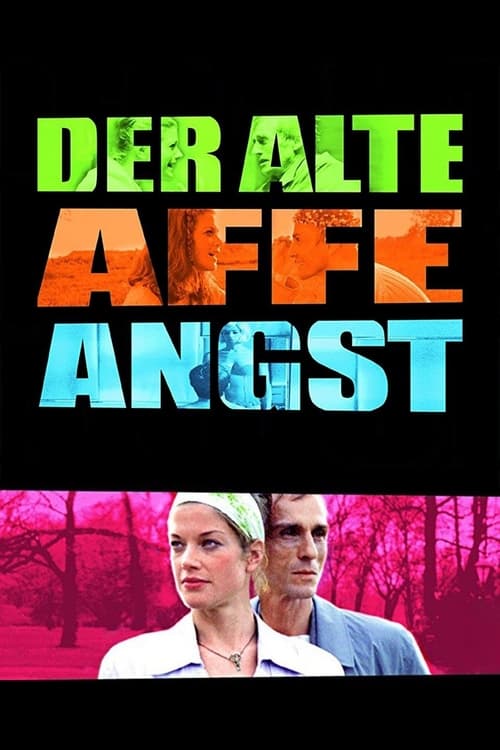
Oskar Roehler's drama Der Alte Affe Angst (Angst) is about the dissolution of a couple. Robert (Andre Hennicke) and Marie (Marie Baumer) have little in common other than their sex life. Since Robert is going through a bout with impotency, they are having a very rocky time. Robert learns that his father, whom he is estranged from, has died. This disturbs Robert so much that he visits a prostitute, and is able to engage in sex with her. Marie discovers the infidelity, and the prostitute has a surprise of her own. Angst was screened at the 2003 Berlin Film Festival.
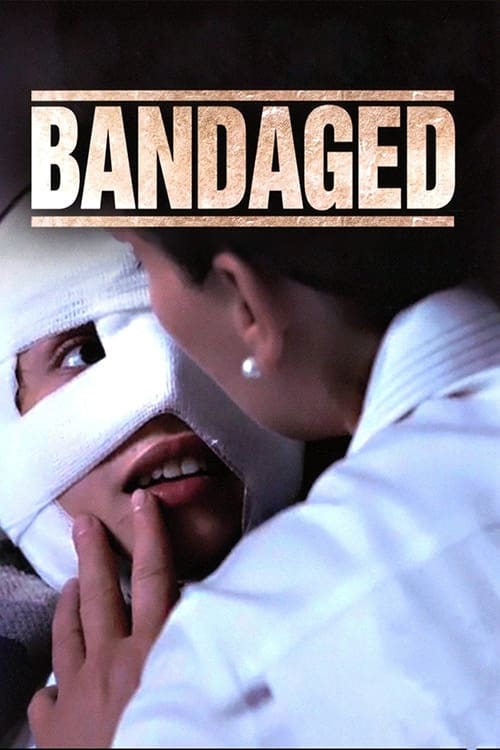
Since his wife's death, Arthur, a peculiar and severe surgeon, cloisters his teen daughter Lucille inside a strange mansion. Desperate, Lucille tries to commit suicide and ends up with her face completely burned and bandaged. Arthur, with the assistance of his aunt, prepares a weird skin graft in order to give back Lucille a face, a face that resembles his beloved and deceased wife. To take care of her, the father then hires Joan, an attractive nurse with a somber past. Lucille and Joan start a forbidden and passionate love affair.
Lesbian filmmakers from Berlin were asked to make a short film about their idea of male gay love and sexuality and, vice versa, gay men were given the task of making a short film about lesbian sexuality and eroticism.
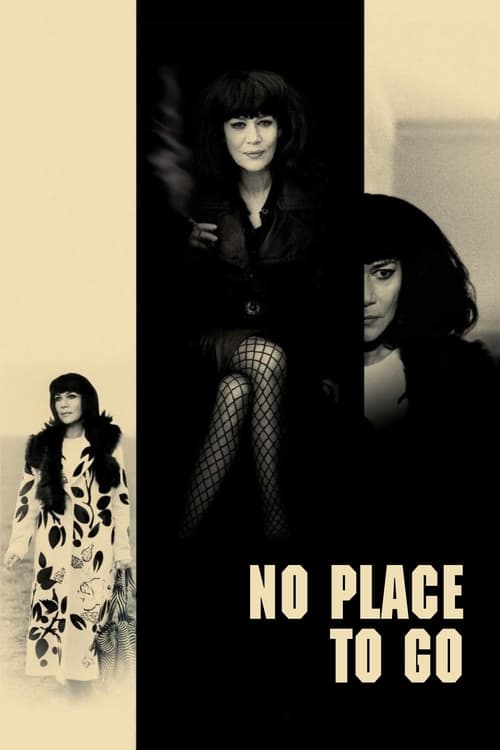
Flanders, a famous female author, travels in 1989 after the fall of the Berlin wall into the German capital. She is deeply depressed by the events because she saw the communist state as a very good thing that has now ended. In the joy of these days she finds no one to understand her, so she has to travel back to Munich. After meeting several people, known and unknown, it seems as if there will be no way to go.
Experimental queer short film, showing people dancing to the song "La Petite Tonkinoise".
In Ger(wo)many, when an army of radical females is preparing for a final revolution and a utopian world without men, a young male soldier arrives seeking refuge at the convent.
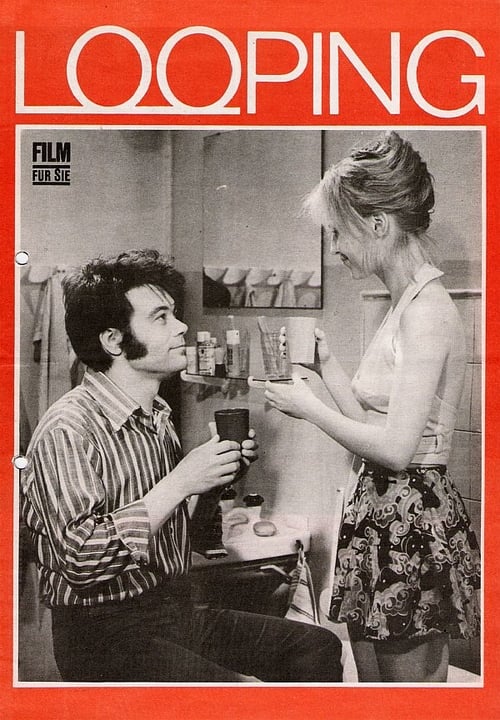
The thirty year old bee is a daredevil, everything seems to work for him. But suddenly a tragic event tears him out of his carelessness. In the explosion of a carbide furnace in operation, a colleague is killed.