FEEL IT.STREAM
Alexander Hammid

Alexander Hammid

Directing

Biography

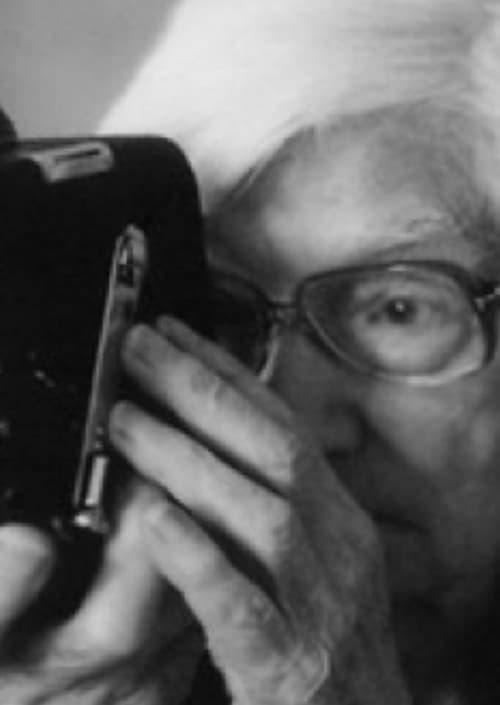
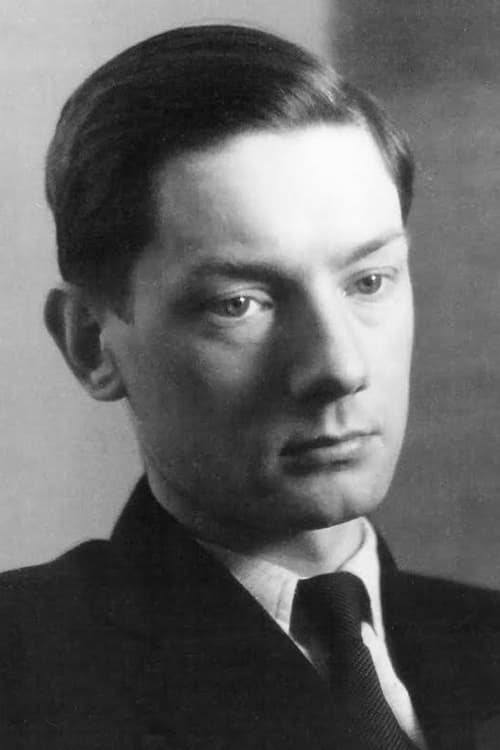
Alexander Hammid born Alexandr Hackenschmied (17 December 1907, Linz – 26 July 2004, New York City) was a leading photographer, film director, cinematographer and editor in Czechoslovakia between the two world wars. He immigrated to the U.S. in 1938 and became involved in American avant-garde cinema. He is best known known for his film, Crisis (1939), Meshes of the Afternoon (1943) and To Be Alive!(1964). He made Meshes of the Afternoon, with his wife Maya Deren—to whom he was married from 1942 to 1947. He won the 1965 Academy Award for Best Documentary (Short Subject) for To Be Alive! (1964), which he co-directed with Francis Thompson.

Known For

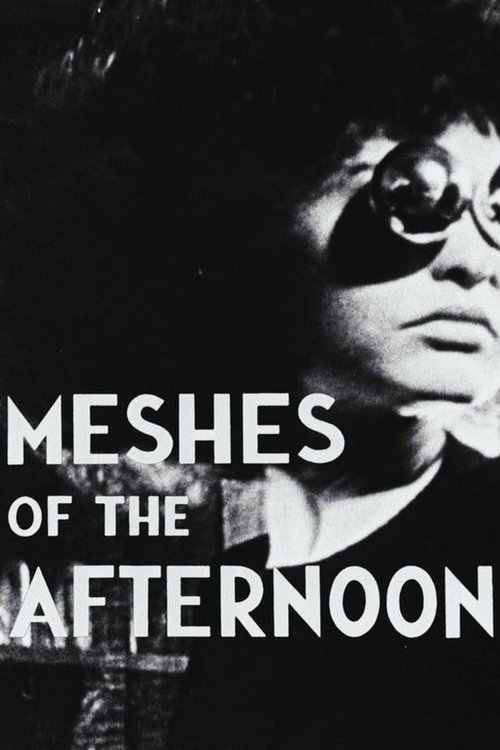
Meshes of the Afternoon
7.6

A woman returning home falls asleep and has vivid dreams that may or may not be happening in reality. Through repetitive images and complete mismatching of the objective view of time and space, her dark inner desires play out on-screen.

Meshes of the Afternoon

1943
Conversion of Ferdys Pistora
7.0

Cashier Ferdyš Pištora goes to rob the villa of banker Rosenštok. At that moment, a fire breaks out and Ferdyš saves the banker's two young children. He is hailed as a hero by everyone and Rosenštok makes him a messenger in the bank. This changes Ferdyš's entire life. He becomes a moralist and bullies the whole neighborhood with his sermons. He falls in love with Terezka, a member of the Salvation Army. Ferdyš's former lover Irma is jealous of Terezka. The two women argue and Terezka, in anger, claims that she killed her child and buried it in the cellar. Ferdyš believes this fabrication. In order to save her, he wants to give her the money that he was supposed to hand over to the bank. Out of jealousy, Irma tells the police that Ferdyš wanted to rob the banker's villa, and Ferdyš is arrested. However, Rosenštok intercedes for him and Ferdyš is acquitted. Terezka confesses that she made up the child's murder and celebrates her wedding with Ferdyš.

Conversion of Ferdys Pistora

1932
In the Mirror of Maya Deren
7.5

Documentary about the life of avant-garde filmmaker Maya Deren, who led the independent film movement of the 1940s.

In the Mirror of Maya Deren

2002
Invocation: Maya Deren
6.3

Maya Deren is a legend of avant-garde cinema. This authoritative biography of the charismatic filmmaker, poet and anthropologist features excerpts from her pioneering Meshes of the Afternoon and her unfinished documentary on Haiti, interviews with Stan Brakhage and Jonas Mekas, and recordings of her lectures. Narrated by actress Helen Mirren, this definitive documentary offers startling insights into one of the most intriguing, accomplished figures in cinema history.

Invocation: Maya Deren

1986
To Be Alive!
7.4

"To Be Alive!" was designed to celebrate the common ground between different cultures by tracing how children in various parts of the world mature into adulthood.

To Be Alive!

1964
From Saturday to Sunday
6.5

Two secretaries go out on a double date, but the inexperienced Mary flees when offered money for sexual favors. She takes refuge in a cafe and encounters a plebeian Prince Charming. The film recounts the simple progress of their romance after they go home together.

From Saturday to Sunday

1931
No image
5.0

This documentary interweaves films and voice recordings by Maya Deren with interviews featuring colleagues and contemporaries who worked with or knew her firsthand. Drawing on archival material and commentary from figures such as Jean Rouch and Jonas Mekas, the film traces Deren’s work and influence across experimental cinema and ethnographic thought.

Maya Deren, Take Zero

2012
At Land
7.3

A woman washes up on a beach and embarks on a surreal journey, encountering others and fragmented versions of herself in a quest for identity.

At Land

1944
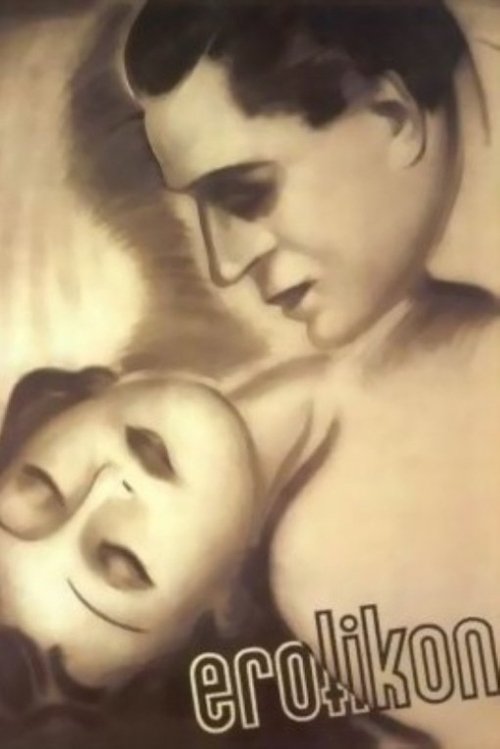
Erotikon
6.3

Andrea, the beautiful daughter of a railway gateman, is seduced by a rich passenger, who missed his train. Left pregnant, Andrea marries another man and moves to Prague, only to encounter her former lover and recover her former lust.

Erotikon

1930
The Private Life of a Cat
7.2

An intimate study of the life of a domestic cat, taking place over a period of months as she gives birth to a litter of kittens and cares for them as they grow.

The Private Life of a Cat

1946
To the Fair!
N/A

Promotional film extolling the wonders to be seen at the New York World's Fair.

To the Fair!

1964
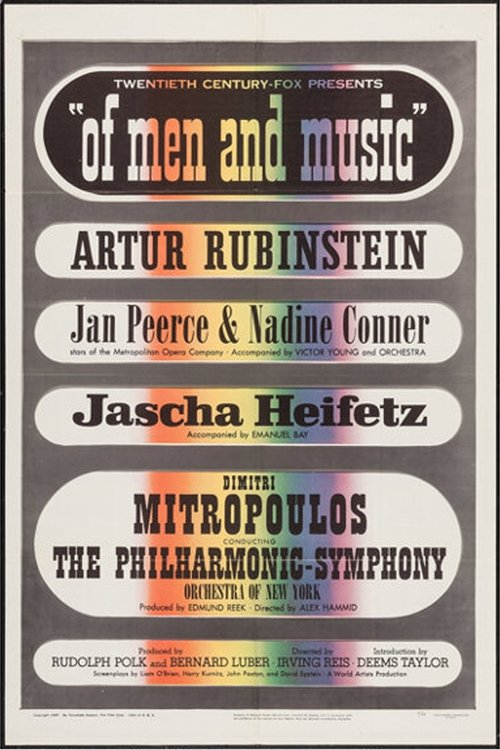
Of Men and Music
7.0

A documentary featuring musicians including Artur Rubinstein, Jan Peerce-Nadine Conner, and Jascha Heifetz.

Of Men and Music

1951
The Medium
5.1

Madame Flora is terrified when she perceives a supernatural presence during one of her fraudulent séances...

The Medium

1951
Crisis
8.0

A documentary about the conquest of Czechoslovakia by the Nazis just prior to World War 2.

Crisis

1939
Angry Boy
7.0

Alexander Hammid's sensitive narrative of how a pre-adolescent boy is helped by a psychiatrist to come to terms with his feelings.

Angry Boy

1950
No image
5.6

Documentary examining the conflicts between the coming of modernization and the traditional culture of a small Mexican village.

The Forgotten Village

1941
Night Journey
5.9

Night Journey, the dance, had its premiere only two and a half years after Appalachian Spring, and it is a close cousin. It too has a stream-of-consciousness narration: Jocasta, as she is about to kill herself, remembering what has happened to her. It too contains soul-delving solos, broken up by ensemble dances. Here, however, the ensemble is a darker element. As the story was taken from Greek tragedy, so the corps is the equivalent of Greek tragedy’s chorus. They tell us how to feel: afraid mostly. In this piece Graham pushed her habitual economy to its limits.

Night Journey

1960
No image
4.3

An unknown gang has again broken into a van containing money from the European bank. Banker Sam Hamilton decides to use an armoured car for the next money transport. He hires racing driver Charly Allan as the driver. Allan is invited to Hamilton's house for a party. During a dance with the banker's daughter Bessy he is attacked by bandits, pushed to the ground and Bessy is kidnapped.

Armored Car

1930
...and Life Goes On
8.0

On the coast of Yugoslavia lives fisherman Ivo Kralj, his wife Marie, son Vuk, and Ivo's mother in one happy home. Marie, who loves her husband and always looks forward to his return from sea, attracts Nikola, with whom Ivo, out of jealousy, has a scuffle at a dance. After the outbreak of World War I Ivo is mobilized. He ends up in a P.O.W. camp where he is subjected to hard labour. His family then receives news of his death. The years pass and the lonely widow Marie is occasionally visited by her friend Nikola. Ivo's mother would like her to remarry. Soon after the wedding Marie becomes pregnant. Ivo, who has been thought dead, succeeds in escaping the P.O.W. camp where he has spent several years. Upon his arrival home he finds his name on a memorial erected to the victims of the war...

...and Life Goes On

1935
No image
7.0

A man and a woman meet on the streetcar. Six years ago, they were close . . .

Listopad

1935