Acting
Aucune description disponible.
L'artiste connu dans le monde entier, Hokusai, est un veuf qui n'arrive pas à gagner d'argent. Il vit avec sa fille Oei dans la maison d'un ami, Bakin. Hokusai rencontre une femme appelée Onao et se retrouve irrésistiblement attiré par elle, mais elle disparaît soudainement. Un jour, Oei ramène à la maison une jeune fille qui ressemble trait pour trait à Onao. Hokusai commence à peindre, en utilisant la jeune fille comme modèle.
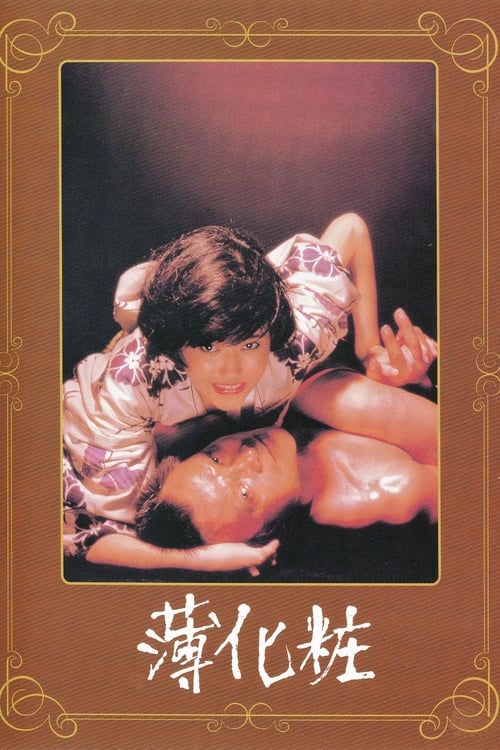
En 1907, Hisano arrive au Yoshiwara afin de devenir geisha. Elle vient d'être vendue pour rembourser les dettes de son père. Après une visite chez le médecin qui lui impose un examen gynécologique des plus désagréables, Hisano est présentée aux trois grandes geishas : Yoshizato, Kobana et la plus respectée Kokonoe. Cette dernière est alors chargée de la former à l'art des plaisirs. Hisano, jeune fille docile et résignée accepte finalement son sort et fait face à son destin... On trouve dans ce métrage les thèmes de l'aliénation, la vie misérable et le destin tragique de femmes désespérées. Ideo Gosha nous dévoile ici la cruelle réalité de ces prostitués qui ne peuvent échapper à leur condition. Certaines deviennent folles ou se suicident, d'autres se saoulent au saké pour tenir le coup. Rares sont celles qui réussissent à régler leurs dettes et à s'en aller. Encore plus rares sont celles qui retrouvent une vie normale...
1949, un homme emprisonné pour le meurtre de sa famille après avoir avoué s'évade. Sa seule chance de liberté est son nouvel amour qui essaie de le protéger des autorités.
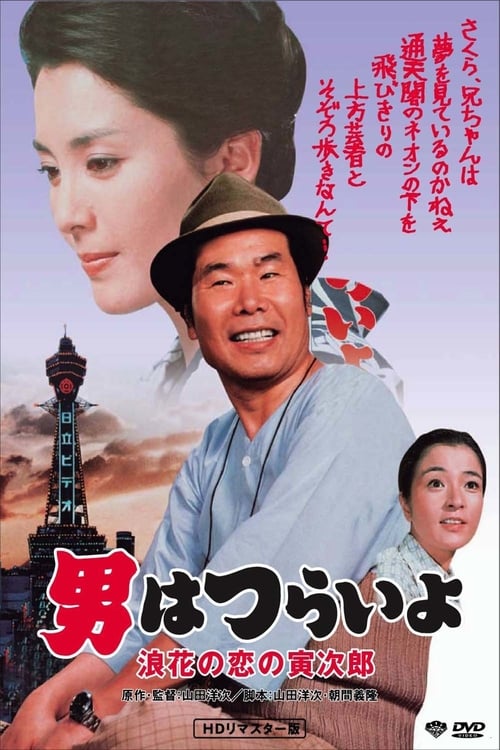
Sur une petite île de la mer intérieure de Seto, Tora rencontre la belle Fumi Hamada (Keiko Matsuzaka) qui se recueille sur la tombe de sa grand-mère. Quelque temps plus tard, Fumi, qui est geisha à Osaka, croise à nouveau par hasard Tora au sanctuaire Ishikiri. Ils se retrouvent pour un rendez-vous galant au temple Hôzan sur le mont Ikoma. Elle lui révèle avoir un petit frère dont elle a été séparée dans la plus tendre enfance. Tora propose qu’ils aillent ensemble à sa recherche, mais ils découvrent alors que celui-ci est mort de maladie. La jeune femme a le cœur brisé et Tora se montre très attentionné envers elle, mais ne parvenant pas à répondre aux sentiments de la jeune femme, il finit par retourner à Shibamata...
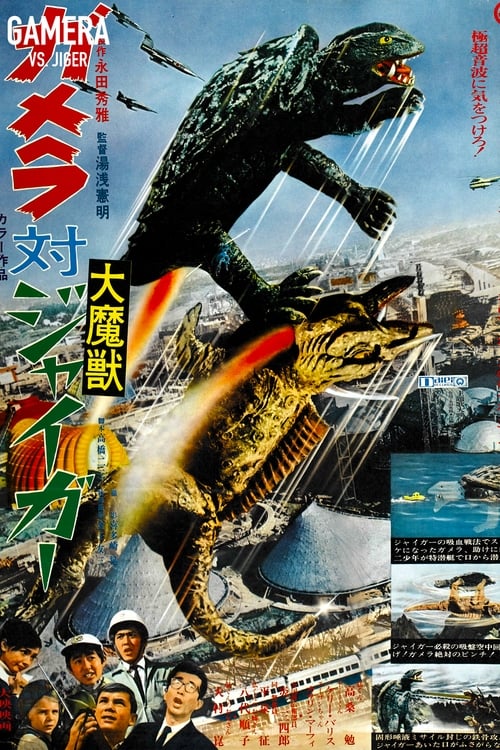
En déplaçant une mystérieuse statue, des chercheurs libèrent le monstre préhistorique Jiger. Alerté par la situation, Gamera tente de l’arrêter. Mais Jiger parvient à injecter une larve venimeuse dans le corps de la tortue géante. Aidé par des scientifiques, Gamera va devoir lutter pour sa survie avant de reprendre le combat contre son ennemi...
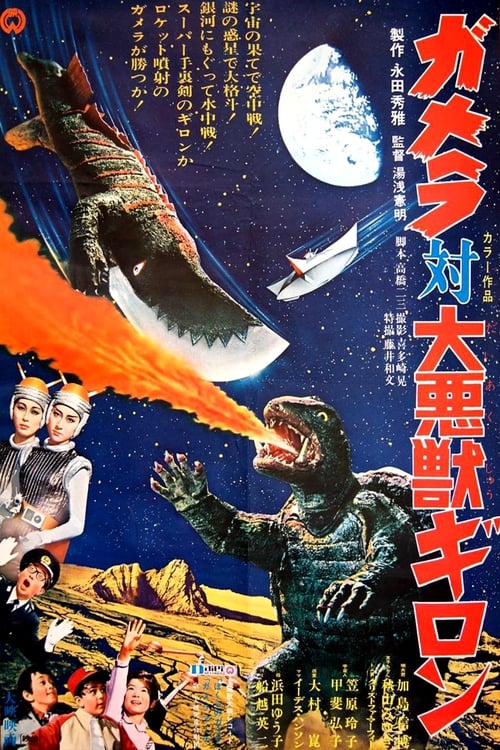
Deux garçons, Akio et Tom, se font enlever par des aliens. Les deux enfants découvrent sur la planète de glace Terra, deux belles femmes aliens ainsi que le monstre Guiron. Gamera retrouve la piste des deux garçons sur Terra et combat Gurion, tandis que les garçons tentent d'échapper aux deux aliens.