Acting
Antonia San Juan Fernández (born 22 May 1961) is a Spanish actress, director and screenwriter.
David Broncano, along with Jorge Ponce, Ricardo Castella and his other collaborators, lead La Revuelta, a comedy show that includes multiple sections and interviews from the Teatro Príncipe Gran Vía in Madrid.
La que se avecina is a Spanish television comedy created by Alberto Caballero, Laura Caballero and Daniel Deorador. The TV-series focusing around the inhabitants of Mirador de Montepinar, a fictional building located on the outskirts of a big city. Both its storylines and cast are heavily based on Aquí no hay quien viva, which ended when Telecinco bought Miramón Mendi, the series production company. The episodes debuted on the Telecinco network, and were later rerun by the same network as well as cable/satellite channels FactoríaDeFicción and Paramount Comedy. The series debuted in 22 April 2007 and became popular thanks to its funny characters, witty script, use of catchphrases and capacity to integrate and poke fun at contemporary issues; the program presents a caustic satire of many of the 'types' found in Spanish society. The name of the show involves wordplay, as "vecina" is the Spanish word for neighbour.
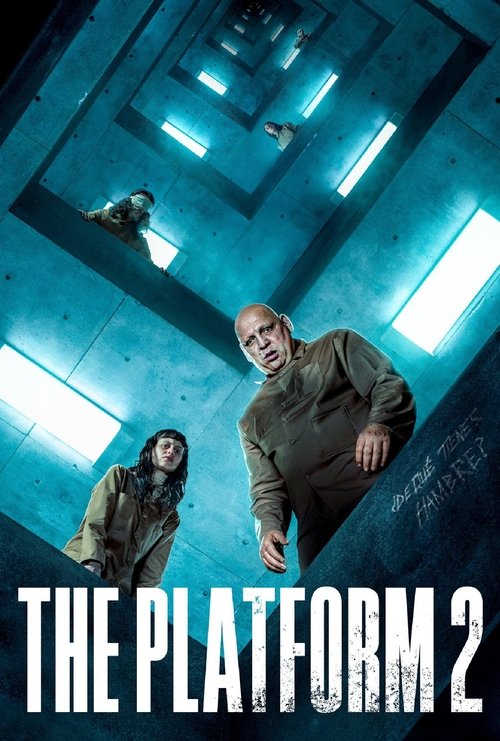
A slab of food descends down a vertical facility. The residents above eat heartily, leaving those below starving and desperate. A rebellion is imminent.
No description available.
After a mysterious leader imposes his law in a brutal system of vertical cells, a new arrival battles against a dubious food distribution method.
Following the tragic death of her teenage son, Manuela travels from Madrid to Barcelona in an attempt to contact the long-estranged father the boy never knew. She reunites with an old friend, an outspoken transgender sex worker, and befriends a troubled actress and a pregnant, HIV-positive nun.
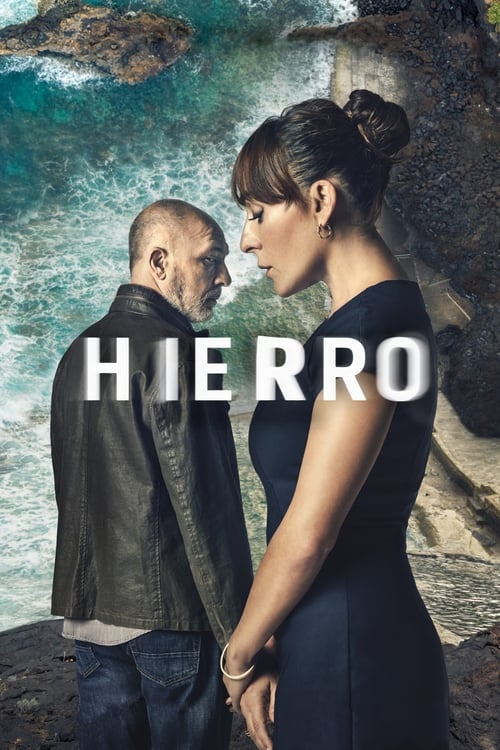
In El Hierro, the most remote island of the Canary Archipelago, a murder has occurred. Candela, an experienced judge with a strong character, must instruct the case as she takes up her position in a destination where she doesn't fit in. The island, an abrupt and changing landscape, is the home of a small community with singular traditions, where nobody enters or leaves unnoticed and where secrets are hard to keep. The murderer is surely one of the islanders. Everybody believes it is Diaz, a shady local businessman, who seems to fit the bill. But nothing is that easy, neither with Candela, nor with Diaz. They are both out to find the murderer. She is out to do her job to the best of her ability; he is out to prove his innocence.
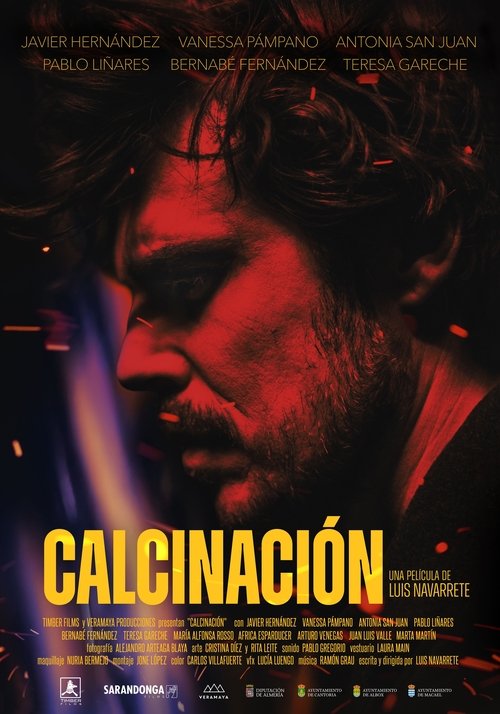
Álvaro has long felt that his life has lost all meaning. Just as chaos threatens to overwhelm him, a mysterious young woman appears, offering what might be his last hope.
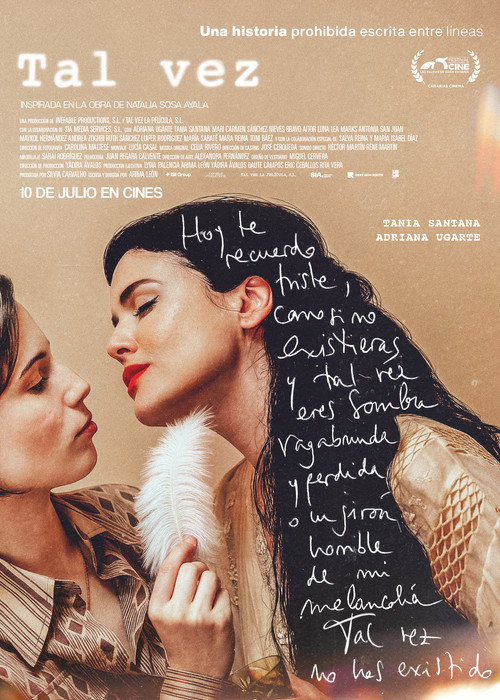
In 1960s Spain, legendary trapecist Pinito del Oro hires young poet Natalia Sosa Ayala to help with her memoirs, sparking a profound emotional bond between them. Through historical events, intimate encounters, and decades of letters, their admiration, affection, and creative passion intertwine. The story moves between memory, desire, and imagination, showing how these two artists influence each other’s quests for freedom, artistic expression, and recognition. Rooted in real moments but told with a dreamlike, imaginative lens, it explores what might have been between them, revealing a tender, evocative tale of connection, longing, and the courage to defy societal constraints.
Several characters from different social backgrounds cross paths in the course of one day: a 50 year old woman who refuses to grow up, a millionaire who provides in-home counseling on Feng Shui while searching for her son, a pop star, a struggling actor, and a selfish theater director.
Manu works at a beach bar. Klaus won't leave the last beach chair. What seems like a clash between opposites turns suspicious when Manu doubts Klaus's presence is coincidental. Tension builds until Klaus makes a disturbing offer.
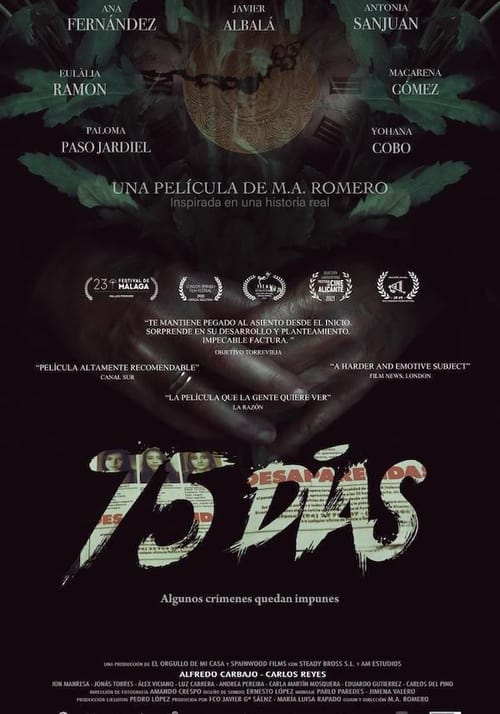
On Friday, November 13th, 1992, three 14 years old girls mysteriously disappear when they head to a disco in a nearby town. 75 days later, their dead bodies were found in an advanced stage of decomposition, half buried in the undergrowth.
Victor has a nice life in Madrid with his partner, José. However, after returning to his childhood home in the mountains of Bulgaria for his grandfather's funeral, he decides to stay for the summer. While reconnecting with his father and the village way of life, he unexpectedly finds love in the form of Liuben, an 18-year-old Roma boy. Despite their differences, and the conflicts surrounding them, Victor and Liuben find refuge in each other, while a romance begins to take form.
A family is on holiday in 1991 when their teenage daughter decides to elope with her boyfriend. Their parents travel forward in time to 2022 and see how much Spain has changed in three decades.
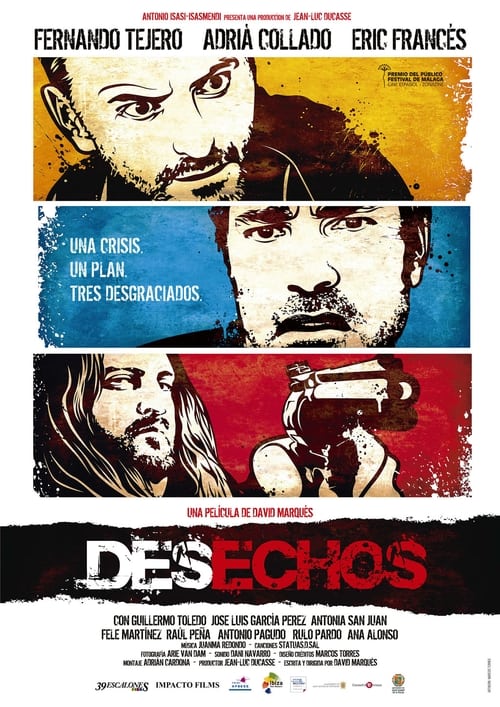
In economic crisis, Kiko (Eric French) and Marcelo (Adrià Collado) believe finding a solution to their economic problems re-letting a room in his house in Ibiza ... As the floor in the living only two fit the closet of the housing as if it were a small room. After several unsuccessful visits appears Soto (Fernando Tejero), a strange character who not only accepts live in the small "bedroom" but also offers the ultimate solution to your all their woes ...
The usually absent father of a chubby kid shows up to take him on a road trip.