FEEL IT.STREAM
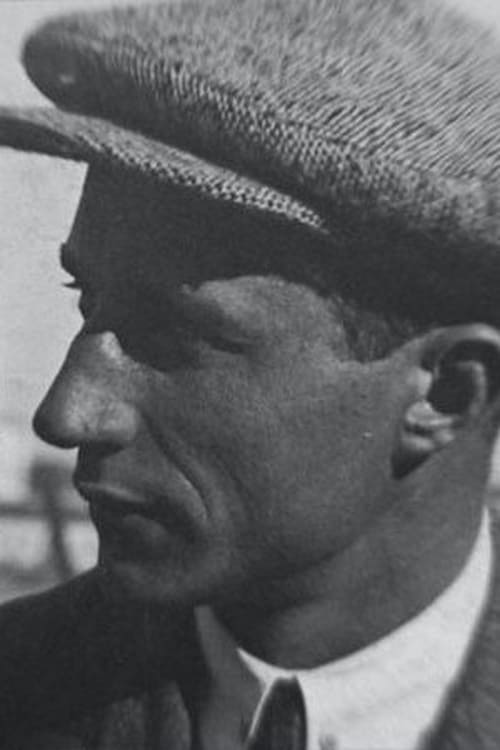
Eduard Tisse

Eduard Tisse

Camera

Biography

Eduard Tisse (13 April 1897 – 18 November 1961) was a Soviet cinematographer. In 1921, Tisse became a professor at Gerasimov Institute of Cinematography. His career took off when he worked with director Sergei Eisenstein on the film Strike. Tisse would become Eisenstein's standard cinematographer for the next twenty years.
Known For

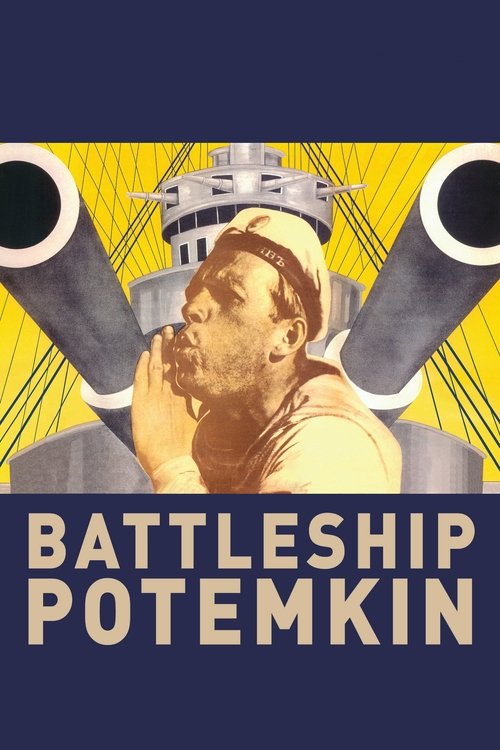
Battleship Potemkin
7.6

A dramatized account of a great Russian naval mutiny and a resultant public demonstration, showing support, which brought on a police massacre.

Battleship Potemkin

1925
Ivan the Terrible, Part I
7.3

Set during the early part of his reign, Ivan faces betrayal from the aristocracy and even his closest friends as he seeks to unite the Russian people. Sergei Eisenstein's final film, this is the first part of a three-part biopic of Tsar Ivan IV of Russia, which was never completed due to the producer's dissatisfaction with Eisenstein's attempts to use forbidden experimental filming techniques and excessive cost overruns. The second part was completed but not released for a decade after Eisenstein's death and a change of heart in the USSR government toward his work; the third part was only in its earliest stage of filming when shooting was stopped altogether.

Ivan the Terrible, Part I

1944
Ivan the Terrible, Part II: The Boyars' Plot
7.3

This is the second part of a projected three-part epic biopic of Russian Czar Ivan Grozny, undertaken by Soviet film-maker Sergei Eisenstein at the behest of Josef Stalin. Production of the epic was stopped before the third part could be filmed, due to producer dissatisfaction with Eisenstein's introducing forbidden experimental filming techniques into the material, more evident in this part than the first part. As it was, this second part was banned from showings until after the deaths of both Eisenstein and Stalin, and a change of attitude by the subsequent heads of the Soviet government. In this part, as Ivan the Terrible attempts to consolidate his power by establishing a personal army, his political rivals, the Russian boyars, plot to assassinate him.

Ivan the Terrible, Part II: The Boyars' Plot

1958
¡Qué Viva México!
6.7

Eisenstein shows us Mexico in this movie, its history and its culture. He believes, that Mexico can become a modern state.

¡Qué Viva México!

1979
Alexander Nevsky
7.0

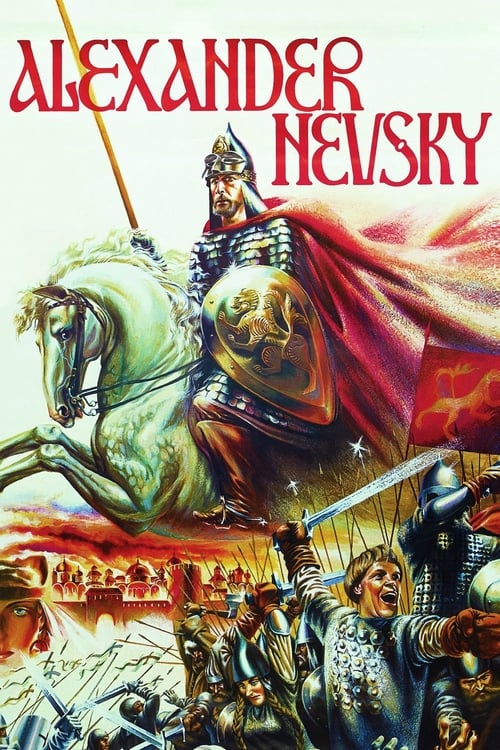
When German knights invade Russia, Prince Alexander Nevsky must rally his people to resist the formidable force. After the Teutonic soldiers take over an eastern Russian city, Alexander stages his stand at Novgorod, where a major battle is fought on the ice of frozen Lake Chudskoe. While Alexander leads his outnumbered troops, two of their number, Vasili and Gavrilo, begin a contest of bravery to win the hand of a local maiden.

Alexander Nevsky

1938
Strike
7.4

Workers in a factory in pre-revolutionary Russia go on strike and are met by violent suppression.

Strike

1925
Meeting on the Elbe
4.9

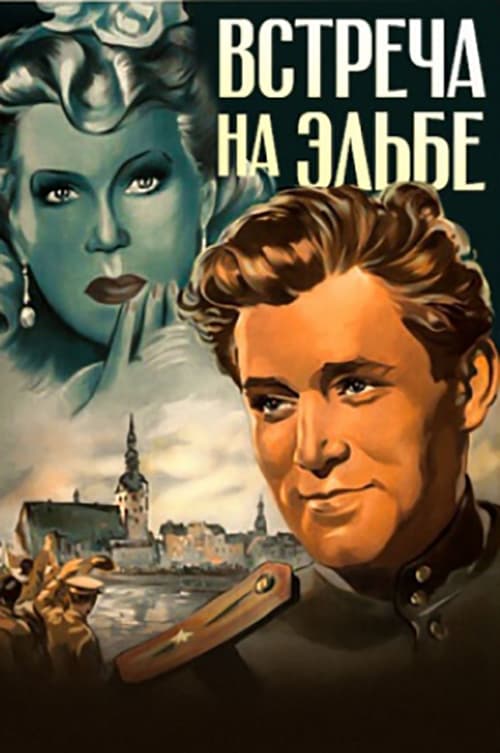
Soviet and American soldiers are meeting on the shores of the Elbe river in Germany in 1945.

Meeting on the Elbe

1949
October (Ten Days that Shook the World)
6.9

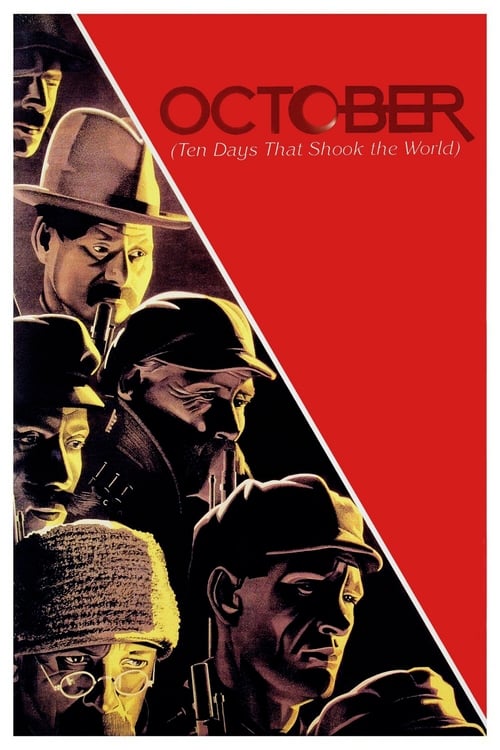
Sergei M. Eisenstein's docu-drama about the 1917 October Revolution in Russia. Made ten years after the events and edited in Eisenstein's 'Soviet Montage' style, it re-enacts in celebratory terms several key scenes from the revolution.

October (Ten Days that Shook the World)

1928
Aerograd
5.0

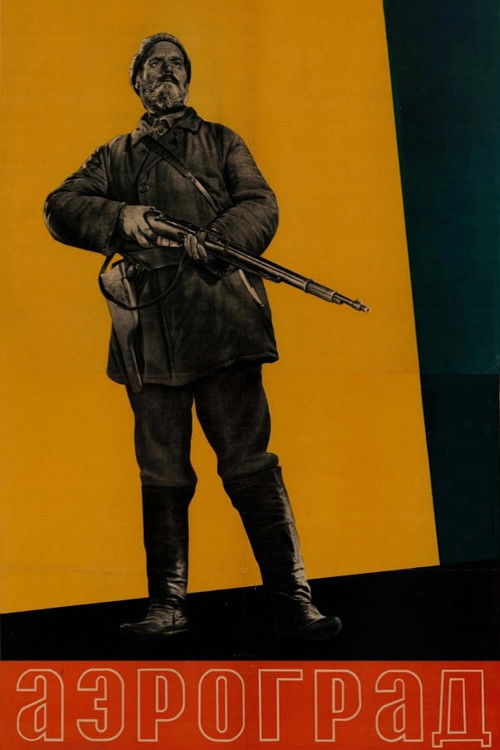
A Russian outpost in Eastern Siberia comes under threat of attack by the Japanese. Aerograd is a new town with a strategically located airfield of vital interest to the government. Work on the new outpost is complicated when tensions develop between workers and a religious sect. Relations between the two countries are further strained in the days before World War II, dating back to the Russo-Japanese War of 1905.

Aerograd

1935
Sickle and Hammer
N/A

A down on his luck peasant goes to fight in World War I and returns home a hero. Partially lost.

Sickle and Hammer

1921
Misery and Fortune of Woman
6.5

This film shows contrasting views of women with problematic pregnancies and the outcomes resulting when they seek out a back-alley abortionist, a trained and licensed abortion provider in a clinic, or an obstetrician capable of performing a Caesarian Section. The full film appears to be lost, but shortened versions, including one with dialogue scenes added in Germany in 1935, can be found on the internet. Additionally, Eisenstein's role in making the picture remains unclear: did he direct some or all of it, just edit it, or merely leave it to Alexandrov and Tisse to make? Released in the USA 1930 in a 65 minute (5800 ft.) version with English intertitles and a music track under the title BIRTH.

Misery and Fortune of Woman

1930
Time in the Sun
6.0

Second attempt to create a feature film out of the 200,000-plus feet of film which Soviet film-maker Sergei Eisenstein shot during 1931-32 in Mexico for American socialist author Upton Sinclair, his wife and a small company of investors. The projected film, to be called "Que Viva Mexico", was never completed due to exhaustion of funds and Stalin's demand that Eisenstein return to the USSR (he had been absent since 1929). The first attempt at editing the footage, in the USA, resulted in "Thunder Over Mexico", released in 1934. In 1940, Marie Seton, from the UK, acquired some of the footage from the Sinclairs in an attempt to make a better cutting according to Eisenstein's skeletal outline for the proposed film. This film has apparently been lost.

Time in the Sun

1940
Death Day
6.0

During his adventure in Mexico, Sergei Eisenstein made footage of a Mexican "Death Day" celebration for inclusion in his "Que Viva Mexico!" film project. When the 200,000-plus feet of film he eventually exposed in Mexico was first attempted to be made into a feature film, "Thunder Over Mexico", the producers excluded the Death Day material for subsequent compilation as an independent short subject. Silent with music track and explanatory English intertitles.

Death Day

1934
The Immortal Garrison
4.7

The Immortal Garrison is set in June of 1941, at the outset of the Nazi invasion of Russia. A group of Soviet servicemen, languidly biding their time at the Brest fortress on the Polish border, are suddenly galvanized into action. All desires to return home to their wives and sweethearts are swept aside as the courageous garrison unites to thwart a common enemy. The siege of Brest has served as story material for countless Russian films: in lieu of contradictory evidence, Immortal Garrison must be adjudged the best of these films. For its American release, Immortal Garrison was double-featured with another Soviet production, The Mexican.

The Immortal Garrison

1956
Man of Music
4.7

The young composer Mikhail Glinka performs his new work at a soiree at earl Vielgorsky's house. However, the public is accustomed to Western music, and reacts coldly to the creation of the composer. This makes him very sad, but soon he decides to go learn the art of music in Italy. After returning from Italy, he is full of desire to write national Russian opera. Vasily Zhukovsky proposes a subject: a feat of Ivan Susanin. Tsar Nicholas I change the name of the opera to A Life for the Tsar and assigns a librettist - Baron Rosen. Acquaintance with the future co-author shocked Glinka: Rosen speaks Russian with a noticeable German accent. The premiere was successful, but Glinka was still not entirely happy with the libretto: "False words were written by Rosen". When Nicholas I learned that Ruslan and Lyudmila was written on Pushkin's subject, he sees it as sedition. The bitter experience of the composer brighten his supporters.

Man of Music

1952
Listen, on the Other Side
7.0

Soldiers of the Russian-Mongolian Joint Special Detachment, who are carrying out a special mission, went to the front line of the war and assumed the responsibility of conducting a sharp emotional and ideological battle with words and sounds. Therefore, the contribution of these people in the battle of Khalkh River was huge. This film shows the Khalkh River War and its scope through the actions of the "Little Squad" and the thoughts of its heroes.

Listen, on the Other Side

1972
The Magic Beam
N/A

“The Magic Beam” is a film essay woven together from newsreels and documentary material from different decades, fragments of hundreds of non-fiction and fiction Soviet films of the 1910s-1960s.

The Magic Beam

1963
Sentimental Romance
6.7

Romance sentimentale is a 1930 French film directed by Grigori Aleksandrov and Sergei M. Eisenstein. A short, experimental, slightly poetic montage of city and abstract images.

Sentimental Romance

1931
Sergei Eisenstein
N/A

Documentary made for the 60th anniversary of Soviet director Sergei Eisenstein.

Sergei Eisenstein

1958
Silvery Dust
5.4

An American scientist invents a new weapon of mass destruction - silver dust. Corporate war breaks out between two military industry giants to own the weapon. The scientist dies and his son makes the discovery public with more consequences.

Silvery Dust

1953