Sergei Eisenstein
Directing
Biography
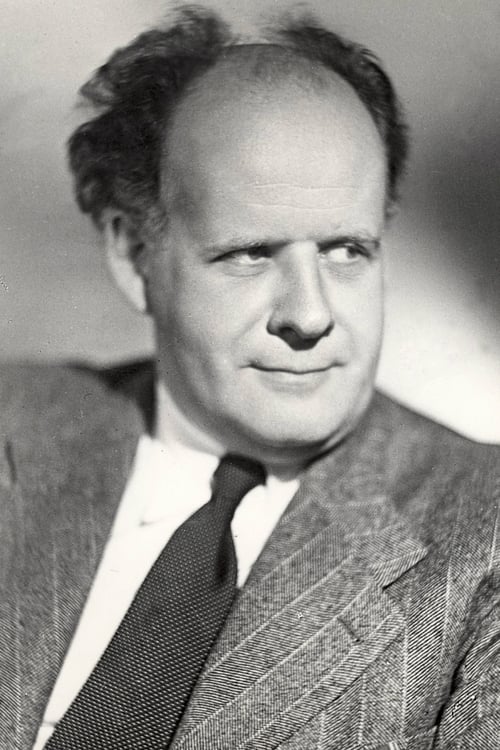
Sergei Mikhailovich Eisenstein was a pioneering Soviet Russian film director and film theorist, often considered to be the "Father of Montage." He is noted in particular for his silent films Strike (1924), Battleship Potemkin (1925) and October (1927), as well as the historical epics Alexander Nevsky (1938) and Ivan the Terrible (1944, 1958). His work profoundly influenced early filmmakers owing to his innovative use of and writings about montage.
Known For

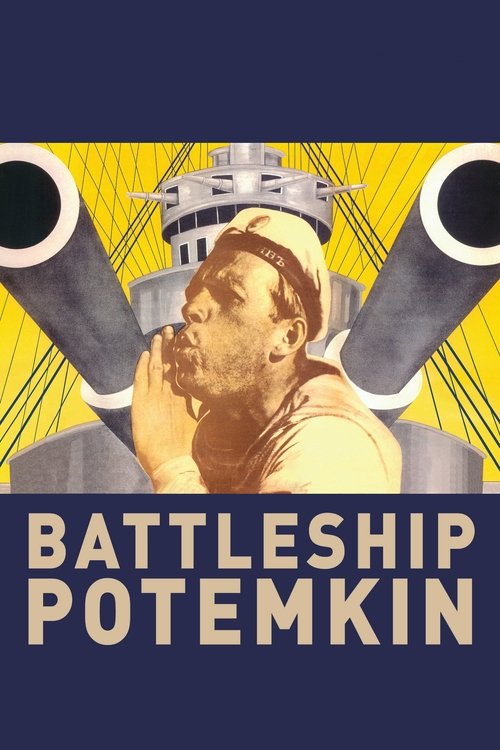
A dramatized account of a great Russian naval mutiny and a resultant public demonstration, showing support, which brought on a police massacre.
Battleship Potemkin

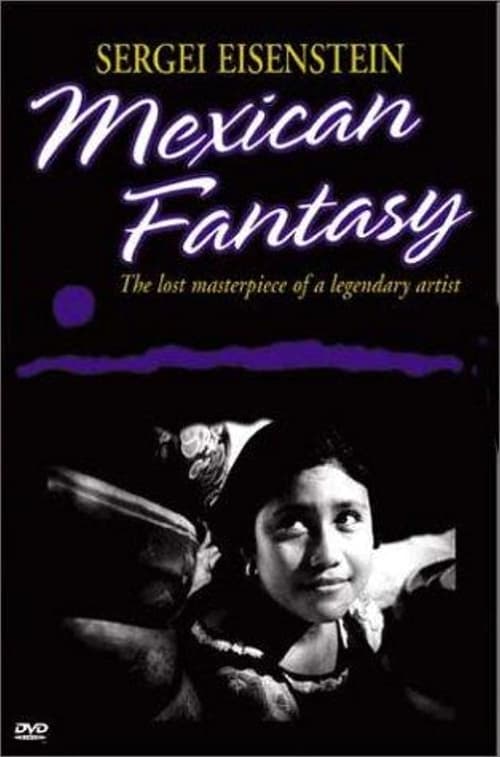
Eisenstein shows us Mexico in this movie, its history and its culture. He believes, that Mexico can become a modern state.
¡Qué Viva México!

Set during the early part of his reign, Ivan faces betrayal from the aristocracy and even his closest friends as he seeks to unite the Russian people. Sergei Eisenstein's final film, this is the first part of a three-part biopic of Tsar Ivan IV of Russia, which was never completed due to the producer's dissatisfaction with Eisenstein's attempts to use forbidden experimental filming techniques and excessive cost overruns. The second part was completed but not released for a decade after Eisenstein's death and a change of heart in the USSR government toward his work; the third part was only in its earliest stage of filming when shooting was stopped altogether.
Ivan the Terrible, Part I

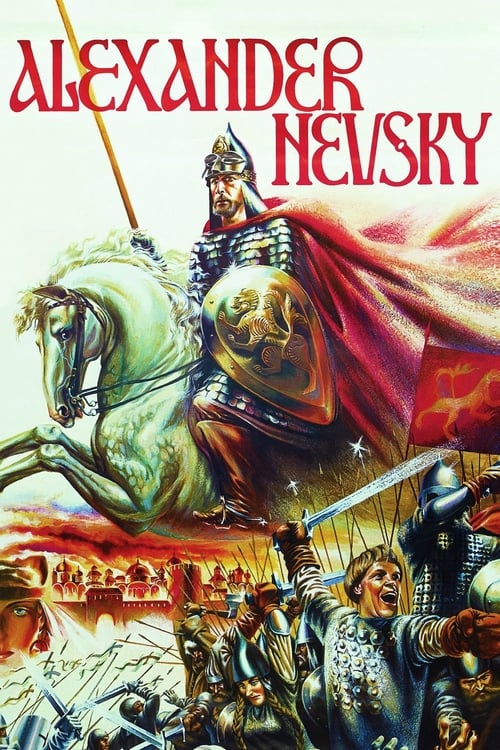
When German knights invade Russia, Prince Alexander Nevsky must rally his people to resist the formidable force. After the Teutonic soldiers take over an eastern Russian city, Alexander stages his stand at Novgorod, where a major battle is fought on the ice of frozen Lake Chudskoe. While Alexander leads his outnumbered troops, two of their number, Vasili and Gavrilo, begin a contest of bravery to win the hand of a local maiden.
Alexander Nevsky

This is the second part of a projected three-part epic biopic of Russian Czar Ivan Grozny, undertaken by Soviet film-maker Sergei Eisenstein at the behest of Josef Stalin. Production of the epic was stopped before the third part could be filmed, due to producer dissatisfaction with Eisenstein's introducing forbidden experimental filming techniques into the material, more evident in this part than the first part. As it was, this second part was banned from showings until after the deaths of both Eisenstein and Stalin, and a change of attitude by the subsequent heads of the Soviet government. In this part, as Ivan the Terrible attempts to consolidate his power by establishing a personal army, his political rivals, the Russian boyars, plot to assassinate him.
Ivan the Terrible, Part II: The Boyars' Plot

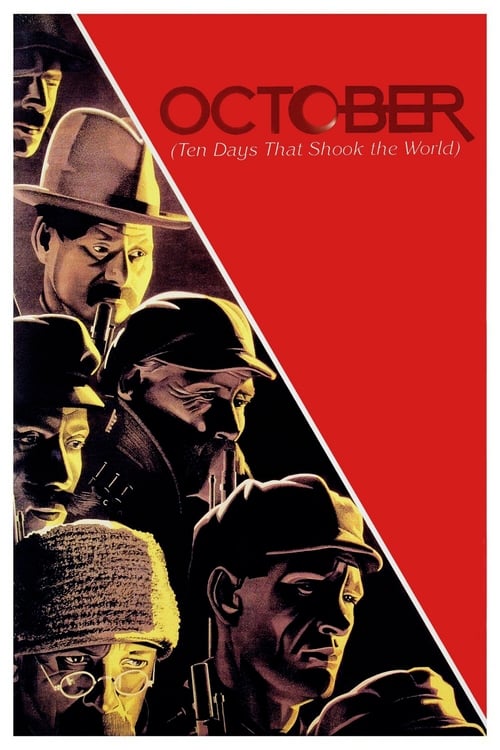
Sergei M. Eisenstein's docu-drama about the 1917 October Revolution in Russia. Made ten years after the events and edited in Eisenstein's 'Soviet Montage' style, it re-enacts in celebratory terms several key scenes from the revolution.
October (Ten Days that Shook the World)

Workers in a factory in pre-revolutionary Russia go on strike and are met by violent suppression.
Strike

No description available.
Our Cinema

Thematic anthology of : Le retour a la Maison (1923) by Man Ray; Emak-Bakia (1926) by Man Ray; L'Etoile de Mer (1928) by Man Ray; Les Mysteres Du Chateau de Dé (1929) by Man Ray; Rhythmus 21 (1921) by Hans Richter; Vormittagsspuk (1928) by Hans Richter; Anemic Cinema (1926) by Marcel Duchamp; Ballet Mecanique (1924) by Fernand Léger; Le Tempestaire (1947) by Jean Epstein; Romance Sentimentale (1930) by Grigori Aleksandrov and Sergei M. Eisenstein; La Coquille et le Clergyman (1928) by Germaine Dulac; Regen (Rain) (1929) by Joris Ivens and Mannus Franken
Cinema of the avant-garde 1923 - 1930

Filmic insert to Eisenstein's modernized, free adaptation of Ostrovskiy's 19th-century Russian stage play, "The Wise Man" ("Na vsyakogo mudretsa dovolno prostoty"). The anti-hero Glumov tries to escape exposure in the midst of acrobatics, derring-do, and farcical clowning. Several members of Eisenstein's troupe at the legendary "Proletkult" stage theatre in Moscow briefly appear in this little film.
Glumov's Diary

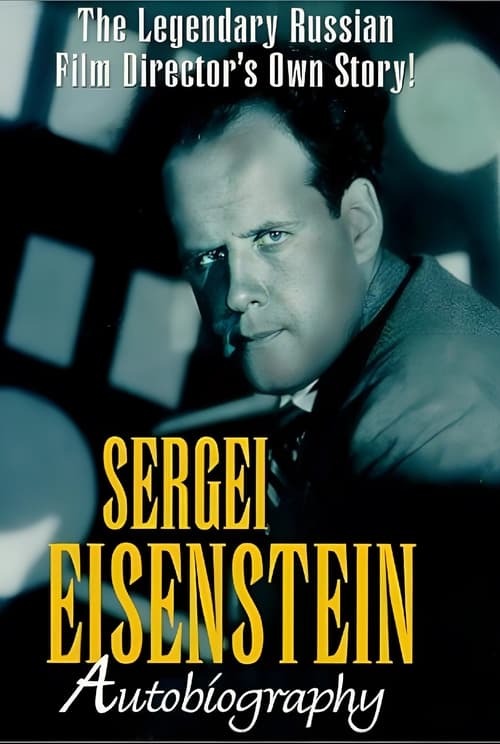
A free film adaptation of the director's memoirs. In form, this is the "stream of consciousness" that attracted Sergei Eisenstein after getting acquainted with the experiments of James Joyce. The outer outline of the film is a long foreign trip of the director, which began in 1929, during which he recalls his past life and considers creative ideas. The film is constructed as a free alternation of reality, dreams, and fantasies. The material for it is fragments from the films of Sergei Eisenstein and his fellow contemporaries, documentary footage depicting the director and his time. The wide coverage of the faces and events reflected in the film shows the special role of Sergei Eisenstein in the culture of the twentieth century…
Sergei Eisenstein: Autobiography

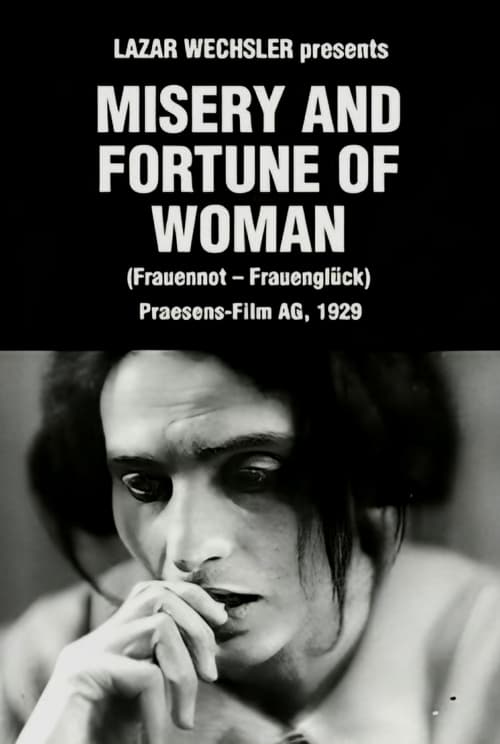
This film shows contrasting views of women with problematic pregnancies and the outcomes resulting when they seek out a back-alley abortionist, a trained and licensed abortion provider in a clinic, or an obstetrician capable of performing a Caesarian Section. The full film appears to be lost, but shortened versions, including one with dialogue scenes added in Germany in 1935, can be found on the internet. Additionally, Eisenstein's role in making the picture remains unclear: did he direct some or all of it, just edit it, or merely leave it to Alexandrov and Tisse to make? Released in the USA 1930 in a 65 minute (5800 ft.) version with English intertitles and a music track under the title BIRTH.
Misery and Fortune of Woman
Archive footage from Potemkin (1925), with English dialogue dubbed in by American actors, is combined with new footage to tie together the brave stand of Odessa Russian guerrilla bands of the 1940's against German forces with the similar situation of 1905 when Odessa citizens aided in the revolt against the Czar as depicted in Eisenstein's classic Potemkin (1925).
Seeds of Freedom

During his adventure in Mexico, Sergei Eisenstein made footage of a Mexican "Death Day" celebration for inclusion in his "Que Viva Mexico!" film project. When the 200,000-plus feet of film he eventually exposed in Mexico was first attempted to be made into a feature film, "Thunder Over Mexico", the producers excluded the Death Day material for subsequent compilation as an independent short subject. Silent with music track and explanatory English intertitles.
Death Day

“The Magic Beam” is a film essay woven together from newsreels and documentary material from different decades, fragments of hundreds of non-fiction and fiction Soviet films of the 1910s-1960s.
The Magic Beam

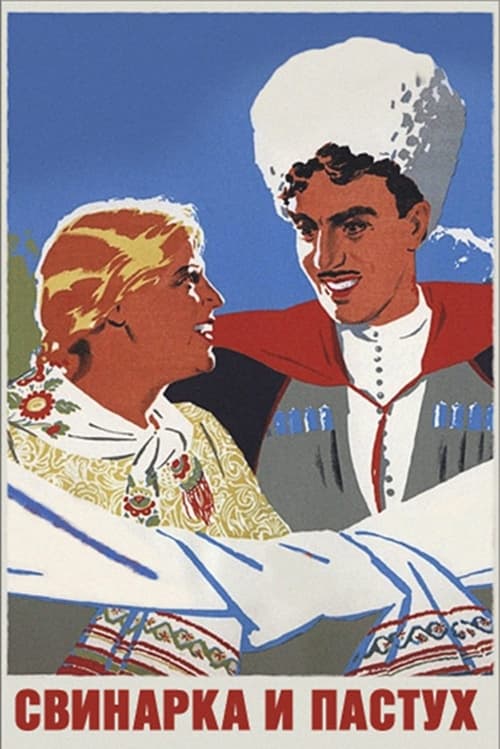
They met in Moscow - a shy swineherd Glasha and shepherd Musaib. Long and difficult will be their way to love and a new meeting in this classic Soviet musical comedy.
Swineherd and Shepherd

Documentary made for the 60th anniversary of Soviet director Sergei Eisenstein.
Sergei Eisenstein

A documentary biography of Russia's greatest filmmaker.
Eisenstein: The Master's House

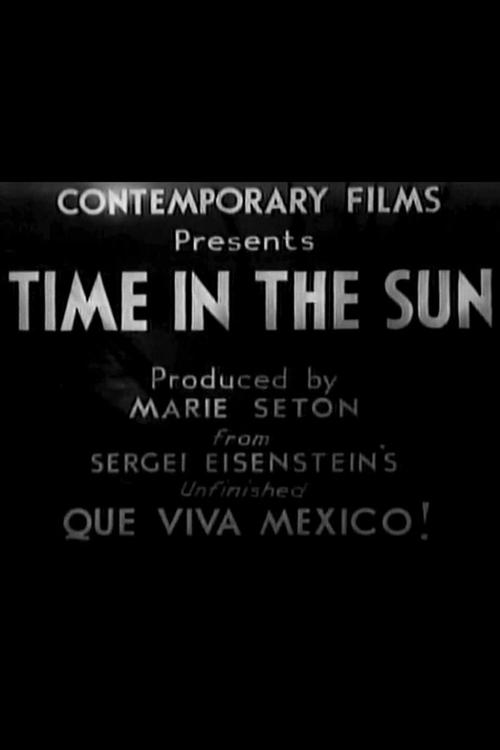
Second attempt to create a feature film out of the 200,000-plus feet of film which Soviet film-maker Sergei Eisenstein shot during 1931-32 in Mexico for American socialist author Upton Sinclair, his wife and a small company of investors. The projected film, to be called "Que Viva Mexico", was never completed due to exhaustion of funds and Stalin's demand that Eisenstein return to the USSR (he had been absent since 1929). The first attempt at editing the footage, in the USA, resulted in "Thunder Over Mexico", released in 1934. In 1940, Marie Seton, from the UK, acquired some of the footage from the Sinclairs in an attempt to make a better cutting according to Eisenstein's skeletal outline for the proposed film. This film has apparently been lost.
Time in the Sun

A German reporter visits Hollywood and is escorted through the MGM Studio by a German nobleman, who is working there as an extra. They meet and speak to several actors, primarily Buster Keaton, John Gilbert, Joan Crawford and Heinrich George. Then they meet Adolphe Menjou, who rehearses a long scene in German. A final scene shows stars arriving at a film premiere, including Jean Harlow, Norma Shearer and Wallace Beery.