Acting
Malhação is a Brazilian television series for the teenage audience. The soap started in 1995, and was set in a fictional Gym Club called Malhação on Barra da Tijuca, Rio de Janeiro. Through the years the location varied slightly. Although the name of the soap remains the same, it is now set in the Múltipla Escolha High School.
Os Trapalhões was a Brazilian comedy group and also a Brazilian television series created by Wilton Franco. Its members were Dedé Santana, Zacarias, Mussum and their leader Didi Mocó, that was played by Renato Aragão. The name Trapalhões is derived from the Portuguese verb atrapalhar, which means the opposite of helping, to do something the wrong way or to Those that confuse. The name is translated "Tramps" in English DVD subtitles. It was aired by Rede Globo from 1977 to 1999. On March 18, 1990, Zacarias died due to respiratory failure, but the group and the series didn't come to an end until July 29, 1994, when Mussum died due to an unsuccessful heart transplant.
A young woman is fated to relive the love of an earlier life. Separated by time, young Serena and botanist Rafael surmount all obstacles as they live a love that is stronger than fate itself. These challenges include the lovely but ambitious Cristina, who is obsessed by the rich botanist and driven nearly mad by her attempts to shatter their great love. A romantic comedy set in the 1940s, Soul Mate underscores the importance of love, family values and the ties of affection with a light touch and plenty of humor.
No description available.
Winner of the International Emmy Award for Best Telenovela, "Side by Side" focuses on two women of different origins and social classes. The brave Isabel, daughter of a former slave and in love with the capoeira player Zé Maria; and Laura, descendant from a wealthy family and destined to an undesired marriage to Edgar. In addition to an unshakable friendship, the two share the same purpose in life: the conquest of freedom in the conservative society of Rio de Janeiro of the early 20th century.
After making a Faustian bargain with a vampire for fame, a regretful young singer must find a sacred, lost artifact that might revert the curse.
A mysterious and spiritual portrayal of one of the most intense and controversial stories in the Holy Bible: the end of the world.
The cheerful and outgoing Jordana lived alongside Silas for 20 years, helping him become wealthy. Despite this, he abandons her to run away with the opportunistic Carla. After the separation, Jordana faces financial difficulties. She then meets Dona Mena, an eccentric and lonely old woman abandoned by her family. Jordana takes care of Dona Mena and, when she dies, inherits four bronze cupids containing a million dollars. The problem is that the cupids disappear without a trace. The cupids become the subject of a fight between Dona Mena's nephews, Loreta and Carlito. The two are the villains of the story. Jordana, however, ends up falling in love with Carlito. In the final chapters, Jordana manages to recover the cupids and rebuild her life. She has the help of her friend Vieira.
In the interior of southeastern Brazil, a powerful race horse explorer deals with his dysfunctional family while competing against one of his former employees - now a wealthy man.
Jocasta, an 18-year-old sociology student and daughter of communist activist Túlio Silveira, is actively involved in the country's political landscape. She is in love with Laio—her polar opposite—a disengaged, esoteric young man who lives off his wealthy father's allowance. A mystic, Laio makes no move without consulting his guru and friend Argemiro, whom he turns to upon learning of Jocasta's pregnancy. The cowrie shell reading reveals that his son is destined to kill him and enter into a romantic relationship with his mother. Terrified, Laio disappears with the child immediately after birth, aided by Argemiro—who loves Laio and loathes Jocasta. Twenty-five years later, Jocasta is a successful yet restless woman searching for her missing son. She is estranged from Laio, who has spent recent years expanding his father's fortune through involvement in underground gambling. On a highway, he encounters Oedipus, unaware that the young man is his son.
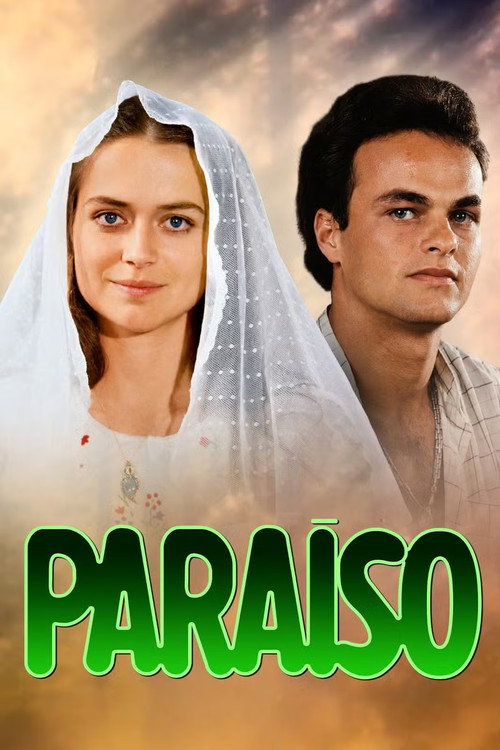
Zeca and Maria Rita experience a forbidden love in the fictional city of Paraíso, where faith and tradition clash amidst land disputes and popular beliefs.
After getting lost on a sea excursion, Jô Penteado and Fábio Coutinho develop mutual feelings during the two months they spend stranded on a deserted island.
Marked by the reputation of “son of the devil”, Zeca sees his life change when he falls in love with Maria Rita, Santinha. But the young woman's devotion and expectations about her destiny put the romance to the test.
The disappearance of Áurea Menezes Garcia sparks a fierce dispute over her business dealings. Firmino, her attorney, assumes power, but faces the greed of her children.
I'll Never Forget You was a Brazilian soap opera shown by the SBT between April 14 and September 26, 2003, at 8:30 p.m. Based the original text of Caridad Bravo Adams, it was translated by Henrique Zambelli and adapted by Ecila Pedroso, under the supervision of Enéas Carlos, totalling 120 episodes. It was directed by Jacques Lagôa, Sacha and Henrique Martins, with David Grimberg as producer.
Os Ossos do Barão is a Brazilian telenovela produced by SBT and originally broadcast from April 28 to September 8, 1997. It is an adaptation of Jorge Andrade's 1963 play of the same name, adapted for television by Walter George Durst, with collaboration from Duca Rachid, Mário Teixeira, and Marcos Lazarini. The telenovela stars Ana Paula Arósio, Tarcísio Filho, Juca de Oliveira, Othon Bastos, and Leonardo Villar. Set in São Paulo in 1948, the story follows Egisto Ghirotto, the wealthy son of Italian immigrants who dreams of gaining social prestige by marrying his son, Martino, to Isabel, the great-granddaughter of the late Baron of Jaraguá. Their romance sparks a bitter conflict between a rising immigrant family and a declining aristocratic dynasty, exposing themes of class, ambition, tradition, and the social transformation of Brazil.