Directing
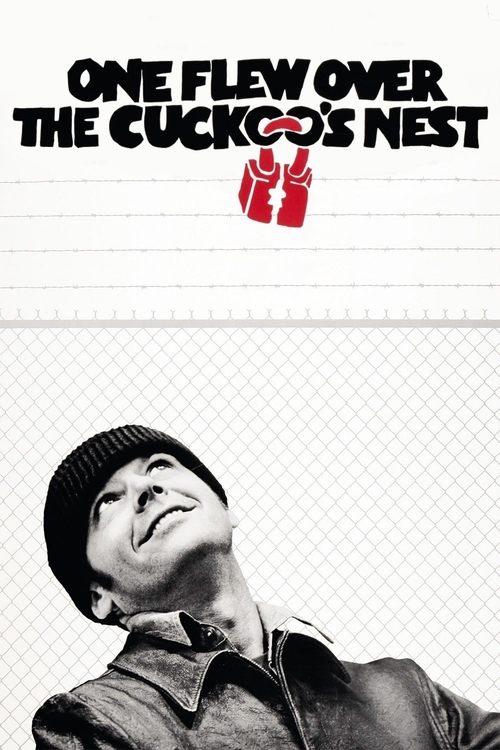
A petty criminal fakes insanity to serve his sentence in a mental ward rather than prison. He soon finds himself as a leader to the other patients—and an enemy to the cruel, domineering nurse who runs the ward.
This film provides a unique view of Cuba's leader, containing fascinating archive footage of the Bay of Pigs invasion and scenes of Che Guevara - alongside interviews with political prisoners.
1985 Argentine documentary film directed by Susana Blaustein Muñoz and Lourdes Portillo about the Mothers of the Plaza de Mayo.
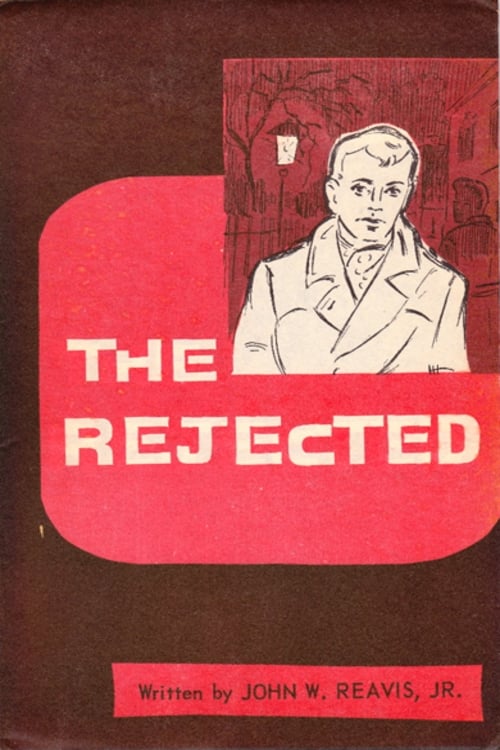
The Rejected is a made-for-television documentary film about homosexuality, the first of its kind to be broadcast on American television. It was first shown on KQED on September 11, 1961, and was later syndicated to National Educational Television (NET) stations across the United States, receiving positive critical reviews.
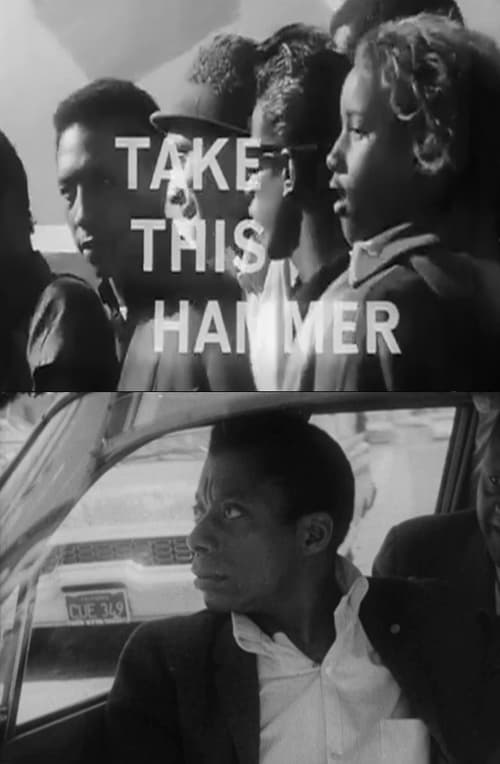
Take This Hammer features KQED's mobile film unit following author and activist James Baldwin in the spring of 1963, as he's driven around San Francisco to meet with members of the local African American community.
This documentary reflects on the lives and aspirations of an African American family - the Johns - who moved to West Oakland from Louisiana, focusing on Robert Lee Johns and his mother Agnes.
No description available.
Fifth in the series "Visions of Paradise." Directed by Allie Light and Irving Saraf. 1983. Minnie Evans is the embodiment of the visionary artist. She is an 88-year-old Black painter in North Carolina who has created a rich world of mythical animals, religious symbols, and natural beauty. The film explores the sources of her art, focusing on her mystical visions, on Airlie Garden, with its magnificent azaleas and swans, where she worked for 27 years and did most of her paintings, and on the African-Methodist church where the connection between her art and her religious fervor becomes evident. She tells about her mystical visions and traces her slave ancestry to her great grandmother's grandmother who was brought from Trinidad and sold as a slave in North Carolina. We see Minnie with her 101 year old mother and at the Evans' family reunion of six generations. Minnie Evans has had many solo exhibits, including one at the Whitney Museum in New York.
Minnie Evans is the embodiment of the visionary artist. She is an African American painter of Wilmington, N.C., who has created a world of mythical animals, religious symbols and natural beauty. The film explores the sources of Minnie Evans' art--Airlie Garden, with its magnificent azaleas and swans, where Minnie worked as a gate keeper for 27 years and where she did most of her paintings. Angel That Stands By Me is part of the "Visions of Paradise" series on contemporary folk artists directed and produced by Irving Saraf and Allie Light.
Second of the series "Visions of Paradise." Directed by Allie Light and Irving Saraf. 1980. 102 Mature: The Art of Harry Lieberman Harry Lieberman, at age 102, shares with wit and wisdom his art, philosophy, and love of life in this documentary which describes his transformation from retired businessman to artist who, in his old age, is "living on the top of the world." The film shows the connections between Lieberman's art and his life-"memories from 80, 90, 94 years back"-and tells his original stories as background to the paintings. We see him painting, sculpting, and meeting with other senior citizens at the Golden Age Club in Great Neck, New York-where he started painting at the age of 80-and surrounded by young students when working as an "artist in residence" at the Fairfax High School in Los Angeles. This delightful film depicts the connections between Lieberman's life and his art, which celebrates Talmudic lore and Jewish life in long-ago Eastern Europe.
Fourth in the series "Visions of Paradise." Directed by Allie Light and Irving Saraf. At age 71, Chief Thunder lives in the Nevada desert with his young wife and small children in The Monument, a concrete and stone house he built and decorated with powerful forms and arches. His overwhelming sculptures, "spirits of the living," portray Indian heroes, family, and friends. He created the monument when a voice spoke in a dream, "You are the Big Eagle and the Big Eagle shall return to his nest." His artistry is the testament of a great American folk artist. The film captures the tragedy of his life, his painful isolation, the beauty of his work, and his creative process. Its highlight is a remarkable sequence in which Chief Thunder sculpts a complete piece on camera. Chief Rolling Mountain Thunder was honored as "The Artist of the Year" by the state of Nevada in 1983.
Profile of Duke Ellington featuring performances and interviews with the legendary bandleader. The performance footage was recorded in a number of places from The Basin St. West Jazz Club, the 1965 Monterey Jazz Festival, and his first Concert of Sacred Music at Grace Cathedral. This program was described by Ellington in his autobiography as the best film about Duke Ellington ever made...
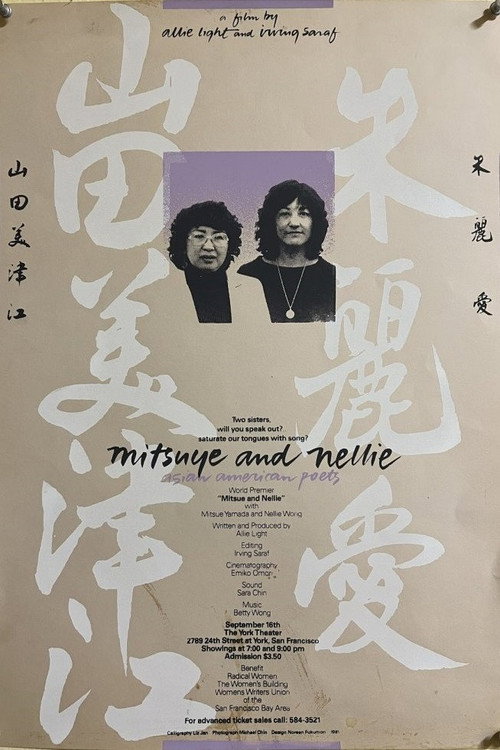
This absorbing documentary examines the lives of Asian Americans through the inspirational poetry of Mitsuye Yamada and Nellie Wong. Interviews, rare archival footage, intimate family scenes, and a lively dialogue between these fascinating women underscore the different histories of Chinese and Japanese Americans, as well as their shared experiences of biculturalism and generational difference.
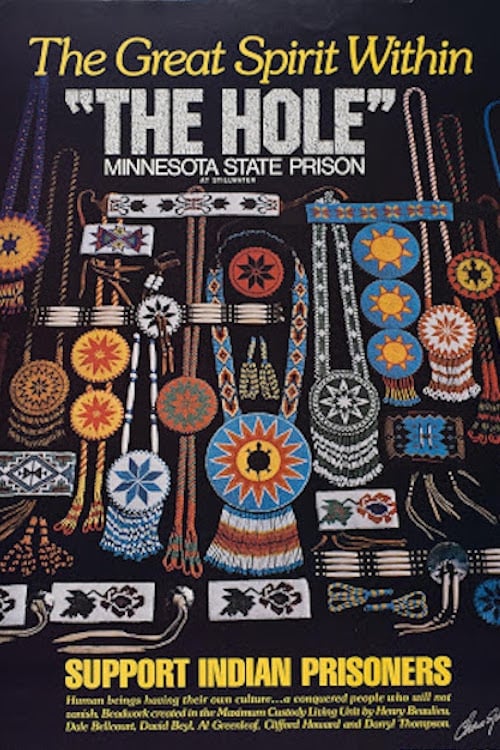
The story of Native Americans seeking to reconnect with their spiritual roots while incarcerated.
A hilarious and affectionate look at the path to stardom inside the competitive world of opera. Filmmakers Allie Light and Irving Saraf relegate the divas to the background and focus on a limelight-craving group of "choristers" -- the seldom-noticed singers who stand behind the soloists portraying peasants, soldiers and slaves.
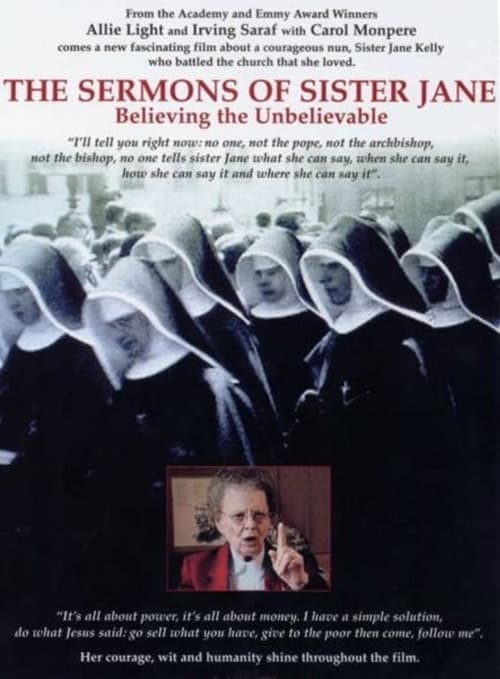
When Sister Jane Kelly discovers sexual molestation and thievery, she carries her battle all the way to Rome creating a scandal; this leads her to debunk church teachings on birth control, homosexuality, married priests and virgin birth and become a champion for the poor. Her courage, wit and humanity shine throughout the film.
Calvin Black was a folk artist who lived in California's Mojave Desert and created more than 80 life-size female dolls, each with its own personality, function, and costume. He also built the "Bird Cage Theater," where the dolls perform and sing in voices recorded by the artist. The film works on two levels. One is the documentation of the artist's legacy and commentary on women: grotesque female figures moving in the desert wind and the theater with its frozen "actresses," protected by his widow from a world she views as hostile. The other is the re-creation of the artist's vision through the magic of film, as the camera enables the dolls to move and sing and brings theater to life as the artist imagined it.
Third in the series "Visions of Paradise." Directed by Allie Light and Irving Saraf. 1982. Grandma Tressa Prisbrey built her first bottle house to hold her 17,000 pencils. This was the beginning of The Bottle Village in Simi Valley, Calif. At 84, Grandma Prisbrey is a vivacious guide to her brilliant houses crammed with objects scavenged from the county dump. At her wittiest-she sings, jokes with her older sister, and combs through the dump. The film is an exploration of Grandma Prisbrey's creativity, pizzazz and sense of the absurd. The film lovingly documents the interiors of 15 of her houses, including Cleopatra's Bedroom, The Round House, as well as the marvelous sidewalk mosaics -- all masterpieces of assemblage art and tapestries of artifacts from the first half of the 20th century.
Documentary film about three veterans of the Civil Rights movement who have become peace spokesman for the new opposition activist. It traces their thought and action over the past year, as they see themselves moving from demonstration to political organizing.
Seven women, breast cancer patients or survivors, take on the necessary task of asking, "Why?". They travel through the United States, interviewing a wide range of experts and researchers as to the possible causes of the leading killer of American women ages 35-54. Courageous questions and research methods ultimately point to assorted environmental toxins of the post-WWII era: DDT, birth control pills, radiation from x-rays and other sources, electromagnetic fields, and atomic bomb testing.