FEEL IT.STREAM
Dziga Vertov

Dziga Vertov

Directing

Biography

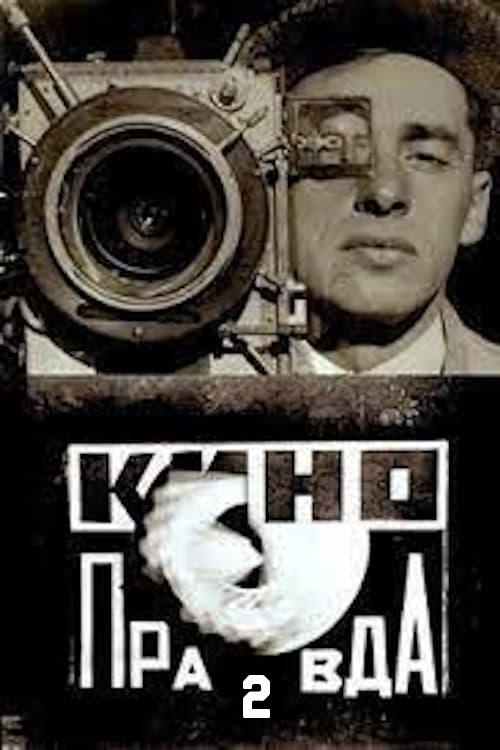
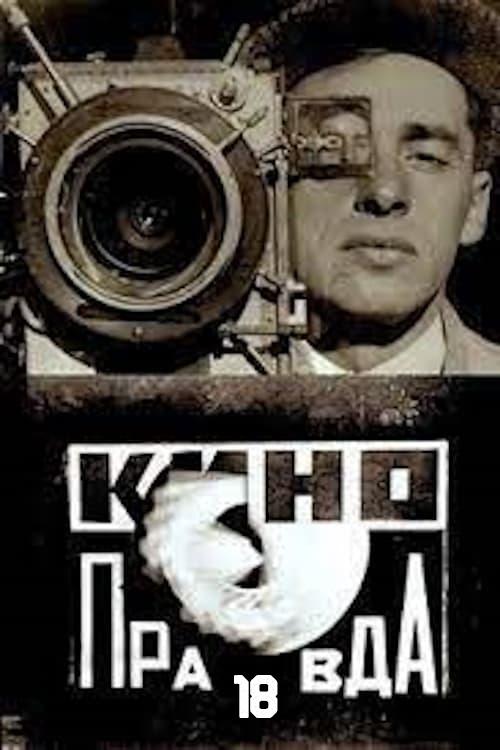
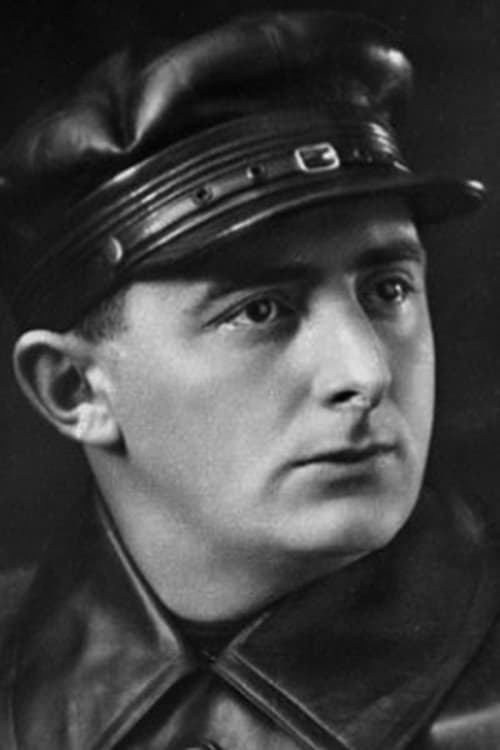
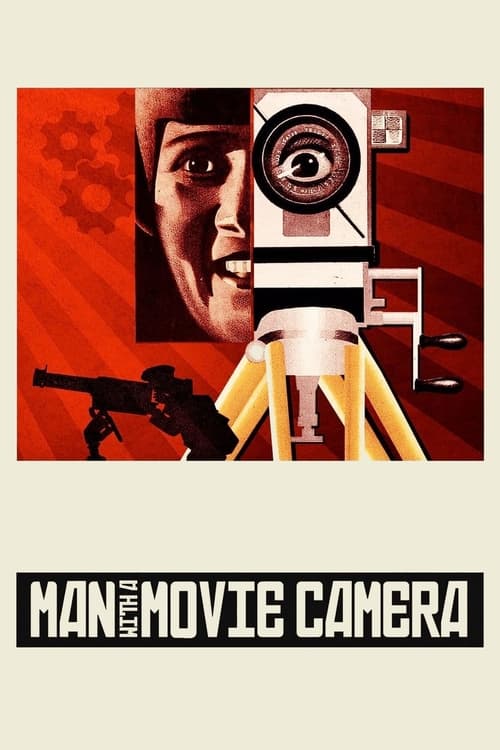
Dziga Vertov (born David Abelevich Kaufman) was a Soviet pioneer documentary film and newsreel director, as well as a cinema theorist. His filming practices and theories influenced the cinéma vérité style of documentary movie-making and the Dziga Vertov Group, a radical film-making cooperative which was active from 1968 to 1972. The independent, exploratory style of Vertov influenced and inspired many filmmakers and directors. The Dziga Vertov Group borrowed his name. In 1960, Jean Rouch used Vertov's filming theory when making Chronicle of a Summer. His partner Edgar Morin coined Cinéma vérité term when describing the style, using direct translation of Vertov’s KinoPravda. The Free Cinema movement in the United Kingdom during the 1950s, the Direct Cinema in North America in the late 1950s and early 1960s, and the Candid Eye series in Canada in the 1950s, all essentially owed a debt to Vertov. In the 2012 Sight & Sound poll, critics voted Vertov's Man with a Movie Camera (1929) the 8th best film ever made.
Known For

Man with a Movie Camera
7.8

A cameraman wanders around with a camera slung over his shoulder, documenting urban life with dazzling inventiveness.

Man with a Movie Camera

1929
Anniversary of the Revolution
6.8

A chronicle of the Russian Revolution of 1917, from the bourgeois democratic February Revolution to the great socialist October Revolution and the final triumph.

Anniversary of the Revolution

1918
Enthusiasm. Symphony of Donbas
6.4

An audiovisual symphony that delves into the industrial, agrarian, and cultural fabric of the Donbas region during the inaugural Soviet Five Year Plan. It spotlights anti-religious campaigns, propagandistic marches, and the vibrant athletic culture of its time

Enthusiasm. Symphony of Donbas

1930
The Magic Beam
N/A

“The Magic Beam” is a film essay woven together from newsreels and documentary material from different decades, fragments of hundreds of non-fiction and fiction Soviet films of the 1910s-1960s.

The Magic Beam

1963
Kino-Pravda No. 14
5.6

Dziga Vertov-directed Soviet newsreel covering: IV. Congress of the Comintern / Congress of the Profintern.

Kino-Pravda No. 14

1923
Kino-Pravda No. 7
5.7

Dziga Vertov-directed Soviet newsreel covering: Trial of the Socialist Revolutionaries / Rebuilding of the destroyed Siberian village of Taseevo / Railroad station Sljudjanka / Abandoned mica pits near Lake Baikal / Soči health resort / Chudjakovskij-Park / Beach near Tuapse / The loading of silk / Afghanistan, Kabul / Peacetime use of tanks / Mountain road / Chapel in the Caucasus.

Kino-Pravda No. 7

1922
The History of the Civil War
4.3

The epic story of the Russian Civil War (1918-21): the White Terror, the counterrevolutionary uprisings, the guerrilla war, the Kolchak front, the Wrangel front and the Kronstadt rebellion. Chaos and violence, devastation and death.

The History of the Civil War

1921
No image
5.4

The film is about the life and work of Grigory Ordzhonikidze Konstantinoviche, an important personality in both the Communist Party and the Soviet state. The film includes speeches by his bereaved friends who attended his funeral. In 1937, after the unexpected death of Sergo Ordzhonikidze, Vertov received an urgent order from the government to produce a film about the life of Ordzhonikidze. He was ordered to work together with Yakov Bliohom and the director of the film "Battleship Potemkin" distributed by Goskino (Soviet State Committee for Cinematography).

In Memory of Sergo Ordzhonikidze

1937
Three Songs About Lenin
6.1

This documentary, made up of 3 episodes, is based on three songs sung by anonymous people in Soviet Russia about Vladimir Ilyich Lenin.

Three Songs About Lenin

1934
Kino-Pravda No. 21: Lenin Kino-Pravda. A Film Poem About Lenin
5.5

Dziga Vertov-directed Soviet newsreel made to commemorate the first anniversary of the death of Vladimir Ilich Lenin (21st January 1924 - 1925) drawn from 'The Final Journey', a Pravda feuilleton written on the occasion of Lenin's funeral by the man who had introduced Vertov to cinema, Mikhail Koltsov. Contains: First anniversary of Lenin's death: 1. Assassination attempt on Lenin and Soviet Russia's progress under his leadership / 2. Lenin's illness, death and funeral / 3. The year after Lenin's death

Kino-Pravda No. 21: Lenin Kino-Pravda. A Film Poem About Lenin

1925
Kino-Pravda No. 16: Spring Pravda. A Lyrical View Newsreel
6.2

Dziga Vertov-directed Soviet newsreel covering: Arts and crafts exhibition / Actions against hunger / Eisenstein's first film "Dnevnik Glumova" ("Glumov's Diary") / Young Pioneers / May 1, parades

Kino-Pravda No. 16: Spring Pravda. A Lyrical View Newsreel

1923
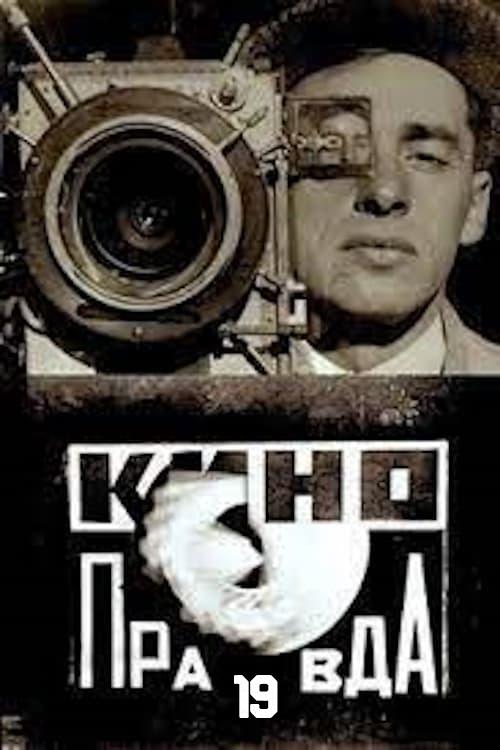
Kino-Pravda No. 10
5.8

Dziga Vertov-directed Soviet newsreel covering: International Youth Day and demonstrations / All-Russian Olympiad / Streetcar collision / Construction of automobiles in a Petrograd factory.

Kino-Pravda No. 10

1922
A Sixth Part of the World
6.6

Through the travelogue format, it depicts the multitude of Soviet peoples in remote areas of USSR and details the entirety of the wealth of the Soviet land. Focusing on cultural and economic diversity, the film is in fact a call for unification in order to build a "complete socialist society".

A Sixth Part of the World

1926
World Without a Game
N/A

Documentary portrait of Dziga Vertov, father of documentary cinema.

World Without a Game

1966
Kino-Pravda No. 11
4.5

Dziga Vertov-directed Soviet newsreel covering: All-Russian Congress of Trade Unions / Delegations and diplomats / Renaming of a confectionery factory / Unloading supplies / Komsomol Day / Red Army maneuvers.

Kino-Pravda No. 11

1922
Kino Eye
6.7

This documentary promoting the joys of life in a Soviet village centers on the activities of the Young Pioneers. These children are constantly busy, pasting propaganda posters on walls, distributing hand bills, exhorting all to "buy from the cooperative" as opposed to the Public Sector, promoting temperance, and helping poor widows. Experimental portions of the film, projected in reverse, feature the un-slaughtering of a bull and the un-baking of bread.

Kino Eye

1924
Kino-Pravda No. 6
5.0

Dziga Vertov-directed Soviet newsreel covering: Streetcar collision / Arms manufacturing plant resumes operation / Assembling an automobile / Bicycle and motorcycle races / A parade of Red Army armored units and an attack exercise.

Kino-Pravda No. 6

1922
The Exposure of the Relics of Sergius of Radonezh
8.1

This newsreel documentary was shot by Lev Kuleshov in 1919, which once credited to Dziga Vertov. A fragment of this newsreel was shown in the documentary The Kuleshov Effect (1969), where Kuleshov talked about his early film work, claiming this short newsreel as his own work.

The Exposure of the Relics of Sergius of Radonezh

1919
Kino-Pravda No. 8
5.8

Dziga Vertov-directed Soviet newsreel covering: A bet is placed on the outcome of the Trial of the Socialist Revolutionaries / The verdict / People in streetcars and on the street / A crashed aircraft / Reconstruction of streetcar line 13 / Peacetime use of tanks – airport construction work.

Kino-Pravda No. 8

1922
Kino-Pravda No. 23: Radio Pravda
5.4

Dziga Vertov-directed Soviet newsreel covering: A peasant buys a receiver at the radio shop / Instructions to attach an antenna / A broadcast-station is developed / A concert is broadcast. Though only a third of this final issue of Kino-Pravda seems to survive, there still exists Aleksandr Bushkin’s time-lapse animation and the sequence in which, as Yuri Tsivian describes, “a cross-section of a photographically correct izba (Russian peasant’s log hut) is penetrated by schematically charted radio waves”—a testament to the magical properties and propagandistic uses of radio in reaching out to Russia’s distant peasantry.

Kino-Pravda No. 23: Radio Pravda

1925