FEEL IT.STREAM
Anne-Marie Miéville

Anne-Marie Miéville

Directing

Biography

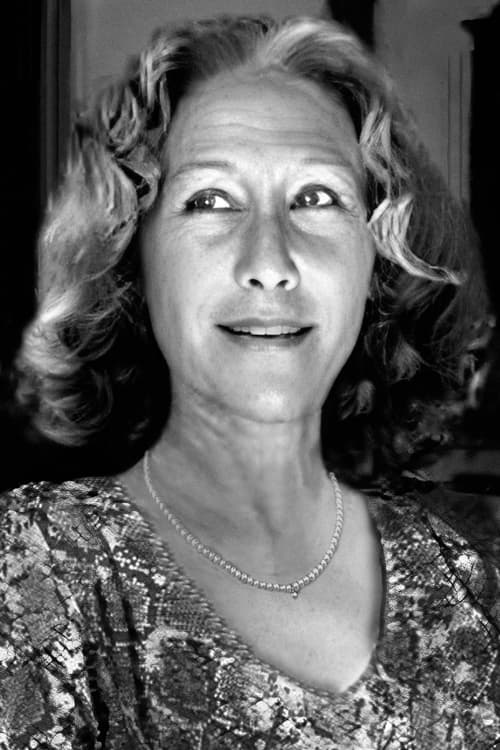
Anne-Marie Miéville, born November 11, 1945 in Lausanne, is a filmmaker, director, producer, screenwriter, actress and writer from Vaud. Anne-Marie Miéville works as a photographer and is the manager of a bookstore. In the 1960s, she also recorded two variety discs for Barclay, on songs by Jean-Jacques Debout. Then in 1972, she met Jean-Luc Godard in Paris, who became her companion until his death in 2022. Initially, from 1973 to 1994, she collaborated with this filmmaker as a photographer, screenwriter, editor, co-director and artistic director for some of her/their films. Then in 1983, she directed her first short film, "How Can I Love", and, a year later, a second short film, "Le Livre De Marie". Since then, she has continued to make films. Through her cinematographic stories, she questions, with a singularity of tone, love, time, the meaning of things, ... Her first feature film is called: "My Dear Subject" and was released in 19883. 1994 "Lou Didn't Say No". Still in 1994, Anne-Marie Miéville published "Histoire Du Garçon", a text retracing the career and life of her brother Alain, who died accidentally in 1993. In 1996/1997, a new feature film was broadcast, "Nous Sommes Tous Encore Here". Then in 2000, "Après La Réconciliation" in which she appeared, accompanied by Claude Perron, Jacques Spiesser, Jean-Luc Godard and Xavier Marchand. In 2002, she wrote "Images In Words", short texts published by Farrago, which the publisher wrote were "a series of fixed shots, short films of writing. Strictly speaking, it is not a question of news, but rather of indescribable moments, fleeting perfumes of images, where it would be a question of filming with words”.
Known For

No image
7.3

In this radically unconventional television series, Godard and Miéville analyze the political economy of personal and mass media communications in relation to society, culture, family and the individual. Their inquiry focuses "on and beneath" communications in a provocative critique of the power of media images in contemporary culture and everyday life. Each of the six programs is constructed of two complementary segments: A discursive visual essay on one aspect of the production and consumption of images is paired with a related interview on labor and leisure with an individual — an amateur filmmaker, a dairy farmer, the mathematician René Thom, Godard himself. These extended interviews provide a subjective counterpoint to the theoretical essays on work, economics and mass cultural imagery.

Six fois deux/Sur et sous la communication

1976Series
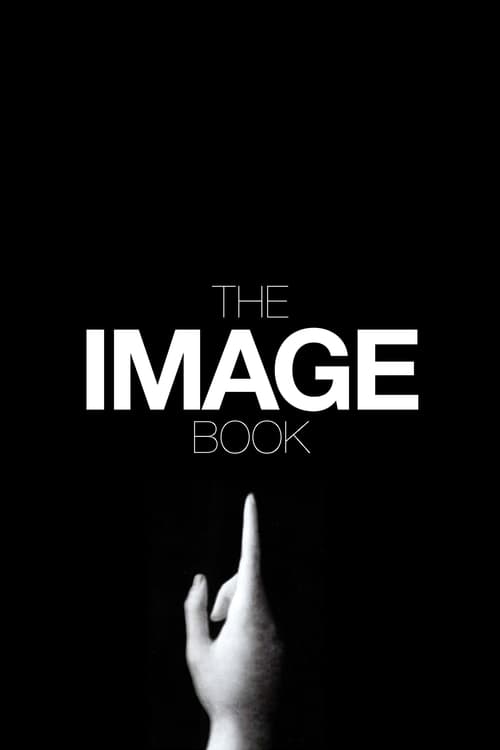
The Image Book
6.3

In Le Livre d’Image, Jean-Luc Godard recycles existing images (films, documentaries, paintings, television archives, etc.), quotes excerpts from books, uses fragments of music. The driving force is poetic rhyme, the association or opposition of ideas, the aesthetic spark through editing, the keystone. The author performs the work of a sculptor. The hand, for this, is essential. He praises it at the start. “There are the five fingers. The five senses. The five parts of the world (…). The true condition of man is to think with his hands. Jean-Luc Godard composes a dazzling syncopation of sequences, the surge of which evokes the violence of the flows of our contemporary screens, taken to a level of incandescence rarely achieved. Crowned at Cannes, the last Godard is a shock film, with twilight beauty.

The Image Book

2018Movie