Directing
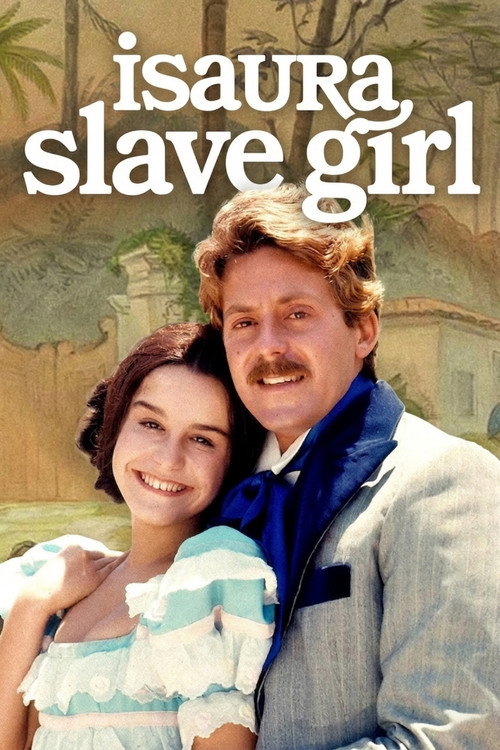
Set in 19th-century Brazil during the waning years of slavery, Escrava Isaura tells the story of Isaura, a white-skinned enslaved woman raised with the manners and education of a noble lady. Though treated with affection by her mistress, Isaura remains legally enslaved and becomes the object of obsessive desire by Leôncio Almeida, the cruel heir to the plantation. After the death of her protector, Isaura falls under Leôncio’s control. Despite his attempts to seduce and dominate her, she resists, determined to preserve her dignity and freedom. Her father, Miguel, helps her escape to Recife, where she adopts a new identity and meets Álvaro, a wealthy and principled abolitionist who falls in love with her. Leôncio eventually tracks her down, leading to dramatic confrontations. In the end, Álvaro rescues Isaura by purchasing Leôncio’s debts, securing her freedom and affirming the story’s central themes of justice, love, and resistance against oppression.
Marina is raised by her father on an island after her mother's death. As a teenager, she moves to Rio de Janeiro to study and live with her godparents, where she ends up falling in love with Marcelo.
Brava Gente was a television series aired by TV Globo in Brazil between 2000 and 2003, initially as a special year-end. The program was adapted from stories and national stories, and plays by famous playwrights, screenwriters and signed by a number represented by several actors and actresses. The genres of the stories varied each week with the style of each director or author. Brava Gente in the stories ranged from comedies and dramas. In all 53 episodes were shown, broadcast on Tuesday nights.
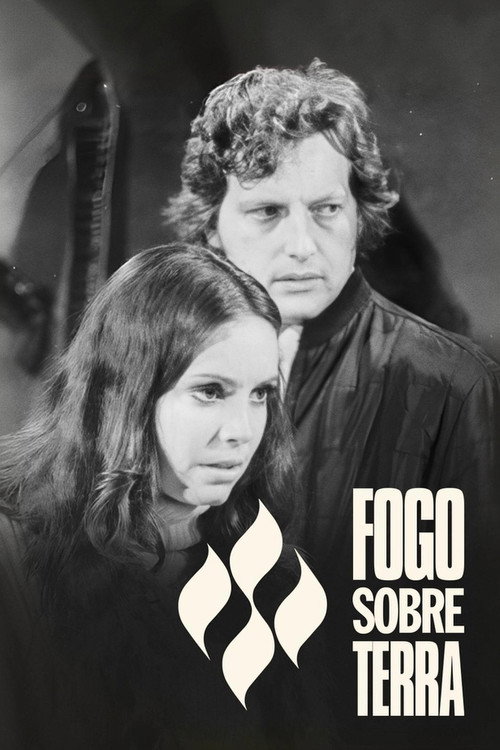
The plot takes place in a fictional city called Vale do Café, where two powerful families, the Toledo and Fontes, are locked in an intense dispute for power and land ownership. Conflicts are marked by betrayals, forbidden loves and dark secrets. The soap opera addresses themes such as ambition, revenge, romance and conflicts between families, showing the fire that consumes the land and human relationships.
Gina attracts attention and envy. Years later, her life is shaken by the return of an old love and she discovers some schemes orchestrated by her best friend.
Isaura was born in 1835, in the farm of Commender Almeida. She is the daughter of the slave Juliana and the tenant of the farm, Miguel. Juliana dies right after the birth, because she denied going to bed with the Commender. He whips her to death in revenge. So, Isaura is raised and educated by Gertrudes, wife of the Commender, who always wanted to have a daughter. In spite of her excellent education and the white skin, Isaura, as a daughter of a slave,will always be treated as a slave.
The soap opera critiques the power struggles among rural politicians in the 1920s. Joaquim is shocked when a doctor reveals that his son, Luís Jerônimo, has a lung lesion. To recover his health, the young man leaves Rio de Janeiro for Colonel Boanerges's farm in Vila da Mata, Espírito Santo. There, he meets Zuca, and the two fall in love. Zuca is the colonel's goddaughter and the fiancée of the fearless cowboy Tobias, who refuses to accept the possibility of losing her to the outsider. Zuca and Luís Jerônimo face numerous obstacles in pursuing their love. Their romance is also threatened by the arrival of Pepa in Vila da Mata; having been in love with Luís Jerônimo back when he lived in Rio, she tries by every means possible to drive the couple apart.
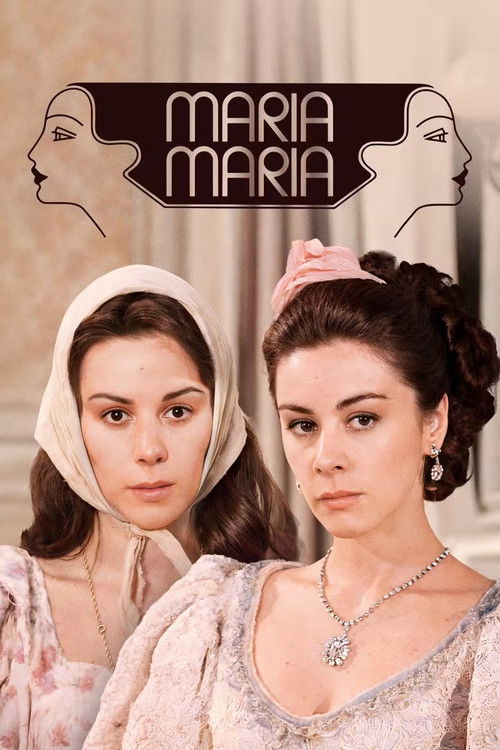
In the backlands, the drover Ricardo marks the destiny of young Maria. Years later, in Xique-Xique, a mistake between two identical women rekindles passions, separations, and an impossible love.
The soap opera told the story of Fernando Dalba, or Nando, a fruit vendor who works with his mother, the Baroness, and his friends Gino and Guiomar. His life changes after he meets the wealthy widow Cristina Guimarães, owner of a beauty salon, who decides to teach him how to behave like a man of high society. Cristina's intention is to win a bet, but she falls in love with Nando, who is engaged to Candinha.
After getting lost on a sea excursion, Jô Penteado and Fábio Coutinho develop mutual feelings during the two months they spend stranded on a deserted island.
No description available.
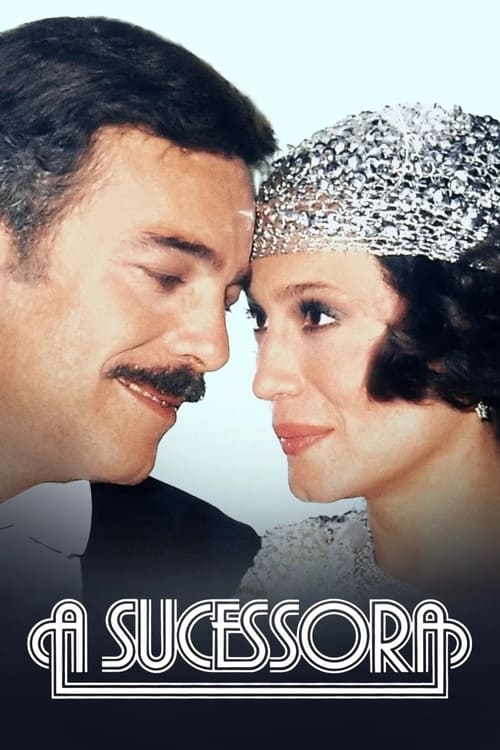
The story follows the experiences of Marina, a young country bumpkin who marries the mysterious and charismatic widower Roberto Stein, a fabulously wealthy businessman living in 1920s Rio de Janeiro. As Marina attempts to acclimate to her new marriage and responsibilities, she discovers that Stein's late wife, Alice, still seems to have a strong hold over the household. Despite her new husband's affection for her, Marina is nonetheless threatened by Alice's presence, which is made conspicuous through her old maid Juliana's obsessions and her intimidating portrait.
Set in 1940s São Paulo, the story follows Laura, a modern woman devoted to the arts who is oppressed by her husband, Natércio Prado—a wealthy man with traditional views. Amidst marital turmoil, Laura suffers a severe trauma and is even committed to an asylum by her husband. The couple separates, and the family is torn apart: Laura keeps her youngest daughter, Virgínia, while Natércio retains custody of the other daughters, Otávia and Bruna. Frail and penniless, Laura moves into the Vila Mariana home of her neurologist, Daniel. He is in love with his patient and believes her condition is physical rather than mental. Laura hides the fact that Virgínia is actually Daniel's daughter. The youngest daughter eventually returns to live with her father, where she faces hostility and harshness from the housekeeper, Frau Herta.
Cecília is in love with Eduardo, a millionaire who doesn't care about their relationship. Ready for a new direction in life, she ends the relationship and goes to work as a flight attendant in New York. Later, she returns to win back her love, but things are not the same anymore.
Maria Augusta, Maria José, and Maria da Glória reunite in Rio after studying together in Switzerland and prove their friendship despite many twists and turns, crimes, and romances.
Facing a financial crisis, Guilherme receives an ultimatum: he must pay his overdue rent within 24 hours or face eviction from the Copacabana apartment—located in Rio de Janeiro's South Zone—where he lives with his family: his wife Joana, his children Kika, Beto, and Tatá, and his father Olavo. Left with no other option, they move into a large house in São Cristóvão (in the North Zone) lent to them by Joaquim, a Portuguese friend. The family struggles to adapt to the suburban neighborhood and cope with their lack of money. To overcome the crisis, Guilherme becomes a partner in Joaquim's auto repair shop.
A widower who was anything but traditional for the 1950s, Álvaro has a frank relationship with his daughters and becomes the target of criticism from his sister-in-law Fausta, especially when he meets Marta.