Directing
Fernanda is the youngest daughter of the landowner Gonzalo Elizalde, owner of a large dairy company, and Eduardo is the son of Soledad, the Elizalde family's housekeeper. The two children have grown up together, united by an innocent and pure love, despite the difference in social class.
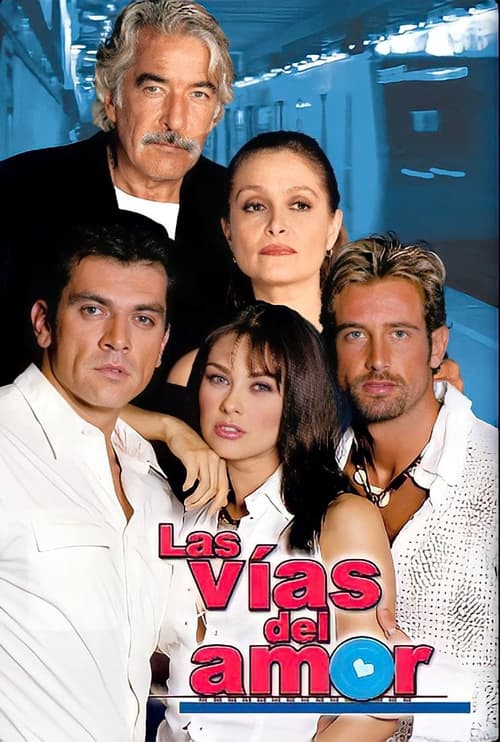
Las Vías del Amor is a Mexican telenovela that aired on the Televisa channel in Mexico and Univision in the United States from 2002-2003.
Soñadoras is a Mexican telenovela. It was produced by and broadcast on Televisa in 1998, and shown in 1999 on Univision.
Sofía Domínguez is a motherless girl who lives with her father, Dr. Antonio Domínguez, with her stepmother Mercedes and has a younger brother named Esteban. The latter two strive to make Sofía look bad whenever they can, while her father works all day in a laboratory. Sofia has several friends who are her neighbors and one day they decide to enter the "haunted mansion" on Villa Luz street, where a man named Chon lives and who worked for his late employer "Don Darvelio." When they enter, they will live great adventures and fight to defeat the evil forces of Helga, the "Great Witch" who constantly threatens Sofia's life due to a prophecy that she must fulfill.
The story revolves around four beautiful 21-year-old girls who come from different social strata. The first of them, Laura, is a middle-class girl, serious, sensitive and studious, who can study computer science at a private university because she won a scholarship. There he meets Jimena de la O, daughter of a millionaire businessman. At first, there will be a lot of friction between the two, but little by little a strong bond of friendship will form between them. Jimena is the typical rich, dissipated and irresponsible girl, for whom promiscuity, alcohol and drugs have marked her life since her mother died.
The story of two lawyers specializing in family law, Ricardo and Alejandra, that despite coming from two disappointments and being in a world where it seems that love loses strength, before so much divorce, they still have faith in finding true love.
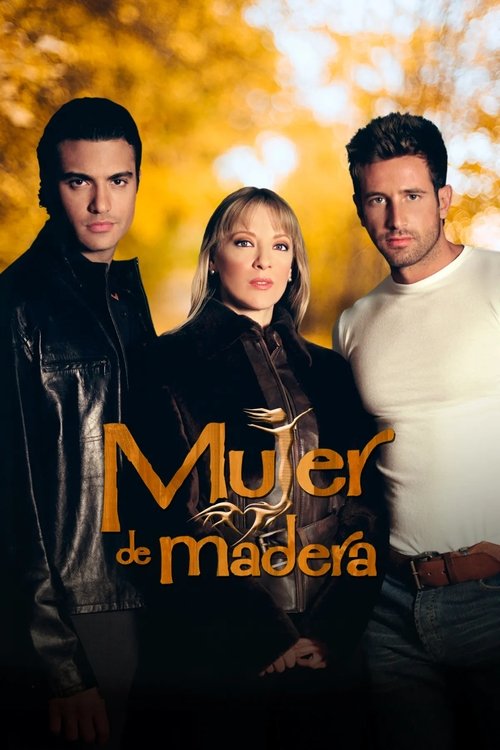
Mujer de Madera is a Mexican telenovela produced by Televisa in 2004. One unusual feature of this telenovela is that the main character is played by different actresses before and after her stay in hospital due to a forest fire.
Las Amazonas is a Mexican telenovela produced by Salvador Mejía Alejandre for Televisa and originally broadcast on Las Estrellas from May 16 to September 4, 2016. It is based on the Venezuelan telenovela Amazonas (1985). The story follows ranch owner Victoriano Santos and his three daughters, whose lives are transformed by love, family rivalries, and long-hidden secrets. As old betrayals resurface and unexpected romances develop, they must confront painful truths that will test their relationships, reshape their family, and change their future forever.
El premio mayor is a Mexican telenovela created and produced by Emilio Larrosa for Televisa and originally broadcast on Canal de las Estrellas from September 4, 1995, to May 24, 1996. Written by Verónica Suárez and Alejandro Pohlenz, the telenovela stars Laura León, Carlos Bonavides, Sergio Goyri, and Sasha Sokol. It was followed by the sequel Salud, dinero y amor in 1997. The story follows Huicho Domínguez, an uneducated construction worker who unexpectedly wins the grand prize in the National Lottery. His sudden fortune transforms his family's life as they move into a luxurious mansion and struggle to adapt to their new social status. As wealth attracts greed, infidelity, and opportunistic people, Huicho risks losing the love and stability that once defined his family.
Volver A Empezar is a Mexican telenovela which starred Yuri and Chayanne. It was produced and broadcast on Televisa from July 25, 1994 until February 10, 1995.
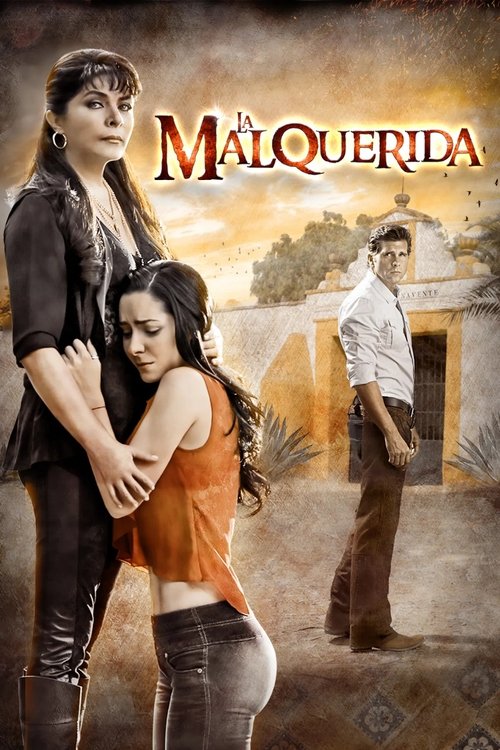
La malquerida is a Mexican telenovela produced by José Alberto Castro for Televisa. It is an adaptation of the play "La malquerida", written by Spanish playwright Jacinto Benavente. Victoria Ruffo and Christian Meier will star as the adult protagonist, Ariadne Díaz and Mane de la Parra will star as the young protagonists, while Brandon Peniche will star as the main antagonist.
Salud, dinero y amor is a Mexican telenovela produced by Emilio Larrosa for Televisa and originally broadcast on Canal de las Estrellas from August 4, 1997, to January 2, 1998. It is a sequel to the 1995 telenovela El premio mayor. Created by Emilio Larrosa, with scripts by Alejandro Pohlenz and Saúl Pérez Santana, the telenovela stars Itatí Cantoral, Eduardo Santamarina, and Carlos Bonavides. The story continues the life of Luis “Huicho” Domínguez after his rise to wealth in El premio mayor. Now facing new challenges, Huicho must deal with family conflicts, ambition, love, and the consequences of his fortune. Alongside Estrella Pérez and Dr. Jorge Miguel Fontanot, he becomes involved in a story of romance, betrayal, and the search for happiness beyond money and social status.
After the death of her abusive husband, Matilde finds her new best friend in Miguel, her young, insecure, and disoriented neighbor.
Snapshot of the sophisticated and exclusive gay nightlife of one of the most emblematic clubs in 1980s’ Mexico City, where people living under the weight of a repressive society that marginalized them felt the need to express an exacerbated sense of freedom. Through the eyes of a young man eager to explore the world and live freely in the capital city, the series recreates a slice of life and a decade that shook the world.
El Bienamado is a Mexican telenovela produced by Nicandro Díaz González for Televisa and originally broadcast on Las Estrellas from January 23 to June 11, 2017. It is based on the Brazilian play O Bem-Amado, written by Dias Gomes. Set in the fictional town of Loreto, the story follows Odorico Cienfuegos, an ambitious and charismatic mayor whose obsession with inaugurating the town's new cemetery leads to a series of humorous schemes, political intrigue, and unexpected situations.
A group of students arrives in a small town during a hiking expedition. Once there, the local priest accuses them of being communist agitators on the run from an army crack-down against student demonstrations in nearby Mexico City and rallies the townsfolk to lynch them. Based on a true story.
When a worker is found murdered on the construction side, the investigation swiftly turns from things criminal to the political circumstances surrounding the building itself. Widespread corruption and neglect by the builder himself are seen to have brought the situation about. Much of the movie is filmed using hand-held cameras, and the majority of the dialogue is in the difficult-to-understand and very slangy Spanish dialect of Mexico City's bricklayers.
Based on a true story, it tells the story of opera singer Paco Sierra, who, realizing that the life of an artist does not provide him with enough money, plans and carries out a terrorist act: He assures the passengers of an airplane that he has placed a bomb.
Tomás, a famous and egocentric actor, buying a Buddha head in Lagunilla . In an attempt to avoid being robbed, the thief accidentally kills in self-defense , with the relic . His life starts to change , forcing him to confront this crime and discover the sheer banality of existence. Seeking redemption faced with the mother of the thief and asks forgiveness , learning to forgive yourself
A landowner known as Bulldog seeks to take over a ranch, but is opposed by the Brotherhood of the Blade, a group of tobacco smugglers made up of skilled horsemen who operated during the turbulent times of General Antonio López de Santa Anna.