FEEL IT.STREAM
Mirella Freni

Mirella Freni

Acting

Biography

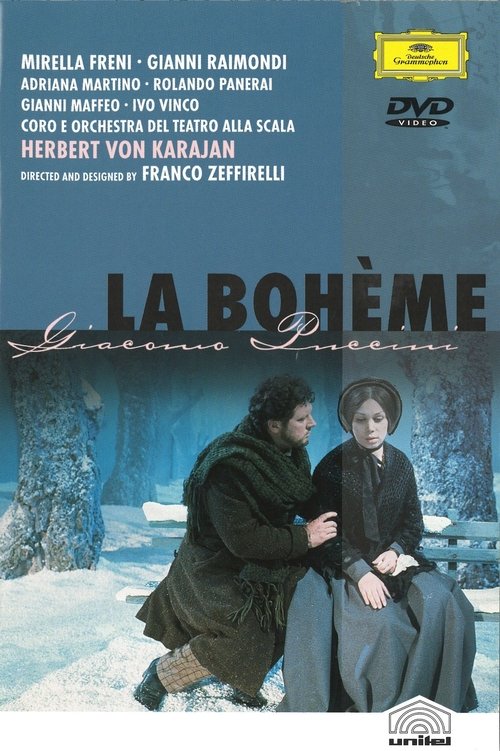
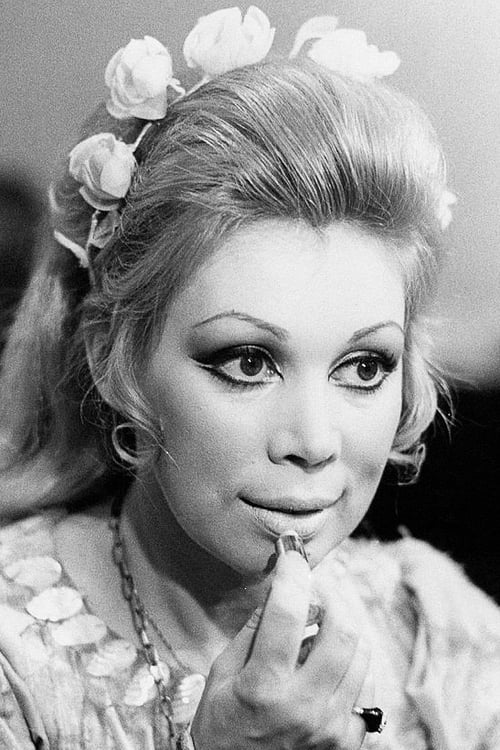
Mirella Freni (born Mirella Fregni, 27 February 1935 – 9 February 2020) was an Italian operatic soprano who had a career of 50 years and appeared at major international opera houses. She received international attention at the Glyndebourne Festival, where she appeared as Zerlina in Mozart's Don Giovanni and as Adina in Donizetti's L'elisir d'amore. Freni is associated with the role of Mimi in Puccini's La bohème, which featured in her repertoire from 1957 to 1999 and which she sang at La Scala in Milan and the Vienna State Opera in 1963, conducted by Herbert von Karajan. She also performed the role in a film of the production and as her debut at the Metropolitan Opera in New York City in 1965. In the earliest opera DVDs, she portrayed her characters convincingly in both acting and singing. Freni was married for many years to the Bulgarian bass Nicolai Ghiaurov, with whom she performed and recorded. Her obituary from The New York Times describes her as a "matchless Italian prima donna". Born in Modena, she had the same wet-nurse as Luciano Pavarotti, with whom she grew up and who was to become a frequent tenor partner on stage. She studied voice first with her uncle, Dante Arcelli, then with Luigi Bertazzoni and Ettore Campogalliani. She later changed her name thinking it was easier to pronounce. Freni made her operatic debut at the Teatro Municipale in her hometown on 3 March 1955 as Micaëla in Bizet's Carmen. She later married her teacher, the pianist and director Leone Magiera; the couple had a daughter. Freni resumed her career in 1958 when she performed Mimì in Puccini's La bohème at the Teatro Regio in Turin, and sang in De Nederlandse Opera's 1959–60 season. Her international breakthrough came at the Glyndebourne Festival, where she appeared in 1960 as Zerlina in Mozart's Don Giovanni, alongside Joan Sutherland as Donna Anna, and in 1962 as Susanna in The Marriage of Figaro, and as Adina in Donizetti's L'elisir d'amore, directed by Franco Zeffirelli. In 1961, Freni first performed at the Royal Opera House in London as Nannetta in Verdi's Falstaff. She stepped in as Nanetta at La Scala in Milan for Renata Scotto. On 31 January 1963, she appeared there as Mimi in a production staged by Franco Zeffirelli and conducted by Herbert von Karajan. She became one of the conductor 's favourite singers in operas and concerts. The production was repeated at the Vienna State Opera the same year, and she appeared at the house in eleven roles, including the title role of Puccini's Manon Lescaut, and Amelia in Verdi's Simon Boccanegra. On 29 September 1965, she first appeared at the Metropolitan Opera in New York City, again as Mimi, with Gianni Raimondi as Rodolfo who also made his house debut. Reviewer Alan Rich wrote in the New York Herald Tribune: Miss Freni is—well, "irresistible" will do for a start. Beautiful to look at, and actress of simple naturalness and overwhelming intelligence, she used voice and gesture to create a Mimi of ravishing femininity and grace. The voice itself is pure and fresh, operating without seam from bottom to top, marvelously colored at every point by what seems to be an instinctive response to the urging of the text. ... Source: Article "Mirella Freni" from Wikipedia in English, licensed under CC-BY-SA 3.0.
Known For

La Boheme
8.7

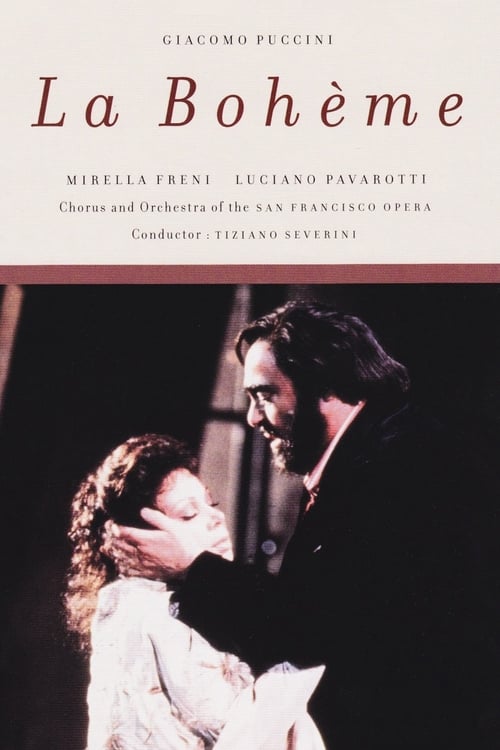
Giacomo Puccini's bittersweet opera of high-spirited bohemians and the doomed love between Rodolfo, the idealistic poet and Mimi, the consumptive flower-maker, is a beautifully balanced series of tableaux depicting the infectious joie de vivre of youth and the tragic waste of disease and separation. The legendary and incomparable partnership of Mirella Freni and Luciano Pavarotti as the two lovers has been captured in this special live recording from stage of the San Francisco Opera. Brian Large has adapted Francesca Zambello's production for video, further illuminating the fascinating interaction of Puccini's characters. Gino Quilico sings Marcello, the colorful and moody painter, whose tempestuous relationship with the flirtatious Musetta (sung by Sandra Pacetti), comically mirrors the more profound love of Rodolfo and Mimi. Nicolai Ghiaurov sings Colline.

La Boheme

1988Movie
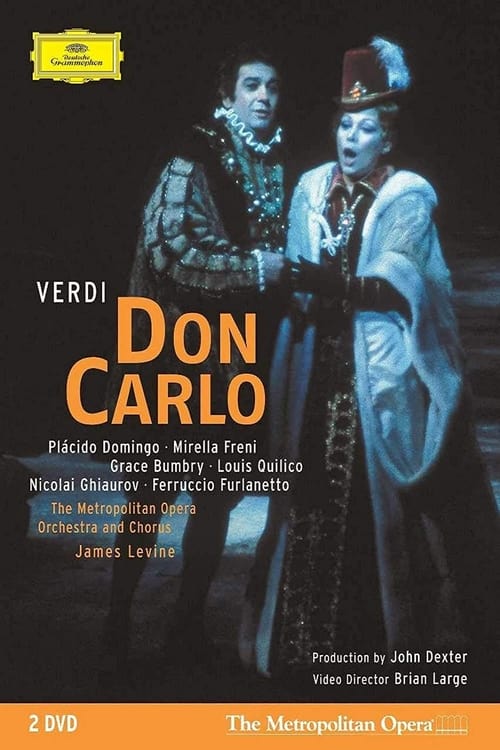
Don Carlo
8.0

Ghiaurov, Freni, and Bumbry were great voices in their time, and they are still effective here -- good enough musicians to put over the quite heavy vocal and expressive demands of their roles. Louis Quilico was never quite in that league, and he sounds a bit spread and woofy in places here, but he works hard and effectively to bring Rodrigo to life. Placido Domingo recorded his first Don Carlo, for EMI with Giulini, about 15 years before this production, but he looks and sounds fine here -- in the early 1980's he was doing very good Otellos and Lohengrins too, and Furlanetto, still in his 30's, brings a rich, young voice to an old part and succeeds in making the Grand Inquisitor vocally as well as expressively formidable. Levine brings both weight and energy to the score, and that reading fits well with the overall "traditional" design and production -- the Met's wardrobe budget must have been severely taxed, but everybody looks splendid.

Don Carlo

1983Movie
No image
8.0

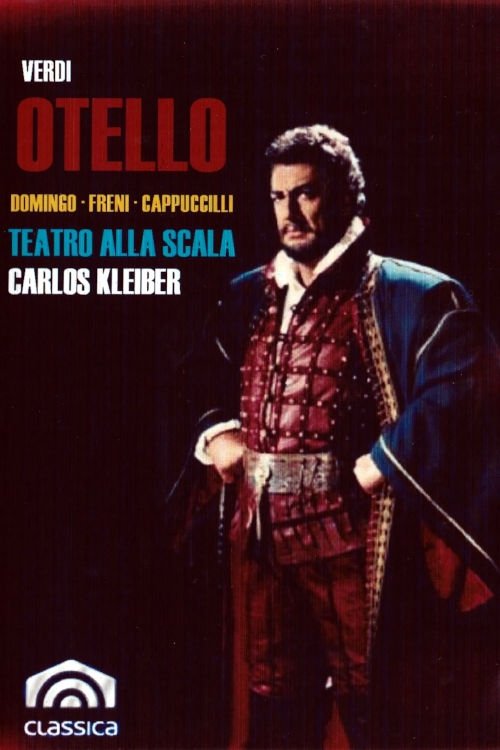
It truly is an historic performance. Domingo looking and singing like a god pouring out golden tones; Renato Bruson sounds, like the sublime Verdian Baritone that he was at that time; Nicolai Ghiaurov proves again that he was one of the greatest "Verdi Basses"; Mirella Freni shows that there was more to her than just being Mimi and Susannah-in fact I can remember reading that at the time of the premiere of this production that there were fist fights (not unusual in La Scala's gallery) between Mirella's many fans--between those fans that just wanting her to continue singing the light lyric repertoire that they were use to her singing and those that felt she should and could sing the lyric-spinto repertoire which, of course, she proved that,indeed, she could (She's still singing more than twenty years later). This performance captures some of the best Verdi singers of the time doing dear ole wonderful Giuseppi proud.

Verdi Ernani

1982Movie
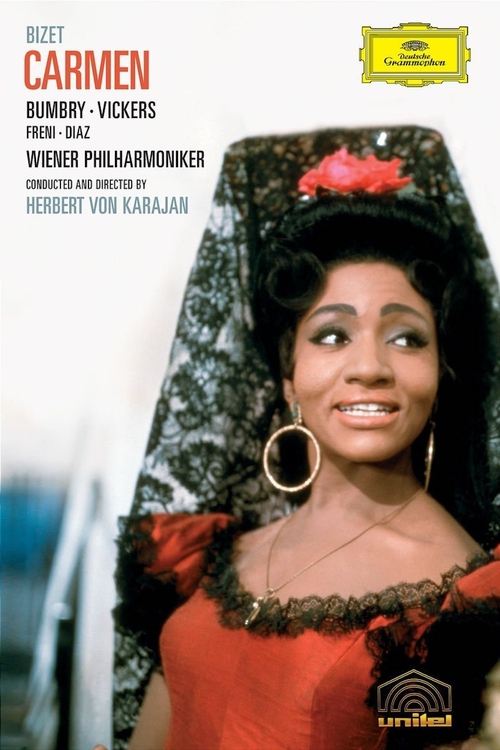
Bizet Carmen
7.3

This spectacular opera film was taped in 1967 and is based on the 1966 Salzburg Festival production directed by Herbert von Karajan himself, who also conducts the fabulous Vienna Philharmonic Orchestra. The production features the three greatest exponents of their respective roles at the time: Grace Bumbry’s magnificently seductive-toned Carmen, Mirella Freni’s ineffably lovely, touching Micaëla and Jon Vickers’s thrillingly manic-depressive Don José. On its release the film was hailed by Die Presse, (Vienna) as a “unique artistic event”, while Le Monde felt that Karajan’s production brought “a whole new dimension” to the opera, “combined with a magisterial interpretation”. A classical and utterly dramatic approach to probably the world's most beloved opera – Karajan’s Carmen is as much a delicacy for opera fans as it is a perfect starter for newcomers.

Bizet Carmen

1967Movie