Acting
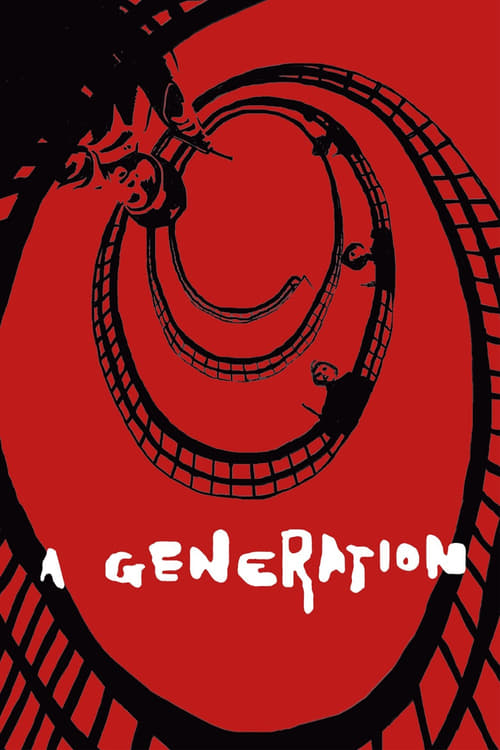
Stach is a wayward teen living in squalor on the outskirts of Nazi-occupied Warsaw. Guided by an avuncular Communist organizer, he is introduced to the underground resistance—and to the beautiful Dorota. Soon he is engaged in dangerous efforts to fight oppression and indignity, maturing as he assumes responsibility for others’ lives.
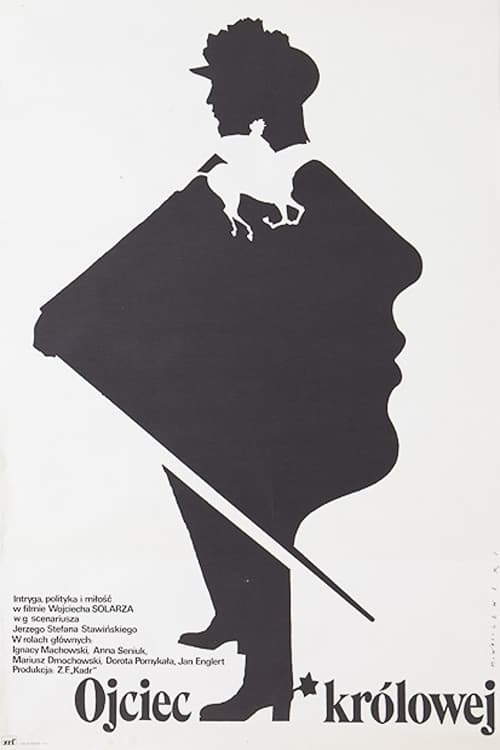
Chevalier de Charentes goes to Poland on a double mission.
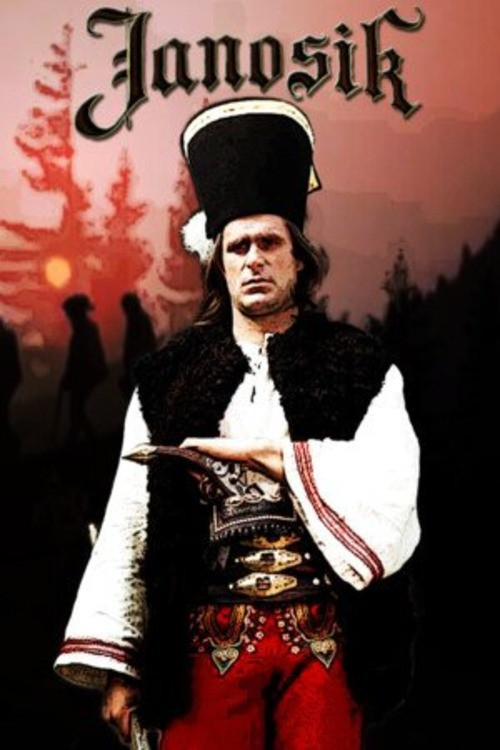
Janosik was a television series that aired in Poland in 1974. It is about a famous Polish highlander outlaw who in folk legends steals money and goods from the rich and helps out the poor. The series was directed by Jerzy Passendorfer. There are 13 1-hour episodes.
Set in the Kalisz Region in the second half of the 19th century after the failure of the January Uprising in 1863, the miniseries presents a unique portrait of an oppressed society as told through the life of the Niechcic family.
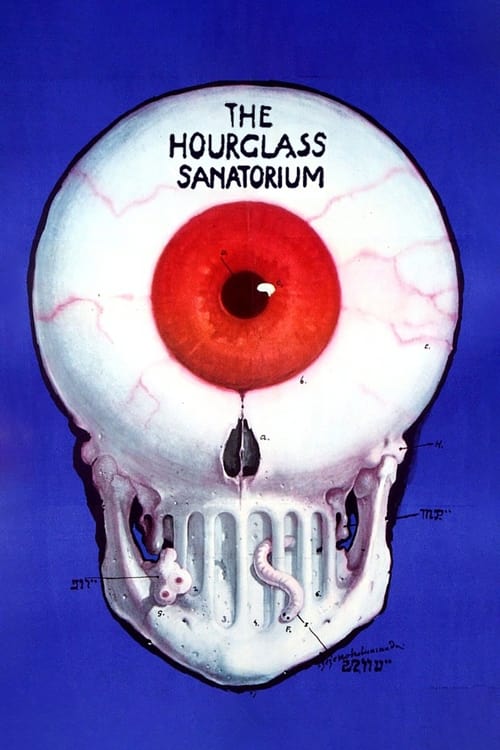
Jozef visits a dilapidated Sanatorium to see his father. Jozef undertakes a strange journey through the many rooms of the sanatorium, each which conjures worlds composed of his memories, dreams and nightmares.
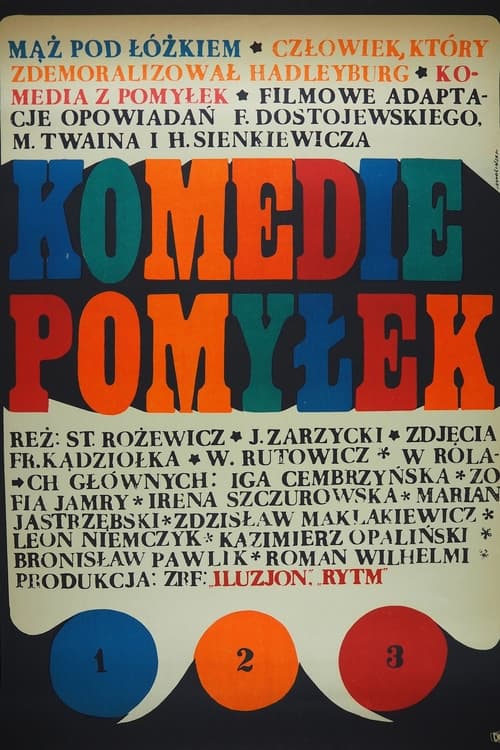
A collection of intimate television short stories based on well-known literary works.
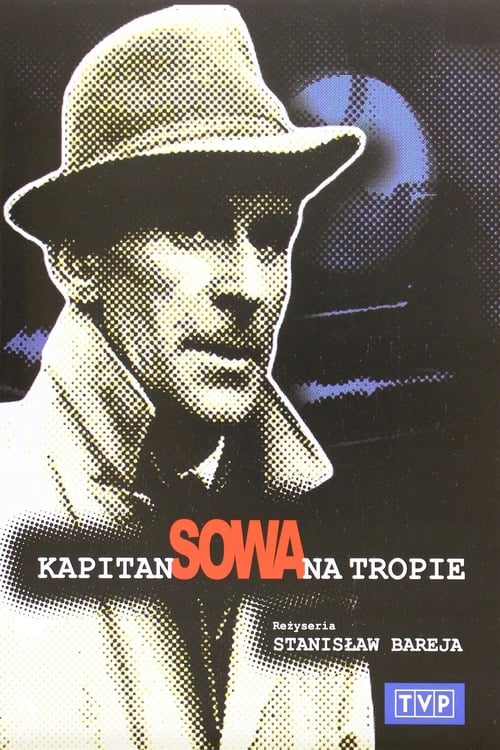
Kapitan Sowa na tropie is a Polish series from 1965 directed by Stanisław Bareja. It was the first Polish criminal series made after World War II.
No description available.
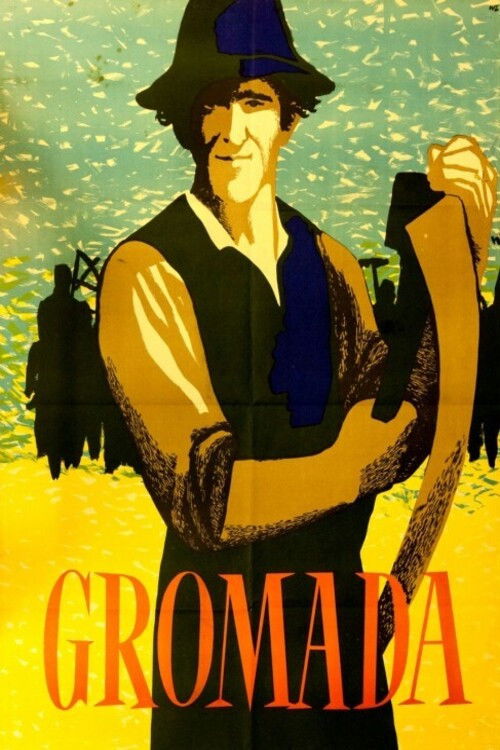
The struggle between poor villagers, who are eager to build a co-operative mill and a cultural centre, and the village wealthy men - the miller and the kulaks - who are desperate to stop the farmers.
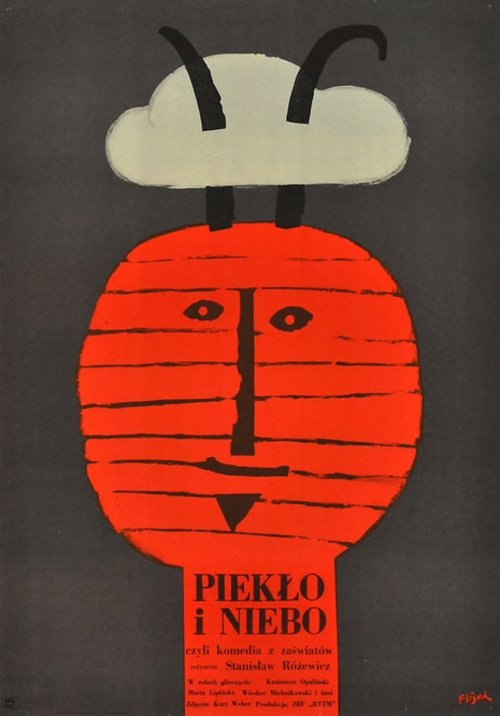
A bus crashes and its passengers find themeselves in the afterlife, which they find has the not only the same set of rules as Earth, but also the same bureaucratic chaos.
Jadwiga and Karol, siblings leaving in Western Poland learn that the man that has raised them is not their biological father.
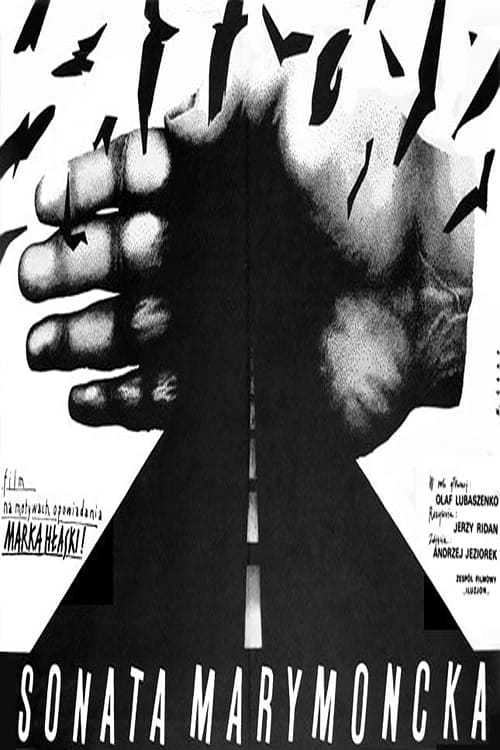
Main character, Rysiek, tries to live through dangerous times of war-torn and later stalinist Poland.
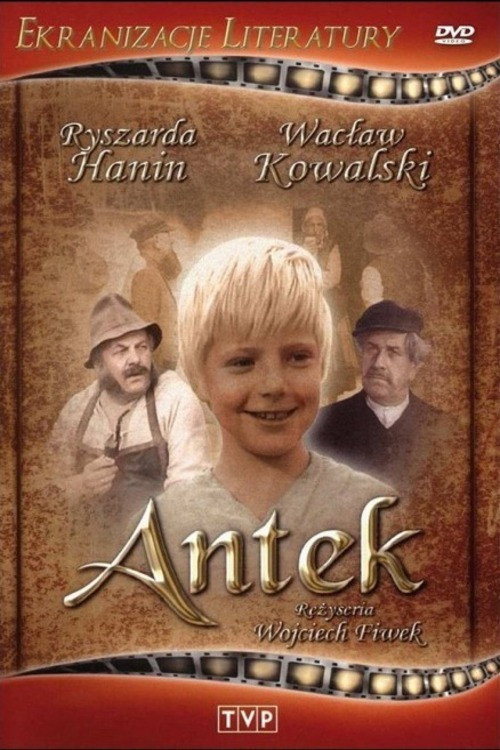
A black-and-white adaptation of one of Bolesław Prus's most widely read short stories. The director faithfully portrays the protagonist against the backdrop of the struggle to reshape the image of the Polish countryside in the late 19th century. We follow the vicissitudes of a poor peasant child who allows himself to seize the opportunities of life.
After discussions with Schwartz, a producer from the West, screenwriter Stefan comes back to Poland. Everybody reminds him of his previous success: “The Flame”. The tired protagonist goes back to his wife, actress Ewa, who is eagerly awaiting him. Ewa goes to an audition which doesn’t turn out too well. On the next day, Stefan and his collaborators are wondering what to write a scenario about. Meanwhile, Stefan has a tooth ache. He decides to visit a dentist but is scared away by the price he has to pay for the treatment. Stefan still can’t find an idea for a scenario, and Ewa is not being cast. They decide to sell the car, but a man who takes their car out for a test drive doesn’t return. Stefan is changing ideas for the scenario constantly, he can’t make up his mind… at home, a pipe goes off… the wine he keeps in gallons blows up… the milicia (People’s Republic of Poland’s police) comes and general chaos ensues, as they are drowning in water and wine… which gives Stefan an idea…
A tale of a young impoverished nobleman, who with his uncle returns from a war against the order of the Teutonic Knights in Lithuania. He falls in love with a beautiful woman and pledges an oath to bring her "three trophies" from the Teutonic Knights.
On the night of August 31, 1939, Dolas, from a platoon reinforcing a train station on the German border, falls asleep in a train car and unknowingly crosses into Germany. The moment he shoots a German, who he thinks is a saboteur, the German invasion of Poland begins, and Dolas is convinced it was his fault. He is taken to Stalag POW camp, the first destination in his odyssey around Europe.
A UFO lands at night in a typical Masovian village. The villagers feel honored and want to be as hospitable as possible for the unexpected alien guests.
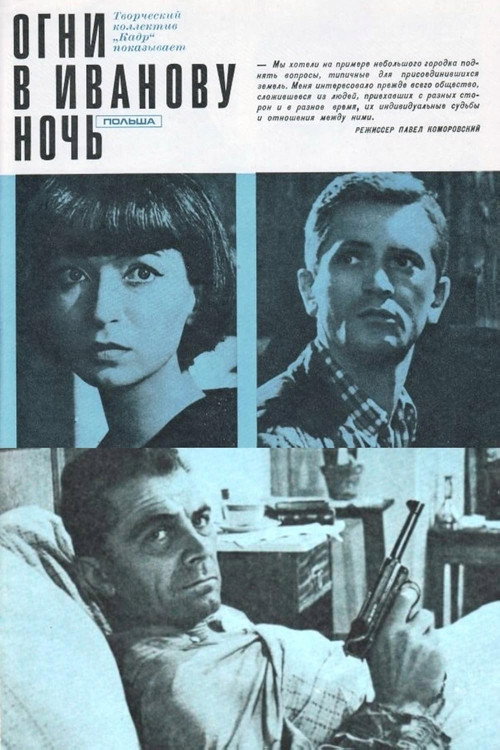
A young, idealistic poet, turns his back on civilization and goes to small, backwood village, rents a bed in the house of an old woman, and decides to make his living as a lumberjack. Soon he realizes that the world around him is far from perfect.
The 1937 trial of communist journalists, working for the same student magazine in Vilnius, is shown through the tragic life of the paper's young collaborator Julek Szulc.
The movie consists of three novellas, the events of which take place during World War II. The first, "White Daisies", tells how a Polish priest saves a Jewish boy who survived a mass shooting. Another movie story, "Desolation," is about a ghetto boy in love who must, by all means, bring wildflowers to his beloved. The third novel, "The Cuckoo's Prediction," is about a prisoner who escapes from a POW camp. He escapes after his bunkmate tells him that he heard him speaking Yiddish in his sleep.