
Michael Snow
Directing
Biography
Michael Snow was considered one of Canada's most important artists, and one of the world's leading experimental filmmakers. His wide-ranging and multidisciplinary oeuvre explored the possibilities inherent in different mediums and genres, and encompassed film and video, painting, sculpture, photography, writing, and music. Snow's practice comprised a thorough investigation into the nature of perception. While Snow early established himself as a successful painter and musician in his native Toronto, it was his 1962 move to New York City that marked the beginning of his rise to international prominence. He entered into a long-lasting and fruitful dialogue with downtown Manhattan's artistic avant garde, exchanging ideas with figures such as Yvonne Rainer, Philip Glass, Sol LeWitt, and Richard Foreman, and developing of some of his most ambitious and influential works to date. His 1964 film New York Eye and Ear Control documents his growing involvement with the burgeoning free jazz movement, and the soundtrack boasts a lineup that includes Albert Ayler, Don Cherry, and Sonny Murray. Snow would continue to pursue improvised music, both on his own and in ensembles such as Toronto's CCMC. The generation and reception of sound in the broader sense emerged as one of his main concerns, reflected in performance and tape works that share qualities with contemporaneous experiments by composers like Steve Reich. At the same time, Snow made alliances within the underground film scene centered around Jonas Mekas' Filmmakers' Cinematheque, an experience that encouraged him to find ways to transfer his concerns with music and photography into the realm of the moving image. He assisted Hollis Frampton on films such as Nostalgia(1971), and it was legendary director Ken Jacobs whose loan of equipment helped Snow create his most famous and influential work, the groundbreaking 1967 film Wavelength. Wavelength, which notoriously includes a 45-minute camera zoom within a fixed frame, remains one of the most studied and admired works of structuralist filmmaking. Other of Snow's films of this period, including Back and Forth (1969) and La Région Centrale (1971) similarly explored the mechanics of filmmaking to simultaneously investigate the functional processes of cinema and of thinking itself. In the 1970s and 1980s, Snow, responding to a growing institutional commitment to his work, experimented more with large-scale installations, including public sculptures such as Flightstop (1979) and The Audience (1988-89). In recent years, he focused on the specific nature and potential of digital media, yielding works like the video-film *Corpus Callosum (2002). Regardless of artistic genre, Snow consistently engaged in an analytical discourse on the nature of consciousness and experience, language and temporality. He died on January 5th, 2023.
Known For

Cinématon is a 156-hour long experimental film by French director Gérard Courant. It was the longest film ever released until 2011. Composed over 36 years from 1978 until 2006, it consists of a series of over 2,821 silent vignettes (cinématons), each 3 minutes and 25 seconds long, of various celebrities, artists, journalists and friends of the director, each doing whatever they want for the allotted time. Subjects of the film include directors Barbet Schroeder, Nagisa Oshima, Volker Schlöndorff, Ken Loach, Benjamin Cuq, Youssef Chahine, Wim Wenders, Joseph Losey, Jean-Luc Godard, Samuel Fuller and Terry Gilliam, chess grandmaster Joël Lautier, and actors Roberto Benigni, Stéphane Audran, Julie Delpy and Lesley Chatterley. Gilliam is featured eating a 100-franc note, while Fuller smokes a cigar. Courant's favourite subject was a 7-month-old baby. The film was screened in its then-entirety in Avignon in November 2009 and was screened in Redondo Beach, CA on April 9, 2010.
Cinématon
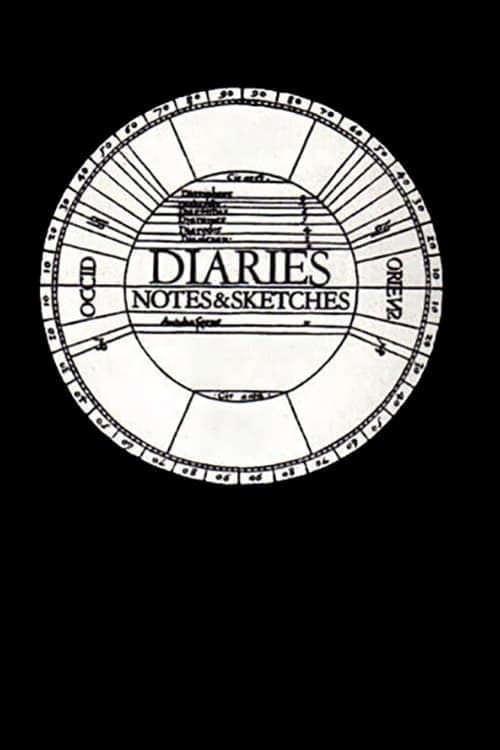
Also known as Walden, Jonas Mekas’s first diary film is a six-reel chronicle of his life in 1960s New York, interweaving moments with family, friends, lovers, and artistic idols. Blending everyday encounters with portraits of the avant-garde art scene, it forms an epic, personal meditation on community, creativity, and the passage of time.
Diaries, Notes, and Sketches
An unreleased diary film shot during the Fairleigh-Dickinson Artist Seminar simultaneous to the production of Back and Forth by Michael Snow.
Seminar
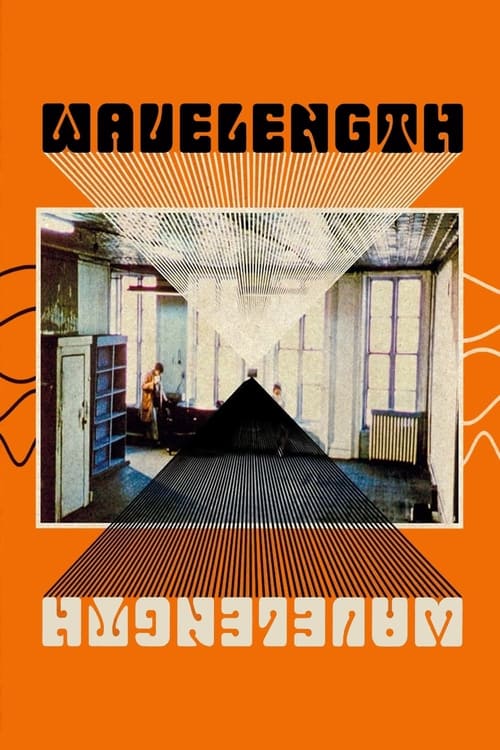
Wavelength consists of almost no action, and what action does occur is largely elided. If the film could be said to have a conventional plot, this would presumably refer to the three “character” scenes. In the first scene two people enter a room, chat briefly, and listen to “Strawberry Fields Forever” on the radio. Later, a man (played by filmmaker Hollis Frampton) enters inexplicably and dies on the floor. And last, the female owner of the apartment is heard and seen on the phone, speaking, with strange calm, about the dead man in her apartment whom she has never seen before.
Wavelength
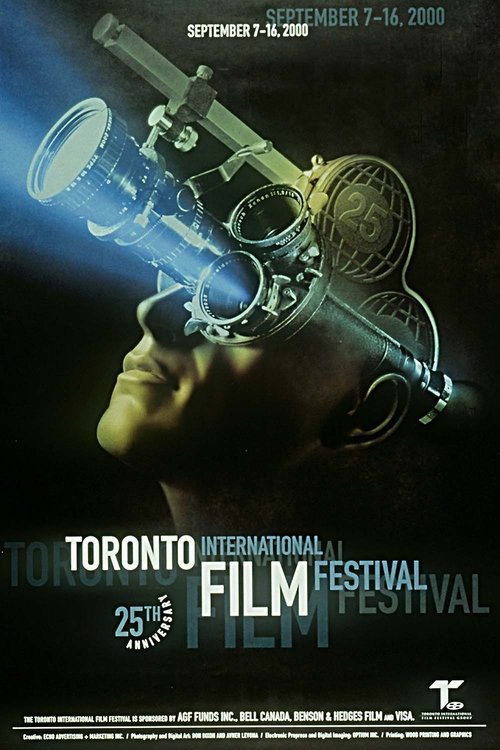
Commissioned by the Toronto International Film Festival to mark the event's 25th anniversary in September 2000, the "Preludes" program consisted of ten short films by Canadian directors which were inspired in some way by the festival. Each film screened as a prelude to a feature film in the 2000 Toronto International Film Festival program. The full "Preludes" anthology was screened on the web in November 2000, and was given theatrical retrospectives at the TIFF Lightbox in the subsequent years.
Preludes
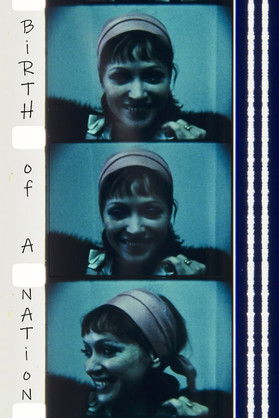
Jonas Mekas assembles 160 portraits, appearances, and fleeting sketches of underground and independent filmmakers captured between 1955 and 1996. Fast-paced and archival in spirit, the film celebrates the avant-garde as its own “nation of cinema,” a vital community existing outside the dominance of commercial film.
Birth of a Nation
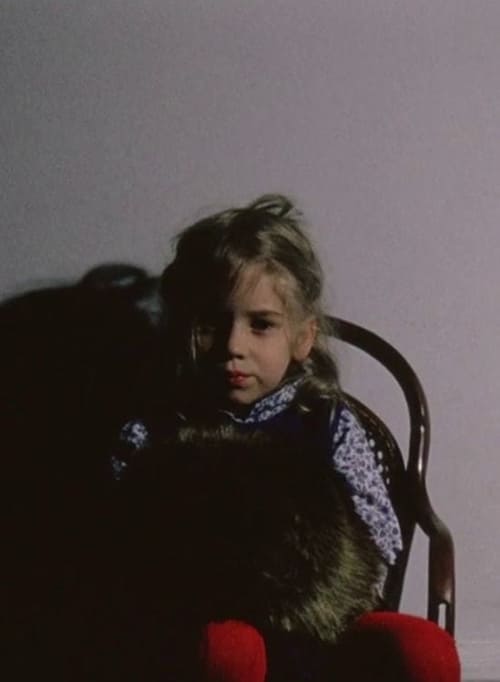
"The whole film are non-art portraits of people in which they do what they want with this hat – and therefore, act or stand in front of my camera. It’s only love: therefore it can’t harm you". Joyce Wieland.
Bill's Hat
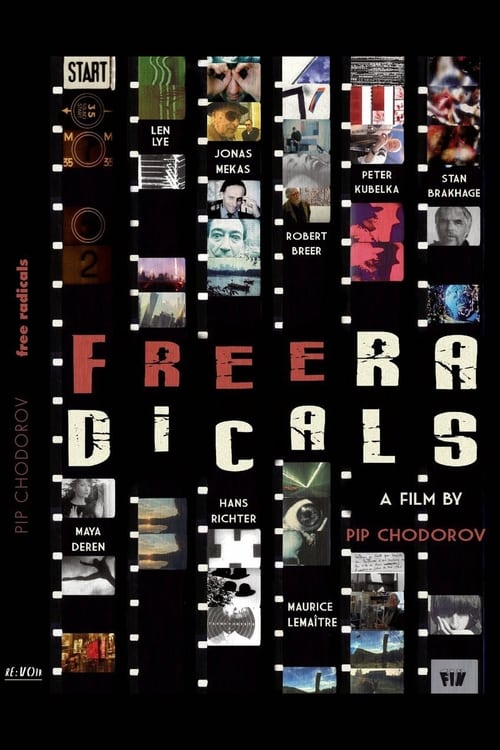
Experimental filmmaker Pip Chodorov traces the course of experimental film in America, taking the very personal point of view of someone who grew up as part of the experimental film community.
Free Radicals: A History of Experimental Film
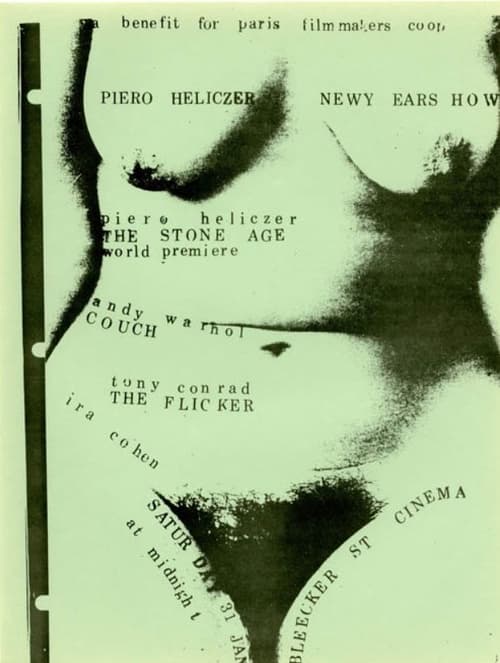
"The question is, it is either going to be a stoned age or a new Stone Age" - Louis Brigante
The Stone Age
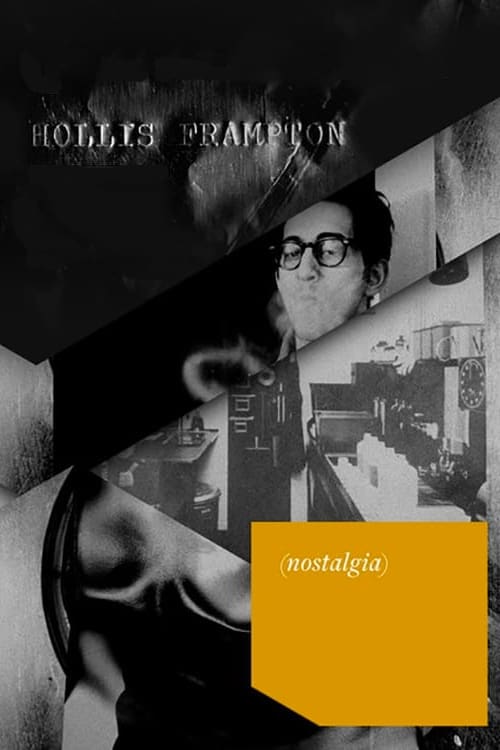
Michael Snow narrates a series of Hollis Frampton's photographs (speaking as Frampton, in the first person)—as each picture catches fire on a hot plate.
Hapax Legomena I: (nostalgia)

Knokke, Belgium. A small mundane coastal town, home to the beau-monde. To compete with Venice and Cannes, the posh casino hosts the second ‘World Festival of Film and the Arts’ in 1949, organised in part by the Royal Cinematheque of Belgium. To celebrate cinema’s 50 year existence, they put together a side program showcasing the medium in all its shapes and forms: surrealist film, absolute film, dadaist films, abstract film,… The side program would soon become a festival in its own right: ‘EXPRMNTL’, dedicated to experimental cinema, and would become a mythical gathering of the avant-garde…
EXPRMNTL
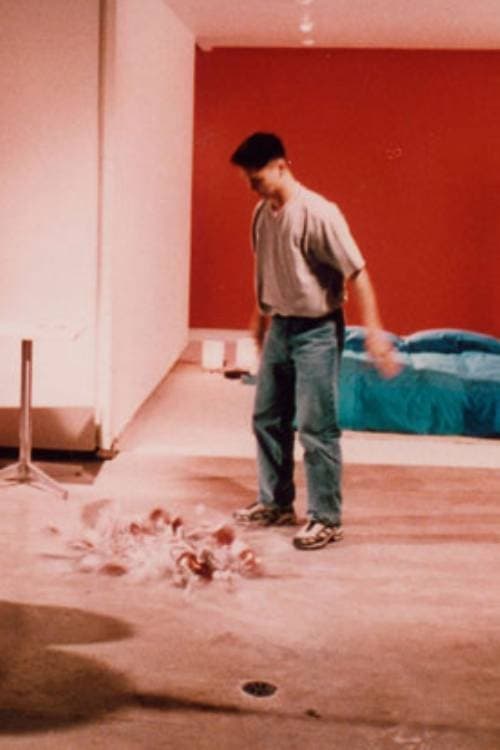
Panning shot of a room while a group of people discusses film while eating at a table.
Prelude
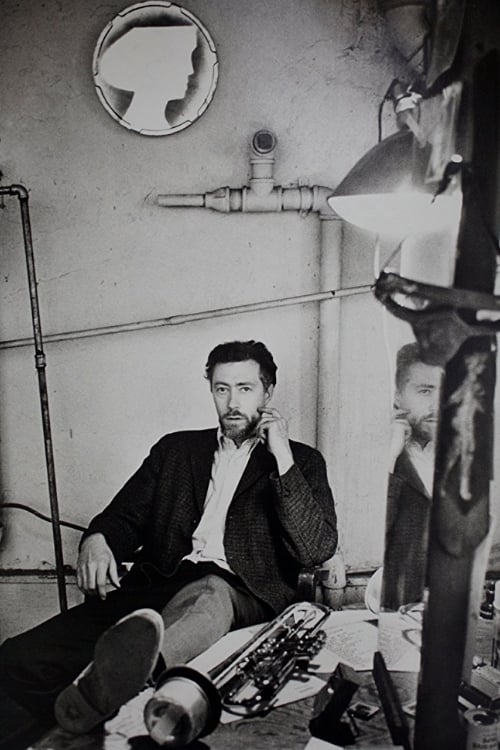
A serendipitous encounter with a younger artist gives legendary Canadian art icon Michael Snow the opportunity to reflect on his life and career.
Portrait of Snow
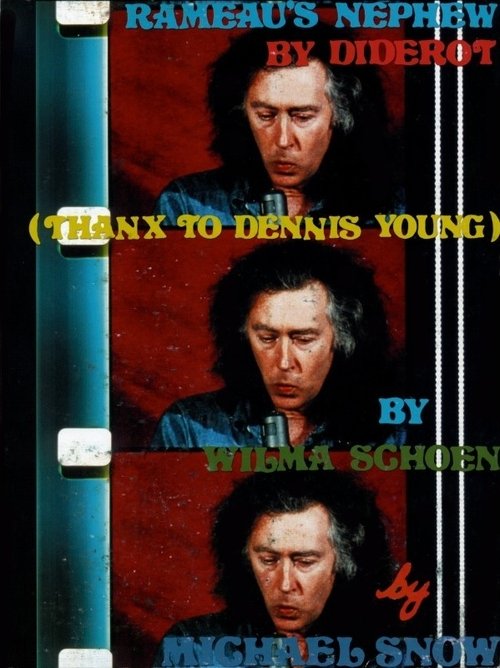
Various unrelated vignettes, often juxtaposing sound and image.
‘Rameau’s Nephew’ by Diderot (Thanx to Dennis Young) by Wilma Schoen

A camera moves back and forth at an increasing pace. Back and forth, back and forth...
Back and Forth
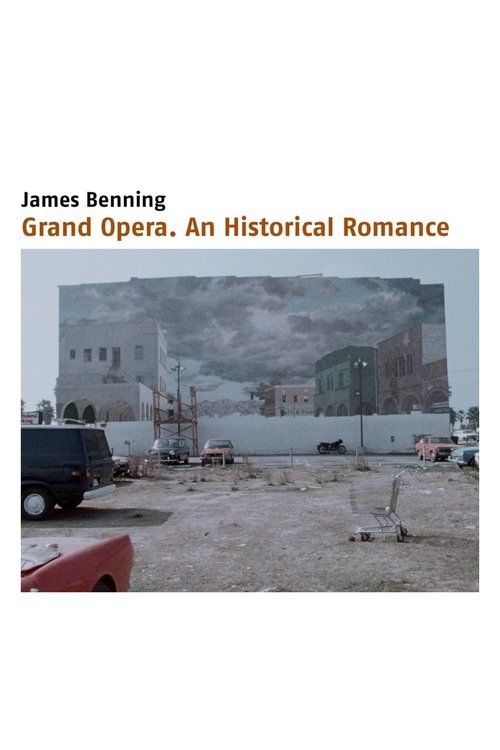
Grand Opera marks a stock-taking of Benning's work and his life, presenting a personal and artistic autobiography woven together with a series of events dealing with the historical development of the number pi, Benning's travels, and homages to Michael Snow, Hollis Frampton, George Landow (Owen Land), and Yvonne Rainer.
Grand Opera: An Historical Romance

Two twenty-something women dream of the ideal man and slowly realize that reality is very different from their fantasies.
Dream Life
A young woman stands by a car while scenes from metropolitan life flash by.
Cyclopean 3D: Life with a Beautiful Woman
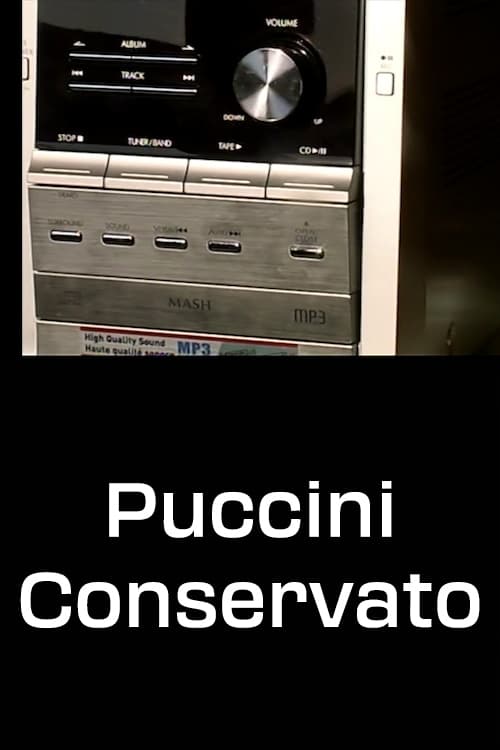
Puccini Conservato uses a CD, a sound recording of some Puccini music (from La Bohème). The source of the sound (the loudspeakers) in a continuous hand-held panning (guided by the music), is intercut with shots of flowers or wood-fire, exemplifying the lyricism in Puccini’s music. By being a recording of a recording, the work proclaims the artificiality of the sound. However the beauty and humanity of the music comes through too.
Puccini Conservato
Solar Breath (2002) is a 62-minute loop of fluttering curtains that reveal and conceal an idyllic landscape in rural Newfoundland.