Danièle Huillet
Directing
Biography
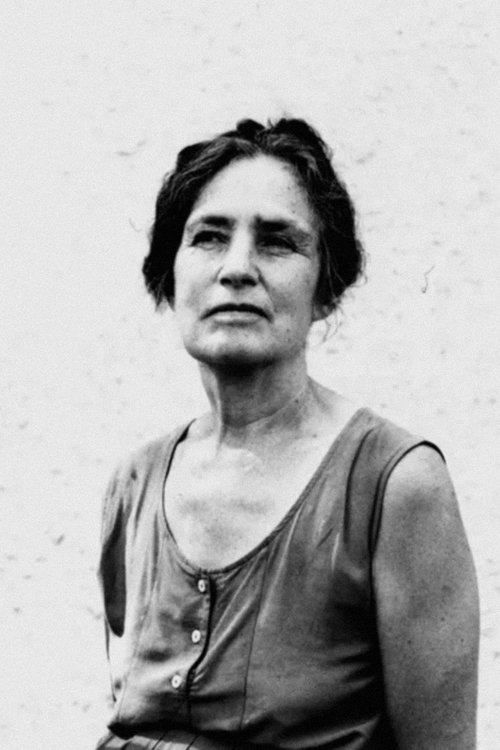
Danièle Huillet was born on May 1, 1936 in Paris, France. She was a director and editor, known for Sicily! (1999), Class Relations (1984) and The Chronicle of Anna Magdalena Bach (1968). She was married to Jean-Marie Straub. She died on October 9, 2006 in Cholet, Maine-et-Loire, France.
Known For
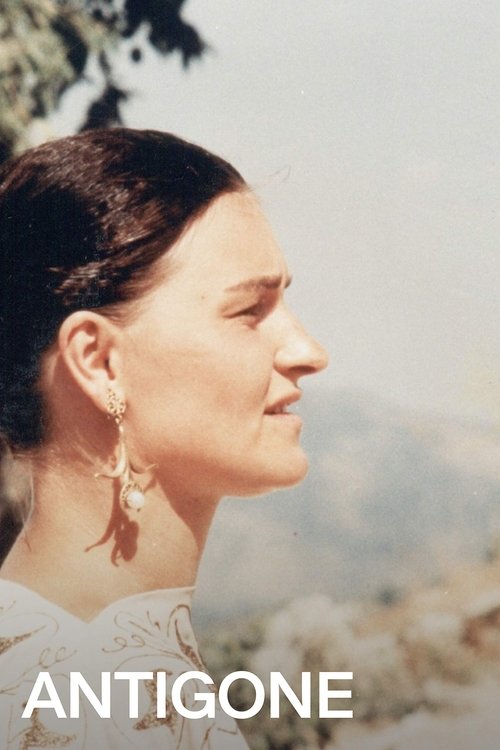
A fearless Antigone, refusing to allow the dishonored body of her murdered brother Polynices to be devoured by vultures and dogs, defies the Thebian tyrant Creon by burying him.
Antigone

Cinématon is a 156-hour long experimental film by French director Gérard Courant. It was the longest film ever released until 2011. Composed over 36 years from 1978 until 2006, it consists of a series of over 2,821 silent vignettes (cinématons), each 3 minutes and 25 seconds long, of various celebrities, artists, journalists and friends of the director, each doing whatever they want for the allotted time. Subjects of the film include directors Barbet Schroeder, Nagisa Oshima, Volker Schlöndorff, Ken Loach, Benjamin Cuq, Youssef Chahine, Wim Wenders, Joseph Losey, Jean-Luc Godard, Samuel Fuller and Terry Gilliam, chess grandmaster Joël Lautier, and actors Roberto Benigni, Stéphane Audran, Julie Delpy and Lesley Chatterley. Gilliam is featured eating a 100-franc note, while Fuller smokes a cigar. Courant's favourite subject was a 7-month-old baby. The film was screened in its then-entirety in Avignon in November 2009 and was screened in Redondo Beach, CA on April 9, 2010.
Cinématon
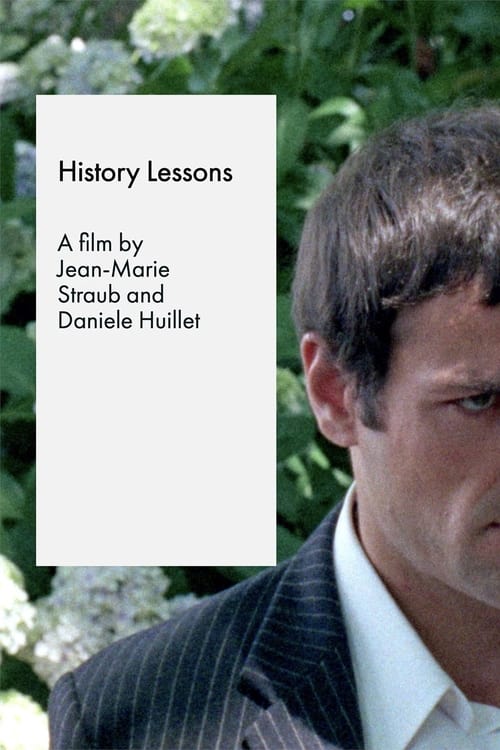
Set in contemporary Rome, the film shows through a series of encounters with “ancient” Romans, how the economic and political manipulation by ancient Roman society led to Caesar’s dictatorship. - British Film Institute
History Lessons
Recently discovered and shown only twice before, Incantati is an alternate ending to Danièle Huillet and Jean-Marie Straub’s 2003 film Umiliati — fragment as mini-manifesto.
Incantati
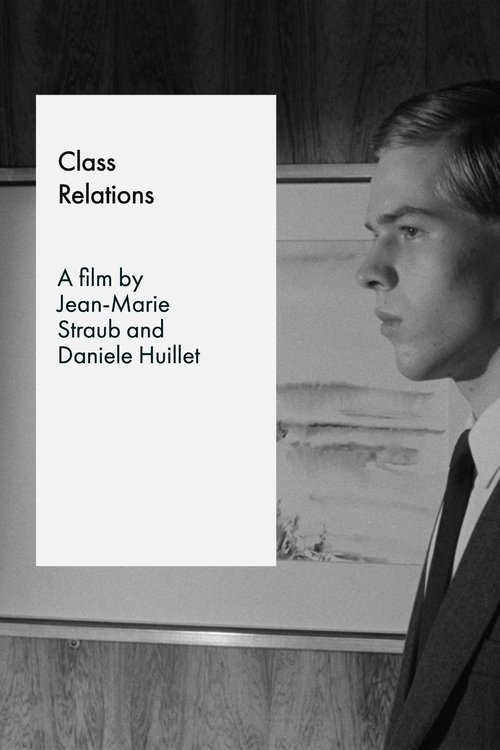
A young man, recently arrived in New York from Europe, becomes swept up in a series of events that are beyond his knowledge or control.
Class Relations
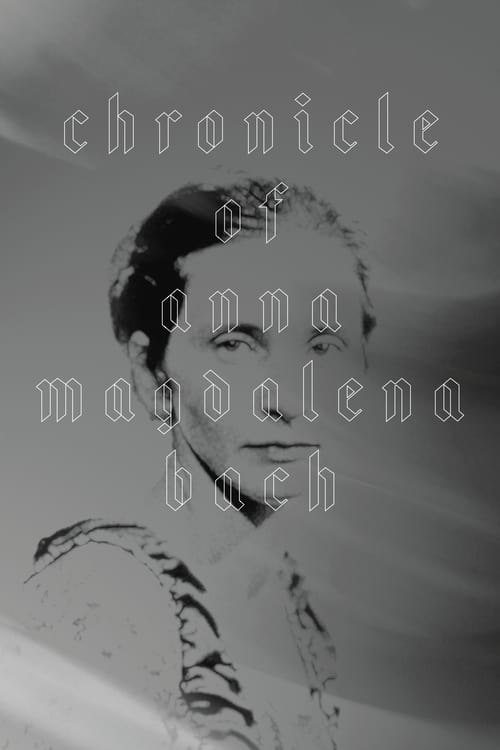
The life and music of Johann Sebastian Bach as presented by his wife, Anna.
Chronicle of Anna Magdalena Bach
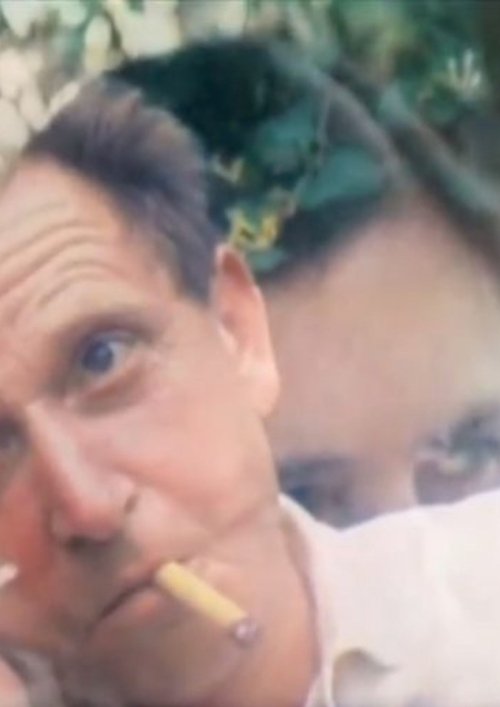
Discuss, discuss, but we must not forget the laundry! Snatches of dialogue, of thoughts that mingle happily with the faces that also mingle with each other. From films number 342 and 343 by Gérard Courant: “Jean Marie Straub”, 1984 and “Danièle Huillet”, 1984.
S et H
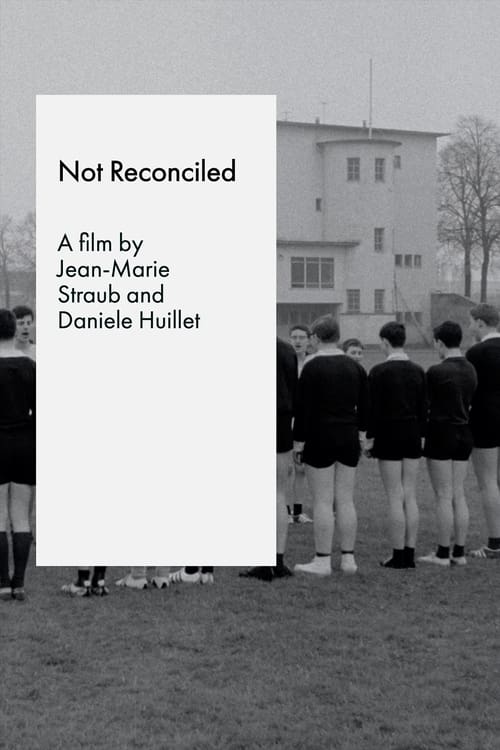
A story about the continuity and collapse of history, the power of suppression, and the terror of reconciliation; loyalty, treason and revenge. In a brave cinematic game, Heinrich Böll’s story Billiards at Half-Past Nine is split up into cracks, blocks, breaks and sudden turns, as the life story of a German family, covering numerous generations, is propelled forward.
Not Reconciled
Two segments. The first one arranges six stories from Cesare Pavese’s «Dialoghi con Leucò», taken from classical mythology. The second segment is taken from Pavese’s novel «La luna e i falò»: after World War II the emigrant «The Bastard» comes back to his village in the Langhe (northern Italy) to find out that everyone he knew has died, and that the war has deeply changed relationships between people.
From the Clouds to the Resistance

A group of men and women have been brought together after World War II, when Italy regained its national and territorial unity. They make up a primitive community which seeks to erase not only the distress created by the war but also the hardships of life, and look to protect themselves from violence, misery and fear. Amid the ruins of this post-war period, these men and women build a new rapport between themselves, between sexes, between generations, between social and geographical origins, between political camps.
Workers, Peasants
A man returns to visit his native Sicily after living in New York for a long time. He learns about the Sicilian way of life from stylized conversations with an orange picker, his fellow train passengers, his mother, and a knife-sharpener.
Sicily!
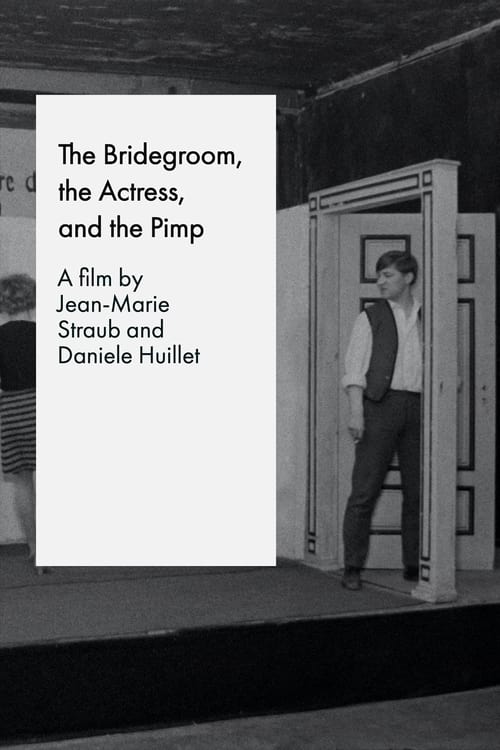
Three sequences are linked together in this short film by Straub; the first sequence is a long tracking shot from a car of prostitutes plying their trade on the night-time streets of Germany; the second is a staged play, cut down to 10 minutes by Straub and photographed in a single take; the final sequence covers the marriage of James and Lilith, and Lilith’s subsequent execution of her pimp, played by Rainer Werner Fassbinder. "The film is a look entirely at Western decadence" - Jean-Marie Straub.
The Bridegroom, the Actress, and the Pimp
The child Ernesto doesn't want to go to school any more because, as he says, all he is taught there is things he doesn't know.
En rachâchant
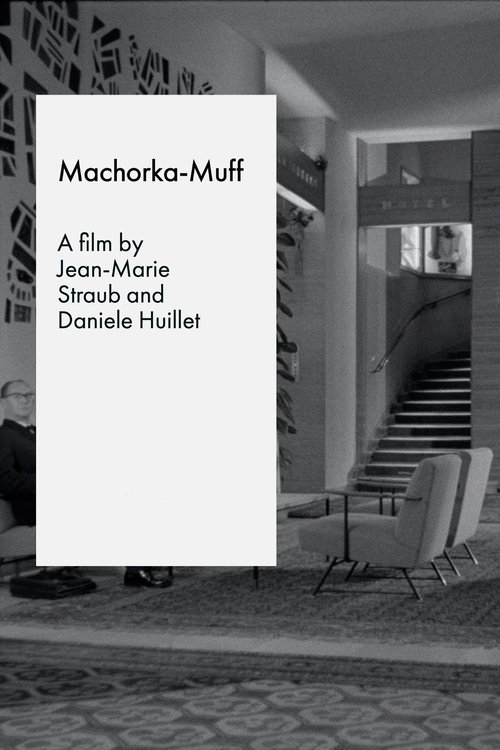
A satirical attack on West Germany's re-armament and revival of militaristic tradition in the Adenauer era.
Machorka-Muff
Excerpts from the novel Donna di Messina (1949 and 1964, 1967) by Elio Vittorini (1908-1966).
Humiliated
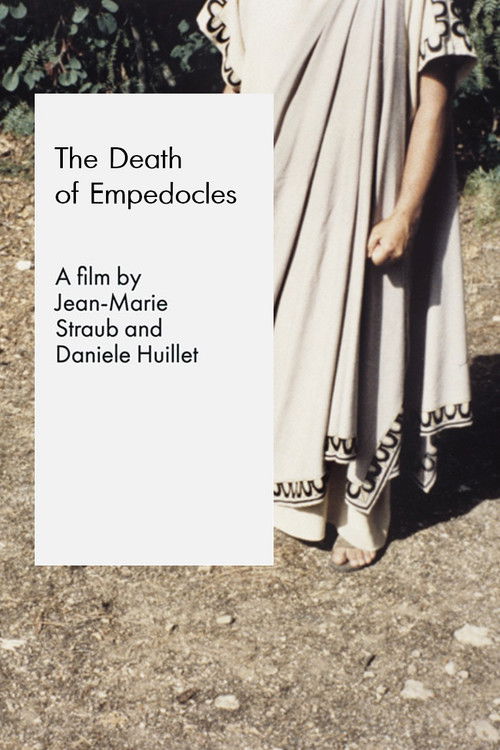
Film adaptation by Straub and Huillet of Hölderlin’s 1798 tragedy on the symbolic death of Empedocles, the legislator in Ancient Greece.
The Death of Empedocles
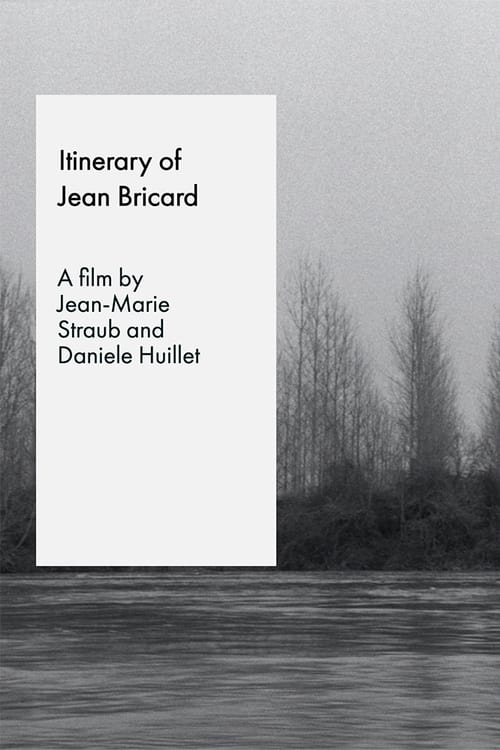
The film is a commemoration of the lost livelihood of the earth, the lost lives of the War and to the work of two of the cinema’s greatest artists.
Itinerary of Jean Bricard
In the summer of 1986, Danièle Huillet and Jean-Marie Straub were working in the park of an old Sicilian mansion and in a clearing at the foot of Mount Etna shooting Der Tod des Empedokles. Assistant cameraman Jean-Paul Toraille toyed around, so to speak, with his first video camera, filming the daily work on the set. Now, 24 years later, he was joined by Jean-Marie Straub in editing the material into a film. Anyone who expected the shooting of Les Avatars de la mort d’Empédocle to be an austere affair, an exercise entirely devoid of humour or a Straubian tour de force is proven wrong: so much lightness, joy, concentration, spells of waiting for the sun to come out – and even proper slapstick in between – is hard to find.
Les avatars de la mort d’Empédocle

"At the end of filming Umiliati, Straub and Huillet gave thanks to the cast and crew in a graceful way: by inviting Dolando Bernardini to sing several stanzas from Torquato Tasso’s 16th-century epic poem Jerusalem Delivered." - MoMA
Dolando
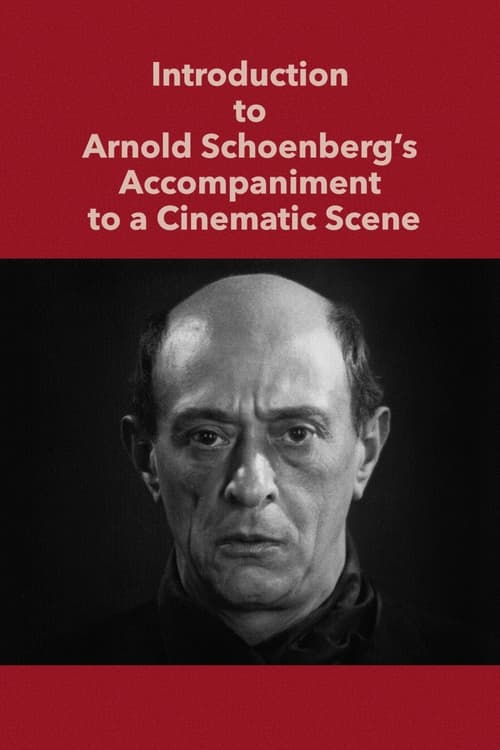
This is a small, intense film based on Schoenberg’s opus of the same name with the subtitle “danger, fear, catastrophe”. It deals with emerging fascism and the persecution of Jews, as well as with their historical continuities.