FEEL IT.STREAM
Jean-Marie Straub

Jean-Marie Straub

Directing

Biography

Jean-Marie Straub (8 January 1933, Metz – 20 November 2022) and Danièle Huillet (1 May 1936, Paris – 9 October 2006, Cholet) were a duo of filmmakers who made two dozen films between 1963 and 2006. Their films are noted for their rigorous, intellectually stimulating style and radical, communist politics. Though both were French, they worked mostly in Germany and Italy. From the Clouds to the Resistance (1979) and Sicilia! (1999) are among the duo’s best regarded works. Description above from the Wikipedia article Straub–Huillet, licensed under CC-BY-SA, full list of contributors on Wikipedia.

Known For

Bambi
9.0

The Bambi, often called the Bambi Award and stylised as BAMBI, is a German award presented annually by Hubert Burda Media to recognize excellence in international media and television to personalities in the media, arts, culture, sports, and other fields "with vision and creativity who affected and inspired the German public that year", both domestic and foreign. First held in 1948, it is the oldest media award in Germany. The trophy is named after Felix Salten's book Bambi, A Life in the Woods and its statuettes are in the shape of the novel's titular fawn character. They were originally made of porcelain until 1958, when the organizers switched to using gold, with the casting done by the art casting workshop of Ernst Strassacker in Süßen.

Bambi

1948
Venice 70: Future Reloaded
5.1

Made for the Venice Film Festival's 70th anniversary, seventy filmmakers made a short film between 60 and 90 seconds long on their interpretation of the future of cinema.

Venice 70: Future Reloaded

2013
A Traveler's Memory: Jeonju Digital Project 2011
N/A

Memories of neighbors surrounding a violinist who committed suicide naked. Journey to the jungles of Guyana and Suriname in South America, chasing down the infamous gold miners. A sequel to 'Mauris Barres', directed by Jean-Marie Straub, wandering around Mont Saint-Eudil. Jean-Marie Straub, a ‘fighter’ of modern cinema, who explores the physical properties of movies; Claire Denis, an ‘adventurer’ who crosses boundaries and encounters others; Jose, the ‘walker’ who discovers the mysteries of life with the attitude of an essayist Louis Guerin's original cinematic world.

A Traveler's Memory: Jeonju Digital Project 2011

2011
Antigone
6.0

A fearless Antigone, refusing to allow the dishonored body of her murdered brother Polynices to be devoured by vultures and dogs, defies the Thebian tyrant Creon by burying him.

Antigone

1992
Cinématon
4.9

Cinématon is a 156-hour long experimental film by French director Gérard Courant. It was the longest film ever released until 2011. Composed over 36 years from 1978 until 2006, it consists of a series of over 2,821 silent vignettes (cinématons), each 3 minutes and 25 seconds long, of various celebrities, artists, journalists and friends of the director, each doing whatever they want for the allotted time. Subjects of the film include directors Barbet Schroeder, Nagisa Oshima, Volker Schlöndorff, Ken Loach, Benjamin Cuq, Youssef Chahine, Wim Wenders, Joseph Losey, Jean-Luc Godard, Samuel Fuller and Terry Gilliam, chess grandmaster Joël Lautier, and actors Roberto Benigni, Stéphane Audran, Julie Delpy and Lesley Chatterley. Gilliam is featured eating a 100-franc note, while Fuller smokes a cigar. Courant's favourite subject was a 7-month-old baby. The film was screened in its then-entirety in Avignon in November 2009 and was screened in Redondo Beach, CA on April 9, 2010.

Cinématon

1978
Chronicle of Anna Magdalena Bach
6.2

The life and music of Johann Sebastian Bach as presented by his wife, Anna.

Chronicle of Anna Magdalena Bach

1968
History Lessons
6.3

Set in contemporary Rome, the film shows through a series of encounters with “ancient” Romans, how the economic and political manipulation by ancient Roman society led to Caesar’s dictatorship. - British Film Institute

History Lessons

1972
Artemide’s Knee
6.3

Mourning the death of his partner and collaborator Danièle Huillet, Straub finds tender mercy in music and nature. Out of the abyss, Kathleen Ferrier sings “The Farewell” from Gustav Mahler’s “The Song of the Earth”, (which the composer wrote in 1909 after the death of his daughter) and Heinrich Schütz’s Lament on the Death of His Wife. The landscape also provides solace: the mountain grove where Endymion pines for his beloved Artemis, “a wild thing, untouchable, mortal,” appears to embody the Japanese concept of ‘mono no aware’ — a wistful acceptance of the fleeting beauty of things.

Artemide’s Knee

2008
Not Reconciled
5.9

A story about the continuity and collapse of history, the power of suppression, and the terror of reconciliation; loyalty, treason and revenge. In a brave cinematic game, Heinrich Böll’s story Billiards at Half-Past Nine is split up into cracks, blocks, breaks and sudden turns, as the life story of a German family, covering numerous generations, is propelled forward.

Not Reconciled

1965
Fool’s Mate
6.5

Claire is a chic young Parisian woman married to a somewhat older husband, Jean. Claire meets her lover, Claude, at his apartment, where he gifts her a fur coat. Now Claire needs to figure out how to return home with this expensive gift without the affair being found out.

Fool’s Mate

1956
No image
N/A

In the summer of 1986, Danièle Huillet and Jean-Marie Straub were working in the park of an old Sicilian mansion and in a clearing at the foot of Mount Etna shooting Der Tod des Empedokles. Assistant cameraman Jean-Paul Toraille toyed around, so to speak, with his first video camera, filming the daily work on the set. Now, 24 years later, he was joined by Jean-Marie Straub in editing the material into a film. Anyone who expected the shooting of Les Avatars de la mort d’Empédocle to be an austere affair, an exercise entirely devoid of humour or a Straubian tour de force is proven wrong: so much lightness, joy, concentration, spells of waiting for the sun to come out – and even proper slapstick in between – is hard to find.

Les avatars de la mort d’Empédocle

2010
Incantati
N/A

Recently discovered and shown only twice before, Incantati is an alternate ending to Danièle Huillet and Jean-Marie Straub’s 2003 film Umiliati — fragment as mini-manifesto.

Incantati

2003
Itinerary of Jean Bricard
5.8

The film is a commemoration of the lost livelihood of the earth, the lost lives of the War and to the work of two of the cinema’s greatest artists.

Itinerary of Jean Bricard

2008
Jackals and Arabs
5.1

A Kafka dialogue is read by actors in Straub's own apartment in Paris.

Jackals and Arabs

2011
From the Clouds to the Resistance
5.3

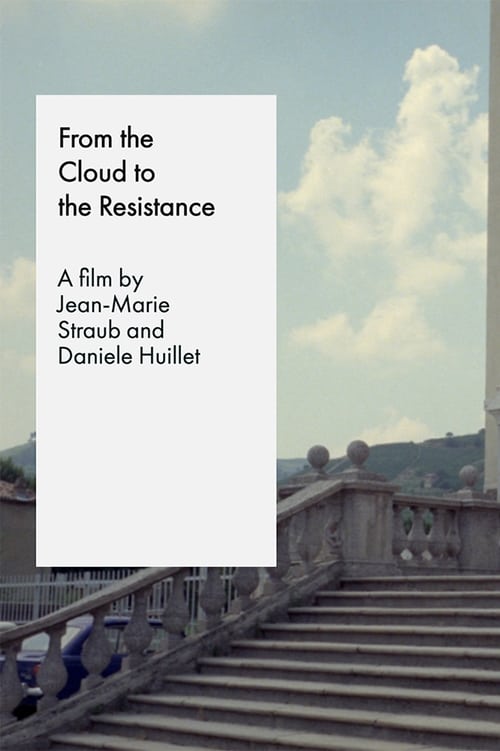
Two segments. The first one arranges six stories from Cesare Pavese’s «Dialoghi con Leucò», taken from classical mythology. The second segment is taken from Pavese’s novel «La luna e i falò»: after World War II the emigrant «The Bastard» comes back to his village in the Langhe (northern Italy) to find out that everyone he knew has died, and that the war has deeply changed relationships between people.

From the Clouds to the Resistance

1979
The Death of Empedocles
5.5

Film adaptation by Straub and Huillet of Hölderlin’s 1798 tragedy on the symbolic death of Empedocles, the legislator in Ancient Greece.

The Death of Empedocles

1987
I Did Not Die
N/A

Alix is a woman of 27 looking for the only thing she is incapable of: love.

I Did Not Die

2008
Class Relations
6.8

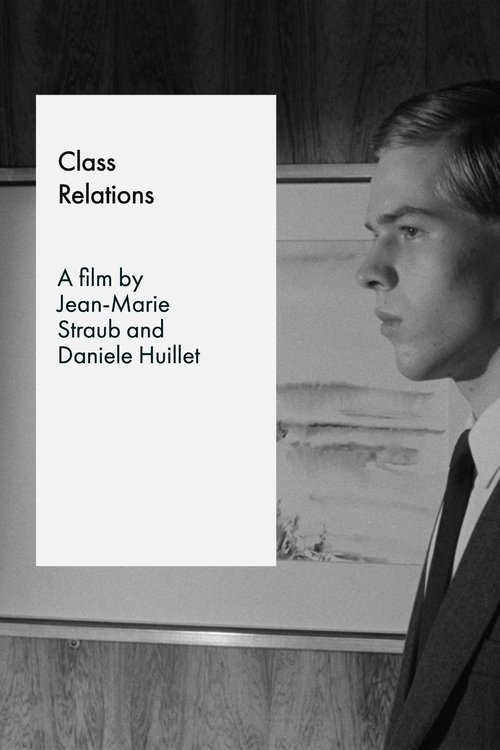
A young man, recently arrived in New York from Europe, becomes swept up in a series of events that are beyond his knowledge or control.

Class Relations

1984
Workers, Peasants
4.4

A group of men and women have been brought together after World War II, when Italy regained its national and territorial unity. They make up a primitive community which seeks to erase not only the distress created by the war but also the hardships of life, and look to protect themselves from violence, misery and fear. Amid the ruins of this post-war period, these men and women build a new rapport between themselves, between sexes, between generations, between social and geographical origins, between political camps.

Workers, Peasants

2001
No image
5.7

Another adaptation from Cesare Pavese’s Dialogues with Leucò (following "From the Clouds to the Resistance", "These Encounters of Theirs" and "Artemis' Knee".

The Witches, Women Among Themselves

2009