Acting
Captain Ebbs is an older, experienced seaman who has, however, only sailed on freighters. While his current old barge, the Martin Luther, has to go into the shipyard for an overhaul, the shipping company gives him command of the elegant cruise ship Julia to temporarily replace a colleague who has fallen ill. The rough Ebbs finds his way into his new job only with difficulty and initially puts his foot in his social mouth.
Theophil Läppli is a swiss patriot, who after a trip to Greece tries to recover the democratic roots of Switzerland. With much enthusiasm and idealism he's discovering, that corruption and greed are wide spread in his beloved country. This is the second movie about Theophil Läppli after HD-Soldat Läppli (1959).
No description available.
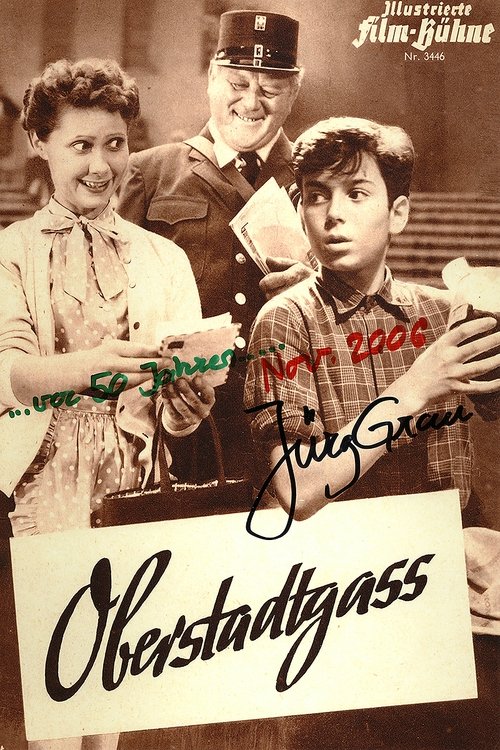
Realist melodrama set in Zurich. In the old town district, people are concerned about Mäni, the child of a toilet attendant, who is growing up without a father. Postman Jucker appeals to the boy's conscience and protects him from unjustified accusations. After Mäni's mother dies, Jucker, who has become the child's guardian, takes Mäni into his home. Mrs. Jucker does not accept the boy and accuses Jucker of forgetting their own deceased child. Mrs. Jucker flees to her sister's house. Mäni also runs away.
Feminist drama about Sue, an attractive student proud of her sexuality who knows how to play by her own rules and make it in life, and her supportive repressed best friend Ruth, who doesn't know men as well as Sue, which leads to tragedy.
Wäckerli, policeman in the small Swiss village of Allenwil, is in trouble. His son Ruedi is unhappy in his apprenticeship and spends way too much money. And now 10'000 francs have been stolen from the bourough's community fund...
The farmer Christen, his wife Änneli, their sons Resli and Christeli, and their daughter Annelisi live together harmoniously on the Liebiwyl farm. The harmony is disrupted when Christen allows himself to be persuaded by the deceitful village clerk to speculate with his ward's money. As a result, all the money is lost, and the defrauded farmer has to pay the community for the damage out of his own pocket. This angers Änneli, whose great willingness to help is thwarted by Christen, who is becoming increasingly stingy. One harsh word leads to another, and soon the couple is facing a shambles. The children also suffer from the unfriendly atmosphere at home. Only a visit to church on Pentecost and the corresponding sermon make reconciliation possible.
Unemployed and homeless actors following the dream of finding the future in South America. The manager Osvaldo Curtis tricks the group of colorful and failed artists to apply for a special visa overseas.
Maria Kunz, a barmaid and hostess, is found strangled in her apartment on Helvetiastrasse. Gaudenz Moser is seen at the scene of the crime as he drives away on his motorcycle. He has an accident and is arrested. All the evidence points to him. His brother Vinzenz Moser calls on Iseli, the pastor of his home parish in Graubünden, for help. Iseli immediately sets off for Zurich, where the case has already been closed by the police because a confession has been made. Pastor Iseli, who has a keen sense of criminal investigation, does not believe that Gaudenz Moser is guilty and begins his own investigation in Zurich's underworld.
Florestan Mississippi, a public prosecutor by profession, visits a lady named Anastasia and, while drinking coffee with her, convicts her of poisoning her husband. At the same time, he asks for her hand in marriage, as he too has killed his wife with poison; the marriage is to be the "atonement" of the two poisoners. The four allegorical personifications in this comedy are, in addition to the loveless, absolute justice in the form of the prosecutor Mississippi, perfect equality, represented by the world revolutionary Saint-Claude, Christian love, embodied in the down-and-out, alcoholic tropical doctor Count Uebelohe-Zabernsee, and finally the "Frau Welt" of the old mystery play – Anastasia, who falls for everyone and betrays everyone, loves nothing but the moment, and dies with an invoked untruth on her lips.
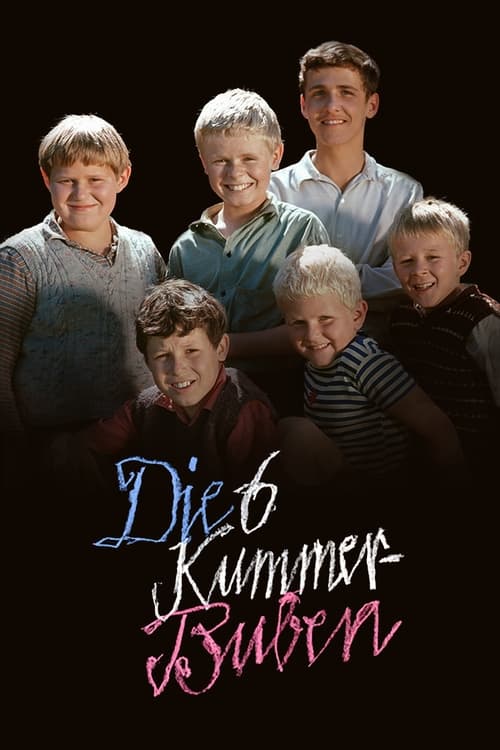
Gottfried and Sophie Kummer live freely and independently with their six boys in a modest cottage in the countryside. Although the cottage has neither electricity nor running water and must be heated with wood, the small wages of a construction worker are not enough to meet all their obligations. Especially since the former owner, Mayor Lüthi, still has a mortgage on the cottage, on which the Kummer family must pay interest. And this interest makes life difficult for the Kummer family. Then a stranger appears who would like to buy the cottage as a vacation home. But for the Kummers, it is their home! Mayor Lüthi, however, senses a big deal, promises the stranger the house, and at the same time gives the Kummer family a final payment deadline for the interest until the end of the month. So it is the six Kummer boys who take up the fight to save their cottage.
Martin Hugentobler is "full of oil" when he gets home. You could also say he is "full to bursting". But this time, for once, there's a good reason: he and his three fellow Jass players have been playing the lottery for years, always with the same numbers. Finally, their perseverance is rewarded: five correct numbers mean a thousand francs each. However, this time Martin's wife Leni has filled in the slip instead of him - and made a mistake. A stroke of luck, because the "wrong" number helps the Hugentobler family win the main prize - one and a half million.
Engineer Paul Holland returns from a trip. His girlfriend Sybille has disappeared from their apartment without leaving a note. He searches for her and finds himself in the middle of a manhunt for an international drug ring.
They live behind the rails of the classification yard in a small and shabby hut. They take the days as they come, refuse to work on principle and pinch together their livelihood. The three tramps Dürst, Barbarossa and Clown are content with what they have and ignore the outside world, and so far they have fared well. Until now...
Monique finances her medical studies as a go-go dancer in a Munich nightclub. Her relatives, who are involved in local politics, want the club, which they consider immoral, closed down, but during an inspection tour they take a liking to the establishment themselves, taking indecent photos on behalf of the club owner. This leads to an intriguing story full of lies and blackmail, from which everyone involved tries to get out without losing face.
The fabulously wealthy factory owner Eduard Tobler has almost forgotten what it was like to have no money and no power. Now he wants to relive that experience. Under the name Meier, he enters a competition run by his own company and wins second prize: a two-week stay at a grand hotel in St. Moritz. He takes his chauffeur Johann with him as his companion, who has to pretend to be a wealthy industrialist during their stay at the hotel. Tobler's daughter Hedi fears disaster and informs the hotel of the arrival of the mysterious guest. However, Dr. Fritz Hagedorn, an unemployed advertising expert who won first prize in the competition, is mistakenly taken for the millionaire and pampered accordingly. Tobler, on the other hand, is given a tiny attic room without heating and is bullied and harassed by the hotel management in every way possible. Now the comedy of errors can take its course.
Bobby Jucker's soap business is on the brink of collapse. The resigned manufacturer expects to go bankrupt soon. So he doesn't mind letting his wife take the reins and putting on an apron himself. Clara Jucker is tired of being a housewife anyway. Bobby is already gloating over his wife's failure. But Clara turns out to have a talent for business, and instead of impending bankruptcy, her husband now has to cope with his wife's success. What makes the situation even more unbearable is that Clara seems to get along very well with her new assistant, Binggeli-Braun. Bobby Jucker's envy is now compounded by jealousy toward his supposed rival. A fight is inevitable.