Emil Knabel
Directing
Known For
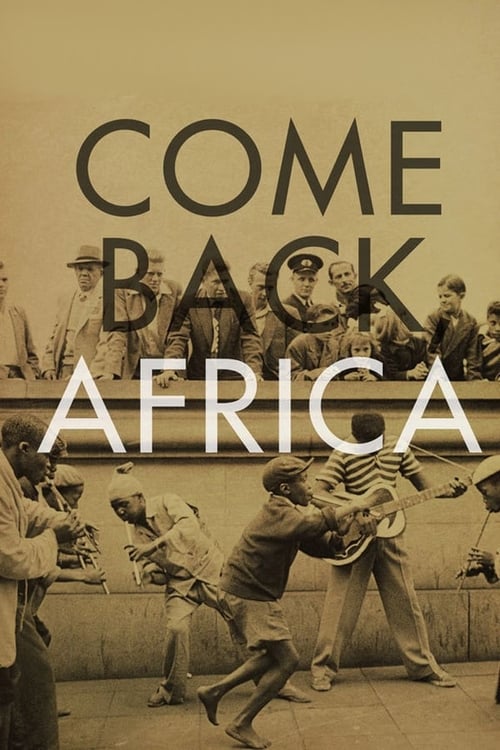
Come Back, Africa chronicles the life of Zachariah, a black South African living under the rule of the harsh apartheid government in 1959.
Come Back, Africa
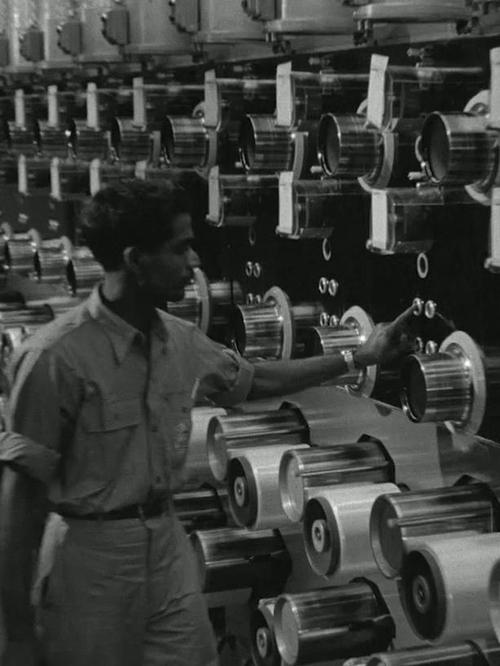
A film produced by the Hasbarah Authority and the Ministry of Development. A Somewhat avant-garde attempt to present the generation, distribution and use of electricity in Israel. The means of electric generation are presented against a backdrop of images related to the sectors the consume the electricity, in industry, water distribution and urban-commercial use. Contrasting with all of these are images of a “backwards” rural community, combining attributes of the local-Palestinian and the Mizrahi-Jewish.
High Tension
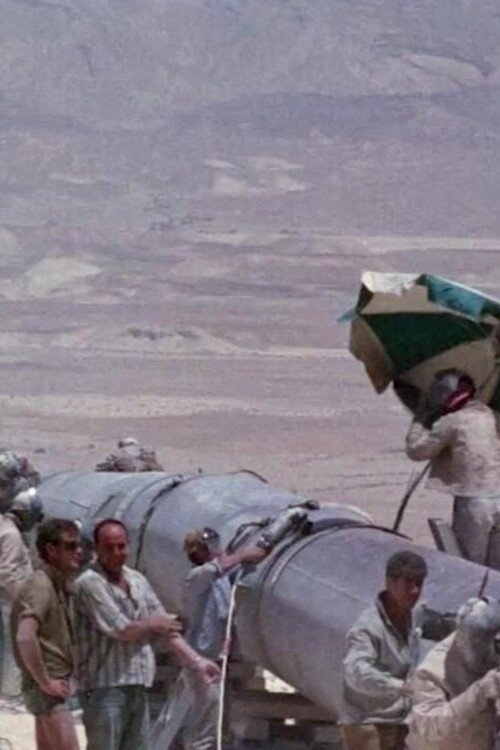
A short documentary, produced by the Israeli Film Service about the laying of the Trans Israel Pipeline. The film was produced under the auspices of the Eilat Ashkelon Pipeline Company and TAHAL. After 18 months of work, one of the most important engineering projects in the history of Israel comes to a close: the laying of a 254 kilometer long pipeline between the Port of Eilat and the oil port in Ashkelon. The purpose: creating a landbridge to transport oil from the Red Sea to the Mediterranean – independently of the Suez Canal. This film follows the complex undertaking, which took place both in the desert and at sea.
The Oil Pipeline

A short documentary about the Jerusalem Foundation’s projects. The Jerusalem Foundation funds educational and cultural activities as well as development initiatives in the Israeli capital. This film reviews some of the foundation’s projects, including theater performances for children and adults, summer camps, activities in community centers, the inauguration of urban parks, the development of the Mishkenot Sha’ananim quarter, the planning of the Museum on the Seam, and even a masterclass by violinist Isaac Stern. Harvey Rothenberg, one of the Foundation’s donors, calls on other philanthropists to donate to it at the end of the film.
Isaak Stern

A documentary produced by Histadrut about Kibbutz Tel Katzir. Although modest in size, Tel Katzir stands in the center of a border conflict between Israel and Syria. The kibbutz, located in the demilitarized zone between the countries, is a frequent target of Syrian attacks. Between one attack and the next, Tel Katzir members lead their work, family, and cultural life.
Tel Katzir

Avram, an Hassadic hippie; Hassan, an Arab inventor; and Tex, a nonchalant Jew, with so different backgrounds and characters, share a liberal view about sexuality. In a world abiding by the strict moral derived from the Dybbuk (sacred book), the three men will go through a number of tribulations concerning marriage.
The Black Banana
In a post-industrial world people are no longer able to dream. A factory run by Mr Terrier sells the frightened, sleepless masses a dreaming experience. Sarah, the single surviving dreamer, sets out to the only place that can provide answers to her strange night-time visions: the dream factory. Her arrival excites Mr Terrier, who is searching for a new dreamer. The visions of the old comatose man, whose dreams Mr Terrier taps into, have become repetitive and dull. He must be replaced. Didi, Sarah's lover, cuts and edits the dreams for Mr Terrier. To avoid Sarah turning out like the old man, Didi must save her. But for Terrier, Sarah holds the future of his company. He kidnaps her, tying her up then forcibly drugging her. After awakening, Sarah comes to realize the repercussions her dreams have had in the real world.
Andante
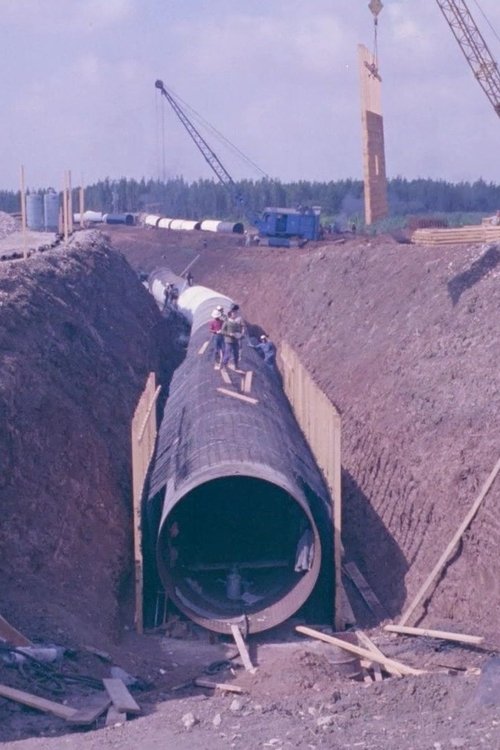
A film produced by the Hasbarah Center in collaboration with Mekorot, Israel’s national water company. Two million work days, of engineers, contractors and of course laborers, allowed the completion of the first part of Israel’s National Water Carrier, an ambitious aquaduct carrying water from the sea of Galilee to population centers and arid regions. The film outlines challenges that faces the builders of the aqueduct: the paving of canals, the creation of a dramatic siphon, allowing the water to cross the Canyon of Nahal Ammoud, the creation of a reservoir at Nahal Tzalmon, etc.
The National Water Carrier

Lionel Rogosin's plea for humanity and against war and fascism. For two years, Rogosin traveled to twelve countries to collect footage of war atrocities from their archives. He interspersed these harrowing images with scenes of a London cocktail party's mundane chatter. Good Times, Wonderful Times was released in 1964 at the height of the Vietnam War, and became one of the great anti-war films of the era.
Good Times, Wonderful Times
Directed by Emil Knebel.
In Nahalal

The Katzman Tapes is a feature length mocumentary, that tells, ironically and satirically while maintaining a serious facade, the story of the state of Israel and Zionism. Lead by director Amnon Winner, who is following the elusive character of Samuel Katzman and his non recorded influence on the historical events . The Katzman Tapes is a satire on the political establishment and the Zionist dream nevertheless it is shown in a lyrical poetic cinematic language. The movie was shot over a course of a decade around the globe, it is intended not only for audience familiar with the Israeli history but for anyone who ever went on a quest in his life.