FEEL IT.STREAM
Eyal Sivan

Eyal Sivan

Directing

Known For

No image
N/A

Annual awarding of the Grimme Awards.

Grimme Award

1964
Route 181: Fragments of a Journey in Palestine-Israel
8.0

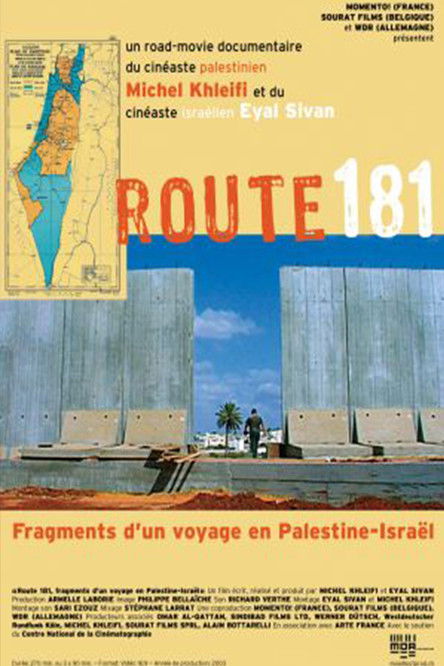
Route 181 is the epic record of a road trip undertaken in the summer of 2002 by two filmmakers, one Palestinian and one Israeli, along sections of what had been designated as the border between Israel and Palestine by U.N. Resolution 181 in 1947.

Route 181: Fragments of a Journey in Palestine-Israel

2004
Lone Wolves in Passive Mode
4.0

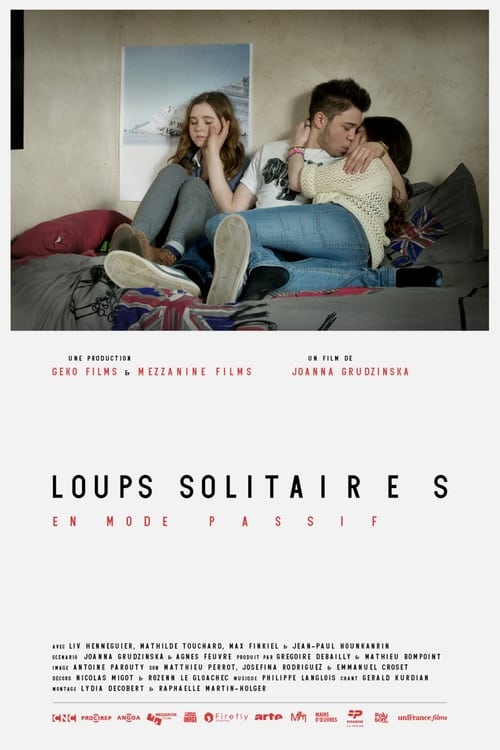
Elisa, 16, is bored by her suburban existence. One night, she discovers a book in her stepfather's library. The crude and tender words of a prostitute make her see her own desire in a new and unexpected light.

Lone Wolves in Passive Mode

2014
I Love You All
8.7

A film on the surveillance and the control in East Germany also speaks about it - representing extreme and almost unbelievable image of a society which has acquired one super-narrative and developed a system which makes it impossible to even speak about the possibility of anything outside it.

I Love You All

2004
État commun - Conversation potentielle (1)
N/A

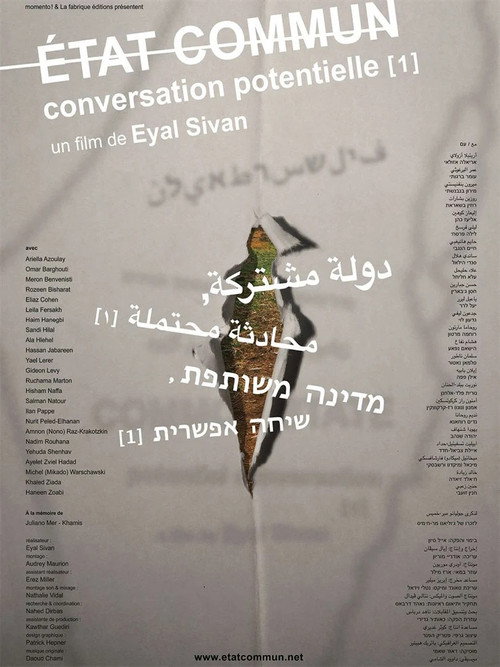
Beyond everything that has been written, filmed, or photographed about the Israeli-Palestinian conflict, Etat Commun - Conversation potentielle (1) offers an original and new way of presenting a revolutionary concept. Twenty years after the Oslo Accords, "the two-state solution" has reached an impasse. The concept of a common state proposes that the notion of the partition of territory should be abandoned in favor of shared space. Through the medium of montage, an encounter that this conflict has prevented for so long can at last take place. Israeli Jews and Palestinian Arabs from Israel, the Occupied Territories or the diaspora, political and activist leaders, refugees and settlers, young and old, academics and artists : the sons and daughters of this country, which spreads between Jordan and the sea, come together for a potential conversation. One speaks, the other listens.

État commun - Conversation potentielle (1)

2013
Looking for Horses
6.0

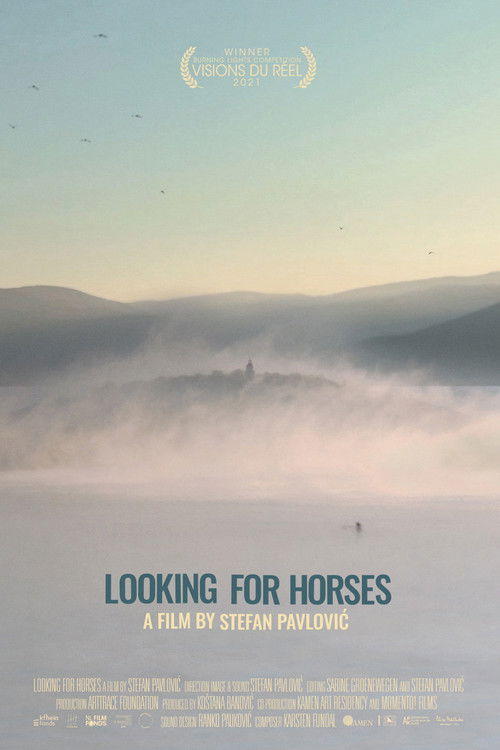
"Looking for Horses" is a film about a friendship between the filmmaker and a fisherman, who lost his hearing during the Bosnian civil war and retreated to a lake to live in solitude. The filmmaker, son of Bosnian parents, struggles to communicate as he lost his mother-tongue due to a heavy stutter. Despite their speech and hearing limitations, a bond develops between the young man and the veteran, as he shares his world of the lake: full of large catfish, wild horses, wide silences, and dangerous thunderstorms. Where for the fisherman the lake stands for a withdrawal from a fractured country, a land of war; for the filmmaker it precisely means the return to that broken place, the land of his parents. They look for ways to communicate, while the camera mediates their growing bond. Taking the shape of a gentle western, "Looking for Horses" is a poetic documentary on trauma, survival, and connection.

Looking for Horses

2021
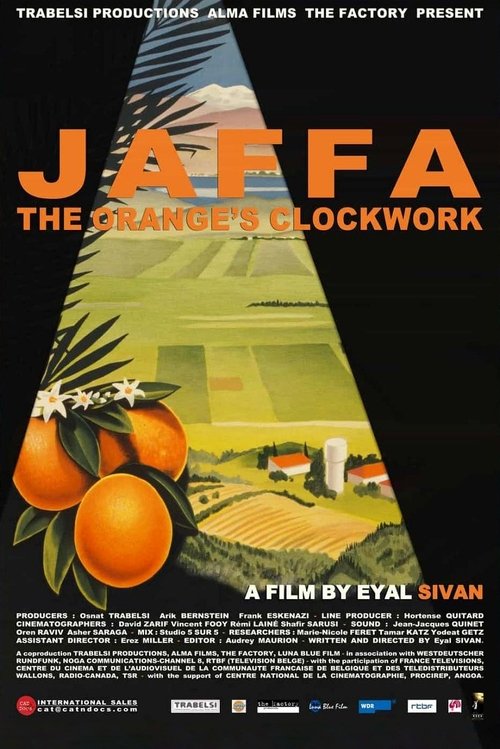
Jaffa: The Orange's Clockwork
5.8

A journey from the harbor town of Yaffa to the Jaffa orange, a fruit through which the Israeli filmmaker examines the Israeli-Palestinian conflict.

Jaffa: The Orange's Clockwork

2010
Izkor: Slaves of Memory
8.5

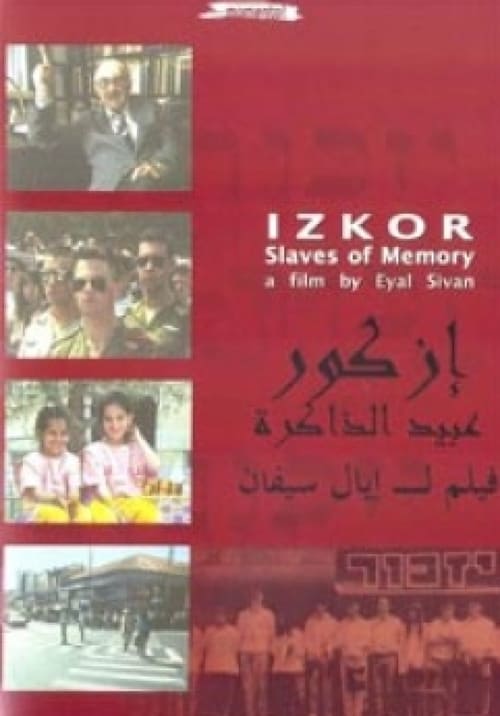
Izkor is about the orchestration of memory. The film shows how school children of all ages in Israel are taught to pay tribute to their nation's past. It keenly observes how some memories are even physically conditioned into the future generations. "One of the most truly, most intelligent, most terrible and sharpest films about Israeli society. A film on memory and politics: this is the way that Israeli society exploits its myths to train people to have no doubts or remorse, creating the soldiers of the future wars." (Tom Segev - Haaretz)

Izkor: Slaves of Memory

1991
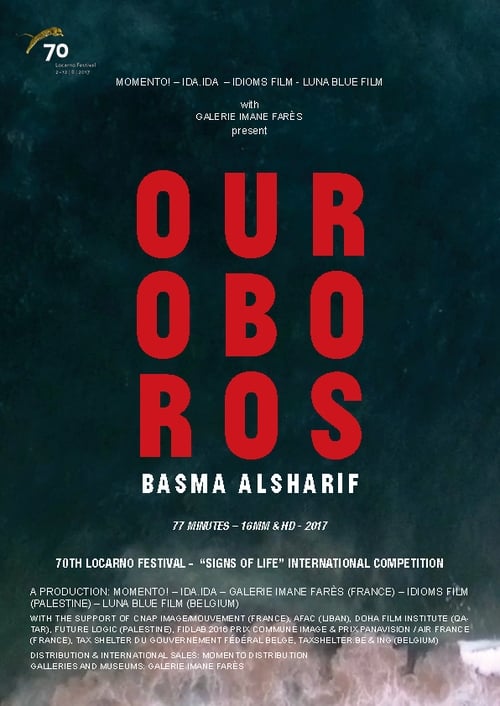
Ouroboros
5.0

This film is an homage to the Gaza Strip and to the possibility of hope beyond hopelessness. Ouroboros, the symbol of the snake eating its tail, is both end and beginning: death as regeneration. A 74-minute experimental narrative film that turns the destruction of Gaza into a story of heartbreak, Ouroboros asks what it means to be human when humanity has failed. Taking the form of a love story, the film's central character is Diego Marcon, a man who embarks on a circular journey to shed his pain only to experience it, again and again. In the course of a single day, his travel fuses together Native American territories, the ancient Italian city of Matera, a castle in Brittany, and the ruins of the Gaza Strip into a single landscape.

Ouroboros

2017
Aqabat Jaber: Passing Through
7.0

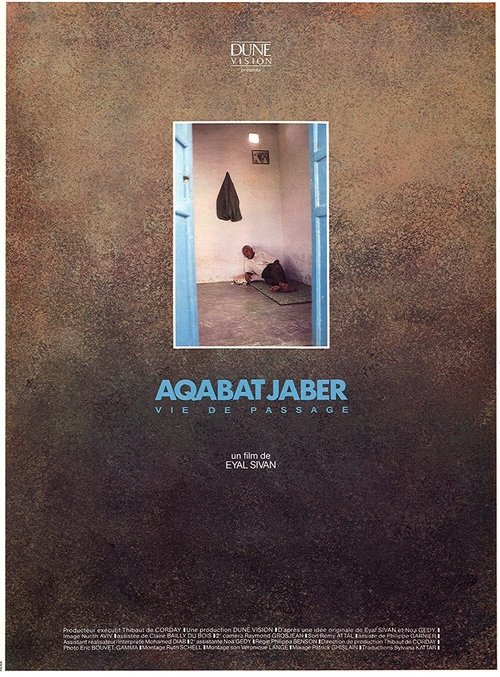
Aqabat-Jaber is one of the sixty Palestinian refugee camps built in the Middle East by the UN at the beginning of the 1950s. Filmed in 1987, a few months before the Intifada, this film tells the story of a disinherited generation brought up in the nostalgia of places they never knew and which no longer exist. The story of a temporary solution that became a permanent way of life.

Aqabat Jaber: Passing Through

1987
Itgaber, He Will Overcome
N/A

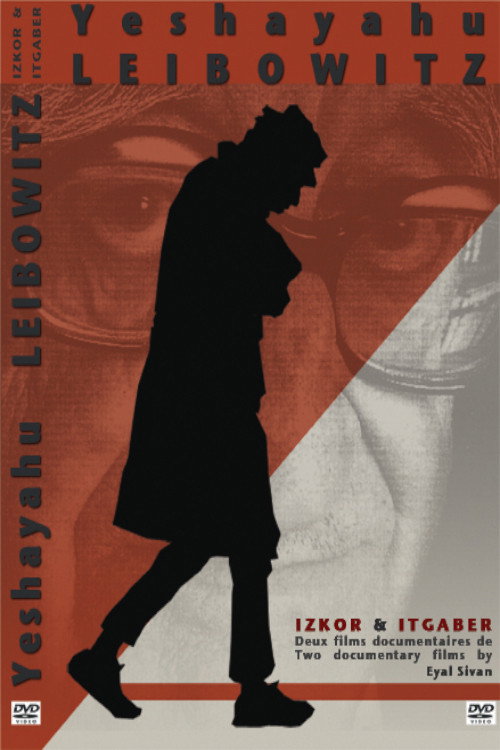
Yeshayahu Leibowitz was born in 1903 in Riga, Latvia. He fled from Russia in 1916 and sought shelter in Berlin during the Weimar Republic. As the Nazis rose to power, being a committed Zionist, he left Germany and headed for Palestine. Over the years he has become a controversial figure due to his strong beliefs that Israel should leave the occupied territories. A moving portrait of a man and his ideas.

Itgaber, He Will Overcome

1993
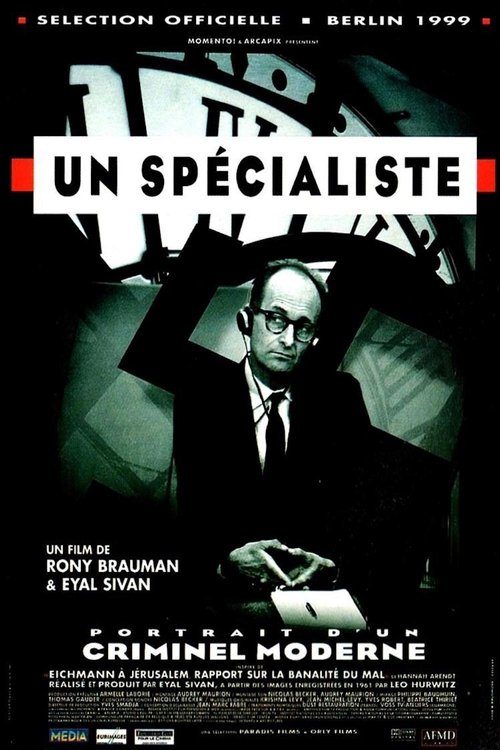
The Specialist
6.3

Composed exclusively of the footage recorded by Leo Hurwitz during the trial of Adolf Eichmann in Jerusalem in 1961, A Specialist is a courtroom drama painting the portait of a zealous bureaucrat who has immense respect for the Law and hierarchy, a police official responsible for the elimination of several million people, a modern criminal.

The Specialist

1999
Aqabat Jaber: Peace with No Return?
N/A

Aqabat-Jaber is a Palestinian refugee camp built nearly seventy years ago just outside Jericho. Today, the camp’s 3,000 inhabitants live under Palestinian autonomy, but paradoxically their status has not changed, they are still refugees.

Aqabat Jaber: Peace with No Return?

1995
Jerusalem(s), Borderline Syndrome
10.0

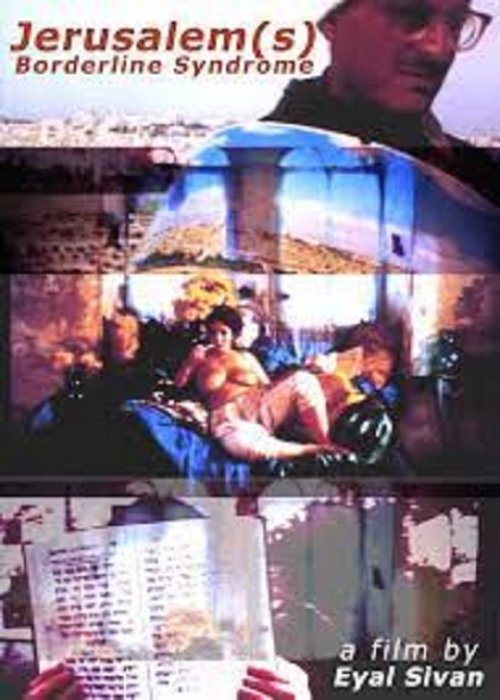
"This iconoclastic film, midway between fiction and documentary, explores the "over-sacred" side of Jerusalem. A political gamble for its inhabitants, a myth for its visitors, Jerusalem remains a universal object of desire that borders on fetishism. The film takes its inspiration from the Jerusalem Syndrome, a psychiatric syndrome, officially recognised in the 19th century, and from which the pilgrims and tourists that visited the Holy City suffered. A camera visits Jerusalem looking for a new approach to show the city. In parallel a young boy wanders the streets and discovers one night a prostitute with golden breasts. The boy, as does the camera, becomes a victim of a violently feminine Jerusalem." - DAfilms

Jerusalem(s), Borderline Syndrome

1995
No image
N/A

Like Zifel and Kalle, the German Jewish refugees in Bertolt Brecht’s Refugee Conversations (1940), from which this project is inspired, Fadi and Rami also live in exile. They are however Syrian-Lebanese and live in 2021 in a European city on the shore of the Mediterranean. When they meet for the frst time at the bufet of the ferry terminal, they engage in a conversation without introduction. What follows is a series of unexpected meetings and unforeseen discussions in which everyday life and political considerations, the individual and the general, are approached sometimes with irony mixed with melancholy, and other times with the play of paradox. On the backdrop of the so-called «migration crisis in Europe», Fadi and Rami freely discuss a variety of topics. Their of-the-cuf exchanges often come back to the cause of their exile: the post-colonial war. Exile, as we know, sharpens the mind. With dialectic and humor, they chat about all kinds of things.

Dialogues of Exile