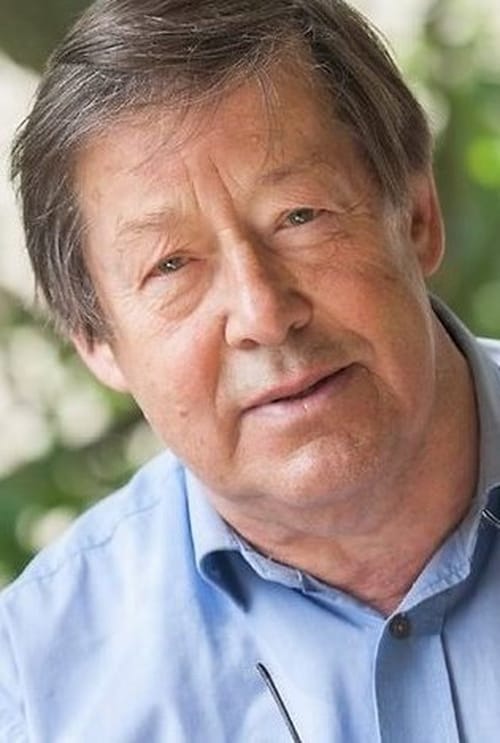
Winfried Junge
Directing
Biography
Winfried Junge was born July 19, 1935, in Berlin. After finishing schol in 1953, he started to study German philology at the college of education at Berlin's Humboldt university. In 1954, he was one of the first students to enroll at the new Deutsche Hochschule für Filmkunst in Potsdam-Babelsberg. Furthermore, he published film reviews from 1951 to 1955. After receiving his diploma, he started to work for the DEFA studio of popular science films, at first as a dramaturgy assistant, then three years as the assistant director to Karl Gass.
Known For

From the 1950s onwards, Erika and Ulrich Gregor brought countless film historical milestones to Berlin and shaped cinema discourse in post-war Germany. A look at the life and work of the couple without whom Arsenal and the Forum wouldn’t exist.
Come With Me to the Cinema – The Gregors

This first co-production between the GDR and Great Britain is intended to contribute to an understanding of the situation and attitudes of millions of working people in opposing social orders. Using the example of shipyard workers, fishermen, the brigade and family of a trade union active cook and unemployed person of various ages and professions in Newcastle on the one hand and a brigade of crane operators of the Warnowwerft and fishermen of the Warnemünde cooperative on the other hand, insights into the way of life and attitudes of people of our time are to be conveyed.
From Us To Me / Vom Wir zum Ich

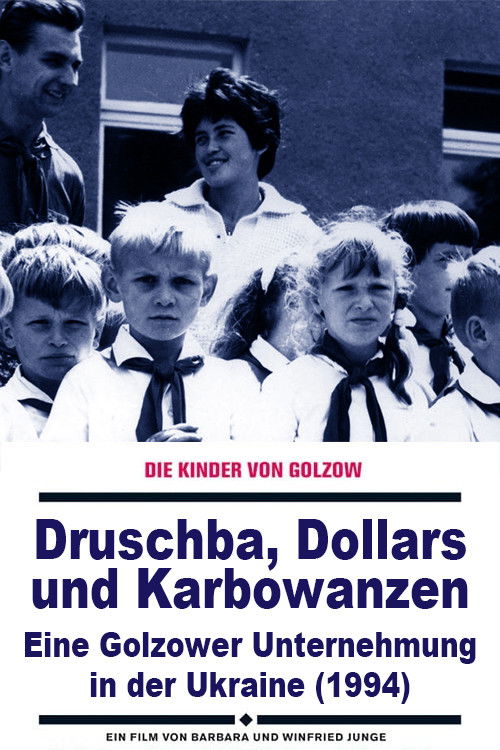
The first two parts of the 19th film are about five former pupils. Two of them already made themselves known through the "CVs" of 1980: Ilona, the electronics worker and later youth functionary in Frankfurt (Oder), and Winfried, the graduate engineer for electronic device construction, who was then also commander of the combat group of his company, the Gröditz (Saxony) pulp mill, and now lives temporarily unemployed in Augsburg. In addition to Ilona and Winfried, who were politically active, the new film portrays Jürgen, Petra and Christian. Their cinematic lives are shorter, because the documentarians had long lost track of them. Now, over 50 years old, Jürgen, initially trained as a painter and upholsterer and now a transport and warehouse worker in Manschnow (Oderbruch), and Christian, an agricultural machinery fitter and now an in-house technician at the Kreditanstalt für Wiederaufbau in Berlin, were willing to be filmed once again.
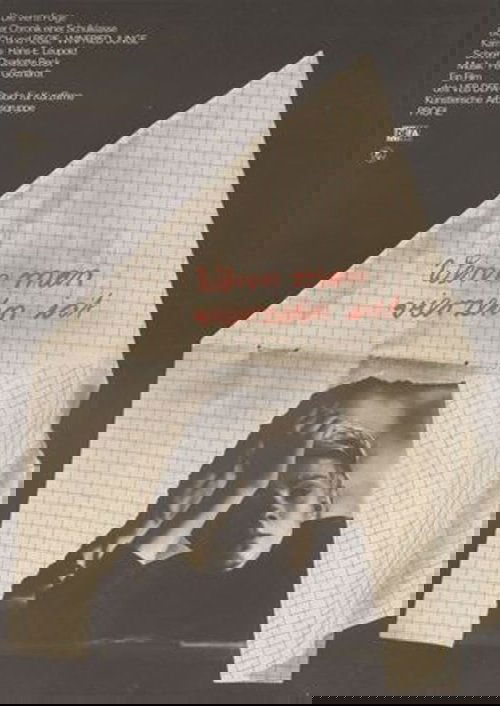
Und wenn sie nicht gestorben sind... Die Kinder von Golzow - Das Ende der unendlichen Geschichte

A sequence of nine individual biographical sketches with a prologue and epilogue on Golzow and the long-term observation. Deepening of the preceding chronicle. The Golzow people in the present, from which retrospective views of the previous life and the life conflicts of the individual are given.
Lebensläufe - Die Geschichte der Kinder von Golzow in einzelnen Portraits
Director Junge was commissioned by the GDR in the country for the first time in the summer of 1970; his film In Syria auf Montage accompanies German engineers who train workers in the Homs textile factory. Shortly after filming ended, Hafez al-Assad put himself under the dictator. Twenty years later emerged ... the father stayed in the war over a youth club with Syrian orphans in Bad Saarow, whose fathers had died in the Lebanon war and accompanied them to Syria, where they were housed in separate, elite "schools of martyr children". Multi-faceted documents that oscillate between peaceful and tense, hopeful and unsettled.
...und der Vater blieb im Krieg. Begegnung mit syrischen Waisen

The film is a reportage showing the help of workers from the GDR in the industrial reconstruction of Syria. We witness the friendly relationship between workers from both countries, who are jointly involved in the construction of the cotton spinning mill in Homs. In impressive pictures the exoticism of the environment and the mentality of the Syrian hosts is shown. At the same time it becomes clear that the workers from the GDR become 'ambassadors of the GDR' through their collegial behaviour and good work.
In Syrien auf Montage

Subsequent discovery of one of the students from the class, to whom in "Curricula vitae" was not yet dedicated a portrait sketch. What the smallest in the class knew how to make of himself. Why the agricultural machinist and father of two sons from his first marriage is called uncle by his third son.
Die Geschichte vom Onkel Willy aus Golzow

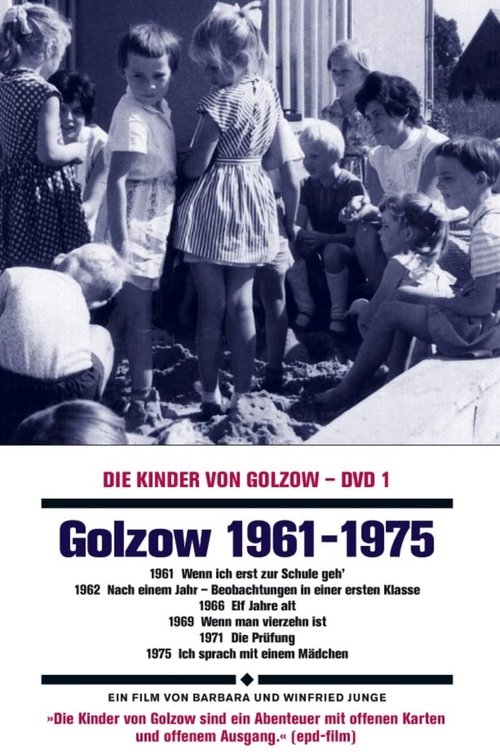
They are now no longer children. Young citizens distinguish themselves. The time before the Jugendweihe and its celebration. They visit Weimar, the former Sachsenhausen concentration camp, the Schwedt petrochemical combine, and decide to go into business after the eighth grade, stay until the tenth, or take the Abitur in the district town.
Wenn man vierzehn ist

About the son of an agricultural functionary who helped enforce the socialist order in Philadelphia in Brandenburg, then in Golzow (Oderbruch) and finally in Bernau near Berlin. Jochen therefore went to school in Golzow for only one year. He became a milker, was a border guard, married and lives with three children in Bernau. Just as disappointed with the GDR as he was with its fall, today he is even with all politics.
Jochen - Ein Golzower aus Philadelphia

The film provides a reportage-like insight into the country of Libya and its social development. The focus is particularly on the "Green Revolution", i.e. the fight for water for a large-scale national agricultural program. This has led to the settlement of new settlers in the coastal strip between Benghazi and Dorna, whose lives are also reported on.
Gruß aus Libyen oder Grün ist eine schöne Farbe

Documentary reports on the annual icing of the Oder in the 160-kilometer border area between the GDR and the People's Republic of Poland. Icebreakers from both countries with experienced skippers join forces to make the international waterway between Frankfurt and Szczecin navigable again. Everyone works hard as a team and even a broken-down ship cannot stop them from achieving their goal. A look back at the winter of 1947 with its flooding shows what the freezing of the river and the subsequent thaw can do if the ice floes are not drained into the Baltic Sea via Lake Dammsch in good time. The skippers from both countries have known each other for years and trust each other; the camaraderie that has developed on the Oder unites the people, they control the river in winter for the common benefit of all.
Auf der Oder

A class reunion of the twenty-somethings in the old school. What one remembers, what the individual has new to tell. One of them: Marieluise. Her love, her work, her demands on herself and the world into which she is coming of age.
Ich sprach mit einem Mädchen

The portrait of someone who came into the class as a dropout and, as far as travel is concerned, later went the farthest of all. The career of a carpenter, enterprising go-getter and incorrigible optimist who always made the best of the changing situations in his life.
Ein Mensch wie Dieter - Golzower

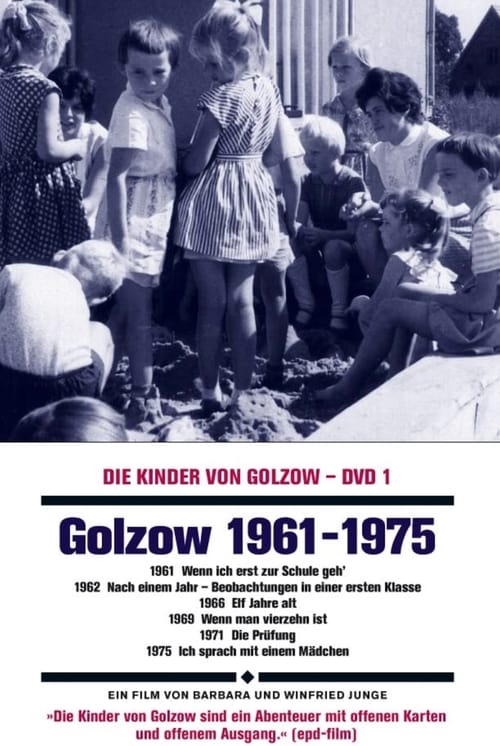
How the class community is formed. The children's environment and the experiences and discoveries that the school gives them. They are reflected in the lessons. At the end of the school year they receive their first report card and are "Young Pioneers".
Nach einem Jahr - Beobachtungen in einer ersten Klasse

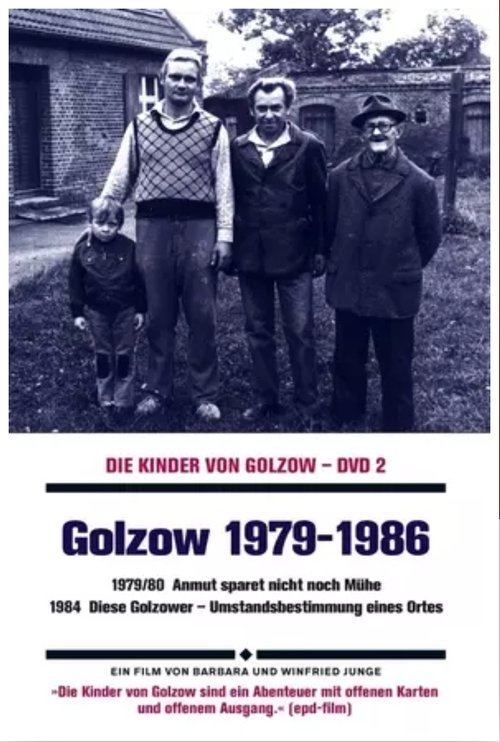
The first summarizing film about the path of the class and the common stations in life. But also about the different paths in the profession, in love, marriage and family. As well as a soldier. A group chronicle, viewed from the historical distance of the 35th year of the end of the 2nd World War and after 18 years of shooting in peace, which ensured everyone the first human right: they were allowed to live.
Anmut sparet nicht noch Mühe

A feuilletonistic conversation with the movie audience about the question: How do you feel about going to the movies? In general - and especially in summer? What do people expect from movies these days and what criticism do they have on their minds? The interviewees are vacationers of all ages and tastes. The occasion and background for this not entirely serious survey is the 1965 Summer Film Festival, which is captured in a cheerful reportage style. Interviews with actors on the festive opening evening and climax of the film confirm that there is only a relative cinema fatigue. It depends on the quality of the film on offer.
Filmsommerliches

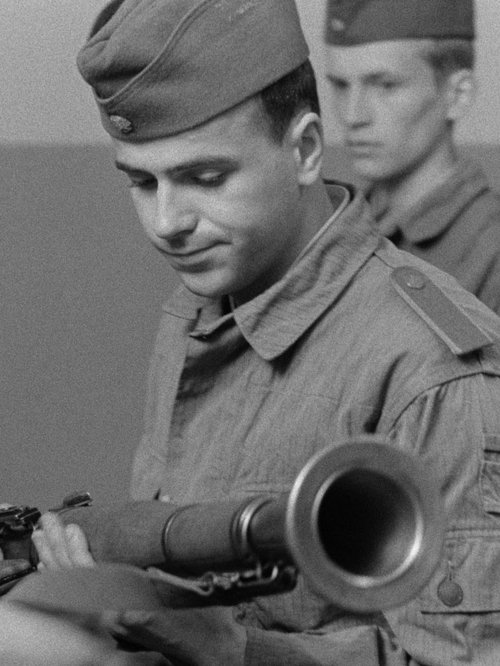
Young East German men starting their compulsary 18-month military service at a Rostock garrison.
Einberufen

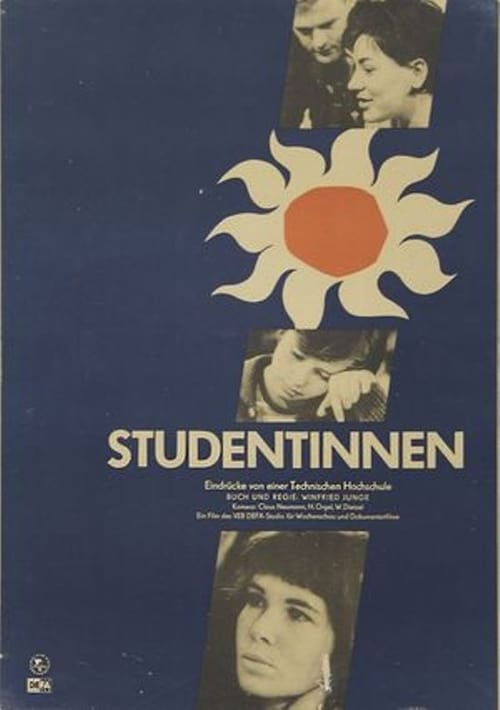
Young women made up only five per cent of students at the technical college in Ilmenau. The film devotes itself of this particular situation by conveying impressions of the women's everyday lives.
Studentinnen

The tragic story of a fun-loving schoolgirl who was the first in her class to become a mother at seventeen, remained unmarried for a long time, worked as a poultry farmer and died of heart failure at the age of 29. It is also the story of her son, who after his apprenticeship in Golzow was unable to find work as a factory fitter and who is also the father of a disabled child.
Brigitte und Marcel - Golzower Lebenswege

Promotional documentary for Rostock and Warnemünde with no commentary. Eleven film themes are set to a suite by composer Günter Kochan. Alternating image sequences of the old and new Rostock blend harmoniously with the music and show a proud, but also battered Hanseatic city, right up to the 750th anniversary with its national and international guests.