Nikolaus Geyrhalter
Production
Biography
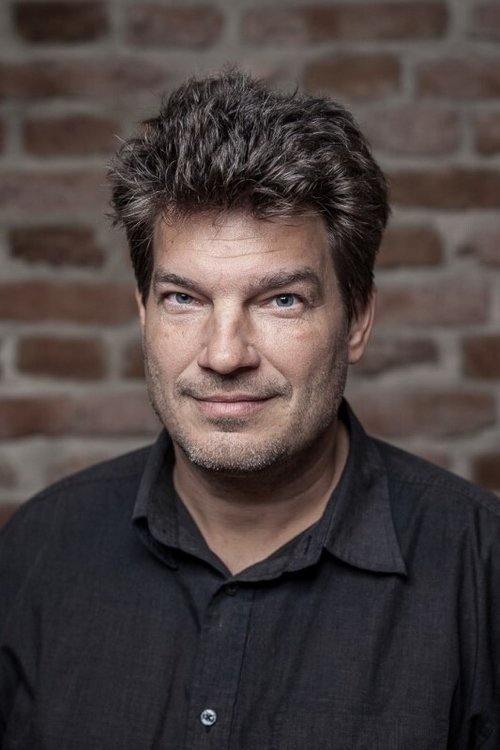
Nikolaus Geyrhalter is a director, producer and cameraman, born in Vienna in 1972. In 1994, when he was 22 years old, he founded his own production company Nikolaus Geyrhalter Filmproduktion which focuses on documentaries and amateur fiction.

Known For

No description available.
Kulturzeit
Annual awarding of the Grimme Awards.
Grimme Award

Although to the outside world he seems like a perfectly normal insurance broker, Michael secretly keeps a 10-year-old boy locked in a room in his soundproof basement.
Michael

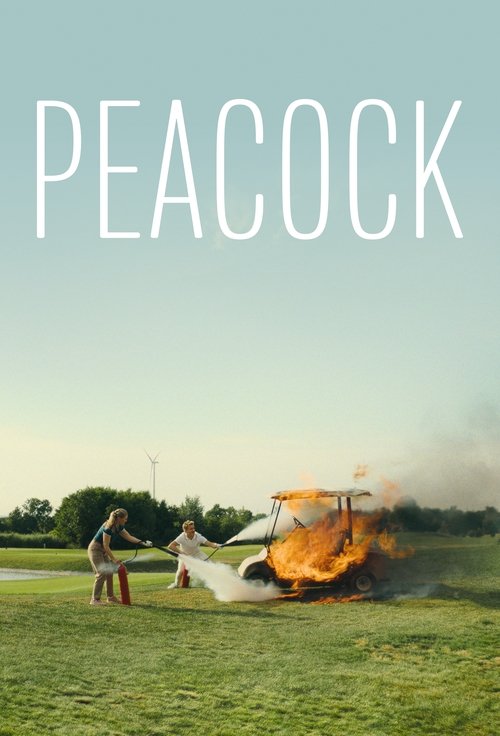
Matthias is a master of pretense, from cultured boyfriend to perfect son or marital coach. He makes a career of being someone else. The real challenge begins when he has to be himself.
Peacock

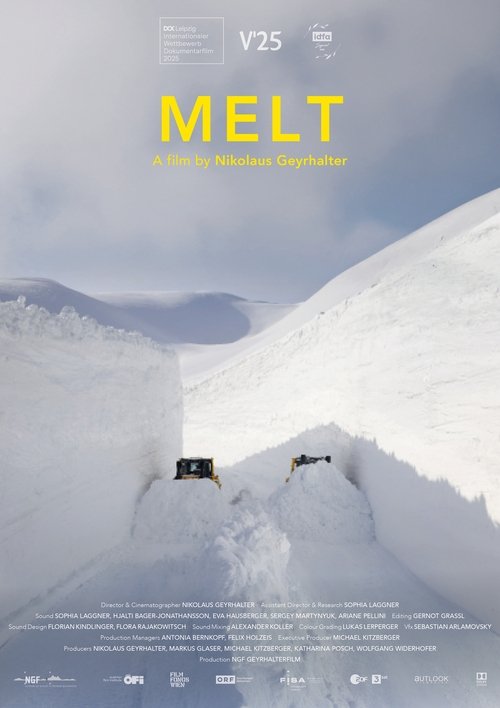
How do people live in snowbound areas? What are the mechanisms for simply moving snow around? How have ski resorts mechanised what ought to be a natural process? A comprehensive study of global warming as it is directly experienced by arctic and alpine communities.
Melt

A champion marathoner leads a double life as a serial bank robber, sprinting between fixes (and away from police cavalcades) as many as three times a day.
The Robber

18th century Vienna. Maria Theresia von Paradis, a gifted piano player and close friend of Mozart's, lost her eye-sight as a child. Desperate to cure their talented daughter, the Paradis entrust Maria to Dr. Mesmer, a forward-thinking-physician who gives her the care and attention that she requires. With the doctor's innovative techniques of magnetism, Maria slowly recovers her sight. But this miracle comes at a price as the woman progressively starts to lose her gift for music.
Mademoiselle Paradis

Mira lives for the sport of ice hockey and leads her team as captain with a strong determination. It's a challenge to reconcile this with her role in the family vineyard: with her mother and her adventurous but increasingly demented grandfather, she runs the farm - with all its responsibilities. The new player Theresa completely unsettles her with her nonchalance and openness. And when Mira's missing brother Paul also turns up and all three get lost in late-night Vienna, Mira discovers the freedom it means to break rules, to reinvent herself - and that you can only love if you let go.
Breaking the Ice

Marie Theres is a perfectly assimilated German in Vienna. She is a good wife to her husband Alexander, an understanding mother to her teenage daughter and a successful and respected doctor, who cares deeply about her patients. One day her perfect life falls apart: her husband leaves, her daughter rebels, she makes mistakes at the hospital and her friends abandon her. Then she meets Fa, a self-confident Iranian woman. The two fall in love with each other and Marie Theres starts to learn to put her own needs and wants first.
What a Feeling

This historical and analytical documentary draws attention to the background of the roots of "New Austrian Cinema" and presents Austria as a film country to be taken seriously. The audience gets to see rare early works by well-known filmmakers as well as shots of landscapes that served as a source of inspiration and locations that have produced important Austrian films since the end of the 19th century.
Cinema Austria, the first 112 Years

With a sense of humour, this documentary questions the condition of women from the angle of the image and perception of their body, and covers the new taboos and aesthetic diktats concerning their genitals in the era of the sexual revolution and contemporary feminism.
Viva la Vulva

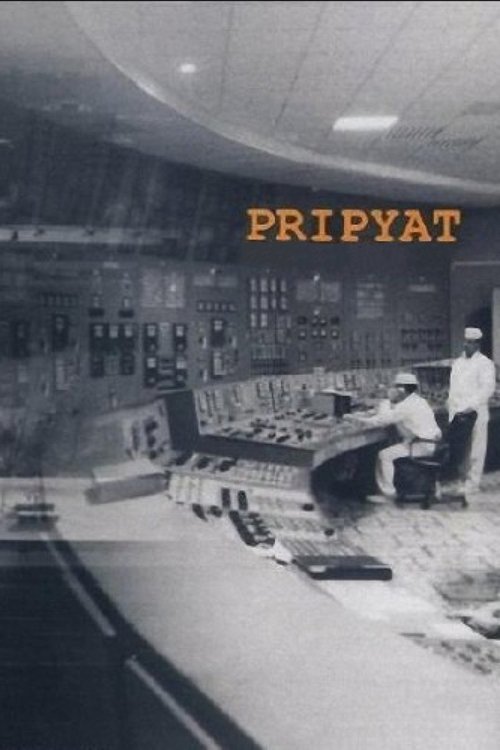
After the catastrophe in 1986, a 30-km restricted zone was erected around the Chernobyl nuclear power plant, and 116,000 persons were evacuated from this area. Pripyat is a portrait of the people who still live and work there, and of those who have moved back. What is life like for these people, a life with the invisible and incomprehensible danger of radioactivity? How do they deal with the aftereffects of an accident which is claimed to be statistically improbable? Four protagonists tell their stories and provide a look at everyday life in “their“ zone.
Pripyat

Franz is by far the smallest in the class, has blond ringlets and gets a high-pitched squeaky voice when he gets upset. Luckily, two best friends help: Gabi and Eberhard. When Franz discovers Hank Haberer's "10 rules for a real man" for himself one day, turbulence is inevitable and the friendship of the three gets into trouble.
Tales of Franz

Robolove is a documentary that explores the interaction between humans and humanoid robots. The filmmaker visits various technology research centers in Japan, Korea, China, USA and Europe as researchers share the challenges of injecting human emotions into these robots.
Robolove

In the spring of 1902, Viennese working-class daughter Marie König runs away from her beating father and is lured into a high-class brothel by an agent. Instead of the promised self-determined life "with horse-drawn carriage rides and silk dresses", she experiences closed doors, violence and exploitation. Only after years of agony does Marie confide in the journalist Emil Bader, who makes the conditions in the brothel public and takes the owner, Regine Riehl, to court.
Aufstand im Bordell - Frauenhandel um 1900

Facebook, Amazon and Google provide us with around the clock access to the convenient digital world! Surveillance cameras on the streets take care of our security. But who actually collects our fingerprints, iris scans, online shopping preferences, and social media postings? Don't we care about our privacy anymore? In his unique charming and curious way filmmaker Werner Boote travels around the world to explore the "brave new world" of total control. EVERYTHING UNDER CONTROL by Werner Boote (Plastic Planet, Population Boom) - an evocative film about the self-evidence of surveillance. In cinemas 25th of December 2015.
Everything Is Under Control

A well-known nightmarish vision of the future: The Earth's population reaches seven billion. Dwindling resources, mountains of toxic waste, hunger and climate change-the results of overpopulation? Who says that the world's overpopulated? And who's one too many? After the box-office success of "Plastic Planet," in POPULATION BOOM curious documentary filmmaker Werner Boote travels the globe and examines a stubborn view of the world that has existed for decades. But he sees a completely different question: Who or what is driving this catastrophic vision?
Population Boom

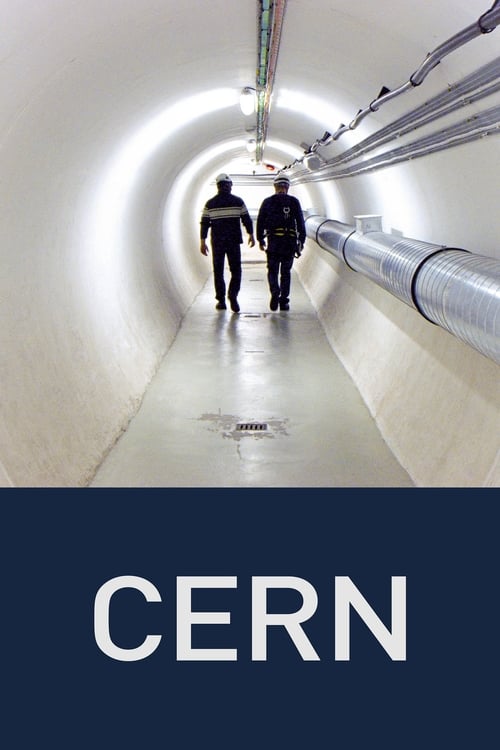
CERN in Switzerland is a research center where they try to recreate the big bang. Nikolaus Geyrhalter follows the center's infrastructure and meets the people who created the "Large Hadron Collider".
CERN

Taking the demise of a textile factory in Austria’s Waldviertel region as its starting point, with the antiquated manufacturing plant initially shown in full operation, this film poses the question of what work means for people’s self-image and character. After the factory goes bankrupt and closes, the filmmaker accompanies some of its employees as they continue to make their way, questioning them about their daily routines, the circumstances in which they live, about looking for work or the new jobs they find. One woman’s situation is precarious, but that doesn’t prevent her from bringing up her grandchildren. Another woman works here and there, flexible and resourceful. One man blossoms visibly in his newly unemployed state. Bit by bit, different aspects of their private lives and personal misfortunes emerge.
Over the Years

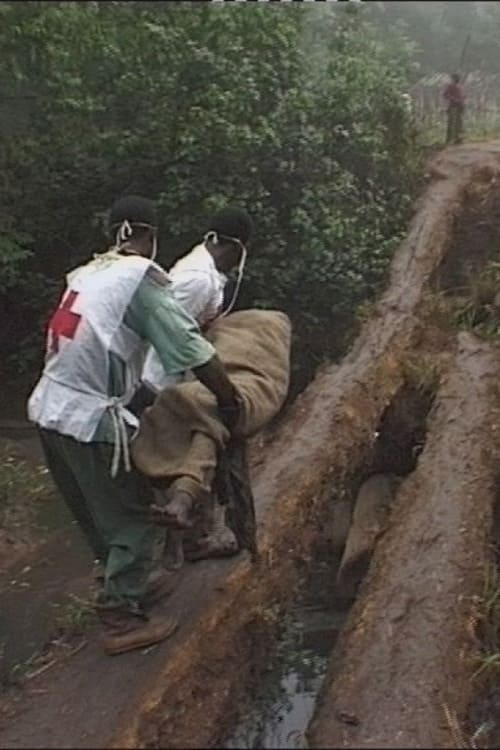
Along an overgrown rail track south of the Zairean town Kisangani, a UN expedition together with a handful of journalists discover “lost” refugees. They are eighty thousand Hutus from far away Rwanda, the last survivors of three years of hunger and armed persecution that transpired throughout the vast Congo basin. The Hutu-refugees leave the forest, gathering in two gigantic camps. Hundreds of refugees die every day from diseases and malnutrition The Rwandans are promised repatriation with airplanes out of Kisangani. The film traces those refugees into the heart of the rainforest, and the hopeless attempts to help them.. But only four weeks later, the unprotected UN-camps are again attacked by machine-gun fire, deliberately massacred by factions of the rebel army (AFDL) of today’s Democratic Republic Congo. Eighty thousand men, women and children disappear once again back into the jungle. (jedensvet.cz)