Ruggero Raimondi
Acting
Biography
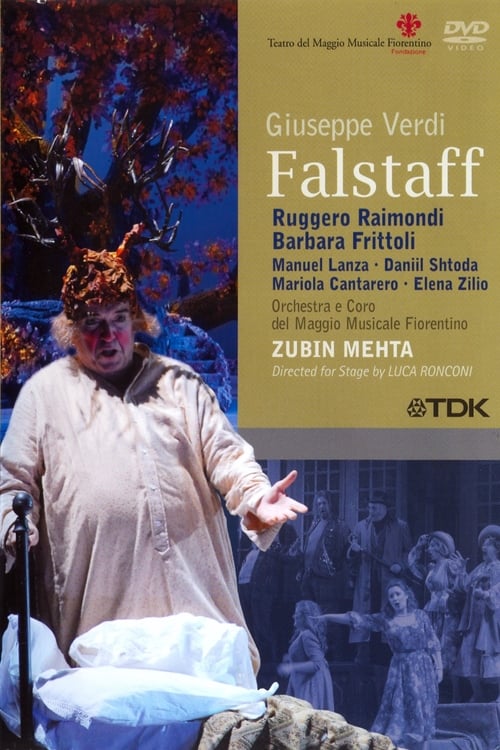
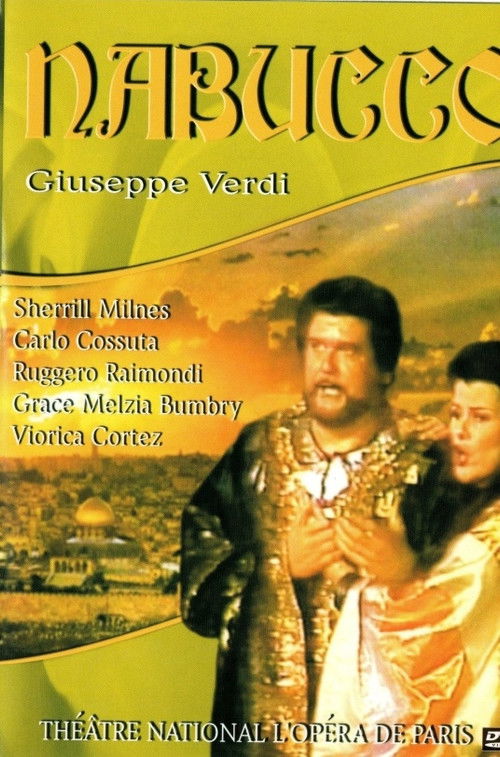
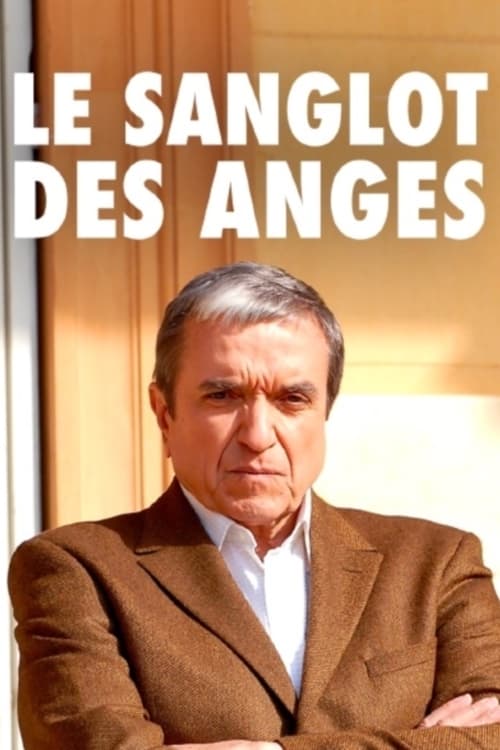
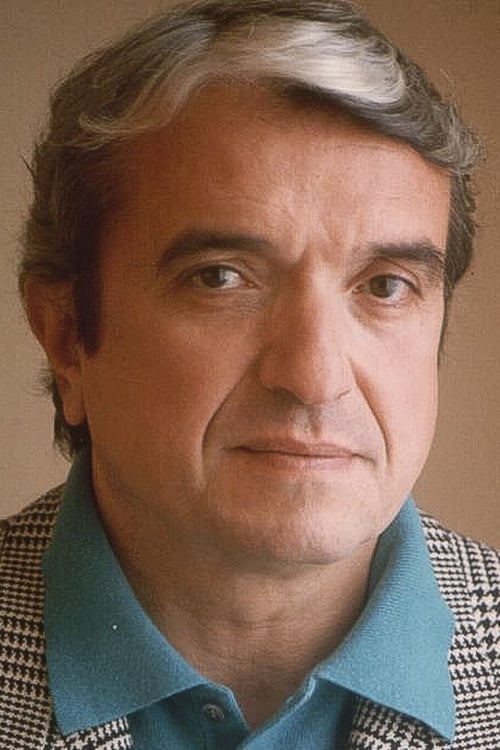
Ruggero Raimondi (born 3 October 1941) is an Italian bass-baritone opera singer who has also appeared in motion pictures. Ruggero Raimondi was born in Bologna, Italy, during World War II. His voice matured early into its adult timbre, and at the age of 15, he auditioned for conductor Francesco Molinari-Pradelli, who encouraged him to pursue an operatic career. He began vocal studies with Ettore Campogalliani, and was accepted at age 16 as a student at the Giuseppe Verdi Conservatory in Milan. He then continued his studies in Rome, under the guidance of Teresa Pediconi and Armando Piervenanzi. After having won the National Competition for young opera singers in Spoleto, he made his debut in the same city in the role of Colline in La bohème in the Festival dei Due Mondi. Subsequently, an opportunity arose for him at the Teatro dell'Opera in Rome when he was called upon to substitute in the role of Procida in Giuseppe Verdi's I vespri siciliani, and he received enormous success from the public and the critics. The young singer was very shy and stiff at first, but his early directors helped him, and he was soon an accomplished opera actor. Raimondi's career soon extended to the major opera houses in Italy, such as La Fenice in Venice, the Teatro Regio in Turin, Teatro Comunale in Florence and abroad, beginning with the Glyndebourne Festival (Don Giovanni in 1969). His La Scala debut was as Timur in Turandot in 1968, his Metropolitan Opera debut was as Silva in Ernani in 1970, and his Covent Garden debut was as Fiesco in Simon Boccanegra in 1972. In 1975, he made his Paris Opera debut as Procida, followed by the title role in Boris Godunov, and his Salzburg Festival debut in 1980 as the King in Aida. In 1986, he first directed a production of Don Giovanni, and decided to continue his career as a director as well. Some of his most important roles have been King Philip in Verdi's Don Carlos; Fiesco; the title roles in Boris Godunov (including the Andrzej Żuławski film) and Attila; Silva; Escamillo in Bizet's Carmen (including the Francesco Rosi film, 1984, with Plácido Domingo and Julia Migenes); the title role in Don Giovanni (including the Joseph Losey film, 1979); Count Almaviva in The Marriage of Figaro; and Don Alfonso in Così fan tutte; the title role in Don Quichotte by Massenet; and Scarpia in a recording of Tosca later filmed live from Rome, with Plácido Domingo and Catherine Malfitano, conducted by Zubin Mehta. He also made the television film Six Characters in Search of a Singer.[citation needed] In 2008, Raimondi made his television debut in the mini-series Le Sanglot des anges on French TV, in which he played the role of an Italian opera singer. In July 2011 he played the role of Pagano in Verdi's I Lombardi alla prima crociata on the rooftop of Milan Cathedral. The concert was organized by the Veneranda Fabbrica del Duomo di Milano to celebrate the 150th anniversary of Italian unification. Source: Article "Ruggero Raimondi" from Wikipedia in English, licensed under CC-BY-SA 3.0.
Known For

No description available.
Champs-Elysées

No description available.
Sacrée soirée

A French variety show.
Numéro un

Le Grand Échiquier is a French variety television program created and presented by Jacques Chancel. It aired at 8:30 pm on the first channel of the ORTF from January 12, 1972 to July 12, 1972, then on the second color channel of the ORTF from September 1972 to December 1974, and finally on Antenne 2 from January 1975 to December 21, 1989. The program returned to France 2 on December 20, 2018 and is hosted by Anne-Sophie Lapix.
Le Grand Échiquier

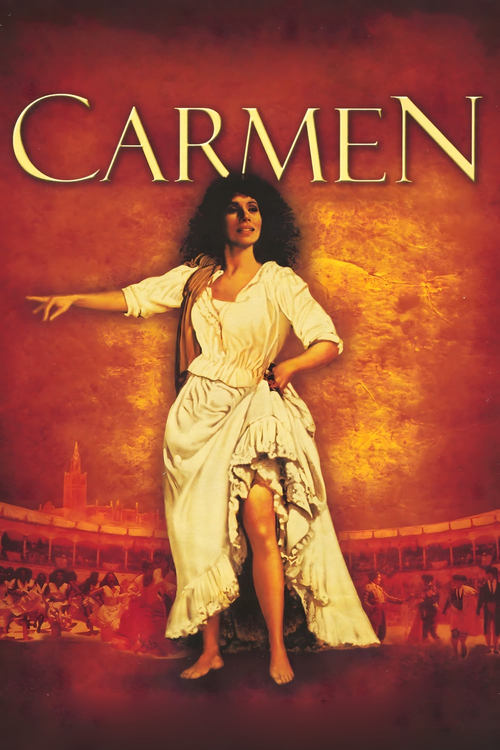
In the early 19th century, in Seville and the surrounding area, Carmen seduces the sergeant Don José, who deserts the army to be with her. But the beautiful gypsy falls in love with the bullfighter Escamillo, much to Don José’s despair.
Carmen

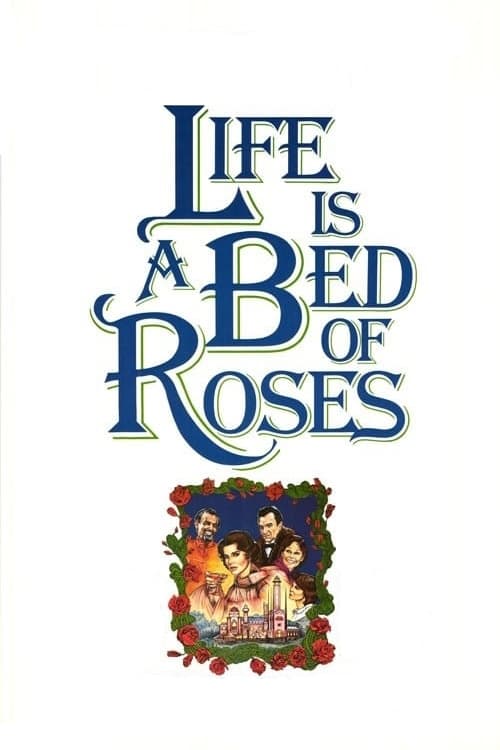
In this whimsical fable, Resnais deftly interweaves three story lines: the creation of an early-20th-century utopia; romantic high jinks at a school conference; and a fantasy sparked by F/X pioneer Georges Méliès.
Life Is a Bed of Roses

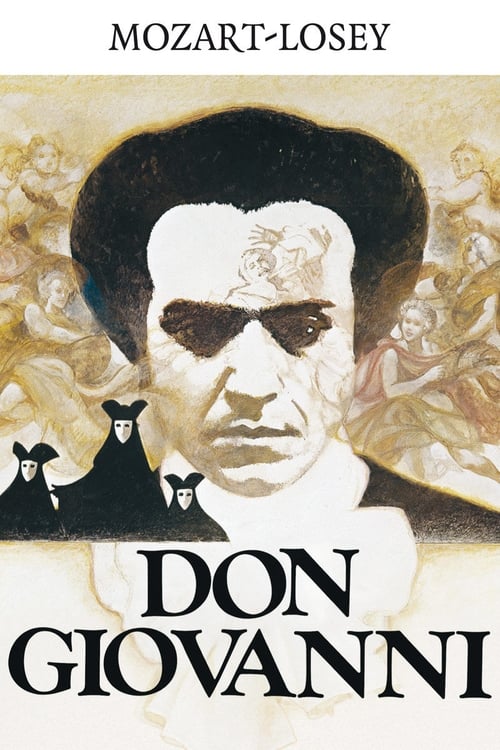
Screen adapatation of Mozart's greatest opera. Don Giovanni, the infamous womanizer, makes one conquest after another until the ghost of Donna Anna's father, the Commendatore, (whom Giovanni killed) makes his appearance. He offers Giovanni one last chance to repent for his multitudinious improprieties. He will not change his ways So, he is sucked down into hell by evil spirits. High drama, hysterical comedy, magnificent music!
Don Giovanni

When their daughter decides to get a divorce, Coline and Andre can’t come to terms with it as they are very fond of their son-in-law. The only way to keep seeing him is in secret. But for how long can they lead a double life?
My Out-Laws

The sexual and social dysfunctional behaviour of the corporate elite are further aggravated when a naive married woman becomes the obsession of two wealthy suitors.
The Trout

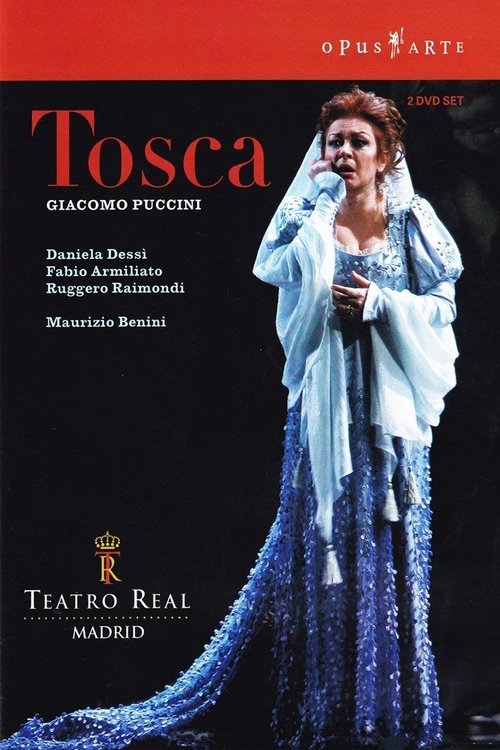
Benoit Jacquot's acclaimed 2002 film of Puccini's opera stars Angela Gheorghiu in the title role, with Roberto Alagna, Ruggero Raimondi and the Chorus and Orchestra of the Royal Opera House, Covent Garden, under Antonio Pappano.
Tosca

No description available.
Gran Gala di Verdi

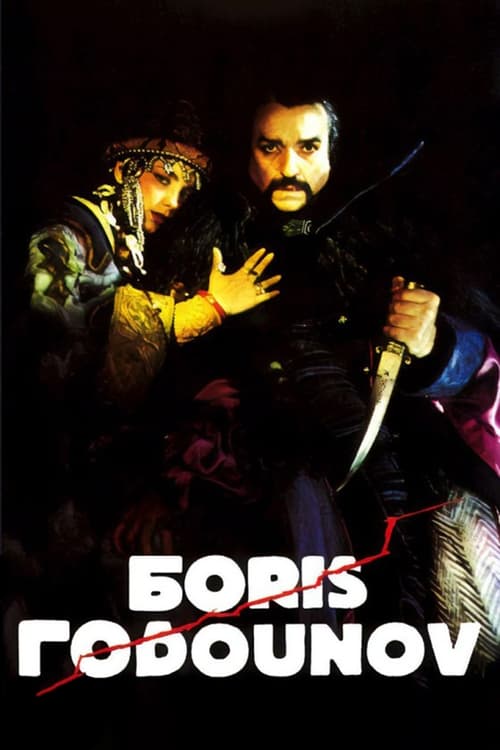
A possible impostor torments a newly crowned medieval czar who may have ordered the real successor's death.
Boris Godounov

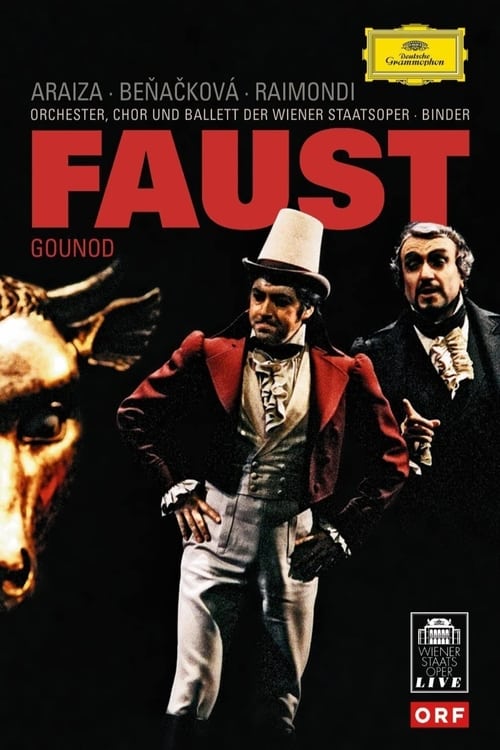
In an epic tale of good versus evil, Faust sells his soul to the Devil and tries to save Marguerite from an eternity in Hell.
Faust

This live version of Puccini s superbly dramatic opera was recorded in Rome in the exact locations and at the precise times of day as Puccini had written into his score. The action opens in Rome's beautiful 16th-century church of Sant Andrea della Valle, where Cavaradossi (Plácido Domingo) is innocently painting, moves to the Farnese Palace where Tosca (Catherine Malfitano) dramatically stabs the lustful Scarpia (Ruggero Raimondi), and finally to the battlements of the Castle Sant Angelo at dawn the following day where Cavaradossi is cruelly killed, and Tosca takes her own life.
Tosca
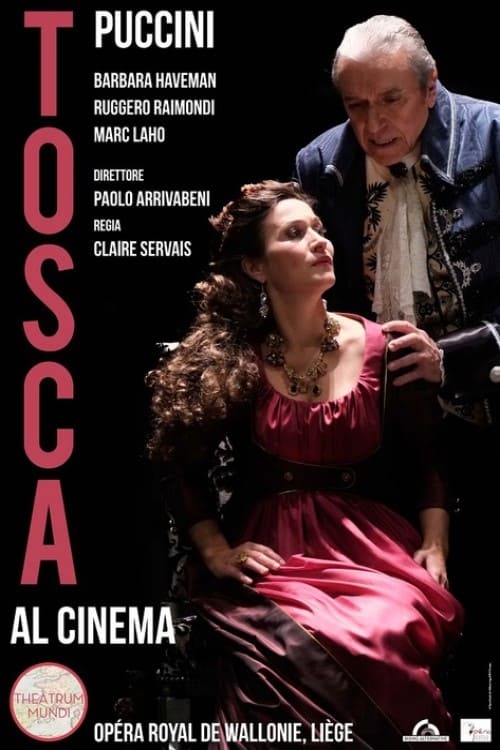
Performed in the actual Roman settings described in the libretto. Moreover, the scenes take place at the appropriate times of day. Rome, June 1800. Floria Tosca is a celebrated opera singer, better known as La Tosca. Her lover is Mario Cavaradossi, a young artist and Bomapartist sympathizer. When the latter helps Angelotti, the leader of the opposition, to escape from prison and hides him in La Tosca's home, he antagonizes Baron Scarpia, the ruthless chief of police, all the more as his love for Tosca is unrequited.
Tosca: In the Settings and at the Times of Tosca

not available
Le Sanglot des anges

Juan Diego Florez in another of his great stage roles. Old Don Pasquale (Ruggero Raimondi) wishes to marry and produce an heir, thus disinheriting his nephew Ernesto, who loves the merry widow Norina. Pasquale"s physician Malatesta pretends that Norina is his sister 'Sofronia', and arranges a mock wedding to Pasquale. 'Sofronia' then proceeds to make Pasquale's life a misery.
Don Pasquale

The tragic story revolves around the licentious Duke of Mantua, his hunch-backed court jester Rigoletto, and Rigoletto's beautiful daughter Gilda. The opera's original title, La maledizione (The Curse), refers to a curse placed on both the Duke and Rigoletto by a courtier whose daughter the Duke has seduced with Rigoletto's encouragement. The curse comes to fruition when Gilda falls in love with the Duke and sacrifices her life to save him from assassins hired by her father.
Rigoletto a Mantova

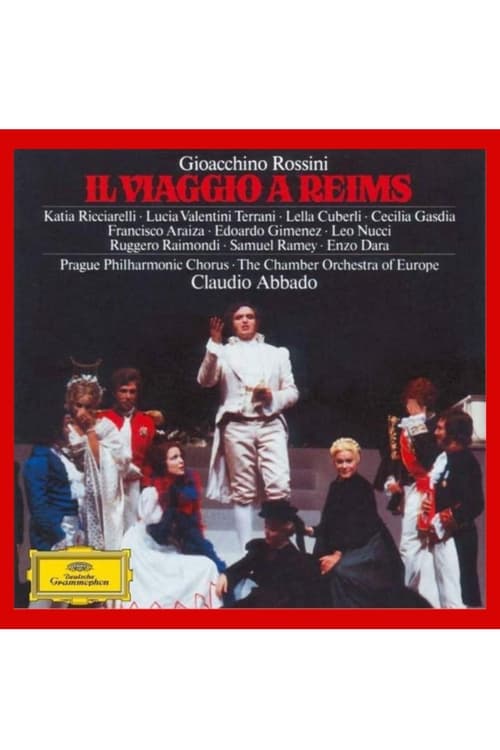
The historic 1984 revival performance of Il viaggio a Reims was the first time in over 150 years the opera was performed. Set in a luxurious hotel in Plombières-les-Bains, the opera follows a diverse group of aristocratic characters as they gather to celebrate the coronation of King Charles X of France. Amidst the festivities, wacky antics ensue, romantic entanglements unfold, and the characters face various comedic and dramatic challenges, showcasing Rossini's masterful blend of music, comedy, and drama.
Il viaggio a Reims

Stage director Emilio Sagi's production of the legendary Barber of Seville is enriched by a bright distribution. Maria Bayo returns to one of her signature role as Rosina, opposite Juan Diego Florez, the Rossini expert tenor. The title role is embodied by the Italian baritone Pietro Spagnoli, while Ruggero Raimondi and Bruno Pratico reconcile the audience with Don Basilio and Don Bartolo.