FEEL IT.STREAM
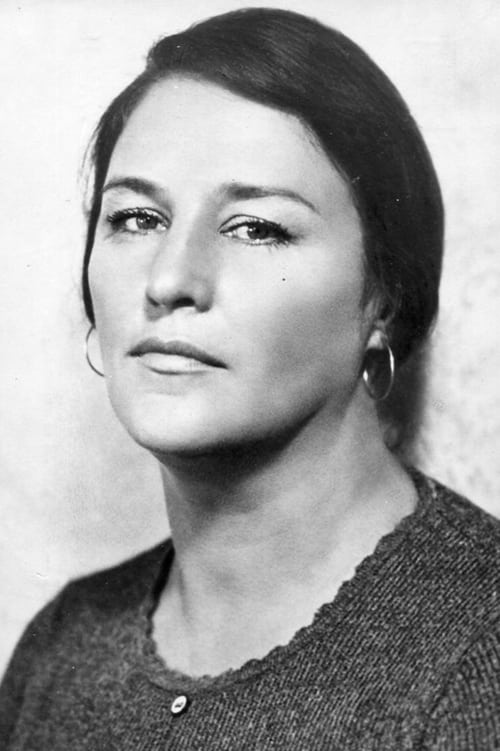
Nonna Mordyukova

Nonna Mordyukova

Acting

Biography

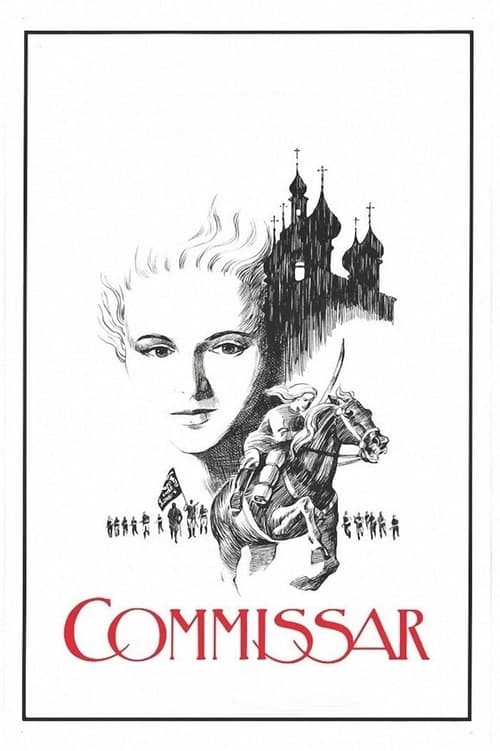
Nonna (Noyabrina) Viktorovna Mordyukova was a distinguished Soviet and Russian actress, born on November 25, 1925, in the village of Konstantinovka, Ukrainian SSR, USSR. Mordyukova graduated from the Gerasimov Institute of Cinematography (VGIK) in 1950 and became known for her powerful performances and strong screen presence. She starred in numerous acclaimed films, including "The Commissar" (1967), "The Red Snowball Tree" (1974), and "Kinship" (1981). She was awarded the title of People's Artist of the USSR in 1974 and received various honors for her contributions to cinema. Nonna Mordyukova passed away on July 6, 2008, in Moscow, leaving a lasting legacy as one of Soviet cinema's most iconic actresses.
Known For

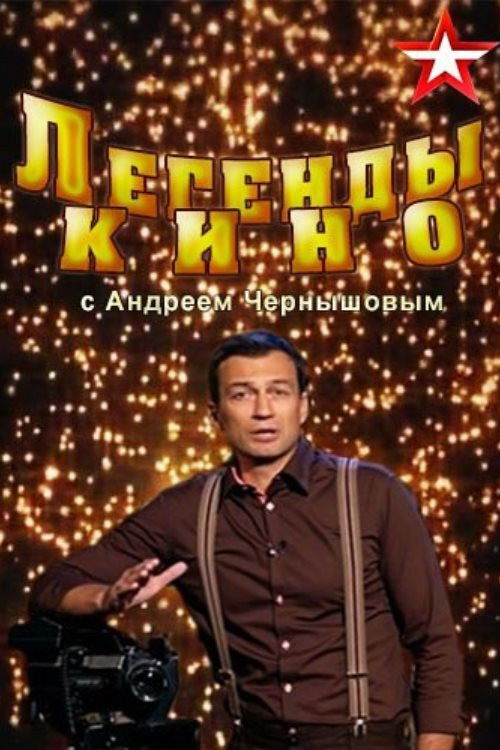
Legends of Cinema
N/A

No description available.

Legends of Cinema

2016
The Diamond Arm
7.8

A diamond smuggling operation goes wrong when an ordinary Soviet citizen becomes unwittingly involved, and the criminals are forced to court him to retrieve their diamonds.

The Diamond Arm

1969
War and Peace
7.6

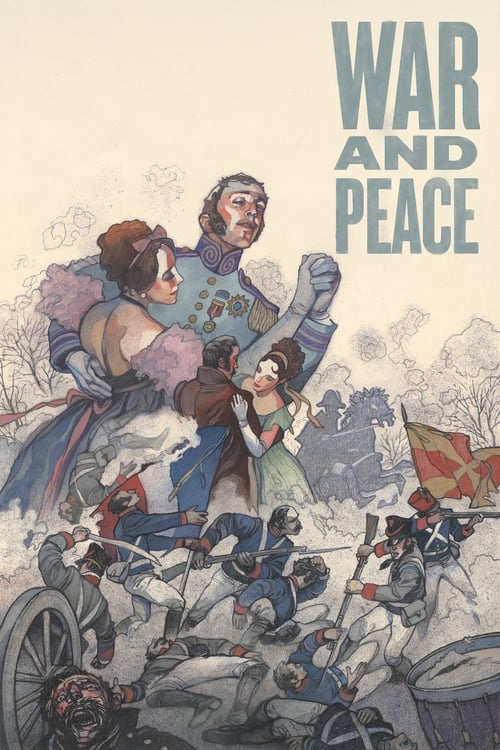
The love story of young Countess Natasha Rostova and Count Pierre Bezukhov is interwoven with the Great Patriotic War of 1812 against Napoleon's invading army.

War and Peace

1968
War and Peace, Part II: Natasha Rostova
7.1

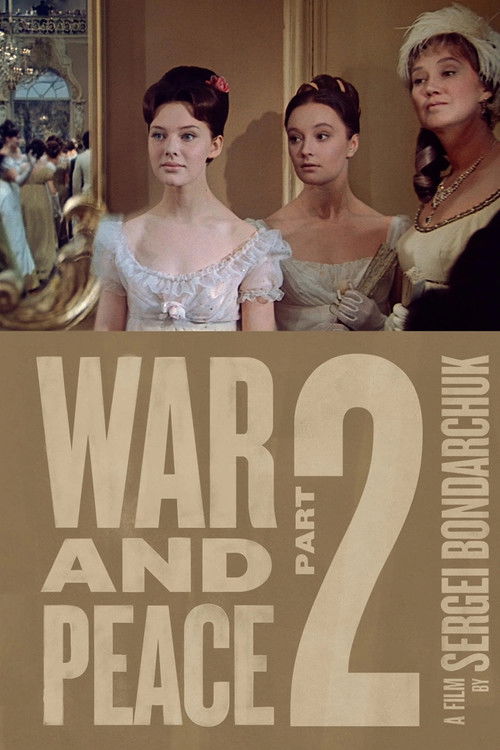
As 1809 nears its end, Natasha attends her first ball, where Andrei falls in love with her with the intent of marriage. However, as her father demands they wait, the prince travels abroad, leaving Natasha in desperate longing. But she meets Anatol Kuragin and forgets Andrei. Part two of the four-part adaptation of Leo Tolstoy's 1869 novel.

War and Peace, Part II: Natasha Rostova

1966
Thirty-three
6.2

The dentist of the provincial town of Upper Yamki made an unexpected scientific discovery by finding the thirty-third tooth in the patient’s oral cavity, Ivan Sergeyevich Travkin. Travkin, exhausted from pain, was taken to Moscow. Ivan Sergeyevich first becomes a patient of a madhouse (thanks to envious persons), and then — a hero of a scientific international conference and, finally, a patient of a dentist professor Bruk.

Thirty-three

1965
They Fought for Their Motherland
6.9

In July 1942, in the Second World War, the rearguard of the Russian army protects the bridgehead of the Don River against the German army while the retreating Russian troops cross the bridge. While they move back to the Russian territory through the countryside, the soldiers show their companionship, sentiments, fears and heroism to defend their motherland.

They Fought for Their Motherland

1975
Station for Two
7.3

Platon Ryabinin, a pianist, is traveling by train to a distant town of Griboedov to visit his father. He gets off to have lunch during a twenty minute stop at Zastupinsk railway station. He meets Vera, a waitress, after he refuses to pay her for the disgusting food he doesn't even touch and misses his train due to police investigation of the incident. His passport is then accidentally taken away from him by Andrei, Vera's fiancé, and his money is stolen as he waits for the next train to Griboedov. Vera learns that Platon is about to get sentenced and sent to prison in the Far East for a car accident he isn't guilty for. During the few days that Platon has to spend in Zastupinsk he and Vera develop feelings for each other...

Station for Two

1983
The Marriage of Balzaminov
6.9

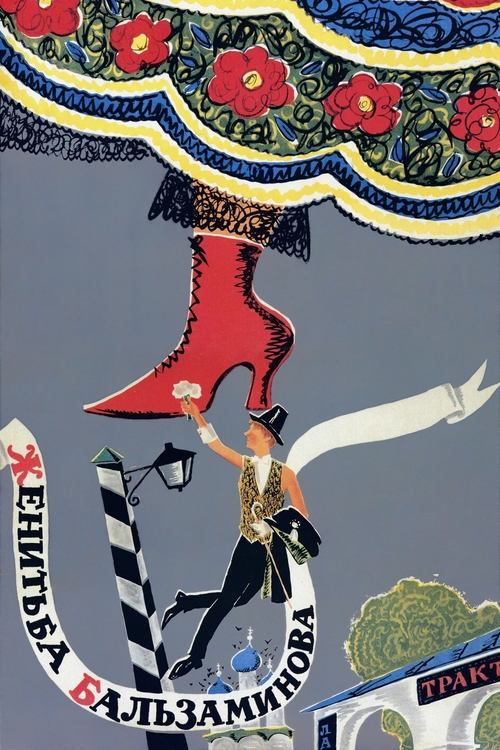
Based on the trilogy of Aleksandr Ostrovsky. Moscow, XIX century. A small official Misha Balzaminov lives in a small house. He, like his mother, sees his happiness in marrying a rich bride. Misha images in dreams and fantasies that he is a general or even a king — rich and domineering. And in reality, poor Balzaminov is haunted by setbacks...

The Marriage of Balzaminov

1964
The Young Guard
5.5

In 1942, local teenagers are organizing the underground resistance in the city of Krasnodon during the Nazi occupation of Russia. The teens manage to outsmart the Nazis in their fight, and their activity lifts the spirits of the surviving citizens.

The Young Guard

1948
The Chairman
6.4

Year 1947... Yegor Trubnikov is giving all his powers to make life in his own Kolhoz better.

The Chairman

1964
I Am an Ox, I Am a Horse, I Am a Man, I Am a Woman
6.0

This glasnost-era documentary, which incorporates footage from films from the 1920s through the 1980s, looks at the history of women in Russian cinema through the eyes of Russian women directors, actors, and scriptwriters. The film’s title refers to a WWII slogan about women doing the work of absent men in the fields and at home. Featuring Kira Muratova, Natalia Ryazantseva, Inna Churikova, Nonna Mordyukova, and others.

I Am an Ox, I Am a Horse, I Am a Man, I Am a Woman

1988
Gloomy Morning
9.0

The third film in the trilogy ("The Sisters", "The Eighteenth Year", "The Gloomy Morning") based on the novel by Aleksei Tolstoy "The Road to Calvary". About the fate of the Russian intelligentsia against the background of the collapse of the Russian Empire and the civil war, which turned the lives of all the heroes of the film narration. Defending Tsaritsyn, the red commander Telegin was seriously wounded. At the hospital, he meets Dasha. After his recovery, the young spouses go together to the Red Army.

Gloomy Morning

1959
A Little Crane
5.6

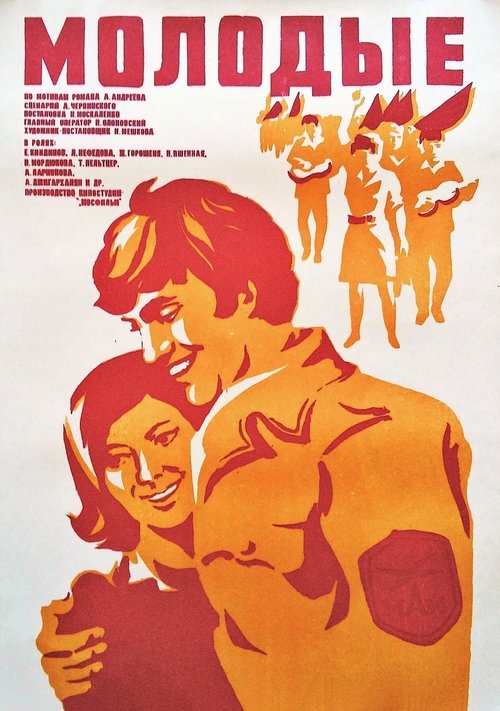
Based on the novel of Mikhail Alekseyev "Bread — as a Noun." About the fate of a Russian woman who endured all the hardships of war and post-war life. After the war, those few who survived at the front returned to their native village. But Marfa's husband, whom she had been waiting for for so many years, would never return. Marfa, a beautiful and proud woman, remains true to her only love...

A Little Crane

1969
What a Mess!
6.6

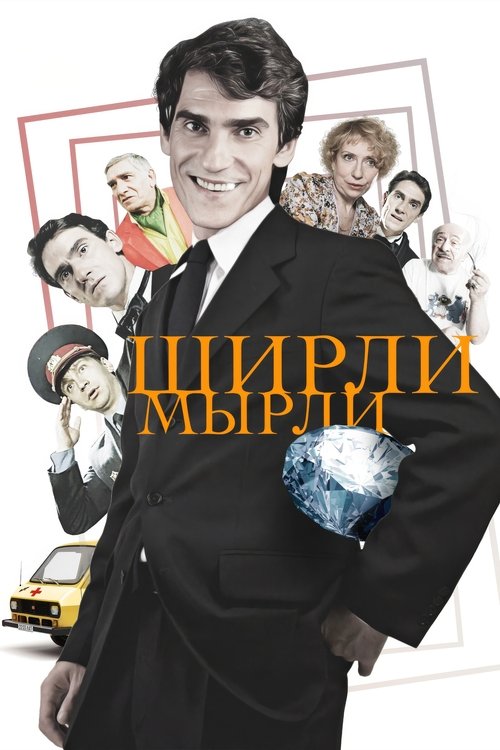
A Russian criminal steals a giant diamond from the Mafia, hides it, and suddenly runs into his unknown brothers; unexpected, absurd events with participation of the mob, doctors, musicians, Americans, militia, and gypsies ensue.

What a Mess!

1995
Kin
6.1

The story follows Maria Konovalova who travels from her rural village to visit her daughter Nina in the city. Maria's arrival exposes the stark contrasts between rural and urban lifestyles and reveals deep-seated family tensions. Interestingly, Родня (Rodnya) in Russian sounds very similar to the word Родина (Rodina), which means "Motherland." The film features three generations of women — Maria, her daughter Nina, and her granddaughter Irina — symbolizing three different Russias: one from the past, one modern, and one representing the future.

Kin

1982
Luna Park
4.6

Andrei is the head of a gang of antisemitic skinheads clinging to the old communist ideals in post-Communist Moscow. When he learns that his long lost father actually is a Jewish bohemian living in Moscow, rather than an Afghanistan war hero, he traces him down in order to kill him. But the intriguing father and his "reactionary" lifstyle soon fascinates Andrei which leads to a clash with his gang.

Luna Park

1992
Restricted Area
N/A

Central Russia. The deputy chairman of the district executive committee, Tretyakova, was instructed to organize work to eliminate the consequences of a tornado that suddenly hit the village. She has to come to terms with the indifference of summer residents from a neighboring village, untouched by the disaster. Relying on her own experience and the will of the victims, Tretyakova will do her best...

Restricted Area

1988
Shine, Shine, My Star
5.6

In 1920, just 3 years after the October revolution, the peoples had to decide between conforming to Bolshevism or national self-determination. In that torn-apart-time, one man, the comedian Volodya, tries to mediate, not between different ideologies, but social life and art. While others just want to wash away their gloom, he reflects on the everyday sorrows and the role of art in that time of changes.

Shine, Shine, My Star

1969
The Mire
5.7

The action takes place during the Great Patriotic War. Peasant Matryona Bystrova loses her husband at the front, then her eldest son goes missing. Matryona decides to save the youngest son at all costs and shelters him from being drafted into the army in the attic of the house until the end of the war. But it turns out that saving her son, she condemns him to spiritual death, and herself to torment of conscience. A private story about the mother of a deserter grows to epic proportions...

The Mire

1978
Loan for a Marriage
4.7

The reason for serious reflection by the staff of one of the typical enterprises in the country was the lack of powder necessary for production and the money to purchase it. The employees came up with a reason to get money from the director’s fund. Having issued a loan for a fictitious marriage between the only man in the department and an unmarried employee, the team thereby organized a completely happy marriage...

Loan for a Marriage

1988