Cecil B. DeMille
Directing
Biography
Cecil Blount DeMille (August 12, 1881 – January 21, 1959) was an American filmmaker, known as a founder of the Hollywood motion-picture industry, one of the most commercially successful producer-directors of his time, and one of the most influential filmmakers in history. Between 1914 and 1956, he made seventy feature films; all but seven were profitable. Cecil B. DeMille is synonymous with religious epics: The King of Kings, Samson and Delilah, and The Ten Commandments (1956). He blended spectacle, sex, and spellbinding narrative to convey a message of faith. It was DeMille who created the image of the omnipotent director, megaphone in hand, wearing boots and a visored cap. DeMille gave Hollywood numerous stars: Wallace Reid, Gloria Swanson, William (“Hopalong Cassidy”) Boyd, Claudette Colbert, Robert Preston, Jean Arthur, and Charlton Heston. DeMille created the posts of studio story editor, art director, and concept artist. He was one of the first to use theatrical lighting on a movie set. In the late 1920s, when Hollywood converted to sound films, DeMille defied the sound experts, liberating the camera from a confining booth, and implementing the microphone boom. DeMille’s authority extended beyond the confines of his studio. He was a power in aviation, banking, politics, and real estate. In the 1930s, his fame as a filmmaker was surpassed by his fame as a radio star. He was a founder of the Academy of Motion Picture Arts and Sciences, an institution from which he eventually won two awards. In 1953 his film The Greatest Show on Earth won the Award for Best Picture of 1952; and he was presented with the Irving G. Thalberg Memorial Award. DeMille’s influence on world culture is incalculable, but there are estimates and milestones. His biography of Jesus Christ, The King of Kings, was a silent film, but because of a unique distribution arrangement, it was eventually seen by 800 million viewers. Samson and Delilah (1949) and The Ten Commandments (1956) are still listed with the top ten all-time box-office champions. They continue to generate revenue and provoke thought.

Known For

Four panelists must determine guests' occupations - and, in the case of famous guests, while blindfolded, their identity - by asking only "yes" or "no" questions.
What's My Line?

The Ed Sullivan Show is an American TV variety show that originally ran on CBS from Sunday June 20, 1948 to Sunday June 6, 1971, and was hosted by New York entertainment columnist Ed Sullivan. It was replaced in September 1971 by the CBS Sunday Night Movie, which ran only one season and was eventually replaced by other shows. In 2002, The Ed Sullivan Show was ranked #15 on TV Guide's 50 Greatest TV Shows of All Time.
The Ed Sullivan Show

Marcello Mastroianni, Isabelle Adjani, Alain Delon, Martin Scorsese, Woody Allen... the biggest stars in cinema were welcomed by Christian Defaye on his show Spécial cinéma. Between intimate confessions from actors and immersion in the world of the greatest filmmakers, Christian Defaye took viewers on a journey into the fascinating world of cinema for nearly thirty years.
Spécial cinéma

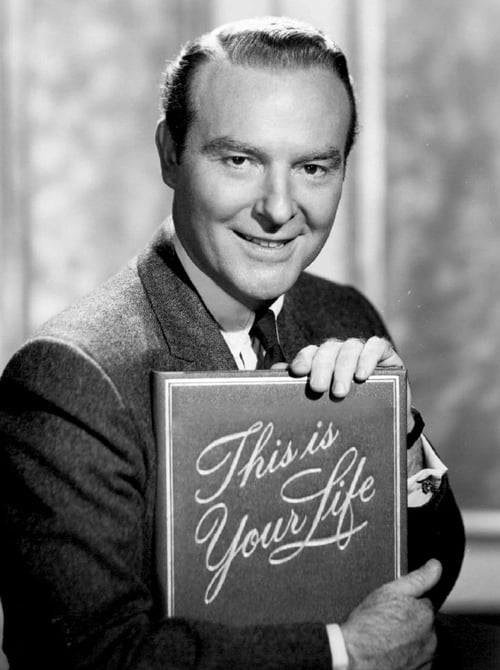
This Is Your Life is an American television documentary series broadcast on NBC, originally hosted by its producer, Ralph Edwards from 1952 to 1961. In the show, the host surprises a guest, and proceeds to take them through their life in front of an audience, including special guest appearances by colleagues, friends and family. Edwards revived the show in 1971-72, while Joseph Campanella hosted a version in 1983. Edwards returned for some specials in the late 1980s, before his death in 2005. The show originated as a radio show on NBC Radio airing from 1948 to 1952.
This Is Your Life

No description available.
Cinépanorama

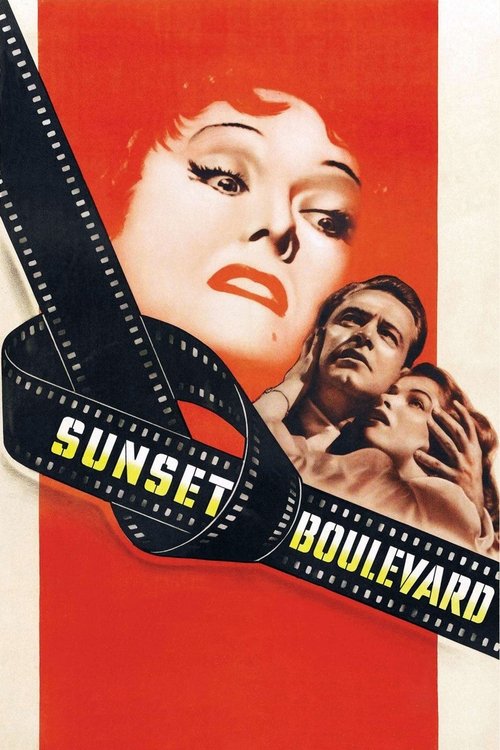
A hack screenwriter writes a screenplay for a former silent film star who has faded into Hollywood obscurity.
Sunset Boulevard

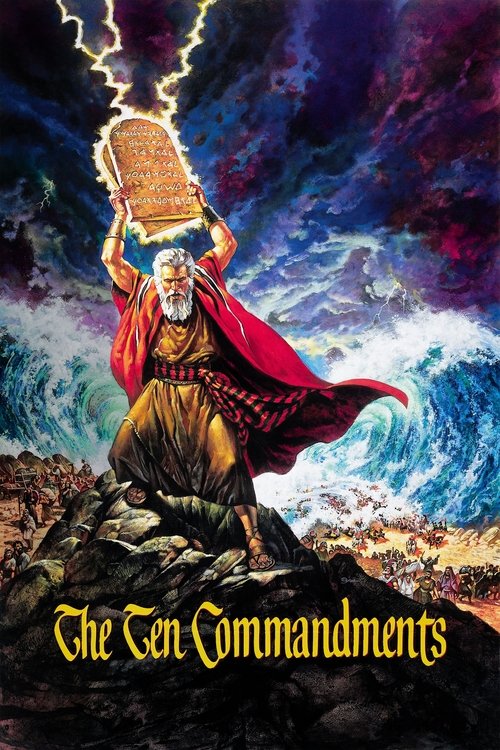
Escaping death, a Hebrew infant is raised in a royal household to become a prince. Upon discovery of his true heritage, Moses embarks on a personal quest to reclaim his destiny as the leader and liberator of the Hebrew people.
The Ten Commandments

When strongman Samson rejects the love of the beautiful Philistine woman Delilah, she seeks vengeance that brings horrible consequences they both regret.
Samson and Delilah

The residents of a small town are excited when a flaming meteor lands in the hills, until they discover it is the first of many transport devices from Mars bringing an army of invaders invincible to any man-made weapon, even the atomic bomb.
The War of the Worlds

Americans consider themselves a 'nation of immigrants', but as the catastrophe of the Holocaust unfolds in Europe, the U.S. prove unwilling to open its doors to more than a fraction of the hundreds of thousands of desperate refuge seekers. Through riveting firsthand testimony of witnesses and survivors who as children endured persecution, violence and flight as their families tried to escape Hitler, this three-part documentary series delves deeply into the tragic human consequences of public indifference, bureaucratic red tape and restrictive quota laws in America. Did the nation fail to live up to its ideals? This is a history to be reckoned with.
The U.S. and the Holocaust

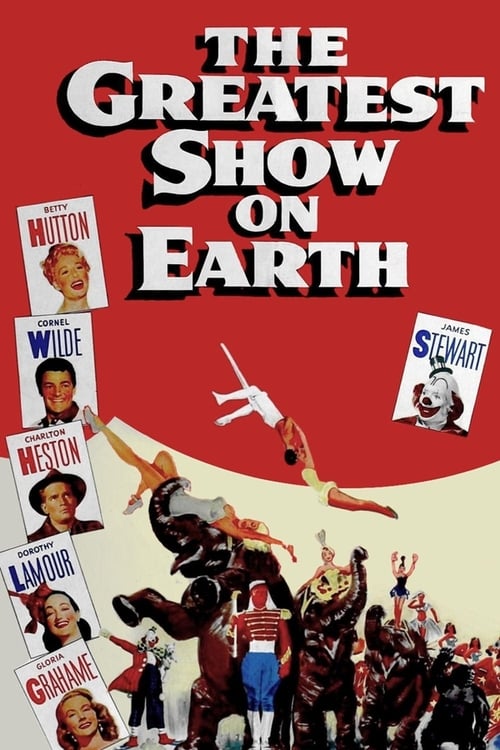
To ensure a full profitable season, circus manager Brad Braden engages The Great Sebastian, though this moves his girlfriend Holly from her hard-won center trapeze spot. Holly and Sebastian begin a dangerous one-upmanship duel in the ring, while he pursues her on the ground.
The Greatest Show on Earth

The Florida Keys in 1840, where the implacable hurricanes of the Caribbean scream, where the salvagers of Key West, like the intrepid and beautiful Loxi Claiborne and her crew, reap, aboard frail schooners, the harvest of the wild wind, facing the shark teeth of the reefs to rescue the sailors and the cargo from the shipwrecks caused by the scavengers of the sea.
Reap the Wild Wind

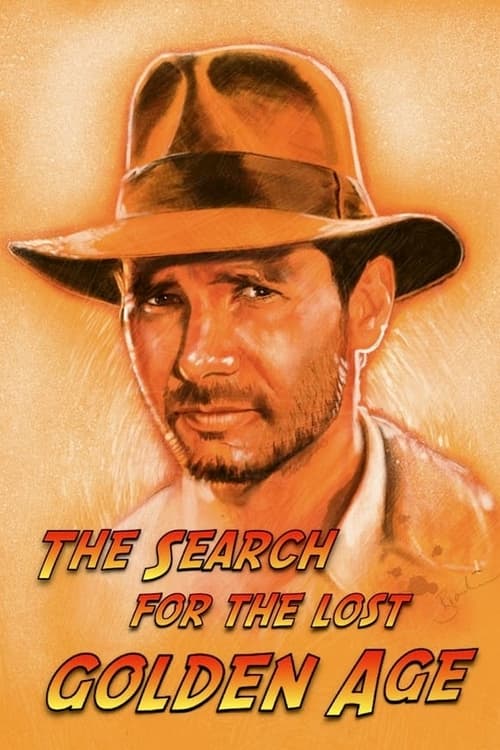
Hawaii, May 1977. After the success of Star Wars, George Lucas and Steven Spielberg meet to find a new project to work on together, the former as producer, the latter as director. The story of how the charismatic archaeologist Indiana Jones was born and how his first adventure, released in 1981, triumphed at box offices around the world.
Indiana Jones: The Search for the Lost Golden Age

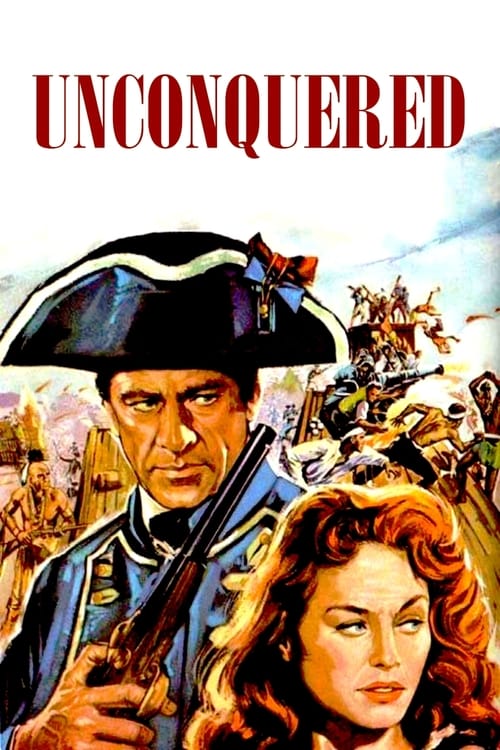
England, 1763. After being convicted of a crime, the young and beautiful Abigail Hale agrees, to escape the gallows, to serve fourteen years as a slave in the colony of Virginia, whose inhabitants begin to hear and fear the sinister song of the threatening drums of war that resound in the wild Ohio valley.
Unconquered

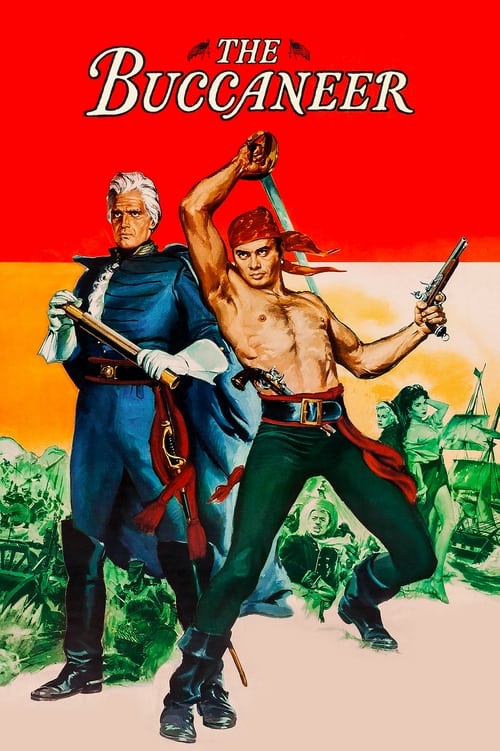
French pirate Jean Lafitte rescues a girl and joins the War of 1812.
The Buccaneer

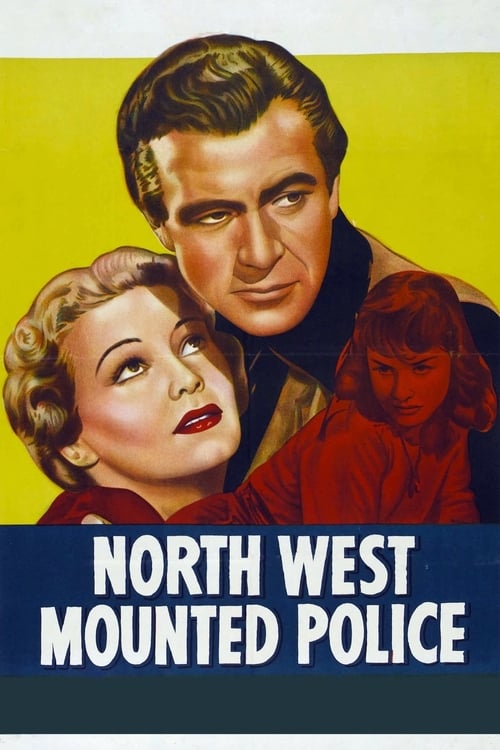
Texas Ranger Dusty Rivers ("Isn't that a contradiction in terms?", another character asks him) travels to Canada in the 1880s in search of Jacques Corbeau, who is wanted for murder. He wanders into the midst of the Riel Rebellion, in which Métis (people of French and Native heritage) and Natives want a separate nation. Dusty falls for nurse April Logan, who is also loved by Mountie Jim Brett. April's brother is involved with Courbeau's daughter Louvette, which leads to trouble during the battles between the rebels and the Mounties. Through it all Dusty is determined to bring Corbeau back to Texas (and April, too, if he can manage it.)
North West Mounted Police

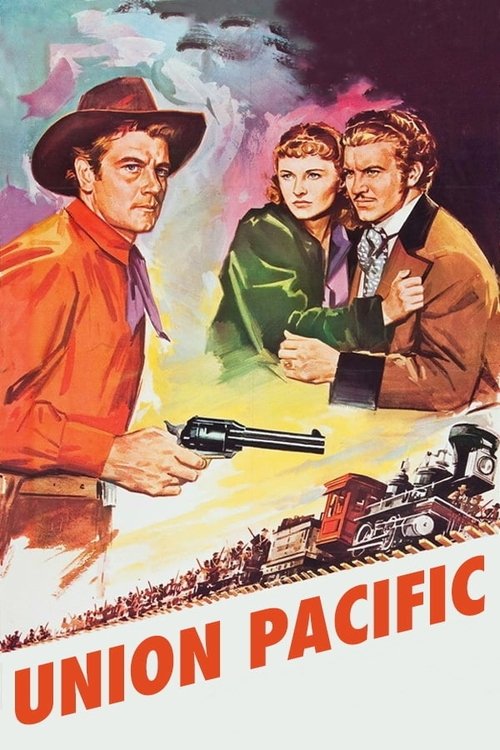
One of the last bills signed by President Lincoln authorizes pushing the Union Pacific Railroad across the wilderness to California. But financial opportunist Asa Barrows hopes to profit from obstructing it. Chief troubleshooter Jeff Butler has his hands full fighting Barrows' agent, gambler Sid Campeau; Campeau's partner Dick Allen is Jeff's war buddy and rival suitor for engineer's daughter Molly Monahan. Who will survive the effort to push the railroad through at any cost?
Union Pacific

During the War of 1812 against Britain: General Andrew Jackson has only 1,200 men left to defend New Orleans when he learns that a British fleet will arrive with 60 ships and 16,000 men to take the city. In this situation an island near the city becomes strategically important to both parties, but it's inhabited by the last big buccaneer: Jean Lafitte. Although Lafitte never attacks American ships, the governor hates him for selling merchandise without taxes - and is loved by the citizens for the same reason. When the big fight gets nearer, Lafitte is drawn between the fronts. His heart belongs to America, but his people urge him to join the party that's more likely to win.
The Buccaneer

A Roman soldier becomes torn between his love for a Christian woman and his loyalty to Emperor Nero.
The Sign of the Cross

Period music, film clips and newsreel footage combined into a visual exploration of the American entertainment industry during the Great Depression.