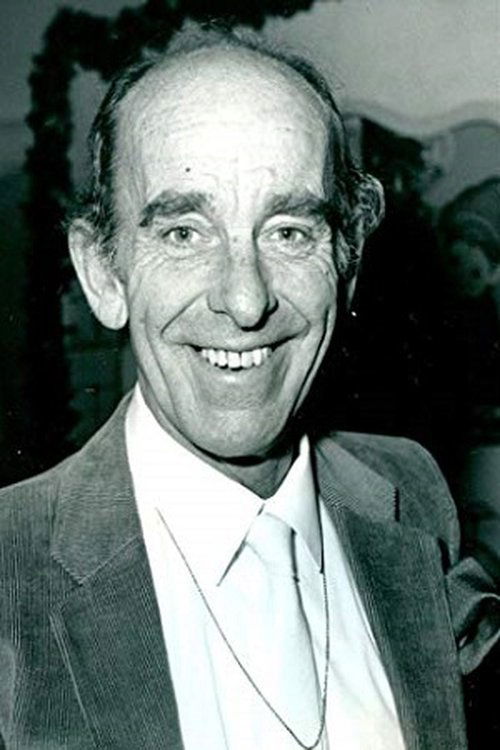
Michael Robbins
Acting
Biography
Born in London, Robbins was a bank clerk who became an actor after appearing in amateur dramatic performances in Hitchin, Hertfordshire, where he and his family lived at the time. Robbins made his television debut as the cockney soldier in Roll-on Bloomin' Death. Primarily a comedy actor, he is best remembered for the role of Arthur Rudge, the persistently sarcastic husband of Olive (Anna Karen), in the popular sitcom On the Buses (1969–73). Robbins and Karen provided the secondary comic storyline to Reg Varney's comedy capers at the bus depot. Robbins also appeared in the series film spin-offs, On the Buses, Mutiny on the Buses, and Holiday on the Buses. His other comedy credits include non-recurring roles in Man About the House, Oh Brother!, The Good Life, One Foot in the Grave, The New Statesman, George and Mildred, Hi-de-Hi! and You Rang, M'Lord? He appeared as a rather humorously portrayed police sergeant in the TV adaptation of Brendon Chase. As well as these comic roles, he assumed various straight roles in some of the major British television shows of the 1960s and 1970s: including Minder, The Sweeney, Z-Cars, Return of the Saint, Murder Most English, The Avengers, Dixon of Dock Green, The Bill and the 1982 Doctor Who story The Visitation. Robbins's film credits included The Whisperers, Up The Junction, The Looking Glass War, Zeppelin and Blake Edwards' films The Pink Panther Strikes Again and Victor/Victoria'. He also had an extensive career as a radio actor, including a role in the soap opera Waggoner's Walk and the satirical 1970s show Life is What Yer Make It. Robbins was an indefatigable worker for charity. He was active in the Grand Order of Water Rats (being elected 'Rat of the Year' in 1978) and the Catholic Stage Guild, and received a Papal Award for his services in 1987. In one of his last television appearances, in A Little Bit of Heaven Robbins recalled his childhood visits to Norfolk and spoke of his faith and love of the Shrine of Our Lady at Walsingham. Michael Robbins had a brother Jack who was a head teacher at Saint Gregory's Catholic middle school in Bedford in the 1970s and early 1980s. Michael made some guest appearances at this school throughout the years and sometimes entertained the pupils with various sketches with his brother Jack Robbins In the mid-1970s he also directed a film: How Are You?
Known For

The adventures of The Doctor, a time-traveling humanoid alien known as a Time Lord. He explores the universe in his TARDIS, a sentient time-traveling spaceship. Its exterior appears as a blue British police box, which was a common sight in Britain in 1963 when the series first aired. Along with a succession of companions, The Doctor faces a variety of foes while working to save civilizations, help ordinary people, and right many wrongs.
Doctor Who

Roguish comedy drama following the misadventures of small-time crook Arthur Daley.
Minder

A quirky spy show of the adventures of eccentrically suave British Agent John Steed and his predominantly female partners. Jonathan Steed - an urbane, proper gentleman spy - teams with various assistants throughout the series' run, including Dr. David Keel, Cathy Gale, Emma Peel and Tara King, to repeatedly save the world from diabolical schemes plotted by equally diabolical evil-doers (among them robots and man-eating monsters).
The Avengers

Simon Templar is The Saint, a handsome, sophisticated, debonair, modern-day Robin Hood who recovers ill-gotten wealth and redistributes it to those in need.
The Saint

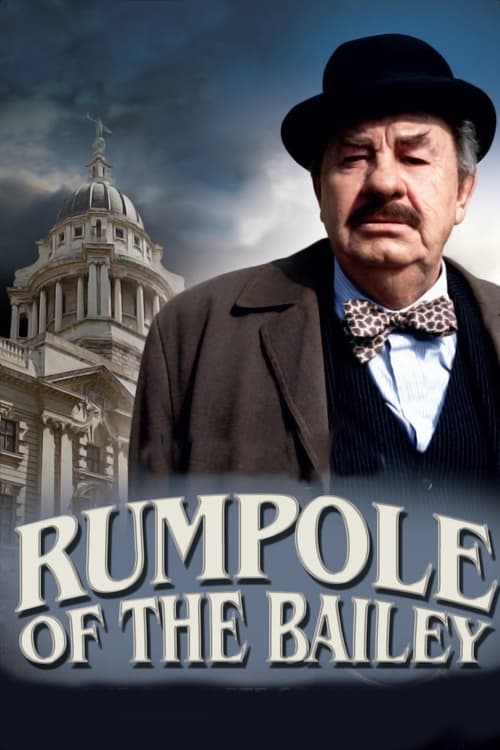
Rumpole of the Bailey is a British television series created and written by the British writer and barrister John Mortimer. It stars Leo McKern as Horace Rumpole, an aging London barrister who defends any and all clients, and has been spun off into a series of short stories, novels, and radio programmes.
Rumpole of the Bailey

The daily lives of the men and women at Sun Hill Police Station as they fight crime on the streets of London. From bomb threats to armed robbery and drug raids to the routine demands of policing this ground-breaking series focuses as much on crime as it does on the personal lives of its characters.
The Bill

Z-Cars or Z Cars is a British television drama series centred on the work of mobile uniformed police in the fictional town of Newtown, based on Kirkby, Merseyside. Produced by the BBC, it debuted in January 1962 and ran until September 1978.
Z-Cars

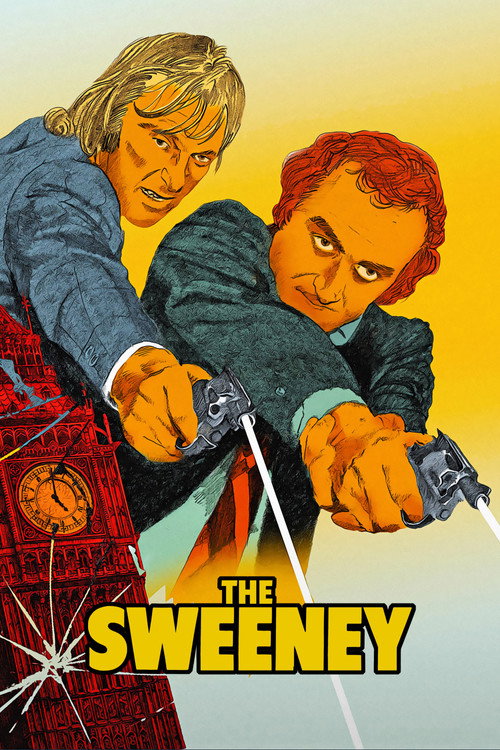
Jack Regan, an unethical officer of the Flying Squad, uses unorthodox methods to pursue criminals with the help of his partner, George Carter.
The Sweeney

Theatre 625 is a British television drama anthology series, produced by the BBC and transmitted on BBC2 from 1964 to 1968. It was one of the first regular programmes in the line-up of the channel, and the title referred to its production and transmission being in the higher-definition 625-line format, which only BBC2 used at the time.
Theatre 625

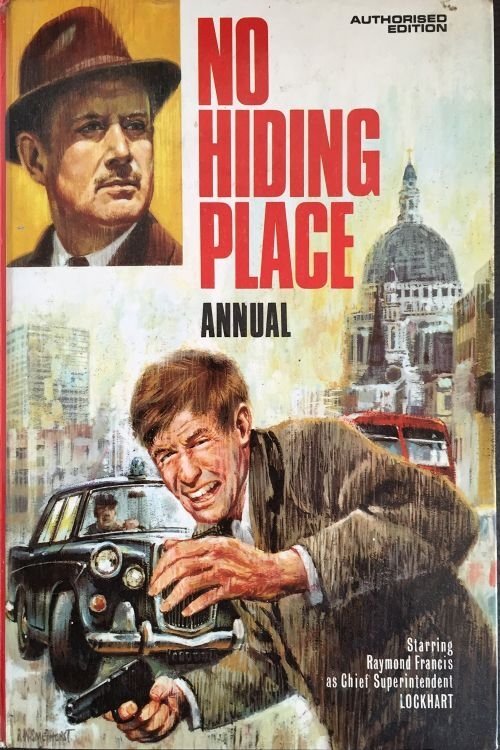
No Hiding Place is a British television series that was produced at Wembley Studios by Associated-Rediffusion for the ITV network between 16 September 1959 and 22 June 1967. It was the sequel to the series Murder Bag and Crime Sheet, all starring Raymond Francis as Detective Superintendent, later Detective Chief Superintendent Tom Lockhart.
No Hiding Place

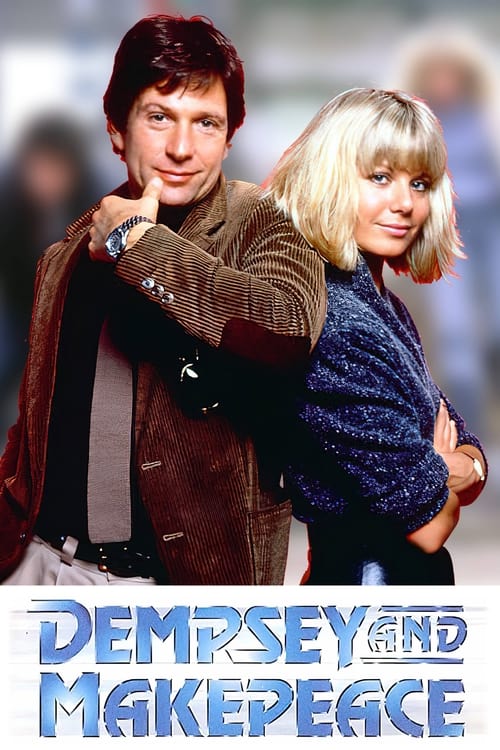
Dempsey and Makepeace is a British television crime drama made by London Weekend Television for ITV, created and produced by Ranald Graham. The leading roles were played by Michael Brandon and Glynis Barber, who later married each other on 18 November 1989. The series combined elements of previous series such as the mis-matching of British and American crime-fighters from different classes as seen in The Persuaders! and the action of The Professionals.
Dempsey and Makepeace

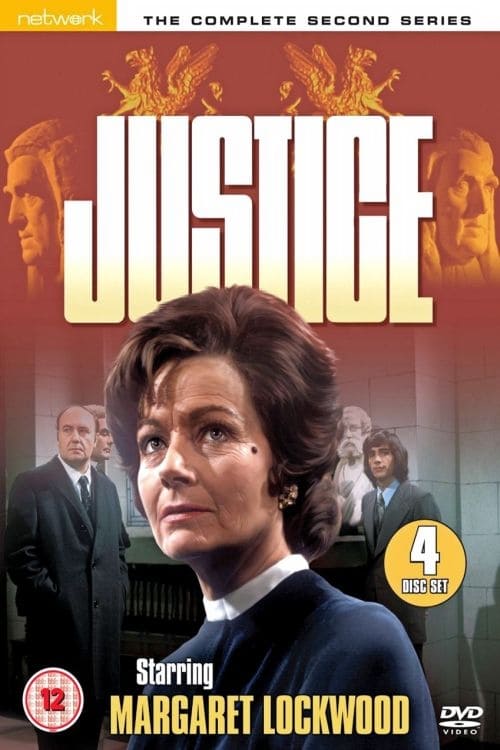
Justice is a British drama television series which originally aired on ITV in 39 hour-long episodes between 8 August 1971 and 16 October 1974. Margaret Lockwood stars as Harriet Peterson a female barrister in the North of England. It was made by Yorkshire Television and was based loosely on Justice Is a Woman, an episode of ITV Playhouse broadcast in 1969 in which Lockwood had previously also played a barrister. The theme music was Crown Imperial by William Walton.
Justice

Department S is a United Kingdom spy-fi adventure series produced by ITC Entertainment. The series consists of 28 episodes which originally aired in 1969–1970. It starred Peter Wyngarde as author Jason King, Joel Fabiani as Stewart Sullivan, and Rosemary Nicols as computer expert Annabelle Hurst. The trio were agents for a fictional special department of Interpol. The head of Department S was Sir Curtis Seretse.
Department S

The New Statesman is a British sitcom of the late 1980s and early 1990s satirising the Conservative government of the time.
The New Statesman

Follow the swashbuckling exploits of Simon Templar, a modern-day Robin Hood of sorts.
Return of the Saint

The Edgar Wallace Mysteries was a British second-feature film series, produced at Merton Park Studios for Anglo-Amalgamated. There were 46 films in the series, made between 1960 and 1965. The films were loose adaptations of Edgar Wallace's books and stories. Very few used his original titles, and there was no attempt to set them in the period in which Wallace wrote, probably to obviate the need for elaborate costumes and sets. A 1962 article in Scene magazine quotes £22,000 as the budget for an episode then in production.
Edgar Wallace Mysteries

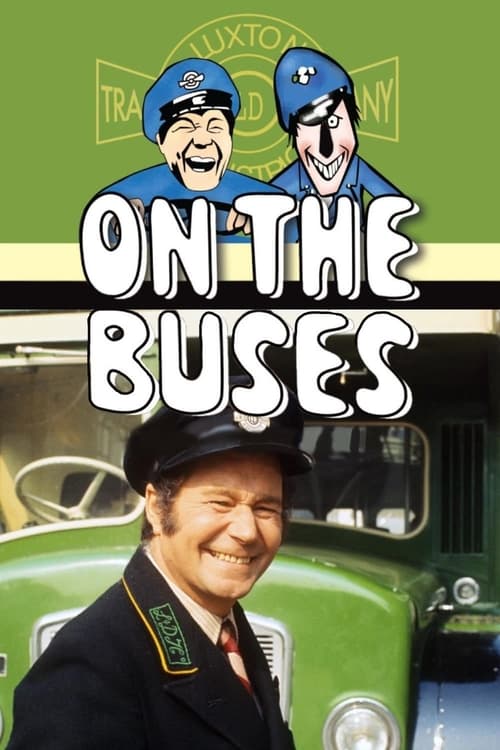
On the Buses is a British comedy series created by Ronald Wolfe and Ronald Chesney, broadcast in the United Kingdom from 1969 to 1973. The writers' previous successes with The Rag Trade and Meet the Wife were for the BBC, but the corporation rejected On the Buses, not seeing much comedy potential in a bus depot as a setting. The comedy partnership turned to a friend, Frank Muir, Head of Entertainment at London Weekend Television, who loved the idea; the show was accepted and despite a poor critical reception became a hit with viewers.
On the Buses

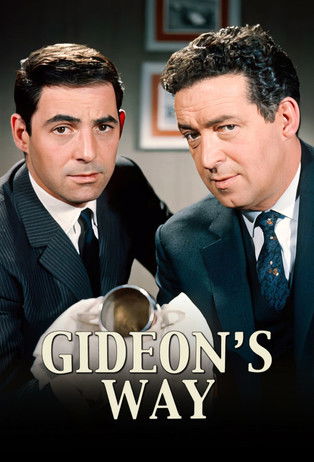
Gideon's Way is a British television crime series made by ITC Entertainment in 1964/65, based on the novels by John Creasey. The series was made at Elstree in twin production with The Saint TV series. It starred Liverpudlian John Gregson in the title role as Commander George Gideon of Scotland Yard, with Alexander Davion as his assistant, Detective Chief Inspector David Keen, Reginald Jessup as Det. Superintendent LeMaitre, Ian Rossiter as Detective Chief Superintendent Joe Bell and Basil Dignam as Commissioner Scott-Marle. The show did not acknowledge any help from Scotland Yard, any other police force or advisor. Daphne Anderson starred as his wife, Kate with Giles Watling as young son, Malcolm, Richard James as older son, Matthew who seemed to have a lot of new girlfriends and Andrea Allan as daughter, Pru. Unusually for police stories, Gideon was shown as a family man at home though urgent phone calls from his bosses tend to disrupt family plans too often. However, he did admit in "State Visit" that his wife had walked out on him for a while years ago when he put the job first and her second. They live in an expensive detached house in Chelsea.
Gideon's Way

One Foot in the Grave is a BBC television sitcom series The series features the exploits of Victor Meldrew and his long-suffering wife, Margaret. The programmes invariably deal with Meldrew's battle against the problems he creates for himself. Living in a typical household in an unnamed English suburb, Victor takes involuntary early retirement. His various efforts to keep himself busy, while encountering various misfortunes and misunderstandings are the themes of the sitcom. The series was largely filmed on location in Walkford, near New Milton in Hampshire, although several clues show that the series may have been set in Hampshire – possibly Winchester. Despite its traditional production, the series supplants its domestic sitcom setting with elements of black humour and surrealism.
One Foot in the Grave

Dixon of Dock Green was a BBC television series following the activities of police officers at a fictional Metropolitan Police station in the East End of London from 1955 to 1976. Some episodes were later remade as a BBC radio series in 2005 and 2006.