Production
In 1951, New York poet Elizabeth Bishop travels to Rio de Janeiro to visit Mary, a college friend. The shy Elizabeth is overwhelmed by Brazilian sensuality. She is the antithesis to Mary’s dashing partner, architect Lota de Macedo Soares. Mary is jealous, but unconventional Lota is determined to have both women at all costs. This eternal triangle plays out against the backdrop of the military coup of 1964. Bishop’s moving poems are at the core of a film which lushly illustrates a crucial phase in the life of this influential Pulitzer prize-winning poet.
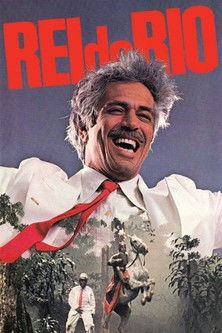
In the 1930s, a blacksmith is accused of murdering his wife and becomes a hero and political leader.
After the death of her handsome but good-for-nothing husband Vadinho, Flor, a widow, marries Dr. Teodoro, a respectable gentleman. Hilarity ensues when Vadinho's spirit returns into her life.
Sandro was a boy who loved to sing rap, to kiss, to stare the statue of Christ the Redeemer and dreamed to go visit Copacabana. Growing up on streets, the story culminates at the infamous episode of 12th June 2000, when Sandro hijacked bus 174.
In the 19th century, a country girl is seduced by a young doctor who's staying at her house for a few days, caring for her, and tries to hide the forbidden romance from her father, who disapproves of the relationship.
Fernando, a journalist, and his friend César join terrorist group MR8 in order to fight Brazilian dictatorial regime during the late sixties. César, however, is wounded and captured during a bank hold up. Fernando then decides to kidnap the American ambassador in Brazil and ask for the release of fifteen political prisoners in exchange for his life.
No description available.
Police investigator Galvão is pursuing two trails, one professional and one personal. While he looks for a serial killer, he also searches for his estranged daughter, Sandra, whom he kicked out of the house. Lives intersect when the serial killer, Toninho, befriends Sandra, now an exotic dancer and prostitute living and working in the seamy underside of late 1970s Rio.
Young guy from the poor Northeast region of Brazil comes to Rio de Janeiro to try his luck. Naturally, he is faced with many adversities along the way.
The story of two immigrant couples: Teresa and Angelo; Pierina and Massimo. While fighting for survival in the new world, the unexpected love of Massimo and Teresa appears. They react against family and cultural traditions and leave to a new destiny, leaving their partners. Quatrilho is the name of a card game in wich the player have to betray his partner in order to become the champion.
After witnessing the assassination of her parents, Luzia is raised by a cowboy and starts behaving like the men of Brazilian "Sertão". As a grown-up, she sets out to find her parent's murderer, but ends up discovering love.
Two friends get rich running an illegal gambling business. But soon they start to compete, and become rivals.
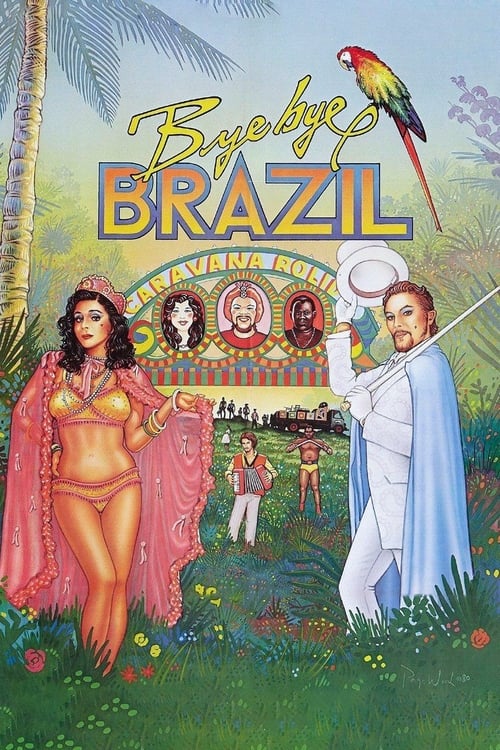
The Caravana Rolidei rolls into town with the Gypsy Lord at the mike: he does magic tricks, the erotic Salomé dances, and the mute Swallow performs feats of strength. A young accordion player is completely enamored of Salomé, and he begs to come along. The Gypsy Lord shrugs, and the accordionist and his pregnant wife, Dasdô, join the troupe.
Fernanda is content with her life until she meets Miguel, a drug addict, bisexual male prostitute. She becomes captivated by him and leaves her family behind in favor of a new life filled with sex and debauchery.
A military man picks up a Native Brazilian woman and heads to a gold panning site where he has undisclosed business to attend to.
According to an amazonian legend, every month, during the full moon, a brazilian fishing village receives a mysterious guest: the Dolphin, who transforms into a human to seduce and be loved by women and hated by men. One of her conquests is the daughter of a fisherman, who has a son with the Dolphin. He constantly reappears to seduce her, and even when she marries, he continues to look for her. This provokes the ire of the husband, who wants to kill him anyway.
In the 1930s, novelist and politician Graciliano Ramos is accused of being a communist sympathizer. He is then arrested and sent to the Ilha Grande prison, where he experiences the disturbing treatment reserved for common prisoners.
An unhappily married cleaning woman in the slums of Rio entices all the money and gifts she can out of an elderly widower.
Romão, illiterate and unemployed, feels destiny drawing him on an odyssey to Rio de Janeiro in pursuit of a job and a decent life. A family of seven journeys 2,000 miles across the hinterlands of Brazil on bicycles. Along the way, the story explores the inner dynamics of a family facing a great challenge with the courage to pursue dreams.
In the mid-1870s, Jacobina, daughter of German immigrants, became leader of a sect that believed in healing the body by cleansing the soul. After having a divine vision and speaking to Jesus, she changes her appearance and manners, disturbing the conservative population of the place. After the death of opponents of her sect, local authorities decide to take action against her and her followers.