FEEL IT.STREAM
Piotr Szulkin

Piotr Szulkin

Directing

Biography

Piotr Szulkin was a Polish film director and writer. He directed over thirteen films, both Polish and international productions. He was a recipient of "Best Science Fiction Film Director" at Eurocon in 1984. During the latter part of his career, he was also a professor at the National Film School in Łódź. He was the son of Paweł Szulkin, a Polish physicist from an assimilated Jewish family (his grandparents were Idel Szulkin and Małka Frydzon). His paternal uncle was Michał Szulkin, a historian and publicist. In 2013, Piotr Szulkin demanded the removal of information about the Jewish ancestry of Paweł Szulkin in his biography in the Polski Słownik Biograficzny (Polish National Dictionary). After Piotr Szulkin sued Polski Słownik Biograficzny, in January 2014, the Civil Court in Kraków, as a protective action, put a one-year prohibition on the dissemination of the volume of Polski Słownik Biograficzny including the biography of Paweł Szulkin.

Known For

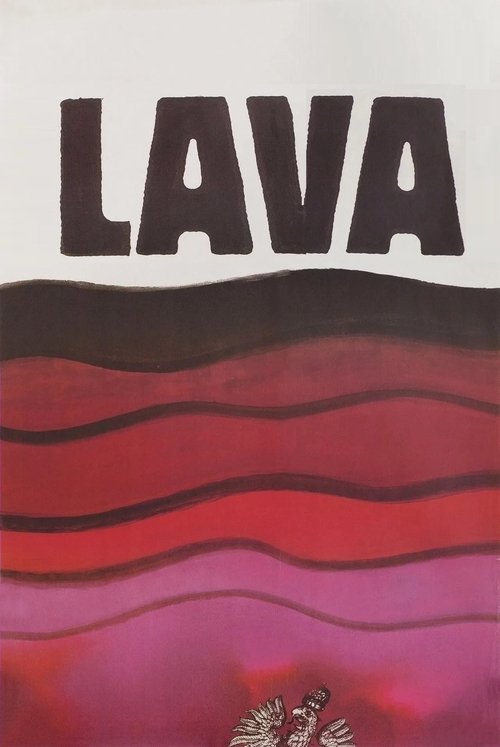
Lava
5.5

On the eve of the Day of the Dead, among mysterious old rituals of the Vilnius region, ghosts of the past and present start to appear.

Lava

1989
Golem
6.8

Pernat finds himself in a police interrogation, accused of a murder, and unable to recall any details of the crime, or even his own life. He's released back into a world of raving lunatics and deranged dentists, murderous doctors and scientists who believe the secret of human creation is inside the walls of a cast-iron oven.

Golem

1980
Ga-ga: Glory to the Heroes
6.3

Scope is a prisoner on a behemoth space station and is chosen, like all his fellow prisoners, to 'volunteer' for the exploration of far-away planets. Landing on planet Australia 458, he is given a hero's welcome with all the sex, booze, and violence that any one man can stomach. But as his new caretakers push him towards even more heinous and deplorable acts, Scope finds that his freedom comes with a high price; his own violent demise, broadcast live for the viewing pleasure of Australia 458's inhabitants.

Ga-ga: Glory to the Heroes

1986
Femina
4.9

The main character is Bogna, a thirty year old woman lost in her surrounding reality and unhappy in her private life. After her husband departs for a foreign scholarship, Bogna learns that her mother died. The trip to her hometown for the funeral becomes a voyage in time, during which she relives the memories of her idyllic childhood.

Femina

1991
The War of the Worlds: Next Century
6.7

Poland, Christmastime. A band of hyperintelligent, bloodthirsty Martians take over the country and enlist hapless television newscaster Iron Idem as the voice of their propaganda machine. But when Iron dares to go off message, he makes an enemy even greater than the aliens—the state itself.

The War of the Worlds: Next Century

1981
No image
8.0

This sumptuously photographed period drama is set in 1791 Vienna. Maximilian Bardo, an opportunistic 18-year old Viennese man with aspirations to rise above his bourgeois upbringing, looks for a chance to shoehorn himself into the nobility. His hopes lead him to the castle of a wealthy inventor, Alexander Plant. It is here that a strange story is played out, as Maximilian, full of naive illusions and innocent ideals of what it means to be wealthy and noble, quickly loses his innocence. Falling prey to the jaded aristocrats in residence, he is cruelly initiated into their decadent games.

Guilty of Innocence

1992
King Ubu
6.5

A grotesque Shakespearean tale of Ubu who comes to power in a bloody way. When his absurd reforms fail and the treasury gets empty, Ubu and his flatterers start implementing terror across the country.

King Ubu

2004
Hospital of the Transfiguration
6.2

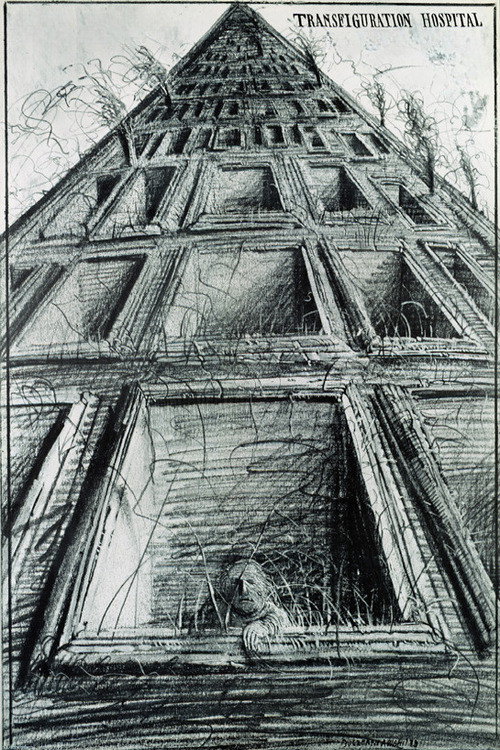
Shortly after the beginning of World War 2 a young idealist doctor is employed in a psychiatric hospital, where his notions of proper care for the patients are challenged by staff and the German occupation.

Hospital of the Transfiguration

1979
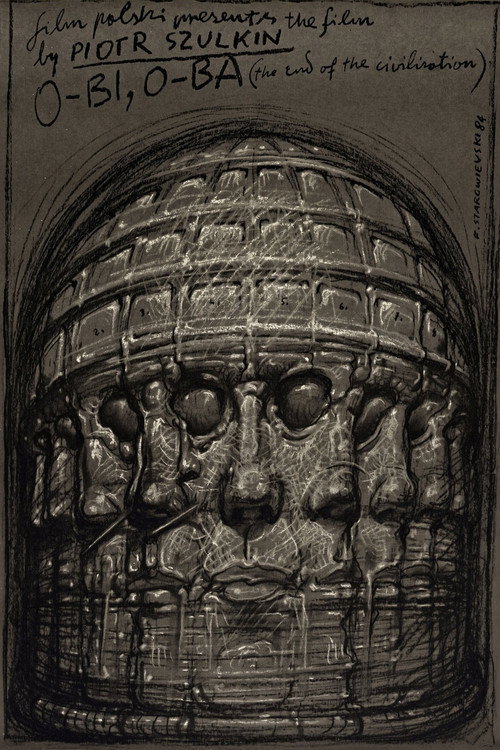
O-Bi, O-Ba: The End of Civilization
6.9

The world has been ravaged by nuclear war. The planet is frozen and radiation kills anyone or anything that ventures outside of 'The Dome'. Soft is a shepherd for the last remnants of humanity who have gathered together as they await rescue from a mysterious craft known only as 'The Ark.' He wanders among the masses, performing his regular daily tasks; keeping morale from plummeting, wooing prostitutes, squashing rebellions, and sometimes feeding the hungry. But as the true and sinister nature of 'The Dome' comes to light, Soft must ask himself if humanity is worth saving...

O-Bi, O-Ba: The End of Civilization

1985
Bewitching Eyes
6.5

A Polish folktale set in the Middle Ages, tells the story of a man, whose eyes, or the gaze of them, brings upon death.

Bewitching Eyes

1977
The Lullaby
8.0

The movie consists of three novellas, the events of which take place during World War II. The first, "White Daisies", tells how a Polish priest saves a Jewish boy who survived a mass shooting. Another movie story, "Desolation," is about a ghetto boy in love who must, by all means, bring wildflowers to his beloved. The third novel, "The Cuckoo's Prediction," is about a prisoner who escapes from a POW camp. He escapes after his bunkmate tells him that he heard him speaking Yiddish in his sleep.

The Lullaby

1986
No image
N/A

Two death row prisoners willingly confess to more murders to delay their execution. A TV adaptation of Janusz Krasiński's play.

Czapa, czyli śmierć na raty

1996
No image
N/A

A television staging of the 1941 Brecht play, The Resistible Rise of Arturo Ui.

The Resistible Rise of Arturo Ui

1997
No image
N/A

Polish teleplay based on Ephraim Kishon's play, concerning the characters of Romeo and Juliet and their alternate fate had they survived the events of Shakespeare's play and grew old together.

Oh, oh Juliet

1996
Everyday Life
5.2

Dialogue-free short detailing the daily tasks of a man and his wife.

Everyday Life

1976
Working Women
5.1

Stylized with dramatic interiors and a distorted frame rate, this early documentary miniature from Szulkin depicts six sequences of solitary, repetitious labor.

Working Women

1978
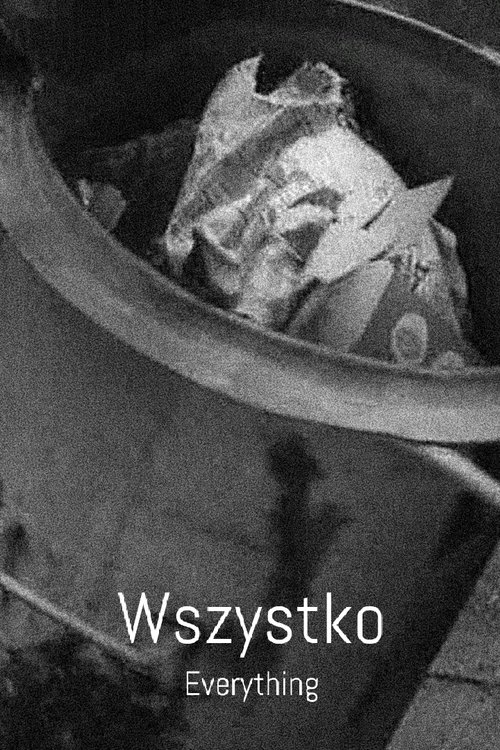
Everything
4.7

Here's a strange one. First, a song on a blackboard: a Polish translation of “I love my little rooster” by American folk writer Almeda Riddle. Then, two men roll around trash bins and lift them to the garbage truck. They do it several times. A woman shouts in the distance. At the end, the picture stops, and the woman sings the song. An early short by Piotr Szulkin.

Everything

1972
Samosiuk. The Independent Film Republic
6.0

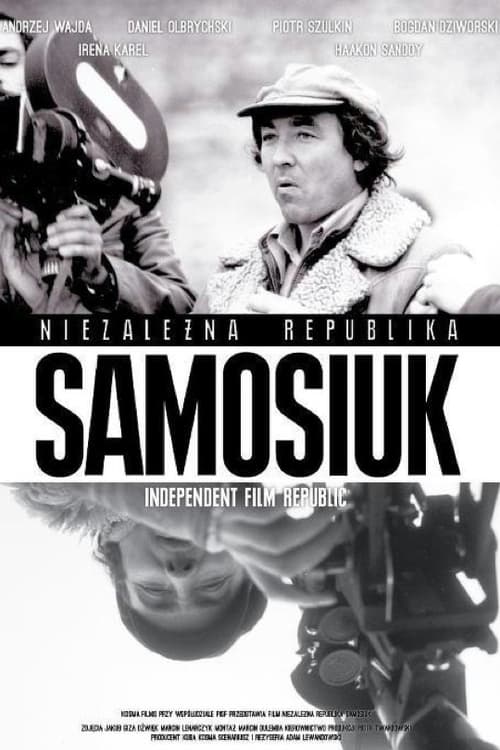
The film is a portrait of Zygmunt Samosiuk, a great forgotten cinematographer, who died in 1983. As a director of photography he worked on such films as The Birch Wood, Landscape Afterthe Battle and Austeria. He introduced, among others, hand‑held camera shots, colour lights and shooting at minimum exposure. Reminiscences of his colleagues and friends, including Andrzej Wajda and Piotr Szulkin, show a gifted artist and a modest man who valued his work above all.

Samosiuk. The Independent Film Republic

2012
Meat (Ironica)
7.5

"Mieso" (Meat) is a satirical and irreverent revision of the most recent history of Poland.

Meat (Ironica)

1994
No image
N/A

A TV adaptation of Sławomir Mrożek's play, about a family whose rejection of traditional values leads to erosion of their daily lives and Artur's, the youngest one's efforts to reinstate rules in the house.

Tango

1992